


Venice has always existed in the global imagination as a delicate, floating dream—a labyrinth of shimmering canals, centuries-old Gothic palazzos, and winding stone alleys that seems to sit perpetually on the border between myth and reality. Yet, for the dwindling number of actual human beings who call this iconic Italian jewel home, the romantic dream has increasingly hardened into a claustrophobic daily struggle under the crushing, relentless pressure of unrestrained overtourism. Every year, millions of eager travelers descend upon its historic bridges and narrow calli, turning quiet neighborhood squares into gridlocked pedestrian corridors, driving out local businesses in favor of cheap souvenir stalls, and placing an entirely unsustainable strain on the fragile, ancient architectural skeleton of a city built entirely on water. In a desperate, passionate bid to restore balance and preserve the city’s vanishing soul, Venice’s newly elected mayor, Simone Venturini, has stepped forward with an incredibly bold and deeply humanized proposal: a dramatic hike in the city’s day-tripper entry fee, raising it to as much as €50 on its most congested, high-congestion peak days. This progressive initiative is far more than a simple fiscal mechanism or a dry municipal policy; it represents an urgent, emotional plea to the global community to recognize that Venice is first and foremost a living, breathing community that cannot survive if it is treated merely as a cheap, consequence-free backdrop for social media photos. By proposing a high financial threshold that forces travelers to pause and deeply reflect on the physical and cultural footprint of their visit, the local government hopes to trigger a radical shift in passenger behavior, fostering a culture of more mindful, slow, and respectful travel that protects the delicate heartbeat of the unique Venetian lagoon for generations to come. This is a battle for the very identity of Venice, turning what could be a sterile bureaucratic conflict into a profound human dialogue about the future of sustainable tourism.
This proposed escalation to a €50 ticket comes on the heels of hard, undeniable statistical evidence proving that the city’s initial efforts to regulate tourist numbers have barely made a dent in the daily influx. Introduced in 2024 as a pioneering global experiment, the current access fee structure—which charges early-booking travelers a modest €5 and those booking last-minute a still-nominal €10—has done shockingly little to discourage visitors or flatten the peak spikes of daily tourist traffic during popular weekends. According to official data published by the Italian newspaper Il Gazzettino, out of a total of 514,710 entrance contributions paid during the first forty-two days of the scheme’s active implementation, 245,503 visitors opted to pay the discounted €5 early-booking rate, while an even higher number, 268,207, willingly paid the €10 last-minute surcharge. These figures paint a clear, sobering picture: a price tag equivalent to the cost of a single cup of local coffee or a cheap souvenir is simply too low to serve as a meaningful psychological barrier or deterrent to global travelers. Venice’s budget councillor, Michele Zuin, candidly observed to the Italian press that there is virtually no behavioral difference for a traveler between spending five or ten euros to enter one of the most famous places on earth. If the entry fee is truly meant to serve as a strategic gatekeeping mechanism that actively reshapes global tourist flows and discourages casual, spur-of-the-moment day trips, Zuin argues that the cost must be raised to a level that commands genuine contemplation and planning before a traveler embarks on their journey. This data proves that current fees are seen as a minor convenience fee rather than a regulatory tool, necessitating a more impactful approach.
Perhaps surprisingly to outside observers, this call for a much higher financial barrier has found strong and vocal allies within Venice’s own hospitality and business sectors, who have come to realize that the long-term economic survival of their industry is inextricably linked to the physical and social survival of the city itself. Daniele Minotto, the director of the influential Association of Hoteliers in Venice (AVA), has warmly welcomed and endorsed Mayor Venturini’s bold proposal, viewing it as an essential catalyst for implementing a sophisticated, sliding-scale system of crowd management. In Minotto’s eyes, an adjustable and significantly higher price limit, applied dynamically during the most critical, high-stress days of the year, could act as a highly effective lever to actively manage, direct, and ease the overwhelming flow of pedestrian traffic. He argues that a €50 ticket is far from exorbitant or unfair when viewed in a broader global context, pointing out that travelers routinely pay similar or even higher prices to gain access to famous historical ruins, sacred archaeological sites, national parks, and world-class museums across the globe. Furthermore, local hoteliers believe that encouraging overnight stays—which are exempt from the day tax—helps support the traditional economy of hotels, authentic restaurants, and local tour guides, steering the tourism model away from mass extraction toward sustainable contribution. By forcing day-trippers to contribute directly to the city’s upkeep at a rate comparable to global historical treasures, Venice can reclaim its status as a premier destination of cultural significance, rather than an amusement park to be quickly consumed and discarded. By framing Venice not simply as an open municipal highway, but as a priceless, highly delicate open-air monument requiring intensive preservation, supporters of the price hike aim to fundamentally shift the modern traveler’s perception, transforming the act of visiting the historic city from a casual afternoon excursion into a conscious cultural pilgrimage.
At the core of these legislative shifts lies a deeply compassionate, human-centric concern for the dwindling population of permanent Venetian residents, who must navigate the logistical, economic, and emotional nightmares of living in a hyper-touristic environment. Councillor Zuin has repeatedly and strongly emphasized that the potential windfall of increased revenue generated by the elevated fee will not vanish into an administrative black hole or be eaten up by government bureaucracy; instead, every euro collected will be directly and transparently reinvested into the city’s social fabric to offset the heavy economic burdens that local families and independent businesses endure daily. Living in a world-famous tourist hub drives up the costs of mundane groceries, fills public water buses to absolute capacity, and places a monumental burden on municipal services like waste management, street cleaning, and building maintenance. By redirecting these tourist-funded resources toward subsidized public utility costs, improved neighborhood infrastructure, community care, and targeted tax relief for the actual residents of Venice, the local government hopes to make the city truly livable once again for those who keep its traditions, localized dialects, and daily neighborhood commerce alive. This policy represents a vital, historic attempt to slow down and ultimately reverse the tragic exodus of Venetians—who have seen their community numbers plummet alarmingly over recent decades—by demonstrating that a city’s first and most sacred duty is to its own citizens, ensuring they are not priced out of their ancestral homes by the very industry that feeds upon them. It provides a tangible mechanism of restitution, turning a tax on visitors into an investment in local survival. By using tourism revenue as an economic shield, Venice can protect its remaining bakeries, bookshops, and community spaces from being entirely replaced by generic, plastic souvenir shops, ensuring the city retains its authentic human warmth.
As Venice steadily approaches the final phases of its multi-year experimental trial, metropolitan leaders and urban planners are preparing to make permanent, structural decisions regarding how the ancient city governs its borders and manages its public spaces. Councillor Zuin confirmed that the upcoming annual travel season will constitute the third and final testing year of this groundbreaking day-tripper tax, after which the municipal administration will gather to thoroughly analyze the accumulated quantitative data and qualitative feedback to forge a definitive, long-term policy for the future of Venice. This critical evaluation period will address major structural questions, such as whether to expand the access fee system to encompass the entire calendar year or to selectively target additional high-stress holidays and seasonal festivals, such as the world-renowned Venice Carnival, which traditionally floods the city’s narrow pathways with overwhelming, shoulder-to-shoulder crowds. Currently, the access fee is applied selectively across sixty designated peak days throughout the spring and summer months of April, May, June, and July, targeting the busiest hours between 8:30 in the morning and 4:00 in the afternoon when day-trippers are most likely to overwhelm the city. By testing these operational variables, the municipal government is gathering the essential behavioral insights needed to craft a highly flexible, responsive, and data-driven policy that protects Venice when it is at its most vulnerable, while still ensuring its historic gates remain open and welcoming during quieter, more sustainable seasons of the year. The city seeks to move away from reactive, panic-driven crisis management toward a proactive, year-round strategy of smart flow control. This transition represents a major milestone in global urban planning, as Venice serves as a testing ground for other heritage cities worldwide—such as Amsterdam, Barcelona, and Kyoto—struggling to find the delicate equilibrium between global accessibility and local preservation.
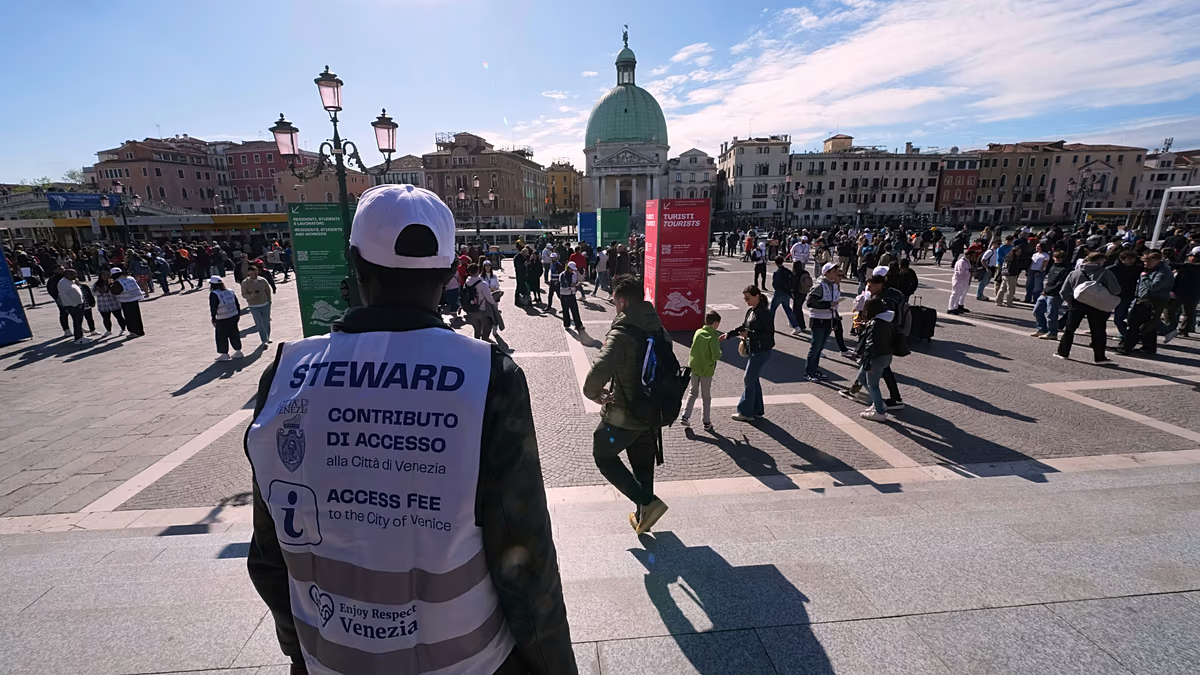
Navigating this evolving landscape requires a clear, empathetic understanding of the rules of engagement, which are carefully designed to protect those with genuine, lasting ties to the city while holding casual, short-term sightseers accountable to the community. To ensure that daily life, education, and livelihood are not disrupted for those who keep the physical and cultural engine of Venice running, an extensive list of practical exemptions is in place; local residents, individuals born within the municipal boundaries, commuting university students, local workers, and overnight tourists with confirmed hotel reservations are entirely exempt from paying the daily levy. For everyone else, the visitor journey now begins on a dedicated, user-friendly digital platform where they must register their stay and secure a personal QR code, with the understanding that failure to obtain this digital pass or to provide a valid proof of exemption during spot checks can result in a steep fine ranging from €50 to €300. As travelers encounter official municipal staff checking codes at major entry points, such as outside the bustling Santa Lucia railway station, they are gently but firmly reminded that Venice is not a static theme park, but a fragile, living municipal ecosystem. This digital check system, while controversial to some who view it as a border-like barrier, is a necessary compromise to avoid physical metal turnstiles and preserve the city’s open visual aesthetic. Ultimately, this humanized approach to tourism management serves as an urgent wake-up call to the global travel community, illustrating that preserving our absolute world’s most beautiful, historic treasures requires us to tread far more lightly, pay more fairly, and cherish the real, living communities that call these wonders home.