





Some 500 kilometers off the sun-bleached coast of West Africa lies Cabo Verde, a hypnotic, ten-island archipelago that has recently captured the global imagination after qualifying for its historic first World Cup. Yet long before football brought this nation into the international spotlight, these islands were quietly cradled in the vast expanse of the Atlantic Ocean, serving as a vital bridge between continents, cultures, and histories. Geographically, Cabo Verde belongs to the ancient, volcanic family of Macaronesia—a name derived from the Greek phrase meaning “Islands of Bliss”—which it proudly shares with Madeira, the Azores, and the Canary Islands. It is a land sculpted by ancient tectonic shifts, adorned with dramatically rugged peaks, sweeping basalt deserts, and lush, hidden valleys. For travelers seeking an escape from the frantic rhythms of modern life, the weather here is nothing short of a continuous embrace, boasting an astonishing 350 days of sunshine a year. Tempered by steady oceanic breezes, temperatures hover in a golden zone between 21°C and 29°C. The local rhythmic lifecycle is defined by just two seasons: the breezy wind season (tempo das brisas) stretching from October to mid-July, and the brief, dramatic rainy season (tempo das chuvas) in August and September. Whether you seek the crisp, refreshing winds of January and February—where temperatures can dip to a cool, revitalizing 16°C—or the intense, sub-tropical warmth of September when the thermometer climbs past 36°C, Cabo Verde offers a sensory climate designed to heal, recharge, and inspire.
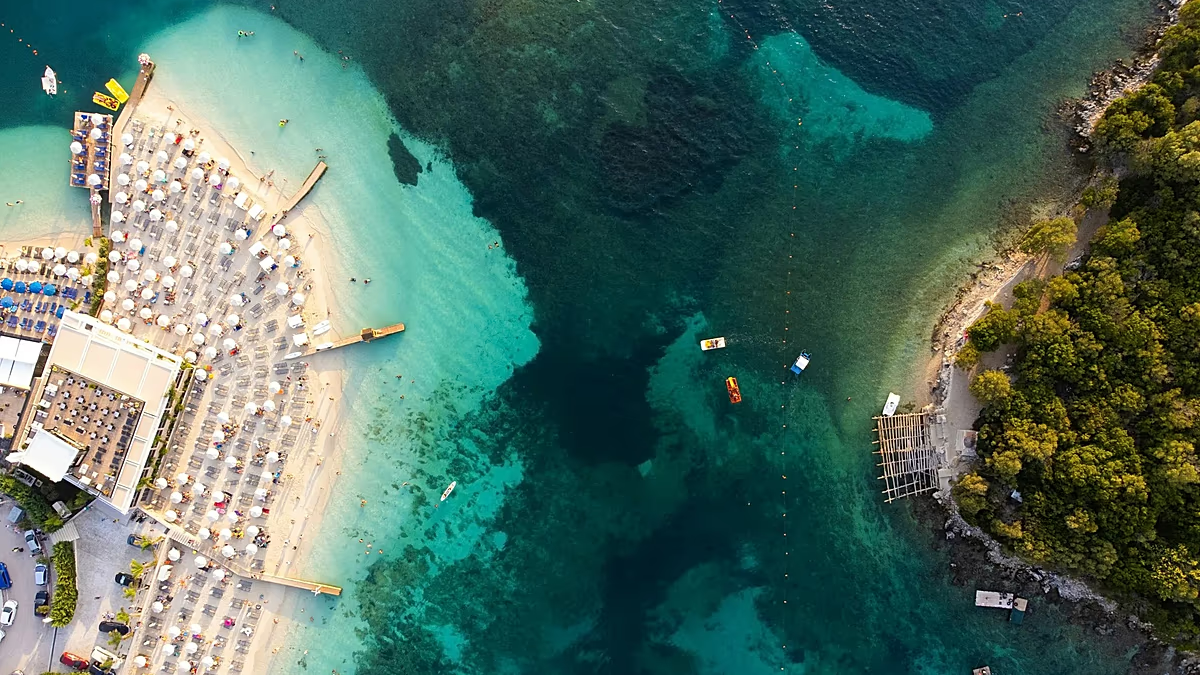
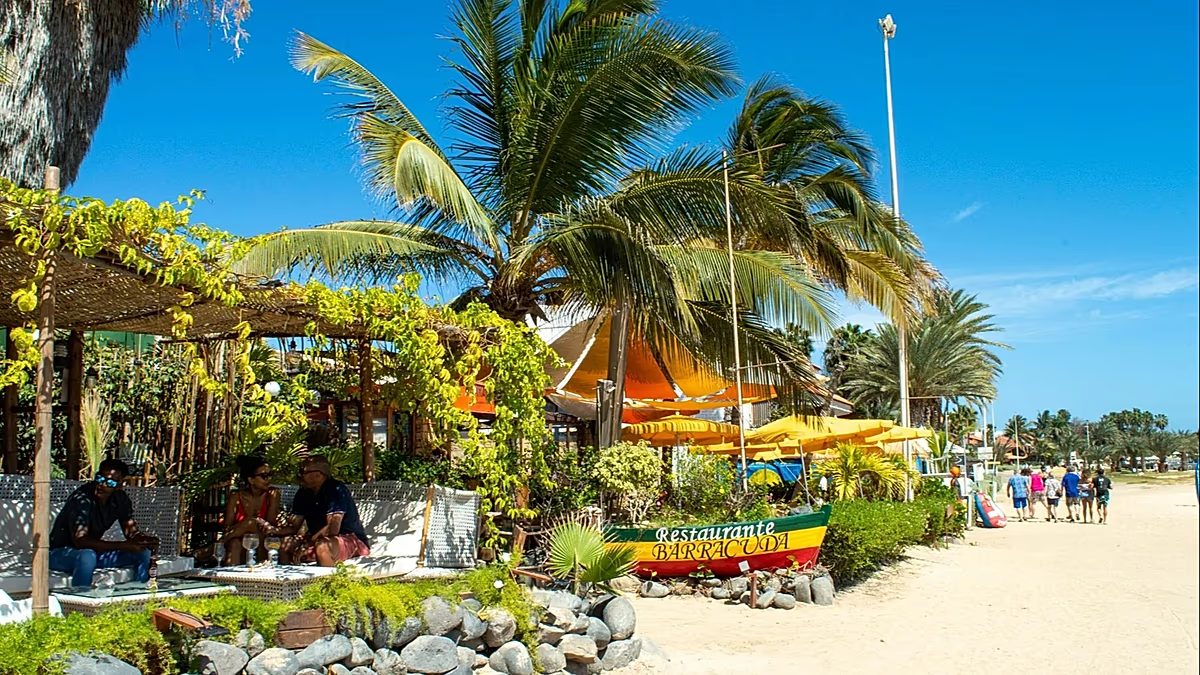
To step foot on Sal, the “island of salt,” is to enter a striking world of contrasts where the parched, lunar interior of the island yields to a coastline of staggering beauty. The jewel in Sal’s crown is Santa Maria Beach, a stretch of ivory-white sand so dazzling it has been officially designated as one of the “Seven Wonders of Cabo Verde.” Here, the Atlantic shows its gentler, more playful side; beachgoers frequently spot wild dolphins breaching the horizon, while beneath the crystal-clear turquoise surface, schools of tropical fish, graceful rays, and elusive moray eels dart through underwater volcanic reefs. Sal is an island designed for active souls and seekers of barefoot luxury alike. One can spend a morning hiking the scenic costal paths stretching from the historic wooden pier of Pontão de Santa Maria all the way to the windswept dunes of Ponta Preta beach, a legendary haven for world-class kitesurfers. For those seeking inland adventures, the island offers everything from high-speed zip-lining over volcanic valleys to horseback riding along the quiet shores. Visitors can find peace wandering through the lush, botanical wonders of the Pachamama Eco Park, or deep-dive into the island’s fascinating identity at the House of Culture Museum, learning how a quiet salt-mining outpost evolved into one of the world’s most sought-after winter sun sanctuaries.
If Sal represents the raw beauty of sand and sea, the vibrant island of São Vicente serves as the beating, artistic heart of the archipelago. Dominated by the bustling, colorful port town of Mindelo, São Vicente is a cultural crucible where African heritage, European colonial history, and Portuguese and Brazilian artistic movements have melted together over centuries. Mindelo’s cobblestone streets are alive with the soulful strains of morna—the melancholic, beautiful blues music popularized globally by the legendary barefoot diva Cesária Évora—which drifts from open tavern windows as dusk settles over the bay. At the Centro Cultural do Mindelo, visitors are invited to look beyond the surface of tourism and truly “feel the soul of Cabo Verde” through immersive street art displays, local woodcarving workshops, and authentic culinary evenings. The island’s unique personality is best understood through the eyes of its people, and local agencies offer captivating six-hour cultural tours starting at €130. Led by passionate multi-lingual guides fluent in English, French, German, and Portuguese, these journeys take travelers intimate distances—from the bustling fish markets to the panoramic heights of Monte Verde—weaving stories of survival, poetry, and colonial resistance that define the modern Cabo Verdean spirit.
For those who yearn for a slower, more meditative style of travel, the quiet island of Maio offers a step back in time. Free from the bustling footprints of heavy development, Maio is a sanctuary of silence, characterized by endless golden bays, sleepy volcanic lagoons, and slow-paced villages where time seems to stand still. The tourism board warmly recommends cycling as the ultimate way to explore the island, allowing travelers to feel the warm desert wind as they pedal along dirt tracks toward empty beaches. Crucially, Maio is a place of profound ecological significance; its untouched coastlines double as biosphere reserves and protected nesting grounds for thousands of loggerhead sea turtles. Each year, under the cover of ink-black summer nights, these ancient mariners crawl onto the warm sands of beaches like Lagoa, Barreiro, Salinas Porto Inglês, and Terras Salgadas to deposit their eggs. To witness this ancient ritual is a deeply moving experience, though it is strictly regulated to protect the fragile ecosystem. Visitors must always be accompanied by a certified local biologist or guide, ensuring that human curiosity supports, rather than disrupts, the delicate conservation efforts designed to preserve these endangered creatures for generations to come.
An exploration of Cabo Verde is incomplete without engaging the senses at the dinner table, where the island’s geopolitical isolation and rich history have birthed a distinct, comforting culinary tradition. The uncontested king of the local kitchen is cachupa, a deeply satisfying, slow-cooked stew that serves as the national dish and is affectionately dubbed the “feast of the islands.” Prepared with loving patience over several hours, cachupa combines hominy corn, beans, cassava, yams, and sweet pumpkin with rich additions of marinated beef, pork sausage, chicken, or fresh tuna. It is a dish that tastes of home, resilience, and community. Naturally, surrounded by some of the richest waters of the Atlantic, the daily catch dictates much of the menu across the archipelago. Local restaurants serve exceptionally fresh catches of swordfish, grouper, mackerel, snapper, and salmon, simply grilled and drizzled with local olive oil and lime. For the culinary adventurer, local menus offer exotic delicacies such as tender grilled octopus and savory conch dishes, providing an authentic taste of the deep, clean sea. This maritime bounty and unique geographical positioning have also made the islands a vital stop on international cruise routes. Prominent cruise liners, including Royal Caribbean, MSC, Costa, and Princess Cruises, now dock at the deepwater ports of Mindelo in São Vicente and Praia in Santiago, elegantly linking Cabo Verde with broader journeys along the coastlines of Senegal and The Gambia.
When planning where to base your island adventure, travel experts suggest bypassing cookie-cutter resorts in favor of intimate, locally run guesthouses that emphasize human connection and ecological mindfulness. Jake Cardigan, an island specialist at Archipelago Choice, highlights Terra Lodge on São Vicente as a tranquil haven of barefoot sophistication. With rooms starting at a reasonable €85 per night, this eco-designed lodge deliberately leaves out televisions, inviting guests to swap screen time for sweeping, uninterrupted views of Mindelo Bay while swinging in a handmade hammock. Meanwhile, on the sun-soaked island of Boa Vista, the Orquidea Guesthouse offers a peaceful sanctuary just 50 meters from the soft sands of Estoril Beach. Guests here wake up to a traditional, freshly prepared breakfast and the cheerful chatter of the resident parrots, who are famously rumored to “give the best advice” on where to find the finest local seafood in the nearby town of Sal Rei. Getting to this Atlantic paradise is increasingly stress-free; Cabo Verde houses four international airports on Sal, Santiago, Boa Vista, and São Vicente, drawing direct flights from European hubs like Lisbon, London, Brussels, and Porto via carriers like TAP Air Portugal and easyJet. With standard flights from Lisbon taking just over four hours, this world of warm trade winds, soulful music, and timeless hospitality is closer than ever, waiting to welcome you to the “Islands of Bliss.”