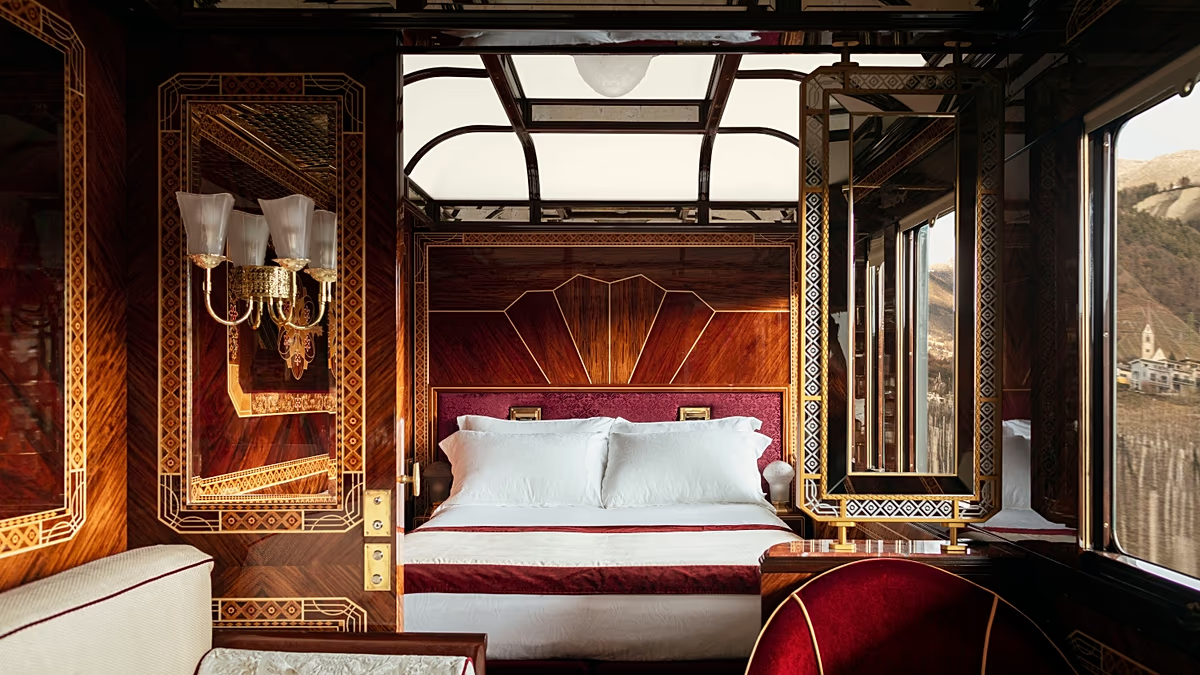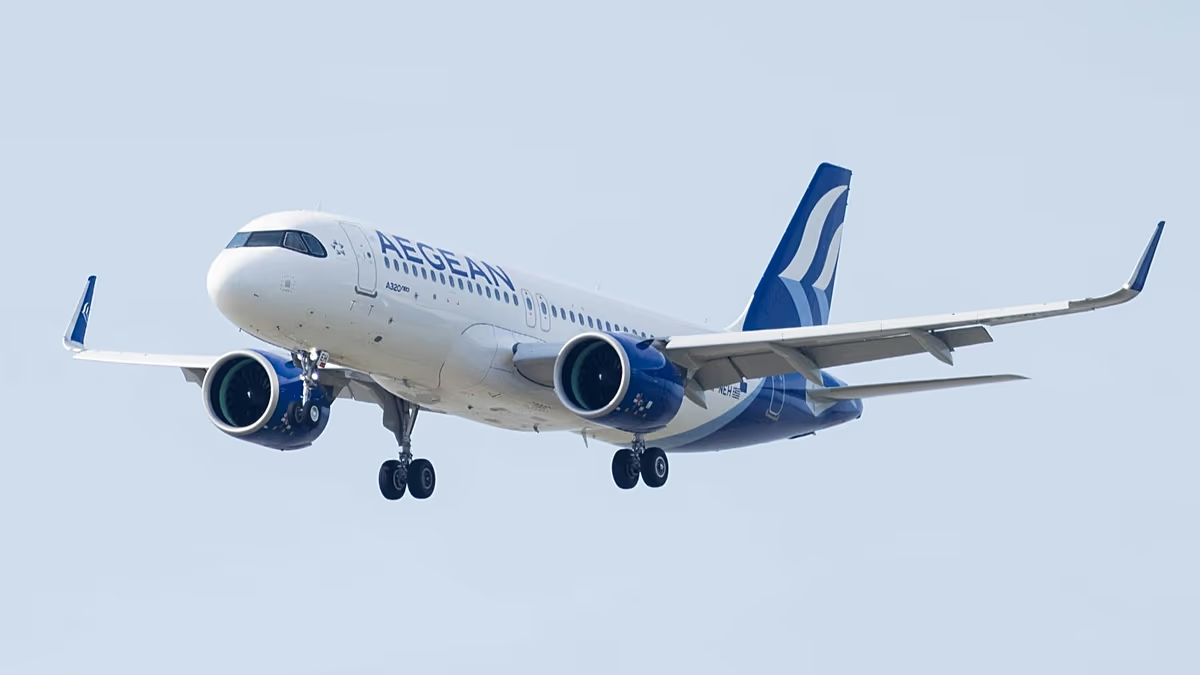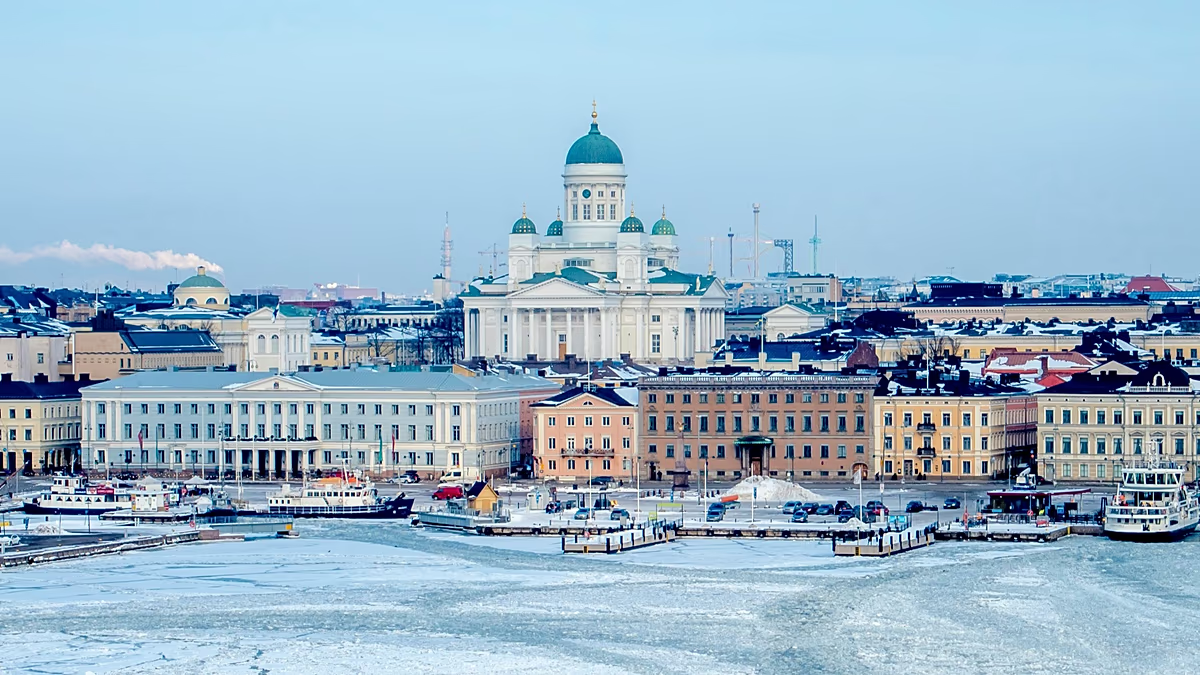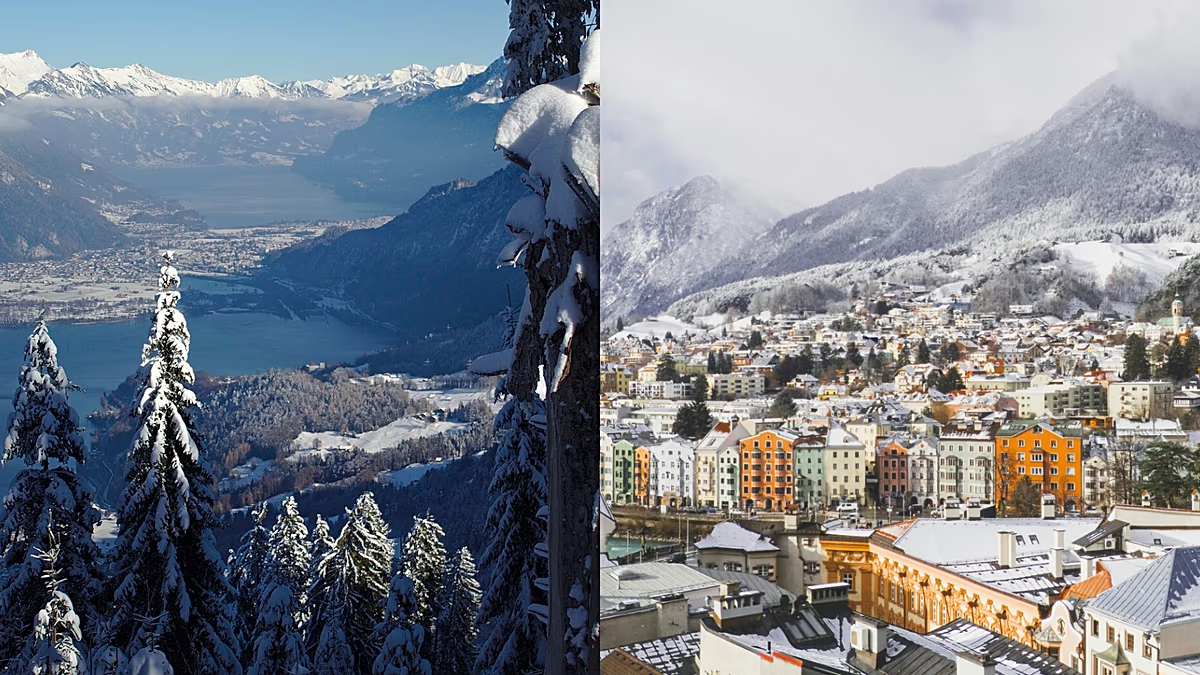



There was a time when the allure of the skies was unmatched, an era when boarding a commercial aircraft felt like the ultimate expression of modern sophistication and rapid transit. Today, however, that romanticized vision of aviation has largely evaporated, replaced by a gauntlet of logistical friction that begins long before your plane ever leaves the tarmac. We have all grown intimately familiar with the soul-crushing routine: the stressful packing limitations, the expensive and lengthy commutes to remote out-of-town airport terminals, the agonizingly slow security queues where you are forced to dissect your luggage, and the claustrophobic hours spent confined to a narrow seat with negligible legroom. In stark contrast, Europe is quietly undergoing a profound transport revolution that turns the clock back to a more civilized, elegant age of travel, powered by a rapidly expanding network of high-speed trains. Across the continent, savvy travelers are realizing that the old math of travel time is deeply flawed. When you factor in the hidden hours required to navigate airports, clear security, and travel to and from distant city outskirts, the railway is no longer just the scenic, eco-friendly alternative—it is quite literally the fastest way to get from point A to point B. By stepping directly from a bustling city center into a spacious, light-filled train carriage, you bypass the psychological toll of modern aviation entirely. This is not merely a shift in transportation logistics; it is a fundamental reclamation of the joy of the journey itself, proving that the shortest path between two European cultures is best measured not in flight paths, but in the steady, rhythmic glide of steel wheels on iron rails.
To truly understand how rail travel has conquered the sky, one needs to look no further than the iconic corridor connecting Brussels to Paris, or the legendary link between London and the French capital. If you were to book a flight from Paris to Brussels, the flight time itself might appear deceptively brief on paper—often clocked at under an hour. However, this figure is a mathematical illusion that ignores the grueling reality of the door-to-door journey, which requires navigating the sprawling concrete labyrinth of Charles de Gaulle Airport in Paris, boarding a flight, landing at Brussels Airport, and taking another transit link into the Belgian capital. When you choose the high-speed Eurostar (formerly Thalys) train, the equation shifts dramatically in your favor, condensing the entire trip into a mere one hour and twenty-two minutes of seamless, stress-free travel. You walk into the historic Gare du Nord in the heart of Paris just fifteen minutes before departure, find your spacious seat with ample luggage storage, and arrive at Brussels-South station before an airline passenger would even have finished clearing the security checkpoints. The same triumphant logic applies to the journey between London and Paris through the marvel of the Channel Tunnel. While a flight between these two global metropolises is notoriously plagued by tarmac delays, baggage fees, and the sheer distance of airports like Heathrow or Gatwick from their respective city centers, the Eurostar whisks passengers from London St Pancras International to Paris Gare du Nord in just over two hours. This remarkable efficiency transforms travel from a chore into a seamless transition, allowing business professionals and leisure seekers alike to work uninterrupted, read a book, or enjoy a leisurely coffee while watching the rolling hills of the French countryside blur past at speeds exceeding three hundred kilometers per hour.
Further south, Spain has constructed a masterpiece of high-speed rail infrastructure that has completely redefined the way the Iberian Peninsula moves. The jewel in the crown of this network is the historic route connecting the capital city of Madrid to the sun-drenched streets of Seville, a journey that once required a tedious drive or a convoluted flight process. With the introduction of the Alta Velocidad Española (AVE), Spain’s high-speed rail service, the trip between Madrid’s breathtaking Atocha station and Seville’s Santa Justa has been trimmed to a breathtaking two hours and thirty minutes. This route was the catalyst for Spain’s railway renaissance, proving so popular and efficient that it practically decimated the domestic air traffic between the two cities. Similarly, the highly competitive corridor between Madrid and Barcelona—once one of the busiest passenger air routes in the entire world—has been thoroughly conquered by the train. Today, high-speed trains zip between these two Spanish powerhouses in just two and a half hours, prompting a massive cultural shift as millions of travelers abandon the stress of regional airports in favor of the relaxed, civilized atmosphere of the rails. Onboard, passengers are treated to generous legroom, reliable Wi-Fi, and the freedom to walk around to a sleek café-bar car to enjoy a glass of Rioja or a plate of jamón. The physical experience of watching the rugged, dramatic Spanish landscape transition from the dry central plains of Castile to the coastal beauty of Catalonia provides a sensory connection to the country that is entirely lost when flying at thirty thousand feet, making the journey feel like an integral, deeply satisfying part of the travel experience rather than a sterile vacuum of lost time.
Italy offers perhaps the most dramatic and romantic example of high-speed rail triumphing over aviation, particularly on the highly traveled corridor connecting Milan, the nation’s fashion and financial powerhouse, to the ancient, historic capital of Rome. For decades, the domestic air route between Milan Linate or Malpensa and Rome Fiumicino was a crowded, expensive, and stressful monopoly dominated by the national airline. However, the introduction of the cutting-edge Frecciarossa (Red Arrow) trains operated by Trenitalia, alongside the fierce, market-disrupting competition from the private high-speed operator Italo, completely transformed the Italian landscape. Today, these sleek, Ferrari-red trains shoot through the heart of the Italian peninsula at speeds of up to three hundred kilometers per hour, connecting Milano Centrale to Roma Termini in just under three hours. The impact on Italian travel habits was immediate and profound; within a few years of the high-speed line’s completion, the domestic air market between the two cities essentially collapsed, with rail capturing over seventy percent of the passenger volume. It is easy to see why when you compare the sensory experiences of the two modes of transit. Instead of enduring the sterile, industrial hum of airport boarding gates, train travelers can purchase a freshly brewed espresso from the station bar, step onto a beautiful platform, and settle into a luxurious leather seat. As the train glides through the rolling clay hills of Tuscany and past the historic stone towns of Umbria, passengers can enjoy a smooth, quiet ride that allows for deep concentration, pleasant conversation, or a peaceful nap, arriving in the very center of Rome feeling completely refreshed, energized, and ready to explore the Eternal City.
The magic of European rail travel is not confined to individual countries; it lies in the seamless, borderless integration of networks that allow travelers to effortlessly traverse international frontiers. In Central Europe, the German Intercity Express (ICE) and Austrian Federal Railways (ÖBB) networks have created a fluid web of connectivity that renders short-haul flights obsolete. Consider the route from Munich to Nuremberg, a journey that takes a mere hour on the ICE, far faster than any flight could ever hope to be once you account for the journey to Munich’s distant airport. Even longer international journeys, such as the route connecting Munich to Vienna, have become highly competitive with flying, offering a peaceful four-hour journey that drops passengers directly into the cultural heart of the Austrian capital. What makes these train journeys so superior to flying is the concept of “reclaimed time.” On a flight, your journey is fragmented into dozens of small, stressful segments: showing your boarding pass, boarding the plane, waiting to take off, turning off electronics, waiting for the seatbelt sign to turn off, and then reversing the entire process upon landing. This constant disruption makes it virtually impossible to focus, relax, or enjoy yourself. On a train, however, once you find your seat, your time is entirely your own. You can set up a mobile office on a spacious table, enjoy a hot meal served on real china in the dining car, or simply gaze out the window as the diverse landscapes of Europe unfold before you in a cinematic, slow-motion panorama that provides a genuine sense of geographic scale and cultural transition.
Ultimately, choosing the train over a short-haul flight is more than just a logical calculation of time and convenience; it is a conscious embrace of a more mindful, sustainable, and deeply human way of exploring our world. In an era when we are acutely aware of the devastating environmental impact of aviation, opting for rail travel is one of the most powerful personal choices a traveler can make to reduce their carbon footprint, with trains emitting up to ninety percent less greenhouse gases per passenger than an equivalent flight. Yet, this environmental responsibility does not require a sacrifice of comfort or time; rather, it unlocks a premium travel experience that restores dignity, space, and peace of mind to the traveler. As European countries begin to actively ban short-haul domestic flights where viable train alternatives exist—a trend pioneered by France and closely watched by neighboring nations—the golden age of rail is not merely returning; it is being actively reinvented for the twenty-first century. With the exciting revival of overnight sleeper trains, like the Nightjet network, travelers can now fall asleep in Vienna and wake up to the smell of fresh croissants in Paris, turning transit into a magical, dreamlike experience. The verdict is clear: for those who wish to travel with style, speed, and soul across the European continent, the train is no longer just an alternative to the plane—it is the undisputed king of the journey, offering a beautiful, sweeping window to the world that an airplane window could never hope to match.