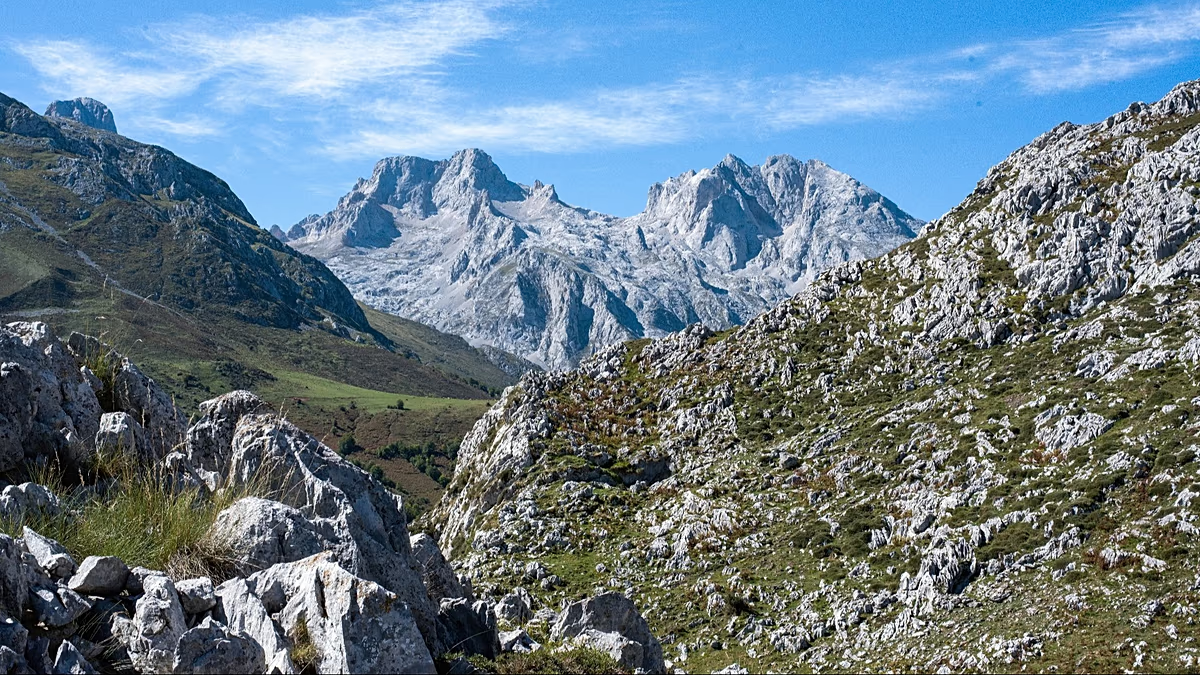






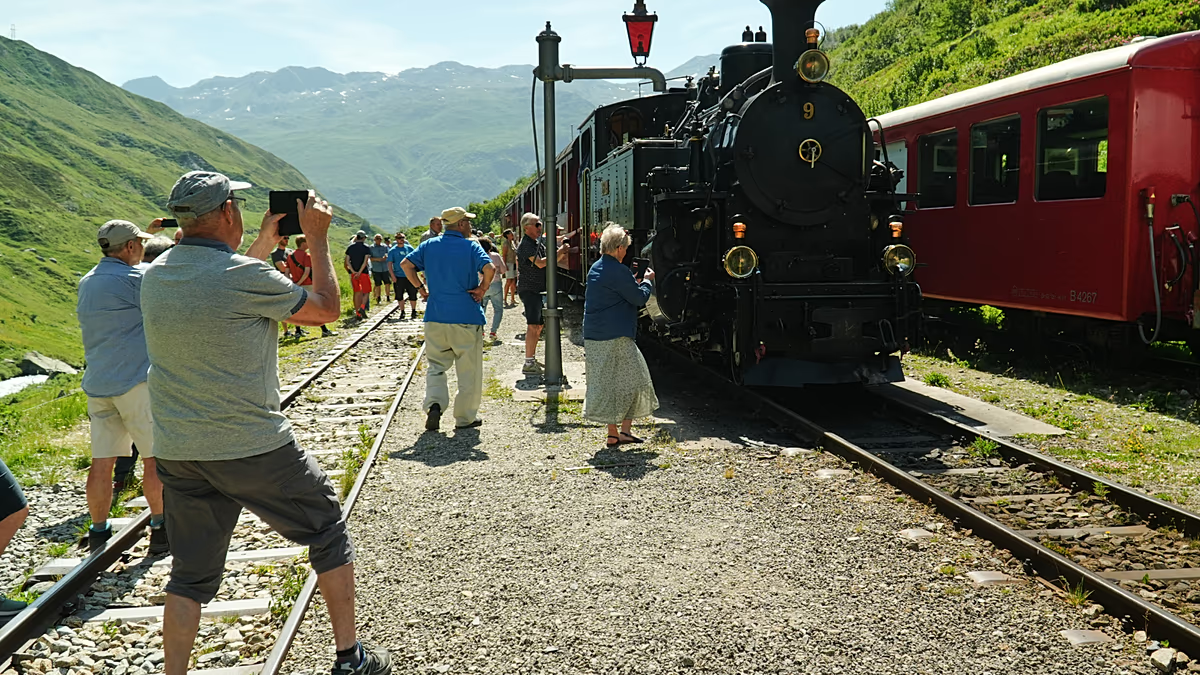
This weekend, local communities and railway enthusiasts from around the globe are coming together to celebrate a remarkable milestone: the centennial anniversary of one of Switzerland’s most breathtaking and historic mountain railways. As part of this lively celebration, vintage steam locomotives are once again chugging along the steep, winding tracks of the Furka Pass, offering passengers a nostalgic journey through some of the most striking Alpine scenery in the world. Rising to an altitude of 2,431 meters, this legendary pass is renowned for its dizzying hairpin turns, which famously served as the backdrop for Sean Connery’s thrilling car chase in the 1964 James Bond classic, Goldfinger. Long before Hollywood took notice, however, a pioneering steam train successfully completed the first continuous transit of this challenging route on July 3, 1926, establishing a vital lifeline that connected the Swiss cantons of Uri and Valais for generations to come.
The survival of this historic railway is a testament to the power of community, passion, and sheer determination. In the early 1980s, the opening of a modern base tunnel deep within the Alps diverted daily rail traffic and led to the abandonment of the high-altitude mountain line. Rather than letting this engineering marvel rust away into history, an army of dedicated volunteers—affectionately known as the railway’s “pioneers”—stepped in to save it. These enthusiasts poured countless hours of hard work into painstakingly restoring, maintaining, and operating the historic infrastructure. Thanks to their efforts, the first stretch of the line reopened as a heritage railway in 1992, and by 2010, the entire 18-kilometer scenic track was fully restored to its former glory, allowing these historic trains to run exactly as they did a hundred years ago.
Today, the Furka Steam Railway operates exclusively during the warm summer months as a beloved tourist attraction, ferrying excited visitors between the charming stations of Realp and Oberwald. Passengers on these summer excursions can step back in time inside beautifully preserved wood-lined carriages, looking out the windows to take in a sensory feast of rushing rivers, vibrant alpine meadows, and lush green pastures where patches of winter snow still linger even in the heat of July. Travelers from all over the world gather to experience these rides, with recent passengers describing the voyage as absolutely magical. For many, like Kurt Guldemann, a retired Swiss railway employee, the journey is a moving tribute to the sheer genius and endurance of early 20th-century engineering.
At the heart of this entire operation are the volunteers who bring these massive iron beasts to life, a task that requires immense skill, patience, and a deep, personal connection to the machinery. Bernhard Lang, one of the veteran volunteer drivers, explains that mastering a vintage steam locomotive is an art form that can take several years of hands-on practice. He describes the locomotive not as a cold piece of metal, but as a living, breathing entity that drivers must learn to truly understand on an intuitive level. To successfully navigate the steep Alpine climbs, a driver must become attuned to the subtle feedback of the train—learning to feel its unique vibrations, listen to its rhythmic breathes, smell the burning coal and hot oil, and anticipate exactly how it will behave on the tracks.
This profound connection to the past is shared by the younger generation of volunteers as well, proving that the romance of steam travel is far from dead. Jacob Kallert, a 21-year-old German transport engineering student who serves as the railway’s youngest train manager, emphasizes the importance of listening closely to the heartbeat of the locomotive. For Jacob, every hiss of steam and click of the wheels tells a story, offering an authentic, sensory link to a bygone era that can still be felt in the present day. This shared passion creates an incredibly tight-knit community among the volunteers, with worker Sergio Rovelli joking that everyone who helps out inevitably catches the “Furka Virus”—an affectionate term for the undeniable, lifelong obsession that keeps volunteers returning to the mountain year after year.
For travelers looking to experience this living history for themselves, the journey offers incredible value, with one-way tickets starting at 46 Swiss francs (approximately €50) for a leisurely trip that lasts just under two and a half hours. The centennial festivities, which kicked off on Friday and continue through the weekend, serve as a beautiful reminder of the power of human preservation. By keeping these vintage trains running, the volunteers of the Furka Pass have done more than just save a collection of old locomotives; they have preserved a piece of Switzerland’s cultural soul, ensuring that the magic, sights, and sounds of the golden age of rail travel will continue to echo through the high Alpine peaks for generations to come.