

Every single one of us harbors a quiet, deeply personal travel bucket list—a mental treasury of spectacular destinations and extraordinary experiences that we promise ourselves we will witness “some day.” These are not the simple, spontaneous road trips or budget-friendly weekend getaways we book on a whim; rather, they are the grand, sweeping odysseys of a lifetime. They are the high-stakes, deeply romanticized journeys reserved for those momentous, once-in-a-lifetime milestones like honeymoons, retirements, or significant wedding anniversaries. We dream about standing in absolute, breath-hushed silence on a frozen tundra while the neon green and violet ribbons of the Northern Lights dance across the polar sky. We envision ourselves walking along the volcanic, ancient shores of the Galápagos Islands, locked in silent conversation with creatures that look as though they stepped right out of prehistory. Or perhaps we fantasize about waking up in an overwater villa in the Maldives, where the turquoise waters of the Indian Ocean lap gently against the wooden stilts beneath our beds. In our minds, these escape fantasies are painted in soft, glowing watercolors of pure joy, effortless romance, and endless relaxation. Yet, we rarely pause to translate these beautiful mental pictures into the harsh, black-and-white realities of a bank statement or credit card bill. We buffer these thoughts with a vague, comfortable assumption that they will simply be “expensive,” promising ourselves that we will save up enough resources to make them happen without ever truly defining what “enough” actually means in today’s global economy. Now, a massive new analytical study from the travel insurance experts at SquareMouth has pulled back the velvet curtain on the luxury travel industry, revealing the true, undeniable cost of our collective wanderlust in the year 2026. By digging deep into real-world consumer behavior, they have illuminated exactly what it costs to transform our most cherished travel dreams into actual, physical footprints on the earth, proving that while our desires may be limitless, the cost of fulfilling them is very real, very high, and meticulously documented.
To build this comprehensive, highly revealing financial map of global exploration, the research team at SquareMouth performed a monumental data-mining operation. They carefully analyzed the reported trip costs from more than 100,000 individual travel insurance policy sales, combined those extensive findings with detailed surveys of over 6,000 active, high-spending travelers, and synthesized real-time pricing trends from major flight and hotel reservation platforms like Google Flights and Kayak. What emerged from this mountain of data is an incredibly clear and fascinating portrait of modern travel economics, highlighting the fifteen most expensive destinations on our planet for 2026. The empirical findings reveal an unmistakable truth: the price of a journey is directly proportional to its physical isolation, infrastructural challenges, and logistical complexity. It is not merely a matter of high-end hotels charging premium rates for luxury linens or elite spa treatments; rather, it is the sheer physics of geography that drives these prices into the upper atmosphere. When a destination is located at the absolute edge of the map, every single raw material, every drop of clean water, every fresh head of salad greens, and every gallon of fuel must undergo a complex, multi-stage journey of its own just to greet you when you arrive. The study effectively categorized these high-priced escapes into three distinct genres: the extreme polar expeditions, which require heavy-duty ice-breaking vessels and specialized survival gear; the ultra-isolated tropical islands, which rely entirely on ocean-bound supply chains; and the deep wilderness safaris, where low-impact, high-cost conservation models deliberately restrict tourist density to protect fragile ecosystems. By looking at these categories, we begin to understand that a high travel price tag is often the steep ethical fee required to keep these pristine environments untouched by the destructive hands of overtourism, ensuring they remain wonderful for generations to come.
Standing boldly at the absolute pinnacle of this newly released global expense index is Greenland, a vast and wild land of dramatic mountain peaks, colossal fjords, and massive ice sheets that has rapidly captured the imaginations of modern adventure travelers. However, entering this quiet Arctic paradise requires a vacation budget that is anything but quiet, with the average daily trip cost for a traveler visiting Greenland climbing to an astonishing $1,171 (approximately €1,027). When you begin to unpack the daily, unavoidable realities of traveling through this subarctic country, the costs pile up with staggering speed: renting a basic car to navigate the rare, isolated coastal roads will set you back about $110 (€97) per day, while booking a standard weeknight in a hotel—even completely outside of the weekend rush—demands an average price of $227 (€200). Even a simple, casual dinner at an inexpensive local diner will cost about $36.03 (€31.60), reflecting the massive financial burden of shipping fresh ingredients over thousands of miles of frozen ocean to an island where agricultural farming is virtually impossible. Not far behind in this category of freezing, high-latitude wonders is Antarctica, securing the fourth place spot on the global list. For those daring souls who wish to walk among the massive colonies of penguins on the great white continent, the financial barrier to entry begins long before you even set foot on a research vessel, with average plane tickets to South American departure ports running around $1,899 (€1,665), and the actual daily itinerary costs on the cruise itself soaring to a breathtaking $1,511 (€1,325). These frozen polar landscapes represent the ultimate frontier of modern travel, where the high price of admission guarantees safe passage through some of the most beautiful, hostile, and strictly protected environments on Earth, reminding us that wild nature holds an immense and undeniable economic value in our rapidly changing world.
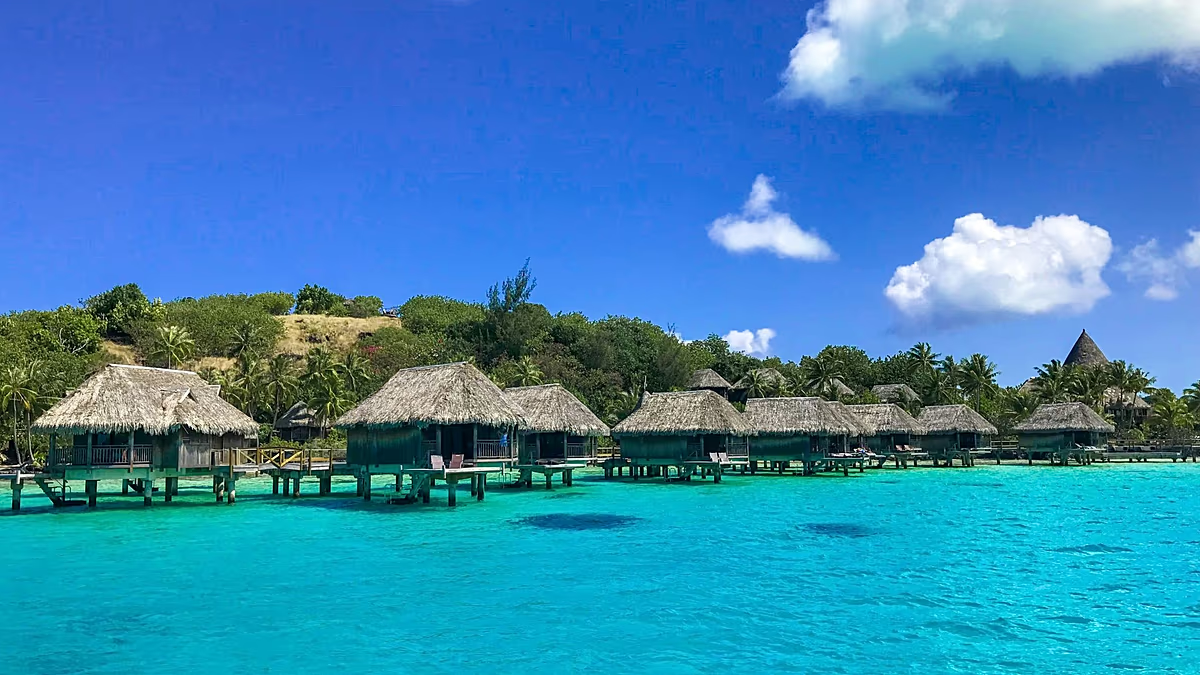
If your natural travel sensibilities pull you toward the warm, sun-drenched waters of the tropics rather than the icy, wind-whipped edges of the polar caps, you will find that island paradise carries an equally steep financial premium. The British Virgin Islands claim the second spot on the list, where the average daily cost of living out your marooned-billionaire fantasies is $925 (€811), and a single weeknight in a local hotel averages a stunning $1,137 (€997). French Polynesia follows closely in third place, exhibiting a fascinating economic structure where the overall daily trip cost is a slightly lower $756 (€663), but the average weeknight hotel stay skyrockets to an incredible $1,382 (€1,212). This represents the ultimate manifestation of the “overwater bungalow” dream, where travelers are paying a steep premium not just for a comfortable bed, but for the complex architectural engineering required to let them sleep safely directly above a fragile, living coral reef. Rounding out the top five is the Maldives, a legendary archipelago of low-lying coral atolls in the heart of the Indian Ocean, where visitors spend an average of $1,072 (€940) per day, and hotels charge an average of $1,249 (€1,096) for a basic weeknight stay. These mid-ocean island nations operate as closed loops of extreme culinary and structural luxury; because they produce very little locally besides fresh seafood and coconuts, every high-thread-count sheet, every bottle of fine European wine, and every heavy-duty air-conditioning unit must be imported via cargo containers and distributed across the ocean by fleets of private seaplanes, turning a simple beach holiday into an incredibly complex engineering, logistical, and financial marvel that few other places on earth can replicate.
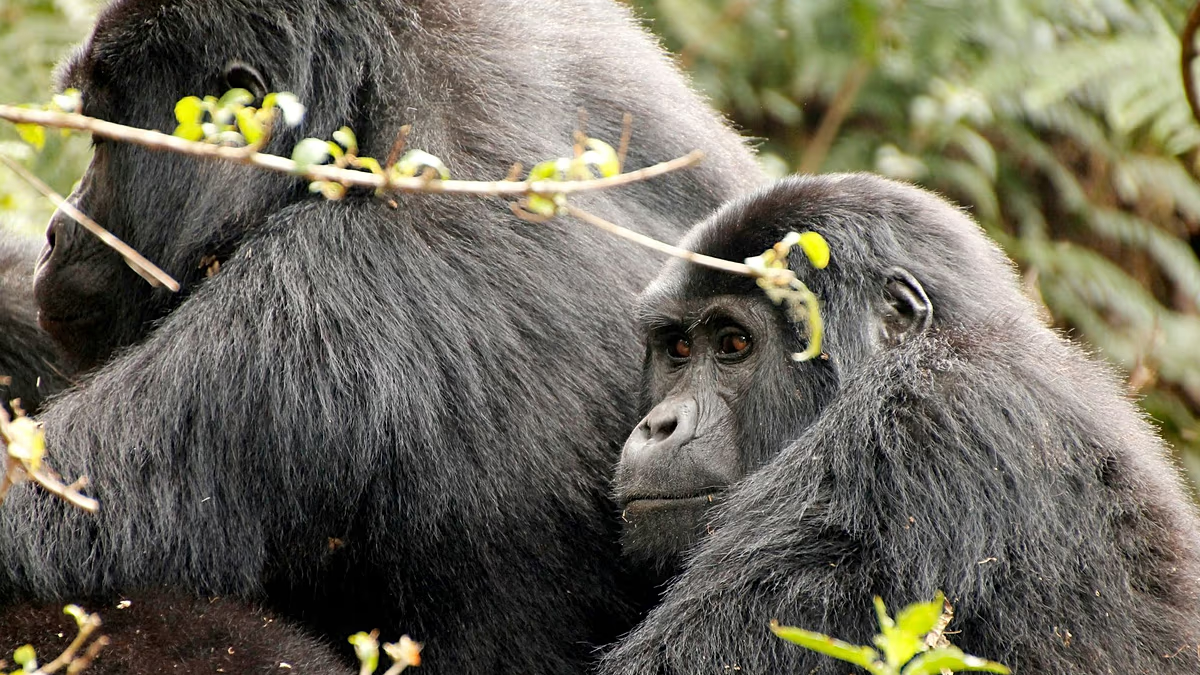
Moving further down the rankings of the world’s most costly travel destinations, we discover that the luxury of wide-open spaces, profound natural silence, and wild nature has become one of the most premium commodities of our modern, hyper-crowded era. Switzerland claims the sixth spot, representing alpine perfection where high local wages, meticulous public transportation infrastructure, and a naturally strong currency make even a humble train ticket or a modest block of local cheese feel like a luxury financial investment. Below Switzerland, we find a heavy concentration of African nations celebrated for their legendary wildlife and conservation-focused hospitality structures. Zimbabwe ranks seventh globally, followed closely by Botswana, which tied for ninth place alongside the Caribbean island paradises of Anguilla and Saint Lucia, while Namibia and Zambia round out the twelfth and fifteenth positions respectively. In countries like Botswana and Zimbabwe, the high cost of travel is actually a deliberate, carefully crafted policy design: these nations have pioneered a highly successful “low-volume, high-yield” tourism model, choosing to limit tourist numbers to protect delicate river deltas and dry savannahs by keeping national park fees and private lodge prices intentionally high. This ensures that the few travelers who do visit contribute directly to the heavy financial burden of anti-poaching patrols, community education programs, and wildlife reservation, turning their dream safari into an active act of conservation that keeps the lions, elephants, and leopards of Africa safe. Similarly, places like Iceland (tied at twelfth) and Norway (fourteenth) demand a premium because of high northern wages, strict environmental regulations, and a desire to prevent the destructive effects of overtourism on their dramatic, fragile landscapes, cementing their places as exclusive, high-value destinations for the conscious traveler.
Ultimately, looking at this list of the world’s most costly travel destinations reminds us that the way we explore our planet is shifting from casual, low-effort sight-seeing to deeply intentional, long-term personal investment. These staggering numbers—whether it is a thousand dollars a day in the icy wilderness of Greenland or a massive hotel bill in the turquoise lagoons of French Polynesia—should not discourage us, but rather inspire us to think differently about how, why, and when we travel. They invite us to view our personal bucket lists not as a series of quick, superficial items to cross off, but as meaningful chapters of life that require patient preparation, careful financial planning, and a deep respect for the places we visit. When we save for years to experience these remote landscapes, we are not just buying a plane ticket or a temporary hotel room; we are investing in the conservation of wild places, supporting remote communities that rely heavily on sustainable tourism to survive, and purchasing a lifelong perspective that can only be found at the edges of the Earth. In a world that often feels hyper-connected and easily accessible, these high price tags are a gentle reminder that some of the planet’s most beautiful secrets are still protected by their sheer distance and natural isolation, requiring us to pay our dues to the earth before we can witness its greatest beauties. The true value of travel is never found on a receipt, but rather in the quiet, priceless moments of awe that stay with us long after we have returned home, proving that some journeys are worth every single penny we spend to make them a reality.