


We have all bin there: you board an economy flight, clutching your boarding pass with a quiet, desperate hope that the middle seat next to you remains empty. The middle seat is the undisputed purgatory of modern air travel. It is a battleground of unclaimed armrests, awkward eye contact, and cramped shoulders, where window and aisle passengers alike pray for a little breathing room, and the poor souls actually stuck in the center dream of escape. Especially on mid- to long-haul journeys, having that buffer space can transform a grueling, claustrophobic ordeal into a genuinely pleasant trip. Recognizing this universal traveler anxiety, airlines are finally waking up to the realization that personal space is the ultimate luxury, prompting a wave of creative cabin innovations designed to solve the “middle seat dilemma” once and for all.
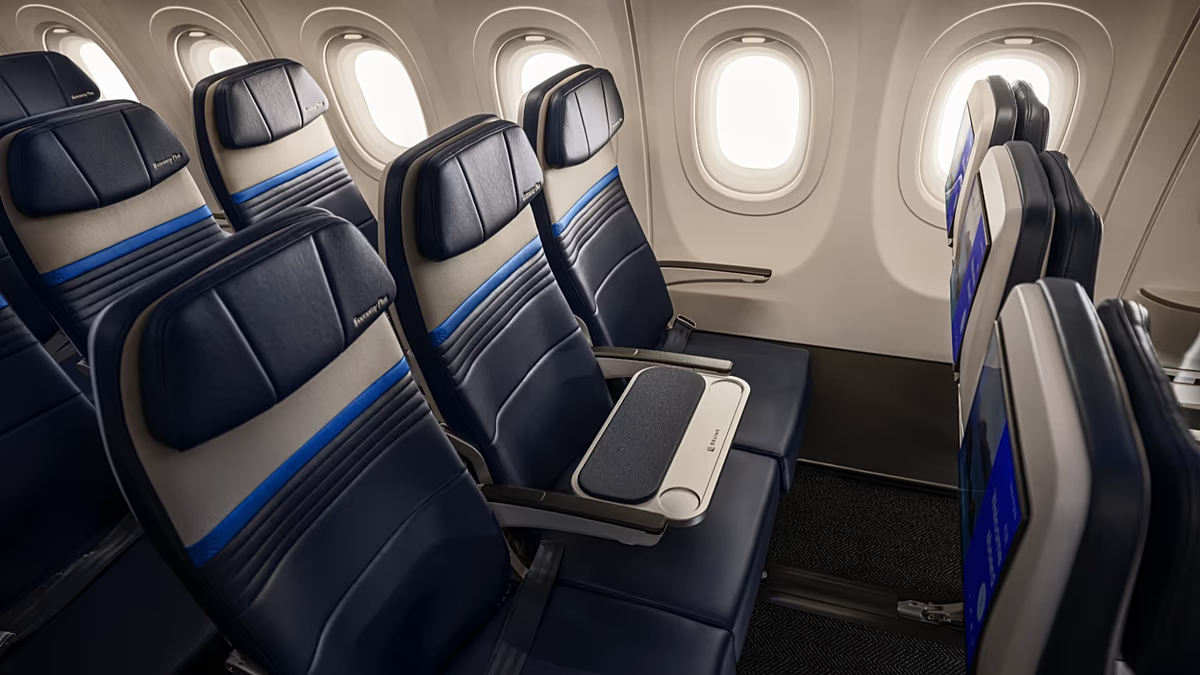
In Europe, carriers like Wizz Air and Air France have pioneered schemes allowing passengers to purchase a neighboring empty seat or even secure an entire row for a fee. Now, United Airlines is taking this comfort-first philosophy to the next level with a series of major cabin overhauls aimed at redesigning the economy experience. Following its earlier announcement of the “Relax Row”—a feature launching in 2027 that lets passengers convert a trio of economy seats on widebody Boeing aircraft into a lie-flat couch after takeoff—United has unveiled another game-changing option for its Economy Plus cabin. On its soon-to-arrive Airbus A321XLR aircraft, the airline is introducing a dedicated row where the middle seat is permanently blocked out and replaced with a shared cocktail table, offering window and aisle passengers unprecedented elbow room.
While this roomier Economy Plus layout will initially debut on just one row of United’s fifty new long-range Airbus A321XLRs, the airline has strongly hinted that it could expand the concept to other jets in its fleet if it proves popular. Tickets for these specialized seats are scheduled to go on sale later this year, with flights commencing shortly after. By creating a physical barrier and dedicated workspace between passengers, United is taking a page from the playbook of major European legacy carriers like Lufthansa and Finnair, which have long kept middle seats vacant in their regional business class cabins to give business travelers more privacy and comfort. United expects this move to make it the only US legacy carrier currently offering this exact kind of guaranteed-empty-middle-seat configuration in its premium economy tier.
This latest cabin update is part of a massive, multi-billion-dollar push across the domestic airline industry to target travelers who are willing to pay a premium for extra comfort without committing to the full expense of a first-class ticket. Andrew Nocella, United’s Executive Vice President and Chief Commercial Officer, emphasized that the airline is investing heavily from “nose-to-tail” to give passengers more flexibility and choices across all cabins. He noted that the new long-range Airbus XLR is designed to offer a top-tier experience at every price point, featuring all-aisle-access lie-flat seats in United Polaris business class alongside these innovative, extra-roomy Economy Plus configurations.
However, this rapid fragmentation of the airline cabin has sparked a quiet debate among frequent flyers. As airlines continue to slice their cabins into increasingly specific tiers, add-ons, and subscription-style perks, the gap between the budget-conscious traveler and the premium flyer is wider than ever. Some travelers express growing frustration over “nickel-and-diming,” where amenities and space that were once considered standard are now hidden behind hefty upcharges and complex booking classes. While legacy competitors like Delta Air Lines have leaned heavily into premium-first strategies that prioritize high-paying customers over bargain hunters, the industry risk is that average flyers may begin to feel left behind in the very back of the aircraft.
In response to these concerns, United’s leadership has pushed back against the narrative that they are solely chasing high-net-worth big spenders. Execs argue that upgrading the premium economy experience actually democratizes comfort, offering a realistic, attainable upgrade for leisure travelers who want to treat themselves on a special trip without paying thousands of dollars for business class. Ultimately, the death of the middle seat—even if it is starting in just one row at a time—signals a shifting philosophy in commercial aviation. In an era where corporate travel is changing and personal comfort is highly valued, airlines are realizing that the secret to winning over passengers might just be as simple as giving them a little room to breathe.