



Golf has long been one of the most reliable engines of the sports travel sector, and across Europe the choices for a memorable golfing getaway are almost endless. From sun-soaked coastal links to mountain-framed fairways, the continent is dotted with courses that can satisfy any golfer’s imagination. But for many travelers, the hardest part isn’t choosing which club to hit out of the bag; it’s deciding where to go, especially when the desire is to find somewhere a little different, a little quieter, and a little more authentic than the usual well-trodden golfing hotspots. That desire for discovery is now backed by real data. According to Golfbreaks, UK Google search interest in “golf package holiday” jumped a staggering 750% year on year, while searches for “quiet golf courses” rose by almost 140% over just three months. These figures, current to September 2026, point to a growing appetite for golf travel that feels personal rather than packaged, serene rather than crowded. In response, the golf travel operator’s experts have identified seven destinations they consider genuinely underrated, supported by internal booking data comparing 2026 with the equivalent period in 2025. The list includes Varna in Bulgaria, which leads the way, alongside two destinations in Portugal, and further picks in Spain, Norway, France, and Greece. These are not places that dominate glossy magazine covers, but they offer something perhaps even more valuable: championship-quality golf in spectacular settings, often at a fraction of the cost and with a fraction of the crowd.
Demand, of course, is one thing, but why are golfers increasingly drawn to the road less traveled? Part of the answer lies in the changing definition of a great golf holiday. For decades, reputation and history were the main measures of a course’s worth, and players flocked to the same celebrated resorts year after year. But as travel becomes more adventurous and golfers more experienced, there is a growing appreciation for places that offer a sense of discovery. Cameron Ritchie, Head of Product – Europe at Golfbreaks, captures this shift beautifully. “Golf is steeped in tradition, and course quality is often judged by history and reputation,” he says. “But some of Europe’s most rewarding experiences can be found away from the established resorts. Choosing a less conventional destination often means quieter courses, better value for money and a more authentic experience, while still enjoying championship-quality golf in spectacular surroundings.” That sentiment resonates strongly with anyone who has ever stood on a packed tee box and wondered if the holiday is really about relaxation or simply another queue. The underrated path offers something different: unhurried rounds, fairways framed by nature rather than housing developments, and the chance to actually feel like a traveler rather than a tourist. It is no surprise, then, that booking data shows significant growth in demand for these hidden gems. Bulgaria, Portugal, Norway, and Greece are all emerging as serious golf destinations, not because they are trying to imitate the classics, but because they offer their own unique character, climate, and scenery. The result is a golf holiday that feels less like ticking off a bucket list and more like creating one.
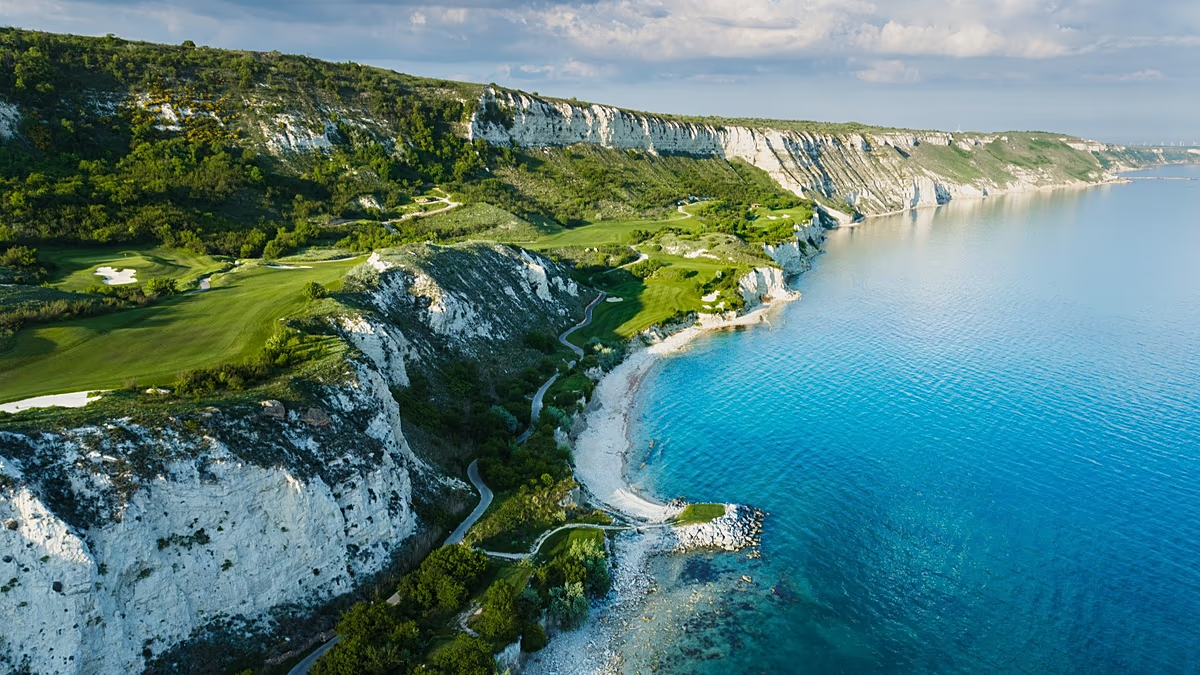
Nowhere is this more evident than in Varna, Bulgaria, a destination that has quietly been building a reputation among golfers in the know. Bulgaria is often overlooked in discussions about European golf, but that is starting to change as players discover its excellent-value courses and hotels. Golfbreaks reports a 173% rise in demand in 2025, followed by a further 47% increase in 2026 to date, and it is easy to see why. The area around Varna, on Bulgaria’s Black Sea coast, offers a combination of dramatic coastal scenery and thoughtfully designed courses. The headline attraction is Thracian Cliffs Golf & Beach Resort, a course that manages to deliver sea views from every single hole. It is the kind of place where the landscape does much of the talking, with cliffs tumbling toward the water and fairways carved into the natural terrain. For golfers who want to stay and play, there are also excellent options like BlackSeaRama Golf & Villas and Lighthouse Golf & Spa Resort. Each has its own personality, but all share that sense of space and calm that is so often missing from busier destinations. Playing golf in Varna feels like a genuine escape, with the Black Sea breeze adding an element of unpredictability and the surrounding countryside inviting exploration between rounds. It is proof that a destination does not need a long golfing pedigree to deliver an unforgettable experience; sometimes it just needs the right combination of land, sea, and a willingness to be a little different.
Further west, the Tróia Peninsula and Comporta in Portugal are carving out their own niche in the golf world. This stretch of coast has long been better known for surfing than for golf, with wild beaches and a laid-back atmosphere attracting a different kind of traveler. But Golfbreaks data shows demand is up 85% year on year, suggesting that golfers are catching on to the area’s unique appeal. The golf offering is impressive, with the Dunas and Torre championship courses at Terras da Comporta providing a modern, challenging test, while the Robert Trent Jones-designed Tróia Golf Club adds a touch of classic design. Between rounds, the beaches are spectacular, and the Sado Estuary offers opportunities for wildlife watching and quiet walks. It is a destination that encourages a slower pace, where golf and nature sit side by side. Meanwhile, on the other side of the Iberian Peninsula, the north-east of Majorca offers a different kind of underrated escape. Away from the busy streets of Palma and the crowded south-western resorts, this part of the island feels more like the traditional Majorca that travelers once fell in love with. Club de Golf Son Servera, the island’s only private members’ club, still welcomes visitors, offering tree-lined fairways and water hazards that demand accuracy. Capdepera Golf Club brings mountain scenery and sweeping Mediterranean views, while Club de Golf Alcanada is another excellent option in the area. When the round is finished, there are quiet beaches and traditional towns to explore, giving the holiday a sense of place that goes far beyond the fairways.
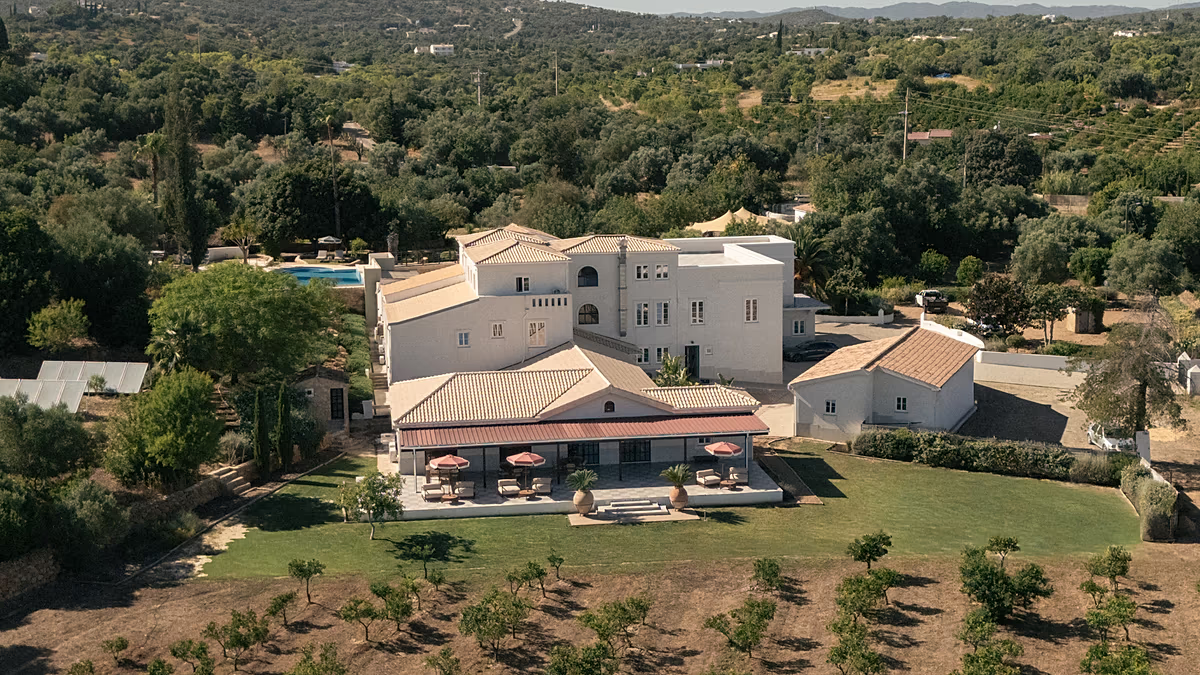
For those willing to travel even further off the beaten path, Gimsøya in Norway offers one of the most extraordinary golf experiences in Europe. Here, above the Arctic Circle, Lofoten Links Golf Club invites players to tee off beneath the midnight sun during the summer months. The coastal layout winds through dunes and rugged terrain, framed by dramatic sea and mountain views that seem almost too beautiful to be real. It is golf at its most raw and elemental, where the weather can change in an instant and every shot feels like an adventure. Lofoten Links Lodges provides a comfortable and stylish base nearby, allowing golfers to fully immerse themselves in the remote landscape. It is not the kind of place you visit for a quick round; it is the kind of place that stays with you long after you have packed away your clubs. Back in more temperate climates, Biarritz in France offers a fascinating mix of history and modern challenge. Golf de Biarritz le Phare is one of the oldest golf courses in France, combining a long and storied past with fast greens and challenging bunkers that still test today’s players. Nearby, Golf d’Arcangues welcomes golfers with rolling terrain and views of the Pyrenees, while Golf de Seignosse expands the regional choice with its own distinctive character. In Portugal, the charming town of Tavira in the eastern Algarve is often overshadowed by the glitz of Vilamoura and Albufeira, but it has a quiet charm that is hard to resist. Quinta da Ria Golf Club overlooks the Ria Formosa Natural Park, while neighbouring Quinta de Cima offers undulating fairways and water hazards. Monte Rei Golf Resort adds a Jack Nicklaus Signature course to the mix, making Tavira a destination that combines excellent golf with authentic Portuguese life. Finally, Costa Navarino in Greece has long flown under the radar, but that is starting to change with a 140% rise in demand. Its four golf courses include The Dunes and The Bay, along with the International Olympic Academy Course and The Hills Course, the latter two designed by José María Olazábal and opened in 2022. Together, they offer variety, beauty, and a distinctly Mediterranean atmosphere.
What unites these seven destinations is not just their underrated status, but the way they remind us why golf travel matters in the first place. A great golf holiday is never really just about the golf. It is about the feeling of stepping onto a tee box and not knowing exactly what the day will bring. It is about the sound of birdsong between shots, the scent of pine or sea salt in the air, and the conversations that happen as you walk down the fairway with old friends or new ones. It is about discovering a corner of the world that you did not expect to fall for, and realizing that the best memories often come from the places that were not on your radar. These underrated destinations offer all of that and more. They give golfers quieter courses, better value, and a more authentic experience, without sacrificing quality. They invite travelers to explore beyond the resort gates, to taste local food, to wander through historic towns, and to feel like a guest rather than just a customer. In a world where so many travel experiences have become predictable and crowded, there is something deeply appealing about going against the grain. Whether it is chasing the midnight sun in Norway, walking the cliffs of Bulgaria, or soaking up the quiet elegance of Portugal’s eastern Algarve, the underrated path is becoming the most rewarding one. So the next time you are planning a golf holiday, perhaps look beyond the obvious names. The fairways may be a little less famous, but the memories they create are every bit as rich. Sometimes the best course of action is simply to explore.