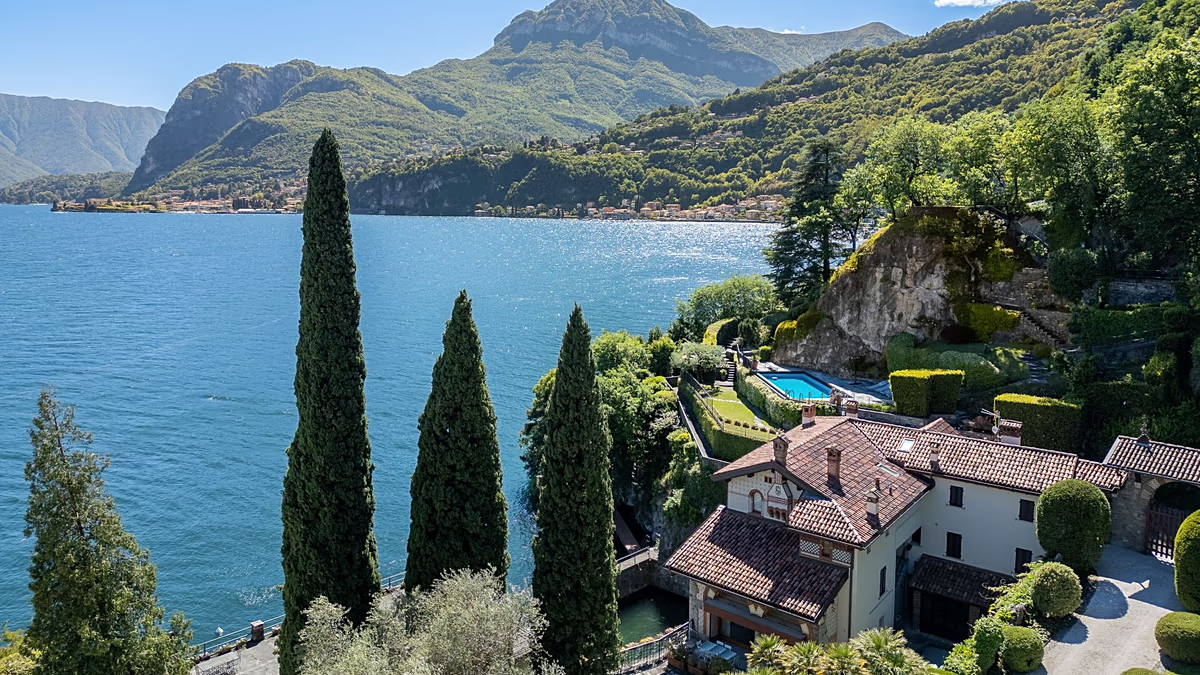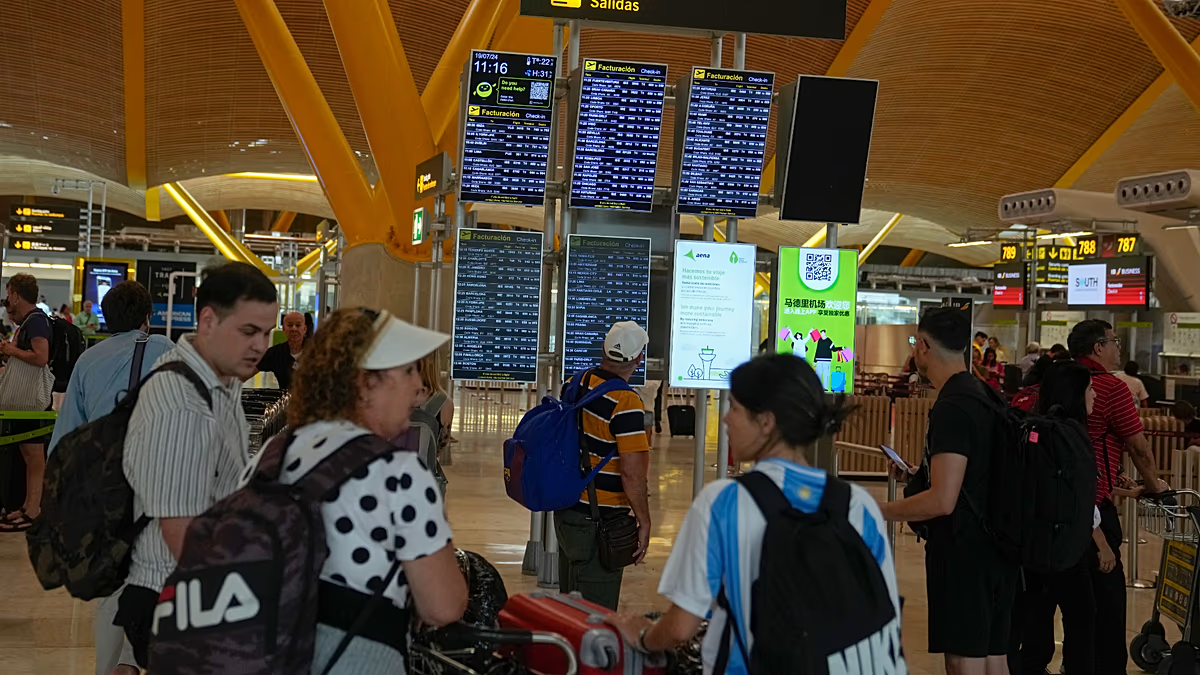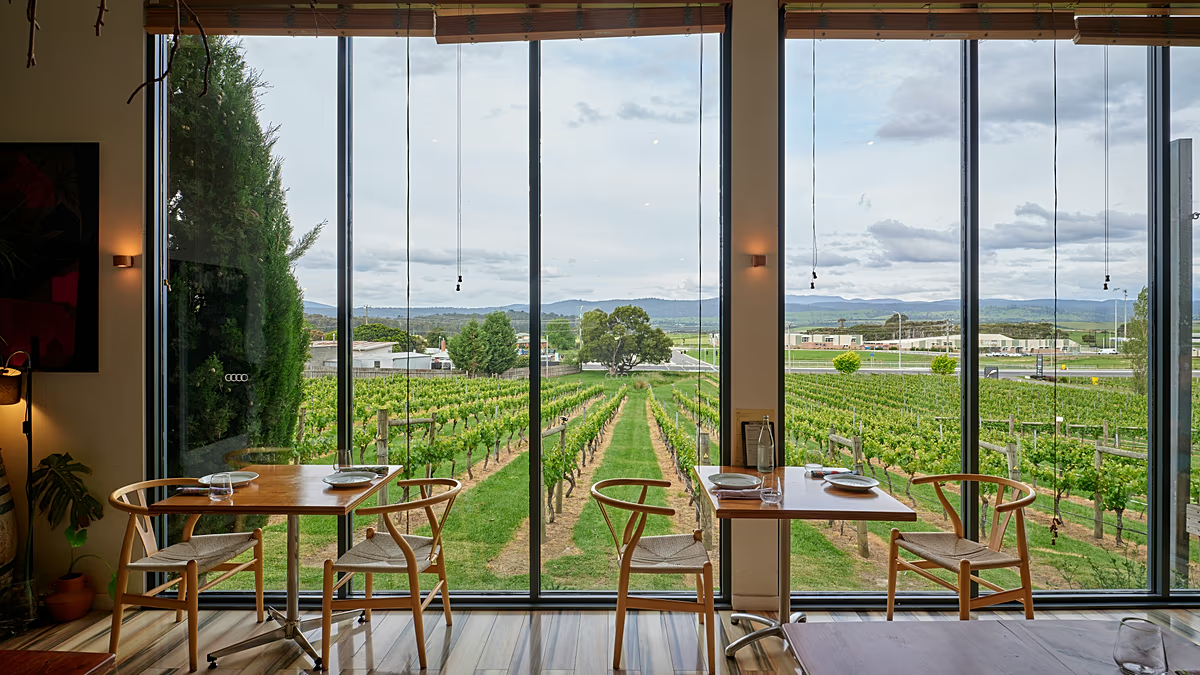



The glittering allure of Europe has always been a powerful siren song, drawing millions of dreamers, wanderers, and pleasure-seekers to its ancient stone pathways and sun-drenched coastlines. Today, despite a rising tide of local discontent, environmental warnings, and desperate municipal measures to curb the crowds, this magnetic pull has only intensified. Recent data from Eurostat and national tourism boards paint an astonishing picture of a continent overflowing with visitors, revealing that Europe’s classic, hyper-popular destinations are not just maintaining their status—they are breaking historical records. Across the European Union, tourist establishments registered nearly three billion overnight stays in a single year, a statistic that reflects an insatiable global appetite for the tried-and-true classics. This monumental influx of travelers has transformed the continent’s most iconic landscapes into living arenas of cultural tension. Behind the dizzying numbers lies a delicate and deeply human paradox: the very places we yearn to experience for their timeless beauty feel as though they are being slowly worn away by the sheer weight of our admiration. From the grand boulevards of Paris to the cliffside tavernas of Santorini, the collective human urge to witness these legendary spaces firsthand has overridden the growing consciousness of overcrowded streets, long queues, and rising costs. This persistence reveals a fascinating truth about modern humanity: when given the chance to explore the world, the vast majority of us still choose the shared cultural vocabulary of Europe’s traditional crown jewels, prioritizing the deep psychological satisfaction of personal pilgrimage over the quiet promise of the untrodden path.
To walk through the historic quarters of Barcelona, Florence, or Palma de Mallorca today is to witness the front lines of a quiet war for the soul of the city. For the residents who call these magical places home, the endless stream of rolling suitcases on cobblestones has transformed from a seasonal annoyance into an existential crisis. The frustration has boiled over into spectacular public protests that have made headlines worldwide, from angry locals targeting diners with water pistols on Barcelona’s La Rambla to massive, passionate rallies in the Canary Islands demanding a fairer distribution of wealth and resources. The human cost of this tourism boom is felt daily in the ordinary rhythms of local life; neighborhood bakeries are replaced by artisanal gelato shops catering to tourists, and long-standing apartment buildings are converted into highly profitable short-term holiday rentals, driving rents to astronomical heights and forcing young locals to abandon their home cities. In response, municipal governments are desperately pulling every lever at their disposal, introducing day-tripper entry fees in Venice, imposing steep tourist taxes, capping cruise ship arrivals, and even launching defensive advertising campaigns urging rowdy tourists to stay away. Yet, these measures seem to do little to deter the global traveler. For a local resident, the city has become a stage set where they are treated as mere backdrop characters in other people’s vacation photos, creating a profound sense of displacement within their own neighborhoods and fueling a heartbreaking sense of loss for the communal spirit that once defined these urban sanctuaries.
On the other side of this delicate equation sits the traveler, driven by an incredibly potent mixture of romanticized history, cinematic nostalgia, and the inescapable influence of modern social media algorithms. We must ask ourselves why we continue to crowd into these overwhelmed spaces when we are fully aware of the chaos that awaits us. The answer lies in the deeply human pursuit of the “European Summer” dream—a carefully packaged, universally recognized fantasy of long, lazy afternoons, ancient monuments bathed in golden hour light, and the thrill of being exactly where history happened. Digital platforms like Instagram and TikTok have democratized this aspiration but flattened our collective imagination, funneling millions toward identical viewpoints, specific cafes, and highly curated photogenic moments, turning travel into a series of checklists to be completed and shared with our peers. There is also a powerful element of risk-aversion at play in our vacation planning; high inflation and rising living expenses have made travel a precious, expensive luxury, and when families spend their hard-earned income on a rare international vacation, they want a guarantee of sublimity. Choosing a legendary, world-class destination like Rome, Paris, or Venice offers a psychological safety net, ensuring that even if the crowds are thick and the prices are extortionate, the sheer architectural grandeur and historical weight of the experience will still deliver a profound sense of wonder that less famous alternatives simply cannot guarantee.
Looking at the dry, mathematical reality of this travel boom reveals the intense economic dependency that keeps the doors of these traditional hotspots locked wide open, despite any swelling domestic outrage. Tourism is not merely a leisure activity; it is a colossal economic engine that sustains millions of families, small businesses, and entire national treasuries across Southern and Western Europe. In countries like Spain, tourism contributes more than twelve percent of the national gross domestic product, while in places like Greece and Croatia, that figure rises to even more staggering heights, making these nations economically vulnerable to any sharp decline in visitor numbers. This reality creates a profound political tightrope for local and national leaders, who find themselves caught in a perpetual, agonizing tug-of-war between the civic duty to protect their voting citizens’ quality of life and the economic necessity of keeping the national economy afloat. The massive revenue generated by hotels, restaurants, tour operators, and transport networks provides critical employment opportunities, funds public infrastructure, and keeps local governments solvent. To shut down the flow of tourism or severely restrict visitor numbers would risk economic ruin, widespread business bankruptcies, and skyrocketing unemployment, particularly in regions where alternative professional industries are scarce. This systemic dependency creates a golden cage, where European cities are effectively trapped by their own success, forced to welcome the chaotic millions with one hand while desperately attempting to manage the internal domestic damage with the other.
In an effort to alleviate this unsustainable geographical pressure, travel experts and marketing boards have championed the rise of the “destination dupe”—the idea that travelers should swap out overcrowded classics for cheaper, quieter, and less frequented alternatives, such as choosing Albania instead of Greece, or Montenegro over the Croatian coast. While these hidden gems have certainly enjoyed a welcomed boost in popularity, the latest travel statistics demonstrate that they have barely scratched the surface of the traffic heading to the continent’s major capitals and coastal resorts. The reason for this failure to decentralize the crowds lies in the practical, human friction of travel, as the traditional hotspots possess decades of deeply established, highly efficient tourism infrastructure that lesser-known regions simply struggle to replicate. From high-speed rail networks like the Eurostar or Italy’s Frecciarossa that seamlessly connect major hubs, to the widespread use of English and the sheer abundance of international flight connections, the path of least resistance will almost always lead travelers back to the classics. Exploring an off-the-beaten-path destination often requires a level of logistical planning, language navigation, and tolerance for unpredictability that the average vacationer, exhausted from their daily working life, simply does not have the energy to muster. Traveling to a world-famous city provides a comforting, streamlined path of luxury, convenience, and absolute certainty, ensuring that the dream of a stress-free holiday remains intact, even if it means sharing that dream with thousands of other human beings at any given moment.
As we look toward the future of European travel, the ultimate challenge is not to stop the world from wandering, but rather to redesign the human relationship between the visitor and the host community. Travel is one of humanity’s most powerful tools for fostering empathy, breaking down cultural barriers, and broadening our intellectual horizons; to stop traveling would be to close our minds and isolate ourselves from the shared global heritage of our species. The path forward requires a fundamental shift in our travel consciousness, moving away from checklist-driven consumerism and toward a philosophy of slow, mindful, and respectful stewardship. This means choosing to visit historic cities during the shoulder seasons, exploring lesser-known neighborhoods rather than clustering solely around the major landmarks, and ensuring that our vacation spending directly benefits local independent businesses rather than massive multinational corporations. It requires us to acknowledge that the beautiful cities we visit are not mere playgrounds or outdoor museums designed for our personal entertainment, but living, breathing communities where real people are trying to raise their children, go to work, and live in dignity. By stepping back from the frantic pace of modern sightseeing and learning to appreciate Europe with humility and restraint, we can ensure that these ancient, precious spaces remain not just crowded monuments of the past, but thriving, welcoming sanctuaries for generations of dreamers yet to come.