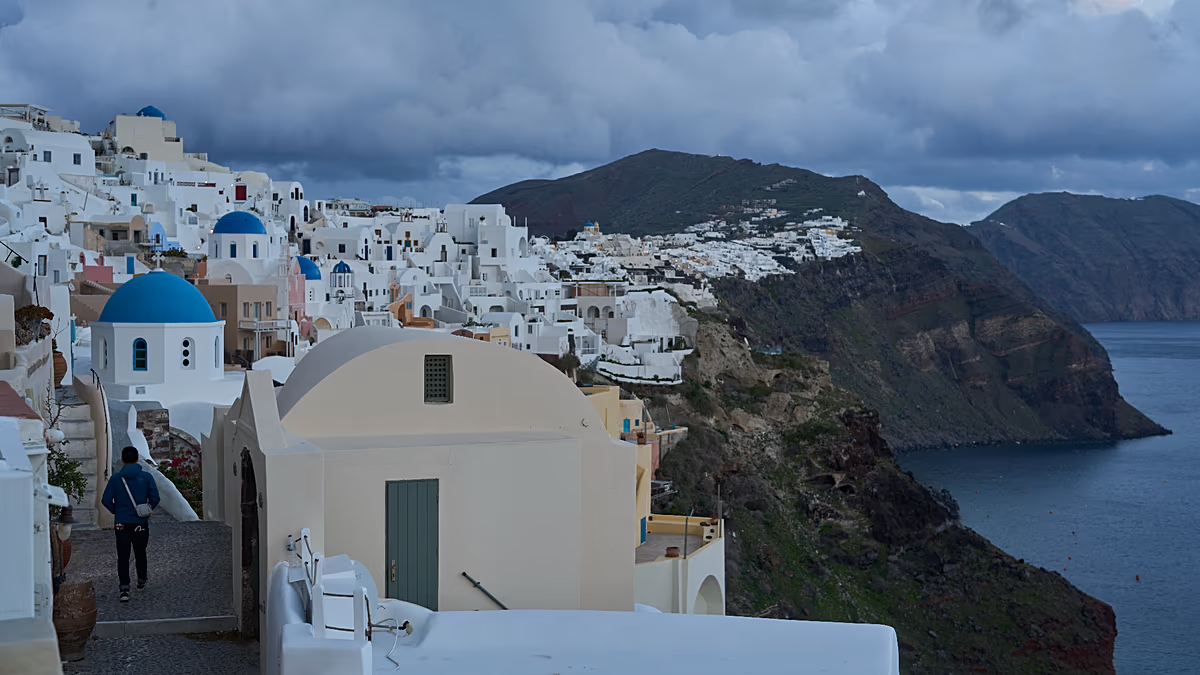


There is a version of Santorini that has been printed on a million postcards: whitewashed houses stacked along volcanic cliffs, blue domes shining under the Greek sun, and the famous sunset spilling gold over the caldera. It is a place people dream about long before they arrive, and it has made the island one of the most recognizable destinations in the world. But the people who live there, and the people who promote it, know that Santorini is more than that single, perfect image. Behind the iconic skyline, there are vineyards growing out of volcanic ash, kitchens preserving recipes that go back generations, villages where daily life moves at a slower pace, and ancient ruins that tell a much older story. With a new digital campaign built around 32 short videos, Santorini is now trying to broaden its international tourism profile and invite visitors to see the island in a different light. The campaign was unveiled at the GNTO Santorini Tourism Forum 2026, held from 5 to 8 October, with the participation of representatives of the Greek National Tourism Organisation, local authorities, industry professionals and around 30 journalists from international travel media. During the forum, GNTO executives active in key European markets presented the travel trends they are recording in their own countries, looking for ways to link Santorini’s already powerful reputation with different kinds of experiences and with trips that go beyond the peak summer season. The message was clear: Santorini is not turning its back on its famous beauty, but it wants to be known for more than sunsets and luxury hotels. It wants to be known for the flavors, the stories, the landscapes and the people that make the island feel alive long after the last postcard has been sent.
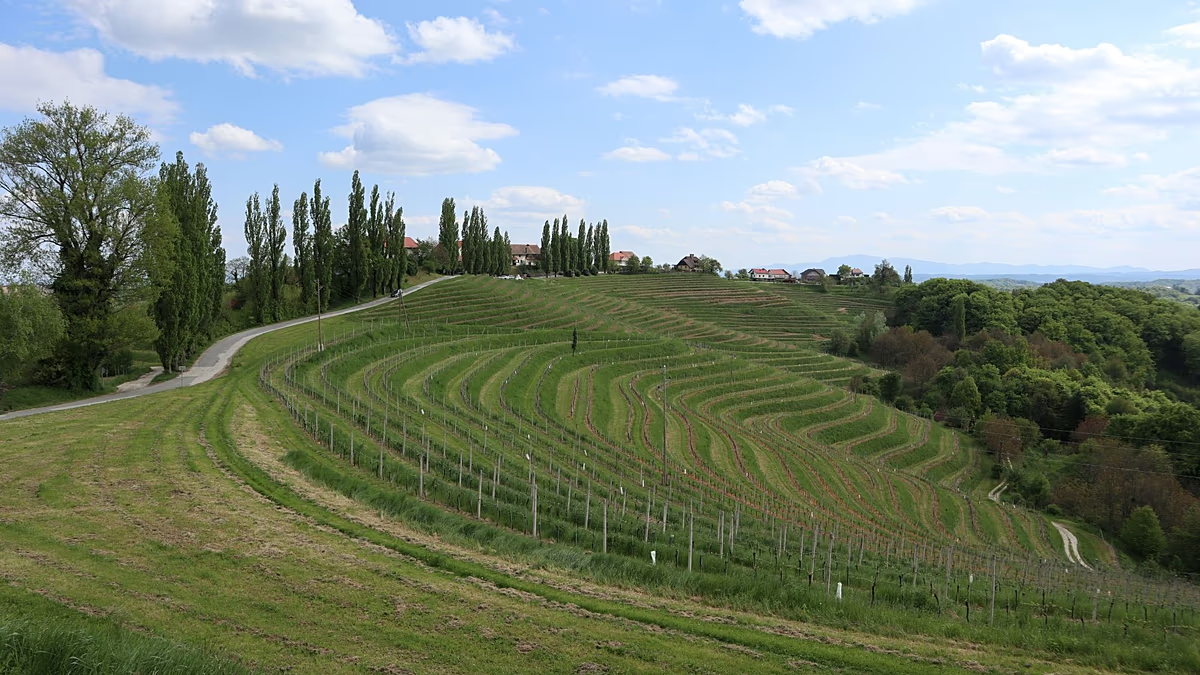
Santorini’s distinctive wine-making tradition is one of the most compelling stories the island has to tell, and it is deeply rooted in the volcanic soil and the climate that shape every vine. For centuries, local winegrowers have used a technique known as the “kouloura,” training the vines into low, circular basket-like shapes that protect the grapes from strong winds and intense sunlight. This ancient method is not just a practical solution; it is a living expression of the island’s relationship with its environment, and it has helped the local Assyrtiko grape variety gain international recognition. Today, many wineries open their doors to visitors, offering tours through the vineyards, visits to production facilities and tastings that reveal the mineral character of the wines. Wine tourism is becoming one of the most promising ways to experience Santorini beyond the crowds, and it fits naturally with the island’s broader culinary identity. Santorini’s gastronomy is built around products that are small in size but huge in character: fava, tiny cherry tomatoes and white aubergine, all cultivated in the island’s distinctive terrain. These ingredients appear in traditional dishes that have been passed down through families, and they are now attracting attention far beyond the island. The importance of local gastronomy has been recognized by the Michelin Guide, which announced in December 2025 that Santorini and Thessaloniki will be added to its Greek selection for 2026, alongside Athens. That recognition is a signal that the island’s food scene is no longer just a complement to a beach holiday; it is a reason to travel in its own right. For travelers who want to understand Santorini through its flavors, the island offers a journey that begins in the earth and ends at the table, with every bite carrying the memory of the volcanic landscape that made it possible.
Beyond food and wine, Santorini is rich in culture, nature and everyday life, and the new campaign aims to bring those layers into focus. Visitors can explore the archaeological site of Akrotiri, a prehistoric settlement preserved beneath layers of volcanic ash, often described as one of the most important ancient sites in the Aegean. Walking through its streets and buildings is like stepping back in time, and it offers a completely different perspective on the island’s long history. Traditional villages such as Megalochori invite travelers to wander through narrow lanes, past old mansions, churches and courtyards, where the rhythm of local life is still visible. Hiking trails overlooking the caldera provide some of the most dramatic views in the Mediterranean, not from a crowded terrace but from paths that wind through the island’s rugged interior. Local authorities also want to strengthen activities such as cooking and pottery classes, which allow travelers to connect with local production and culture in a hands-on way. These experiences are about participation rather than observation, and they leave visitors with more than just photographs. Georgia Nomikou, president of the Municipal Council and the Tourism Committee of Thira, captured this idea beautifully when she spoke to the Athens-Macedonian News Agency: “Visitors do not simply tick off a standard sightseeing itinerary; they go home holding on to the moments that moved them.” She also revealed that production is already under way on 32 short social media videos, each one focused on the moments and experiences a visitor can enjoy on the island. The videos are designed to be shared, to feel personal, and to show Santorini through the eyes of someone who has truly experienced it, not just seen it from a distance.
The diversification of travel preferences was a central theme of the forum’s discussions, and the GNTO representatives from different European markets brought valuable insights into what travelers are looking for today. In the United Kingdom, one of Santorini’s key markets, Eleni Skarveli noted that luxury remains a strong element of the island’s image, but interest is growing in gastronomy, wellness, family trips and holidays that combine several Greek islands. British travelers, she explained, are increasingly looking for experiences that feel meaningful and varied, and Santorini can offer that when it is presented as more than a single destination. In France, GNTO representative Emmy Anagnostopoulou stressed the appeal for visitors who want to discover local cuisine, wineries and cultural heritage. Her words painted a vivid picture of a new kind of traveler: “These are not tourists who stay shut inside a hotel wearing an all-inclusive wristband; they get out, explore and spend money in the local economy.” She also underlined that demand for travel outside July and August can help attract more visitors in spring and autumn, when the island is calmer and the experience feels more authentic. In Austria and Germany, according to GNTO representative Stavroula Skaltza, there is clear interest in wine tourism, gastronomy and wellness, while repeat visitors are looking for new experiences in a destination they already know and love. The Scandinavian markets, represented by Eftychia Aivalioti, show a strong preference for nature, hiking and activities linked to quality and sustainable tourism. These assessments are not based on guesswork; they come from reports collected by GNTO offices in the respective countries and reflect real trends that staff identify in their markets. Together, they paint a picture of travelers who are more curious, more thoughtful and more willing to go beyond the obvious.
One of the main goals of the new strategy is to boost tourism activity outside the peak summer months, attracting visitors who are interested in experiences that go beyond a traditional beach holiday. Santorini is already one of the most visited islands in Greece, and the pressure of summer crowds can be overwhelming, both for residents and for travelers who come expecting a peaceful paradise. By developing wine tourism, cultural visits and nature-based activities, the island can offer additional reasons to travel during periods with fewer tourists, when the streets are quieter, the tables at local tavernas are easier to find, and the connection to the place feels more real. Air connectivity is also a key factor in making this happen. According to the GNTO representative in France, Transavia flights to Santorini have been extended until November, improving options for autumn trips and making it easier for visitors from France and beyond to enjoy the island’s milder weather and golden light. New connections are also planned from the British market. Jet2 has announced weekly flights from Leeds-Bradford Airport to Santorini, running from 6 May to 7 October 2027, a schedule that clearly supports the idea of extending the season beyond the traditional summer months. These new routes are not just about convenience; they are a statement of confidence in Santorini’s ability to attract travelers in spring and autumn, when the island has a different character. The summer will always be special, but the shoulder seasons offer their own magic: wildflowers in bloom, vineyards beginning to stir, the sea still warm, and a sense of space that is impossible to find in August.
At its heart, the new approach is about helping travelers fall in love with Santorini in a deeper way. The island’s famous sunsets are not going anywhere, and luxury accommodation will always have its place, but the campaign recognizes that people are looking for something more than a beautiful image. They want to taste the wine that comes from ancient vines, walk through villages that have stood for centuries, learn the stories behind the food, and feel the texture of daily life in a place that is much more than a backdrop. The 32 short videos being produced for social media are designed to capture those moments, the small and unexpected details that make a journey memorable. They show the hands of a potter shaping clay, the laughter around a dinner table, the quiet beauty of a vineyard at dusk, the sense of discovery that comes from turning down a street you have never seen before. This is a vision of tourism that is more respectful, more sustainable and more rewarding, both for visitors and for the people who call Santorini home. By inviting travelers to slow down and look closer, the island is not trying to change what it is; it is trying to share everything it has always had to offer. As Georgia Nomikou said, visitors go home holding on to the moments that moved them, and those moments are rarely found on a postcard. They are found in the taste of a local dish, the warmth of a conversation, the view from a hiking trail, and the feeling of being somewhere real. Santorini has always been a place of extraordinary beauty, and now it is opening its doors to the extraordinary life that lives within that beauty.