





The global tourism landscape is undergoing an unprecedented philosophical metamorphosis, one that transcends the superficial thrills of sightseeing to embrace a profoundly human-centered ethos. According to the groundbreaking 2026 UN Tourism report, the contemporary traveler is no longer content with being a passive spectator of foreign landscapes or a mere consumer of packaged experiences. Instead, a collective awakening has occurred, shifting our collective travel motivations from a frantic quest for Instagram-certified landmarks to a deeply reflective pursuit of authenticity, connection, and self-discovery. We are witnessing the definitive end of the “bucket-list” era—a period marked by transactional excursions that often drained local resources while offering visitors little more than fleeting digital validation. In its place, 2026 has ushered in an era of intentional presence, where the journey itself is viewed as a form of existential dialogue between the traveler and the host community. This transition is not merely a trend but a structural evolution in global human movement, driven by an acute awareness of our shared vulnerability and interconnectedness. People are traveling slower, staying longer, and looking inward as much as they look outward, seeking destinations that offer emotional resonance, intellectual stimulation, and spiritual stillness. The report beautifully illustrates that travel has returned to its historical roots as a sacred rite of passage and a bridge for intercultural empathy. As travelers cross borders today, they act not as tourists demanding entertainment, but as guests seeking mutual understanding, carrying with them a renewed humility and a desire to engage with the world on its own terms. By placing human dignity, local stories, and mutual respect at the center of the global tourism framework, 2026 is redefining what it means to explore our planet, proving that our wanderlust, when channeled thoughtfully, can be one of the most powerful catalysts for personal growth, environmental healing, community development, and sustainable international peace. Indeed, we are entering a golden age of journeying where physical boundaries dissolve, hearts expand, and deep global understanding truly, irrevocably becomes our ultimate collective destination.
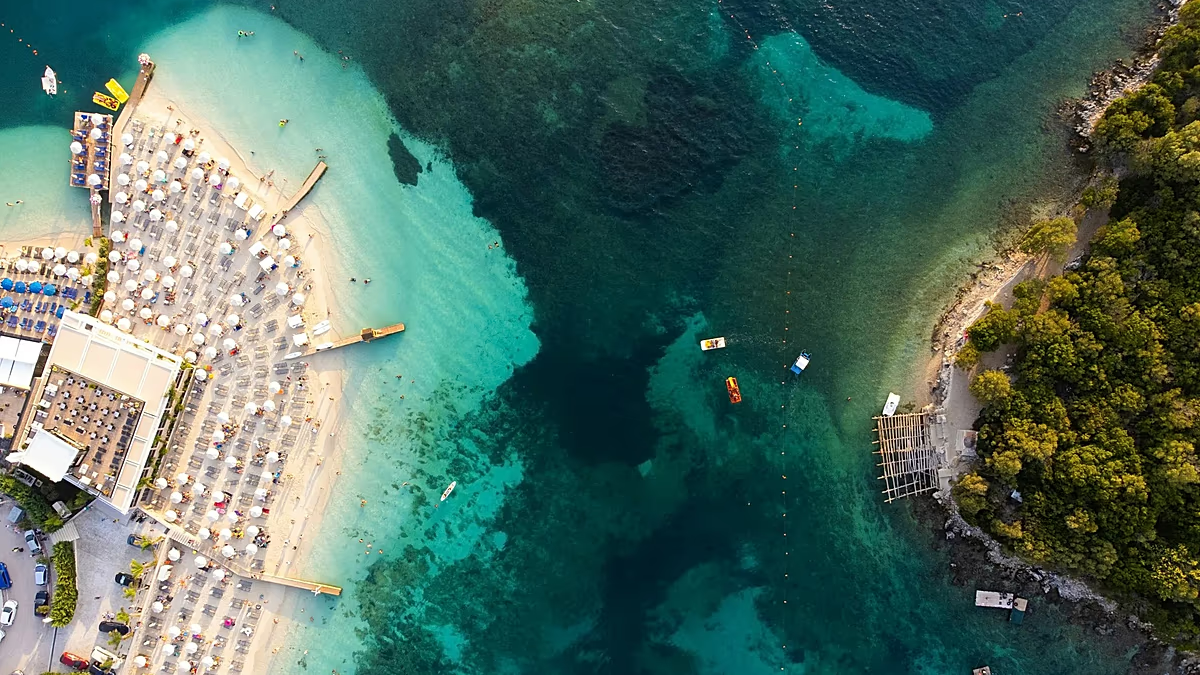
Perhaps the most revolutionary shift highlighted in the UN Tourism report is the transition from sustainable travel to genuinely regenerative tourism. For decades, the travel industry operated under the preservationist mandate of “do no harm,” a philosophy that aimed to minimize ecological footprints but ultimately left pristine habitats in a state of slow, managed decline. In 2026, this passive paradigm has been decisively replaced by an active commitment to environmental and social restoration. Regenerative travel demands that visitors leave a place measurably better than they found it, transforming the act of vacationing into a tangible force for ecological healing and community revitalization. Travelers are actively seeking out destinations, accommodations, and tour operators that integrate carbon-negative designs, circular economies, and hands-on conservation initiatives into their itineraries. Whether it is participating in marine kelp reforestation along the coasts of temperate oceans, assisting in the rewilding of historical agricultural corridors in Europe, or supporting indigenous-managed wildlife sanctuaries in East Africa, global citizens are eager to roll up their sleeves and invest their physical energy into the places they visit. This is a profound shift in consumer psychology; the modern explorer finds immense fulfillment in knowing that their presence directly funds the restoration of a degraded coral reef, the structural preservation of an ancient cultural site, or the economic independence of a marginalized rural cooperative. The UN Tourism report emphasizes that this regenerative model relies on radical transparency and local sovereignty, ensuring that the financial windfalls of tourism are directly funneled back into the community, bypassing corporate middlemen to empower local stewards who are the rightful guardians of their heritage and land. Ultimately, this creates a beautifully symbiotic cycle of restoration. Destinations are no longer treated as commodities to be consumed and discarded, but as living, breathing ecosystems that travelers are privileged to restore. Consequently, every footprint left behind in 2026 is matched by a deliberate, caring human hand that actively plants, nurtures, cleanses, builds, supports, and passionately revitalizes our precious, fragile, shared world.
As we navigate this new era of deep connection, technology is playing an elegant, supporting role that champions intimacy rather than isolation. In 2026, the digital interface of travel has undergone a transformation designed to enhance, rather than replace, human touchpoints. Rather than relying on rigid algorithms that funnel millions of tourists toward identical hotspots, advanced predictive artificial intelligence is being utilized to curate highly personalized, off-the-beaten-path experiences that match a traveler’s unique intellectual curiosity with a local community’s distinct seasonal needs. This subtle technology operates seamlessly in the background, minimizing the traditional frictions of international travel—such as biometric border crossings, automated linguistic translations, and real-time transit synchronization—allowing the traveler to remain entirely present in the sensory reality of their environment. By eliminating the administrative anxieties of transit, technology acts as an enabler of mindfulness, giving visitors more mental bandwidth to appreciate the subtleties of a new place and engage in spontaneous conversations. Moreover, the rise of “smart destinations” means that local authorities can monitor foot traffic in real-time, gently nudging travelers toward lesser-known neighborhoods, artisanal markets, or rural sanctuaries, thereby mitigating the systemic pressures of overtourism while distributing economic benefits equitably. The report underscores that the ultimate measure of technological success in 2026 is its self-effacing nature; it succeeds when it becomes invisible, leaving the traveler face-to-face with a local host, sharing a meal, a laugh, and a story without the digital barriers that once fractured our collective attention spans. Essentially, high-tech serves to cultivate high-touch human experiences, converting digital connectivity into raw, unfiltered earthly links. In this way, software supports human heartbeats, engineering moments of authentic cultural exchange that feel entirely organic and beautifully unhurried. Through these thoughtful innovations, systems are rebuilt to foster true kinship, showing that progress does not have to distance us from the earth or from one another. We are discovering that the interface of tomorrow is not a glowing screen, but a shared horizon, a warm, healing embrace, and a beautiful, vibrant pathway back to humanity.
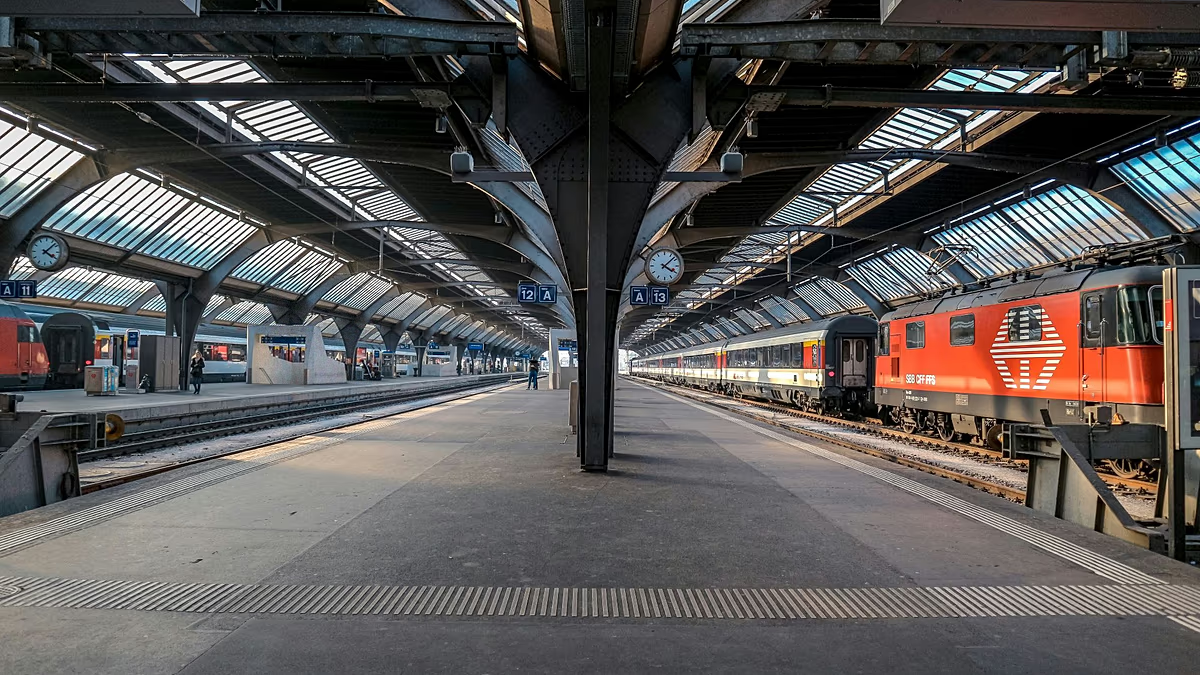
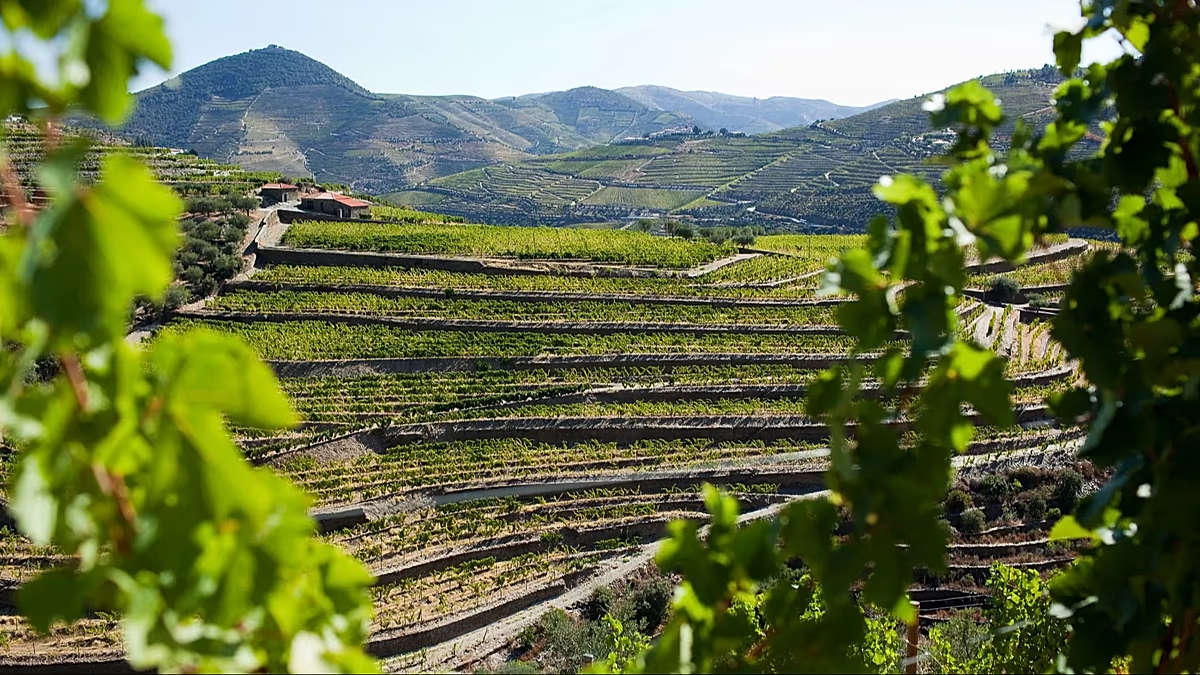
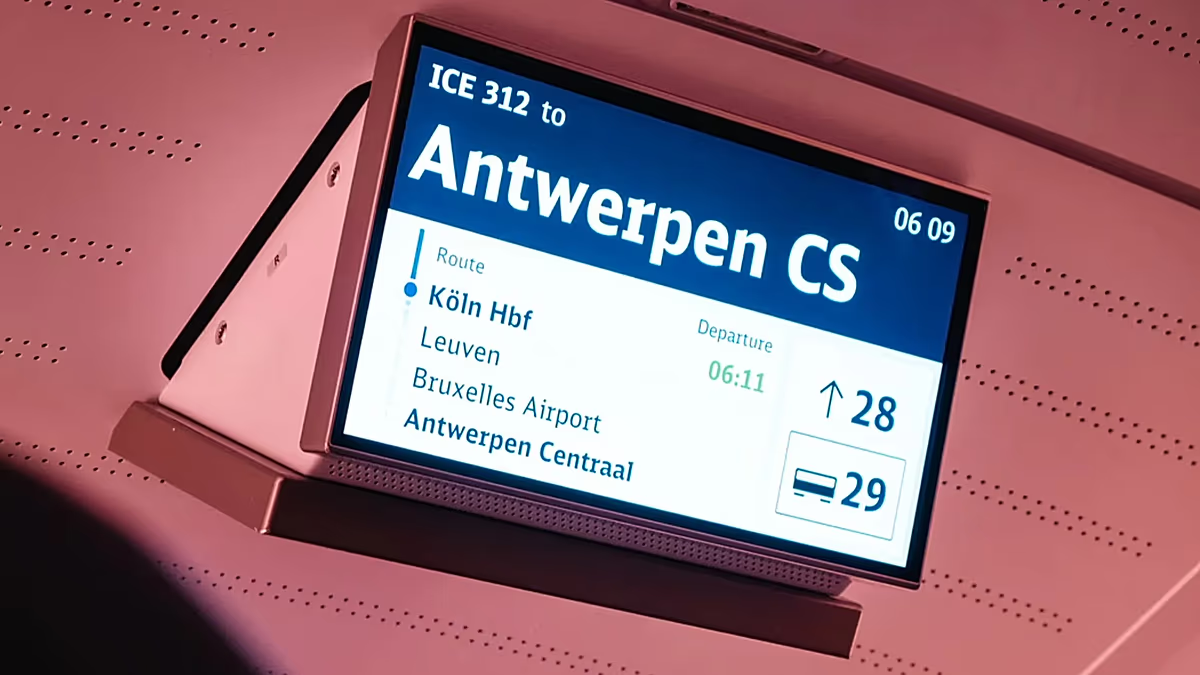
This technological dispersion of tourism goes hand-in-hand with the spectacular rise of slow travel and the embrace of what the industry affectionately terms “under-tourism.” High-speed rail networks, particularly across Europe and Asia, have undergone a magnificent renaissance, transforming long-distance transport into an artistic experience characterized by panoramic glass cabins, cultural programming, and regional culinary collaborations. Travelers are deliberately rejecting the stress of short-haul flights in favor of scenic train journeys where the changing topography becomes a central narrative of the trip. The destination is no longer an isolated pin on a map, but a rich, continuous tapestry of micro-regions, each with its unique dialect, culinary heritage, and architectural vernacular. According to the UN Tourism data, second- and third-tier cities, along with forgotten agrarian villages, have seen an unprecedented influx of visitors seeking the luxury of quietude. These are places where time moves at a human pace, and where visitors can spend weeks learning the art of slow-cooked regional gastronomy, participating in traditional ceramic workshops, or simply walking along ancient pilgrim trails. This decentralization of travel has breathed vital new economic life into aging rural communities that were once threatened by urban migration, allowing younger generations of locals to remain in their ancestral homes and build thriving livelihoods around sustainable hospitality. In 2026, the ultimate luxury is no longer defined by ostentatious five-star resorts; it is defined by silence, open space, unaffected hospitality, and the privilege of being the only traveler in a landscape of breathtaking, untouched natural beauty. By stepping away from congested hotspots, we discover that the true soul of a country is found in its quietest corners. This cultural dispersion represents a deep democratization of wanderlust. Rather than squeezing travelers into over-commercialized corridors, slow travel encourages long-term stays that promote authentic relationships between travelers and local families who happily open their homes. This profound slowing down restores the very soul of global transit, transforming once-weary and hurried commuters back into incredibly thoughtful, deeply curious, and quiet global explorers who cherish stillness.
Furthermore, the travel landscape of 2026 is defined by a beautiful commitment to radical inclusivity and universal accessibility, ensuring that the joy of exploration is a basic human right accessible to all, regardless of physical ability, neurotype, age, or socioeconomic background. The UN Tourism report highlights a momentous shift in infrastructure planning, where destinations are systematically designing environments that accommodate physical disabilities with grace and dignity. From sensory-friendly museum tours and quiet airport lounges designed specifically for neurodivergent travelers, to wheelchair-accessible wilderness trails that navigate high-altitude forests, the physical world is opening up in ways that were once deemed technically impossible. At the same time, we are witnessing the joyful rise of multi-generational travel, where families split across continents reunite not in sterile corporate resorts, but in environments that facilitate shared learning, cultural appreciation, and collaborative adventure. This inclusivity also extends to socioeconomic parity, with the development of community-hosted homestay networks and micro-financed tourism initiatives that allow budget-conscious travelers to experience profound cultural immersions without exploiting local residents. Crucially, this democratization of travel respects the agency of indigenous peoples to self-determine how their cultures are presented, turning historical curiosities into authentic, equal partnerships. When we make travel inclusive, we do not simply expand access to physical spaces; we fundamentally broaden the collective consciousness of our global society by ensuring that every human being, regardless of their circumstances, can find a sense of belonging in the global family. By honoring the ancestral wisdom of local populations and valuing the contributions of marginalized voices, the universal travel landscape of 2026 serves as a powerful sanctuary for structural equity. No longer are disabled, aging, or economically disadvantaged adventurers treated as logistical afterthoughts. Instead, we have successfully redesigned global transit as a welcoming, living testament to our shared humanity. This massive societal triumph reminds us all that when we collectively lower travel barriers, we effortlessly elevate our global heart, creating countless vibrant possibilities for cross-cultural connections, collective healing, and deeply transformative, life-changing personal exchanges across every physical pathway traveled.
Ultimately, the 2026 UN Tourism report paints a deeply hopeful portrait of a global citizenry that has rediscovered travel as a form of sacred re-enchantment and a vital instrument for planetary peace. In a world often fragmented by geopolitical friction and digital polarization, travel has emerged as one of our most resilient containers for building empathy, dismantling prejudice, and fostering cross-border alliances. The modern traveler understands that to step across a border is to step into a relationship, and that every economic choice made on the road is a vote for the kind of world we wish to build. This philosophy changes us from temporary nomads into active citizens of the earth, who cultivate global awareness while practicing local tenderness wherever we happen to lay our heads. As we look to the remainder of this decade, the physical act of journeying has evolved into a deeply therapeutic process, a conscious return to the natural world that heals both the stressed traveler and the delicate ecosystems they visit. By aligning our innate curiosity with a profound respect for the earth and its diverse populations, we are transforming tourism from an extractive industry into a creative, harmonious collaboration. The report leaves us with an inspiring vision: travel in 2026 is no longer about leaving our homes to escape our lives, but about returning to our homes with wider perspectives, warmer hearts, and an enduring commitment to caring for the beautiful, fragile home that we all share. This newly unified journey of heart and mind shifts our gaze from distant horizons to the deep beauty of our present moment. It invites us to wander with purpose, to tread lightly on the soil, and to realize that our mutual connection is the most precious landscape of all. Indeed, the ultimate destination of our planetary wanderlust is a deeper, more compassionate understanding of ourselves and each other across the beautifully woven, infinitely varied tapestry of our shared existence, guiding us safely forward into a brighter, more harmonious global future.