


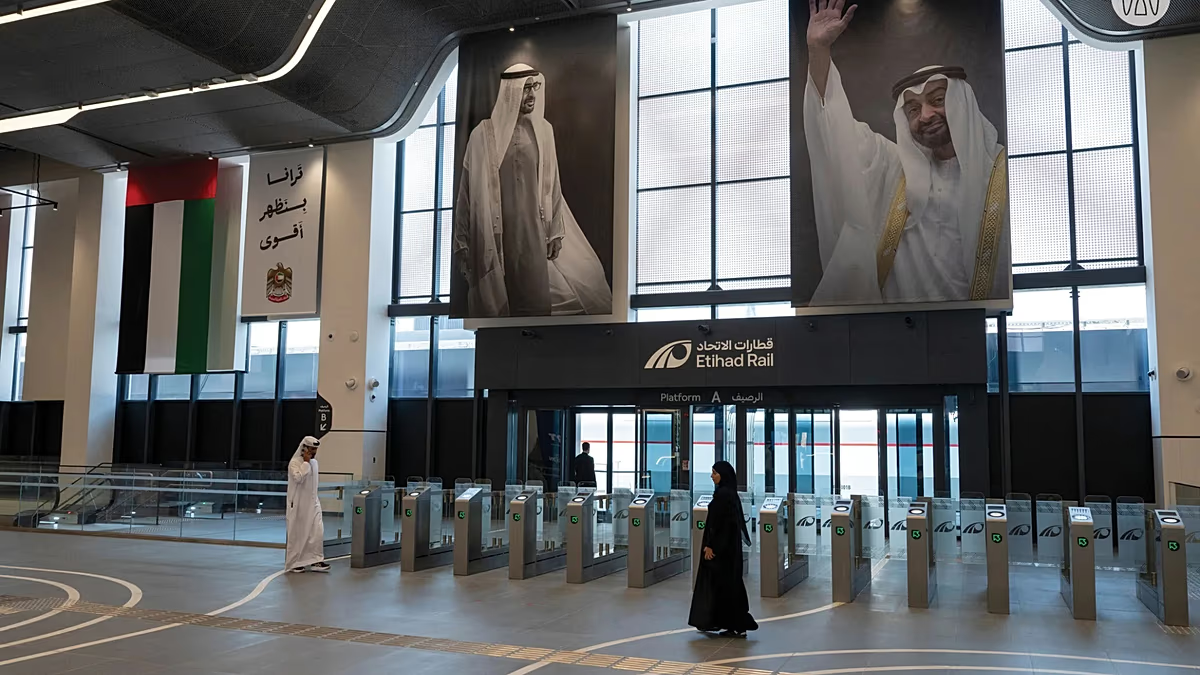
For generations, the landscape of the United Arab Emirates has been defined by the gentle hum of rubber tires on pristine, multi-lane desert highways, where private cars and rugged SUVs have long reigned supreme as the primary lifelines of domestic travel. However, a monumental shift in the country’s transport paradigm is quietly unfolding, marked by the highly anticipated launch of the nation’s very first passenger rail network, Etihad Rail, on the 30th of June. This groundbreaking service will initially link the bustling, futuristic capital of Abu Dhabi with the tranquil, sun-drenched emirate of Fujairah, situated gracefully on the country’s eastern coast. For residents and adventurous travelers alike, Fujairah represents a picturesque escape from urban intensity, celebrated for its rugged mountain ranges, deep-carved scenic wadis, challenging hiking trails, and historic stone forts that stand as silent sentinels of the region’s rich heritage. By seamlessly connecting these two contrasting worlds in a mere one hour and forty-five minutes, the railway offers an inviting alternative to the traditional, sometimes exhausting, coastal drive. To accommodate a diverse spectrum of travelers, Etihad Rail has structured its pricing with accessibility and comfort in mind; standard class tickets will start at a very reasonable AED 55 (approximately €13.20), while those seeking a more luxurious, productive, or relaxing journey can opt for premium class amenities starting at AED 120 (€28.80). This inaugural route is far more than a simple transit line; it is the beginning of a modern human narrative that promises to knit the cultural fabric of the Emirates closer together than ever before, inviting friends, families, and solo explorers to rediscover their country through the panoramic glass of a swiftly moving train window.
The initial June launch of Etihad Rail is merely the opening chapter of a meticulously choreographed rollout designed to reshape the daily geography of the region over the coming months. Following the debut of the eastern corridor, the network is scheduled for a significant expansion on the 30th of September, which will witness the opening of highly anticipated passenger stations in the global metropolis of Dubai as well as Al Dhaid, a traditional agricultural and cultural heartland located in the emirate of Sharjah, just north of Dubai’s glittering skyline. As winter approaches, the westward path of progress continues with the scheduled opening of a station in Al Dhafra, Abu Dhabi’s vast western region, on the 30th of December, providing vital connectivity to the country’s industrial and natural frontiers. The momentum will carry directly into the new year, culminating on the 30th of March when the primary Sharjah train station officially begins welcoming passengers into its terminal. This phased rollout represents a profound evolution in how people construct their lives and careers in the UAE, transforming what were once daunting, multi-hour road trips across unforgiving desert heat into predictable, relaxing commutes. By bridging the glittering coastal cities with the quiet beauty of the inland territories, the railway promises to decentralize economic opportunity, allowing small businesses to thrive, making regional universities highly accessible, and giving families the precious freedom to live in quieter, more affordable emirates while maintaining high-powered careers in major economic hubs.
Recognizing that the true success of any modern mass transit network lies in solving the notoriously difficult “last-mile” challenge, planners have carefully integrated Etihad Rail’s peripheral stations with existing urban transport ecosystems. Because many of the newly constructed rail stations are positioned outside of congested downtown cores to facilitate high-speed travel, Etihad Rail is introducing a dedicated, synchronized shuttle bus service slated to run between central urban landmarks and the train terminals. In Abu Dhabi, for example, travelers can easily board comfortable shuttle coaches at key downtown hubs—such as the vibrant beachfront of the Corniche, the bustling retail corridors of Reem Mall, and the premier events hub at the ADNEC Centre—to be swiftly transported directly to the Abu Dhabi Mohamed Bin Zayed City Station for a modest fee of just AED 10 (€2.40). Meanwhile, in the dynamic city-state of Dubai, the primary railway station has been strategically situated at Jumeirah Golf Estates, a decision that allows passengers to disembark and immediately transition onto Dubai’s world-class metro system, which currently stands as the only operational rapid transit subway system in the entire country. This physical and digital integration of transport networks removes the stress of navigating dense traffic, finding elusive parking spaces, or hailing expensive taxis, transforming the act of traveling between different Emirates into a smooth, deeply humane, and continuous journey that respects the traveler’s time and peace of mind.
Beyond the primary metropolitan arteries, the railway network is poised to unlock some of the UAE’s most secluded and breathtaking natural wonders through several highly anticipated stations, whose official commencement dates remain to be announced but already spark the imagination of eco-tourists and history enthusiasts. Among these future destinations is Al Mirfa, a coastal sanctuary located near the pristine, lush mangrove forests of Al Mugheirah Bay, where travelers will soon be able to swap the hum of the city for the gentle lapping of Gulf waves and the calls of native seabirds. Deeper in the interior lies the planned station at Liwa, a legendary oasis situated on the edge of the Empty Quarter, famed worldwide for its towering amber dunes, historic date plantations, and the high-octane energy of its winter motorsports festival, which draws thousands of thrill-seekers to tackle the legendary Moreeb Dune each year. Even further west, a station will open in Al Sila, a historic settlement positioned right up against the border of the Kingdom of Saudi Arabia, embodying the physical link of shared history and future integration between the neighboring nations. The inclusion of these remote, culturally vibrant destinations in the national rail map ensures that development is not merely confined to the coastal skyscrapers, but instead breathes new life into the historic heartlands, giving both locals and international visitors direct, eco-friendly access to the soul of the Emirati heritage.
While the domestic benefits of Etihad Rail are immense, the network is also part of a much grander, historically resonant vision: the master plan to construct a unified Gulf railway network connecting all six member states of the Gulf Cooperation Council, including the UAE, Saudi Arabia, Oman, Qatar, Bahrain, and Kuwait. Although concrete timelines for this sprawling, transnational project are still being negotiated, the ambition to tie the Arabian Peninsula together by steel tracks evokes a powerful sense of historical nostalgia and future promise. Historically, Saudi Arabia is the only nation in the region with an active legacy of passenger rail transport; in the early decades of the twentieth century, the Kingdom was a crucial segment of the historic Ottoman Hejaz Railway, which famously linked Damascus in Syria with the holy city of Medina before it was tragically closed during the Arab Revolt of World War I. Today, Saudi Arabia has built upon this legacy, operating highly sophisticated modern passenger lines that connect the capital city of Riyadh with the northern border town of Quruyyat near Jordan, and eastward to the busy port city of Dammam on the Arabian Gulf, alongside the high-speed Haramain line that carries pilgrims swiftly between the holy sanctuaries of Mecca and Medina. The realization of the broader GCC rail network will not only stand as a monument to regional engineering prowess but will also serve as a profound catalyst for cultural exchange, allowing a passenger to board a train in Kuwait City and ride all the way through the deserts of Saudi Arabia, the mountains of Oman, and down to the sparkling coasts of the UAE, fundamentally redefining the concept of neighborhood in the Middle East.
At the municipal level, this regional transit renaissance is mirrored by the steady, ambitious growth of urban metro systems, which have slowly begun to redefine late-twentieth-century car culture in the Gulf’s major cities. From the pioneering launch of the Dubai Metro in 2009 to the sleek, state-of-the-art Doha Metro that began welcoming passengers in 2019 just ahead of the historic FIFA World Cup, and most recently, the grand opening of the highly advanced Riyadh Metro in 2024, the region is rapidly embracing public transport as a core pillar of sustainable urban design and liveability. This newfound momentum toward cross-border connectivity was further solidified late last year when Qatar and Saudi Arabia officially signed a historic bilateral agreement to design and construct a state-of-the-art, high-speed rail link that will connect Riyadh and Doha directly. Slated for completion by the year 2031, this project promises to slash travel times between the two capitals to a mere two hours, replacing stressful airport security lines and exhausting cross-country drives with a smooth, relaxing dining-car experience. As these municipal metros and high-speed interstate lines begin to interlock with regional networks like Etihad Rail, the Middle East is rapidly moving toward a future defined not by physical barriers, but by fluid motion, sustainability, and human connection, crafting a cultural tapestry where sharing a morning coffee in Dubai and watching the evening sun set over the desert dunes of Saudi Arabia becomes a seamless, everyday reality.