

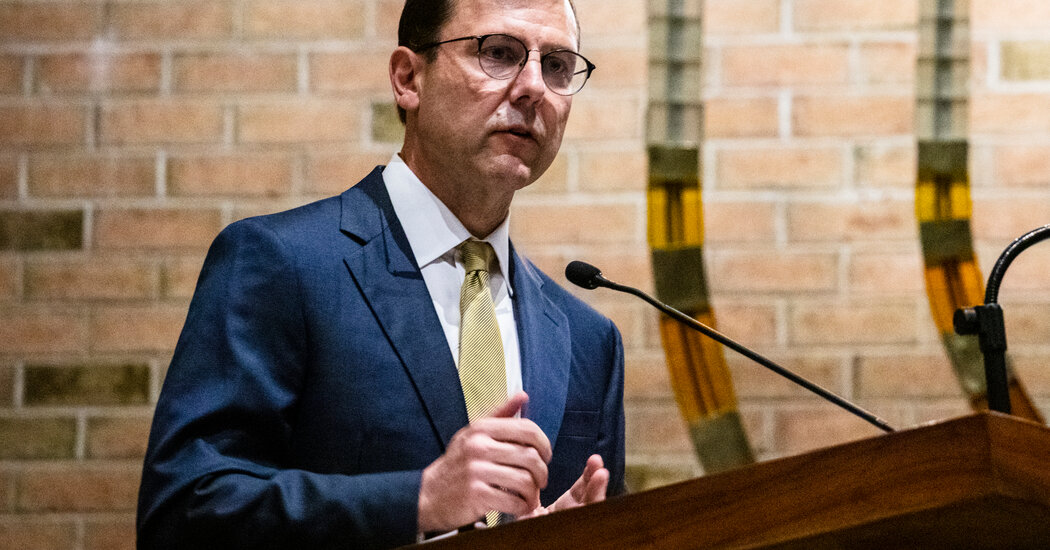
For nearly four months, a heavy and puzzling silence hung over the quiet, tree-lined suburban neighborhoods of Westfield, New Jersey, where residents and local political observers alike wondered about the sudden, mysterious, and largely unexplained departure of their congressional representative, Thomas Kean Jr. Since early March, the second-term Republican lawmaker had been entirely missing from the chaotic, high-pressure corridors of Washington, D.C., leaving a highly noticeable void in both the legislative chambers of the Capitol and the busy, diverse streets of his home district. However, on a recent warm Wednesday evening, that long-standing silence was finally broken when Kean was spotted back within the quiet, comforting sanctuary of his suburban New Jersey home. Just before 8:45 p.m., he could be seen clearly from the damp pavement outside, standing in a brightly lit front room—a scene that presented a deeply human contrast to the cold, distant, and often ruthless political apparatus of the nation’s capital. For a constituency that had spent months reading vague, carefully worded press releases about their representative’s health, seeing him through the glass of his own residence provided a powerful, grounding moment of reality. It served as a stark reminder that behind the grand titles, the legislative voting records, and the relentless machinery of Congress, there is always a flesh-and-blood human being with a private life, a home, and a family. The warm, domestic glow emanating from the windows of the Westfield residence seemed to signal a necessary retreat from the unforgiving spotlights of public life, offering a brief, serene glimpse of a veteran public servant trying to ground himself in his family life after months of dealing with a highly secretive personal trial. This physical homecoming, while immediately raising a flurry of logistical and political questions, carried the emotional weight of a man seeking quiet refuge in the familiar, slowly preparing to face a waiting public.
This delicate boundary between public duty and private vulnerability became even more apparent when a reporter for The New York Times stepped onto the porch and rang the front doorbell of the Westfield home. When the heavy wooden front door swung wide open, there stood Representative Kean, remarkably dressed in a formal dark suit and a crisp red tie, looking as if he were still prepared to step onto the floor of the House of Representatives rather than relaxing in the quiet of his own living room on a weekday evening. “It’s good to see you,” Kean said politely, offering a gentle but firm boundary to the unexpected visitor who had entered his personal space. He did not engage in a lengthy self-defense or offer a nervous explanation, but instead managed the sudden journalistic intrusion with a seasoned politician’s grace, promising, “I’ll talk to you next week. Thank you.” Standing just behind him in the dimly lit hallway was his wife, Rhonda, who offered a warm, pleasant smile to the reporter, acting as a silent, protective pillar of support in a moment that could have easily felt highly invasive. Her quiet presence in the background spoke volumes about the unspoken partnership, enduring loyalty, and shared resilience that sustains political families through periods of intense public scrutiny and personal hardship. By declining to comment further and gently closing the door, Kean successfully preserved the sanctity of his domestic refuge, emphasizing that while he remains a public servant, his immediate attention was anchored to his home and his spouse. This fleeting, doorstep interaction was a masterclass in polite evasion, yet it humanized the congressman in a way that formal press releases never could, revealing a husband and wife standing united on their own threshold, carefully managing the heavy demands of their public roles while fiercely guarding their private peace.
The mystery surrounding Kean’s long absence from the halls of Congress has naturally fueled intense speculation in the media, but at its heart lies a very human and relatable reality: the fragile, unpredictable nature of personal health. For nearly four long months, Kean’s congressional aides would only disclose that the 57-year-old congressman was undergoing treatment for an undisclosed medical condition, stubbornly refusing to offer any further details about his diagnosis, his prognosis, or the specific nature of his clinical care. This prolonged, protective silence meant that Kean was absent for more than one hundred consecutive legislative votes in the House of Representatives since March 5, a staggering level of absenteeism that left his closely divided district effectively voiceless during crucial national debates. While some critics in New Jersey and Washington viewed this lack of communication as a failure of civic transparency, it also highlights the painful, deeply personal trade-offs that public figures must navigate daily when physical illness strikes. In an era where politicians are often expected to behave as tireless, unyielding machines capable of working around the clock, Kean’s sudden withdrawal from the public square serves as a sobering reminder that human bodies are subject to wear, tear, illness, and unexpected crises, regardless of one’s political clout, legacy, or legislative responsibilities. Deciding to focus privately on his health rather than subjecting his intimate medical struggles to the merciless meat-grinder of partisan cable news and online speculation is a profoundly human choice. However, in the relentless realm of federal governance, this choice creates a profound tension between an individual’s fundamental human right to medical privacy and a constituency’s democratic right to active, vocal representation. How we as a society balance empathy for a sick leader with the demanding expectations of the powerful offices they hold remains one of the most complex dilemmas of our modern political age.
This complex tension is amplified to a fever pitch because Kean is not just any standard politician quietly serving out his term; he is a second-term Republican representing New Jersey’s 7th congressional district, one of the most fiercely contested battleground swing seats in the entire country. As the highly anticipated, monumental, high-stakes November midterm elections rapidly approach, this particular district is widely viewed by national party strategists as a crucial, must-win battleground that could ultimately determine the balance of power in the United States House of Representatives. In such high-stakes electoral arenas, a candidate’s constant, energetic presence on the campaign trail is usually considered an absolute, non-negotiable requirement for political survival. Political campaigns are notoriously grueling, exhausting endurance tests that require candidates to shake endless hands, attend back-to-back town halls, raise millions of dollars, and speak directly with suburban voters at local diners, school boards, and community parades. Kean’s prolonged physical absence from this demanding trail has forced his campaign staff and political allies to wage a ghostly and defensive campaign, attempting to convince skeptical voters to support a representative they simply cannot see, hear, or interact with. The immense mental and emotional burden on a candidate who is physically incapacitated or recovering, yet fully aware that his absence could tank his party’s national prospects, is a unique kind of psychological pressure that few outside of the political fishbowl can fully comprehend. This situation forces $a$ crucial examination of the human cost of modern American elections, where individuals are often expected to run on empty, sacrificing their physical well-being to satisfy the insatiable demands of a hyper-partisan political calendar. Kean’s current predicament perfectly illustrates the exhausting pressure placed on modern leaders to choose between their personal health and the collective survival of their political party.
This prolonged vacuum of direct communication has inevitably begun to wear thin on even the most ardent, long-time Republican supporters and local political boosters within the district. Within the towns and suburbs of New Jersey’s 7th district, where authentic personal connections, country club dinners, and face-to-face trust are the lifeblood of local politics, the long silence from the Kean camp has slowly transformed early waves of patient sympathy into palpable waves of frustration, anxiety, and mounting doubt. Local political boosters, donors, and grassroots volunteers, who donate their limited free time to knocking on suburban doors, making cold calls, and defending the congressman’s legislative record to their skeptical neighbors, have found themselves left completely in the dark, entirely unable to offer any real explanations as to why their candidate has vanished from the public eye. When communication breaks down so completely, the foundational contract of trust between a representative and their community begins to rapidly unravel, leaving a painful void where rumors, wild speculation, and a profound sense of abandonment can easily take root. Supporters are human beings, and their political loyalty is not a bottomless resource; it requires nourishment, honest communication, and mutual respect to survive the grueling, toxic storm of a highly competitive modern campaign cycle. For many of these dedicated local organizers, the campaign’s tight-lipped strategy began to feel less like a necessary medical precaution and more like a frustrating political misstep that placed an unfair, heavy defensive burden on their shoulders. This dynamic highlights a critical, often ignored truth about the human side of grassroots politics: a congressional campaign is never just about the single individual whose name is printed on the ballot, but rather about the collective labor and trust of everyday citizens who need to know their leader is standing alongside them in the trenches.
However, a much-needed glimmer of clarity is finally on the horizon for the anxious, weary residents of New Jersey’s seventh district, as a highly anticipated, hard deadline for a full explanation has finally been set. Harrison Neely, a trusted spokesman for Representative Kean, recently announced that the congressman is fully expected to make his highly anticipated, official return to the legislative halls of Washington, D.C., on June 30th. Critical as this physical return is, Neely also sent a reassuring, definitive text message promising that Kean “will be fully transparent on the 30th” regarding his long absence. This firm promise of absolute transparency sets up a pivotal, high-stakes moment of truth—a countdown to a raw, incredibly honest disclosure that has the potential to completely reshape the narrative of his entire re-election campaign. For Thomas Kean Jr., this upcoming reveal will be about much more than just defending a legislative record or salvage-campaigning for a political victory; it will be a deeply personal, vulnerable moment where he must lay bare his private struggles to the very public he seeks to represent. It offers a rare, humanizing path toward political redemption and community healing, providing an invaluable opportunity to rebuild those damaged bridges of trust through the sheer power of honesty, shared vulnerability, and mutual understanding. Whether the diverse voters of New Jersey respond with deep empathy to the ultimate truth of his health crisis, or with lingering skepticism toward the intense secrecy that preceded his return, will reveal a great deal about the capacity for human compassion in our currently polarized social climate. As the end of June swiftly approaches, the quiet, brightly lit home in Westfield stands as a peaceful crucible of transition, where a recovering husband, father, and public servant prepares to step out of the domestic shadows, leave his sanctuary, and begin the challenging journey of reintroducing his true, vulnerable self to a waiting nation.