


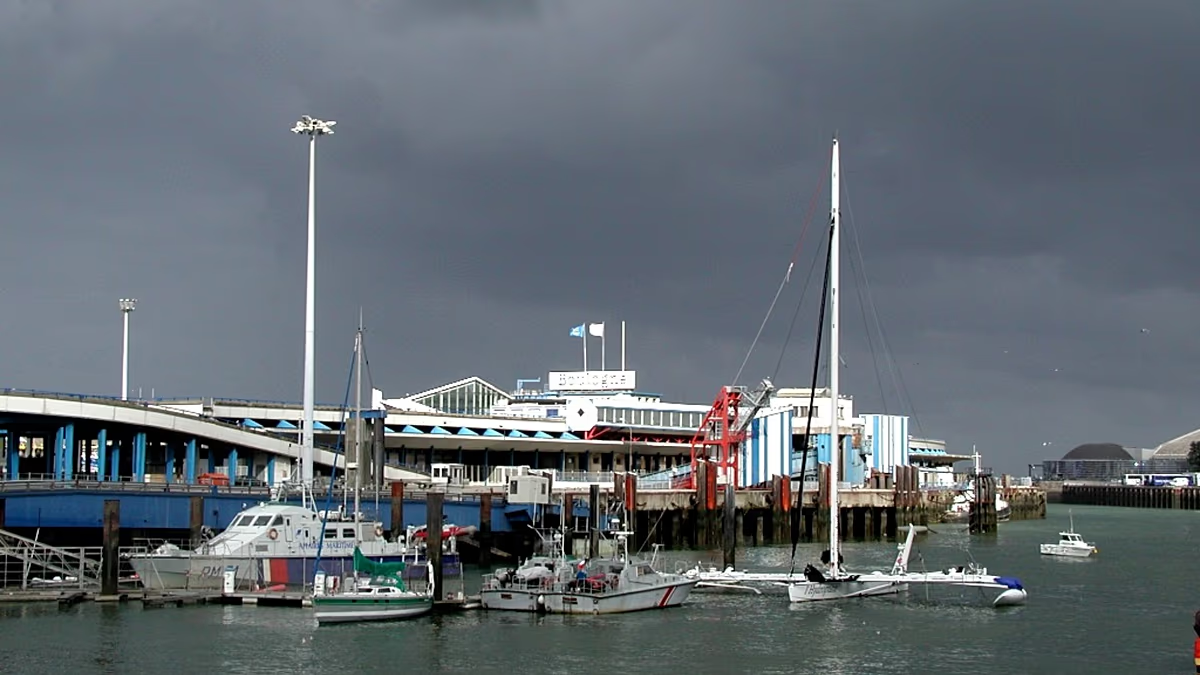
The sea has always had an incomparable way of weaving human destinies together across vast geographic divides, but on Friday, June 12, 2026, the quiet docks of Boulogne-sur-Mer wrote a vibrant and deeply emotional new chapter that captured the hearts of locals and travelers alike. For the first time in fifteen long, quiet years, this historic northern French port town welcomed back the deep, resonant hum of an international passenger ferry engine, signaling its triumphant return to the global maritime stage and reviving a sense of local maritime identity that had lain dormant for a generation. The catalyst for this community celebration was the inaugural voyage of a brand-new ferry route designed to connect the rugged coasts of northern France directly with the green, rolling hills of southern Ireland. Operated by the ambitious and forward-thinking Hibernia Line, this overnight passage directly to Cork represents far more than just a convenient new line on a commercial transit map; it is a profound emotional victory for a region that has spent a decade and a half longing to see its historic harbor bustling with international travelers and shipping containers once more. No one captured this sentimental weight better than Frédéric Cuvillier, the passionate mayor of Boulogne-sur-Mer, who had championed the maritime project through years of complex planning, regulatory hurdles, and community consultations. Expressing his deep pride on his Facebook page, Cuvillier spoke of the dedication it took to build this dream from scratch, celebrating the years of negotiations and unwavering hope that finally culminated in a majestic vessel breaking the horizon. His moving tribute, “I love people who believe in Boulogne,” resonated deeply with local citizens who have historically defined their lives, jobs, and heritage by the daily rhythm of the ocean tides, now revitalized by a direct pipeline to the shores of the Emerald Isle. This new maritime link serves as a physical manifestation of local resilience, proving that even after fifteen years of silence, a port town’s connection to the sea can be restored with passion, investment, and a shared vision of unity.
The practical rhythm of this newly established maritime highway has been designed to fit seamlessly into the lives of both commercial haulers and adventurous holidaymakers, establishing a reliable, comforting heartbeat between the two Celtic neighbors. Operating six times a day from Monday to Saturday in both directions, the route links the French terminal directly with the quiet, scenic village of Ringaskiddy, nestled deeply into the natural, historic embrace of County Cork. For those setting sail from the Irish coast, the journey begins just as twilight falls over the Atlantic, with ferries departing Cork at 21:00 GMT, while travelers commencing their voyage from the European mainland slip away from the Boulogne-sur-Mer docks at 22:00 GMT. The crossing translates into an unhurried overnight escape of approximately 21 hours mid-week, extending to a leisurely 24 hours on Saturday nights, a time frame that naturally encourages passengers to slow down and embrace the voyage. This generous schedule turns what could be a stressful transit experience into a romantic journey under the stars, allowing travelers to watch the twinkling lights of the French coast slowly dissolve into the deep blue of the English Channel before merging into the vast Celtic Sea. Passengers can fall asleep to the gentle, rhythmic sway of the ocean, enjoy a warm meal in the ship’s dining hall as the sea stretches to the horizon, and wake up to the dramatic, mist-shrouded cliffs of the Irish coastline. It is a masterful embrace of the slow travel movement, where the journey itself becomes an integral, cherished part of the vacation experience, allowing people to disconnect from the frantic pace of modern air travel, watch the open ocean roll by, converse with fellow adventurers, and emerge onto dry land fully rested and ready to explore new territories. This route elevates the act of travel from a mere chore to a beautiful, meditative interlude on the water.
Bringing this ambitious physical connection to life are two remarkable sister vessels, the St Patrick and the Akka, sturdy ships meticulously engineered to tame the temperamental waves of the northern seas while offering a sanctuary of hospitality and safety for those on board. Each vessel boasts a generous and versatile capacity, capable of comfortably carrying up to 600 passengers alongside 130 cargo units of freight, striking a perfect operational balance between vital industrial trade utility and relaxing passenger comfort. During the initial, introductory phase of the service, the ocean-going ships are operating as rolling sanctuaries primarily for travelers utilizing personal vehicles—such as family sedans, adventurous campervans, motorhomes, and commercial freight trucks—creating a dynamic, transient community of road-trippers, transport workers, and families sharing stories over hearty meals. However, the true democratization of this route will occur on July 1st, when the service officially opens its passenger gangways to foot travelers, throwing the doors wide open for budget backpackers, romantic railway adventurers utilizing European Interrail passes, and ecological cyclists exploring the vast European continent. Onboard, the design philosophy of both the St Patrick and the Akka is geared towards making the overnight voyage feel less like a functional transport vehicle and more like a warm, floating seaside village, complete with diverse spaces to dine, rest, and gaze out at the endless horizon. By combining comfortable private sleeper cabins, quiet public lounges, and spectacular open-air observation decks, these sister ships provide an inclusive environment where travelers of all walks of life can converse, swap itineraries, and bond over the timeless, romantic experience of open-water navigation, bridging the ancient geographical divide with warmth, safety, and a distinct sense of old-school maritime adventure. As summer approaches, the anticipation onboard is palpable as crews prepare to welcome a diverse array of international wanderers.
While the emotional and cultural impact of this new ferry link is undeniable, its timely creation is also deeply intertwined with the shifting geopolitical realities of modern Europe, serving as a direct, physical response to the administrative complexities of Brexit. In the years following the United Kingdom’s official departure from the European Union, the historical “landbridge”—the transit route requiring Irish shipping haulers and tourists to drive across mainland Britain to reach continental Europe—has become increasingly bogged down by tedious administrative red tape, newly implemented customs checks, and highly unpredictable border delays. This exhausting bureaucratic gridlock has ignited a booming, unprecedented demand for direct maritime bypasses, urging shipping lines to establish direct water routes that keep both commerce and leisure travel flowing smoothly and uninterrupted within the single European market. Hibernia Line now proudly joins an established, innovative vanguard of operators, including venerable industry giants like Brittany Ferries, Irish Ferries, and DFDS, who have collectively transformed the cold waters of the Celtic Sea into a bustling, energetic highway of European solidarity and independent trade. By completely bypassing the United Kingdom, commercial business networks can securely guarantee the timely delivery of vital agricultural goods, manufacturing products, and pharmaceuticals without the headache of customs interruptions, while casual travelers can enjoy a seamless, passport-control-free experience between EU territories, reinforcing a strong, direct link between Ireland and its continental allies. This geographic transition has beautifully reshaped the logistics map of northern Europe, proving that sovereign nations can successfully adapt to political hurdles, and demonstrating that the ocean remains a liberating path of least resistance for societies determined to maintain intimate, uncomplicated ties with one another. The direct maritime route acts as a physical representation of modern European collaboration, turning barriers into bridges and reminding us that when land routes present unnecessary friction, the shared waters of the sea will always offer open, welcoming horizons for cooperation and economic progress.
Beyond the cold, transactional mechanics of trade and shipping statistics, this maritime bridge promises to unleash a rich, transformative wave of tourism and intimate cultural exchange, offering travelers an alluring and easily accessible gateway to discover the unique, welcoming spirits of both coastal destinations. For French and continental visitors landing in the port of Ringaskiddy, County Cork serves as the ultimate, breathtaking starting point to explore the world-famous Wild Atlantic Way, Ireland’s cultural heart, acclaimed worldwide for its vibrant traditional music sessions filled with fiddles and tin whistles, historic stone castles, and a world-class culinary scene characterized by artisanal farmhouse cheeses, organic meats, and fresh-caught Atlantic fish. Conversely, for Irish travelers disembarking in Boulogne-sur-Mer, the historic French town presents a mesmerizing, multi-sensory introduction to the gorgeous Opal Coast, adorned with dramatic sandy beaches, rolling chalk cliffs, and a rich, storied history preserved within its magnificent medieval fortified old town. Boulogne is also globally celebrated as France’s premier fishing port, meaning travelers can indulge in some of the finest, freshest seafood in the world at local family-run bistros, before dedicating an afternoon to visiting Nausicaá, Europe’s largest and most spectacular public aquarium, making the port city an instant hit for curious family holidaymakers and marine life enthusiasts alike. By making these once-distant regions easily accessible with nothing more than a peaceful sleep and a scenic sail, the new Hibernia Line ferry fosters a deeply personal, sustainable style of slow travel where international neighbors can easily cross the ocean to share a creamy pint of stout or a freshly baked, flaky croissant, discovering along the way that despite the linguistic and cultural differences, the shared maritime heritage and resilient coastal spirit of these two proud communities run incredibly deep. This relationship creates a living web of human interaction, turning tourists into temporary locals who bring home a piece of each other’s world.
As eager travelers begin planning their upcoming journeys on this exciting new route, navigating the practicalities of international travel remains a crucial, informative step, particularly concerning the evolving border policies of the European continent. Because Ireland is not a member of the border-free Schengen Area, despite its proud standing as a core, enthusiastic member of the European Union, passenger transit between Cork and Boulogne-sur-Mer inevitably involves crossing an external Schengen zone frontier. Consequently, non-EU and non-EEA citizens disembarking in France will be subject to the newly implemented Entry/Exit System (EES) requirements, necessitating biometric registration, digital facial imaging, and careful electronic passport verification at the Boulogne-sur-Mer border control point upon arrival. While these modern safety, customs, and registry measures naturally require a brief moment of patience and preparation from travelers as they disembark from their overnight cruise, they represent a small, highly manageable price to pay for the sheer convenience of a direct, overnight voyage that completely avoids the high stress of crammed airport terminals, security lines, baggage fees, and flight delays. Ultimately, the triumphant revival of Boulogne-sur-Mer’s international port stands as a shining, inspiring testament to human perseverance, community pride, and international planning, proving that with bold vision and enthusiastic cross-border cooperation, historical pathways can be beautifully reborn, bringing people, diverse cultures, and robust local economies closer together on the open sea. As the St Patrick and the Akka continue to make their regular, reliable crossings through the waves of the Celtic Sea, they do far more than transplant steel, cars, and commercial freight; they carry the hopes, dreams, and shared futures of two coastal communities united by water, ushering in a brilliant new golden age of accessible, eco-conscious maritime travel. This connection reminds us that when we seek to find one another, the sea is not an obstacle, but an invitation.