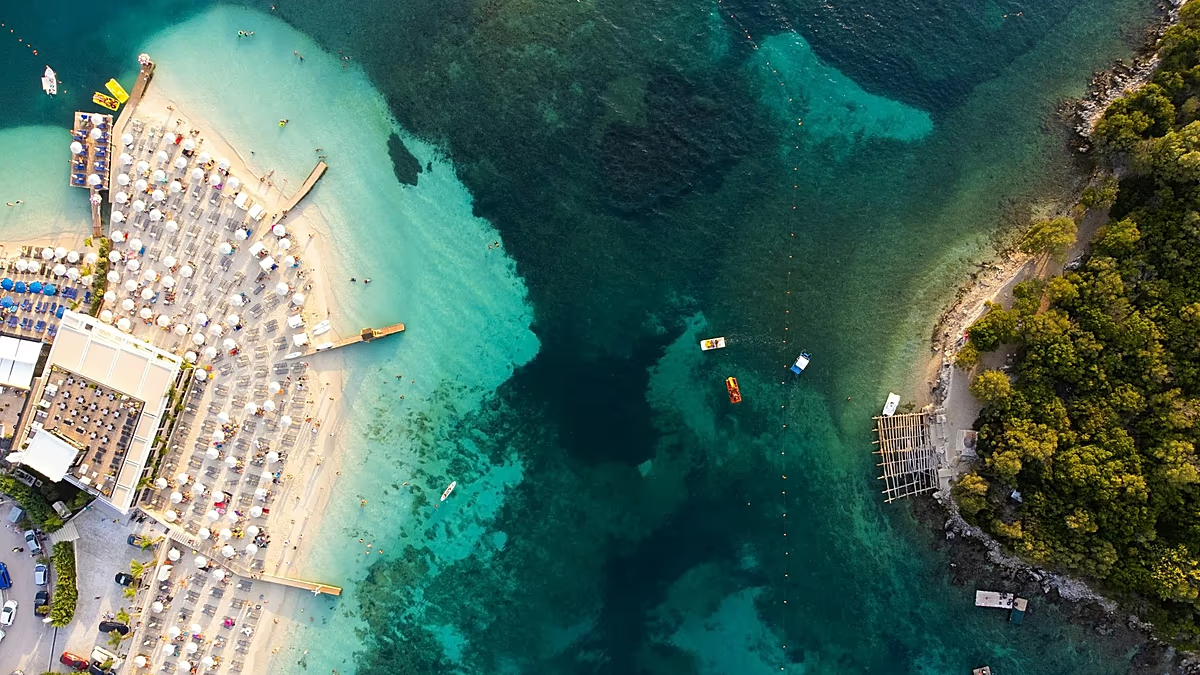




To walk through the quiet corridors of a closed Cuban luxury resort is to witness a profound silence where there once lived a vibrant, sensory symphony of laughter, clinking glasses, and the hypnotic rhythms of traditional son music. For decades, the towering palm trees and white-sand beaches of destinations like Varadero, Holguín, and the pristine Cayos were framed by the welcoming facades of international hotels, serving as vital gateways connecting Cuba to the rest of humanity. This delicate economic lifeline, however, has suffered a devastating blow with the shocking announcement that Spain’s premier hospitality giants, Meliá Hotels International and Iberostar Hotels & Resorts, are drastically scaling back their footprint on the island. Meliá has confirmed the suspension of its operations across fifteen of its managed hotels, a move that follows hot on the heels of Iberostar’s decision on the first of June to shutter its management of twelve properties. For the thousands of ordinary Cuban citizens who cleaned these rooms, prepared the world-class cuisine, manicured the lush tropical gardens, and guided foreign visitors through their homeland, these closures represent far more than a mere corporate restructuring or a tactical shift in market asset allocation. They represent an immediate, catastrophic threat to their livelihood, plunging families into a state of deep economic anxiety and casting a long, dark shadow over the future of an island nation already struggling to survive one of the most severe humanitarian and currency crises in its modern history.
The catalyst for this sudden, painful retreat does not stem from a lack of natural beauty or a sudden drop in global desire to experience the culture of Cuba, but rather from the invisible, crushing weight of international geopolitics and the financial architecture of Washington’s sanctions regime. For years, the United States has steadily tightened its embargo on Cuba, specifically targeting the financial plumbing of the Cuban government by placing suffocating sanctions on GAESA (Grupo de Administración Empresarial S.A.), the massive, opaque business conglomerate controlled by the Cuban Revolutionary Armed Forces. Because GAESA owns Gaviota, the state-run tourism agency that owns the physical infrastructure of the vast majority of Cuba’s high-end resorts, foreign hotel operators like Meliá and Iberostar have found themselves trapped in an untenable regulatory minefield. Under the strict provisions of the U.S. State Department’s restricted list and the looming threat of Title III of the Helms-Burton Act, any international corporation doing business with military-controlled entities faces severe financial penalties, the freezing of assets, and the denial of U.S. visas for their top executives. In the highly globalized hospitality industry, where European brands rely on American banks to clear payments, utilize American software for reservations, and seek to appeal to North American travelers, the risk of being completely locked out of the U.S. financial system has finally reached a tipping point. Yielding to this mounting external pressure, these Spanish hotel chains have been forced to make the agonizing calculation to disconnect from these twenty-seven properties rather than risk the total devastation of their global corporate empires.
To fully comprehend the tragic irony of this situation, one must look closely at the complex, controversial nature of GAESA and its total monopolization of the Cuban economy. Under the long stewardship of the late General Luis Alberto Rodríguez López-Callejas, the Cuban military quietly systematically absorbed the country’s most profitable sectors—ranging from luxury hotels, marinas, and retail shopping malls to financial transaction services and gas stations—insulating itself from the hardships endured by the general population. Washington’s strategy of “maximum pressure” was designed with the explicit goal of starving this military apparatus of the hard currency it uses to sustain its security forces and maintain its grip on power. However, the lived reality of these sanctions reveals a deeply heartbreaking paradox: while the target of the policy is the military elite sitting in air-conditioned boardrooms in Havana, the actual casualties are the everyday citizens standing on the metaphorical front lines of the hospitality industry. The chambermaids who used their hard-earned foreign currency tips to buy scarce medicine for their elderly parents, the cooks who secured extra food to feed their extended families, and the administrative staff who held some of the most stable jobs in the country are the ones suddenly cast adrift. By cutting off these international management partnerships, the sanctions have not toppled the militarized state apparatus, but they have successfully dismantled the most reliable bridge that connected the Cuban working class to the global economy, leaving them with fewer options for dignified survival.
The sudden retreat of Meliá and Iberostar feels particularly jarring because these two Spanish brands were not just temporary tenants; they were the absolute pioneers of Cuba’s post-Soviet economic rebirth. When the collapse of the Soviet Union in the early 1990s plunged Cuba into the devastating economic winter known as the “Special Period,” the government in Havana was forced to abandon its rigid ideological opposition to foreign investment and look to the tourism industry as an emergency life raft. It was Meliá that stepped boldly into the void, partnering with the Cuban state in 1990 to open the iconic Sol Palmeras in Varadero, proving to a skeptical world that Cuba could successfully host mass global tourism. Iberostar quickly followed, and for more than three decades, these Spanish brands stood shoulder-to-shoulder with the Cuban people, weathering ferocious hurricanes, navigating intense local economic shifts, and enduring constant political pressure from critics in Miami and Washington. They invested hundreds of millions of dollars in training local workers, elevating service standards, and marketing the island as a safe, peaceful paradise of warm hospitality. To see these historically resilient companies dismantle their operations at nearly thirty combined hotels feels like the definitive end of an era, a tragic regression back to the dark days of total isolation, and an admission that the dreams of a modernized, globally integrated Cuban tourism sector have been crushed under the gearwheels of geopolitical warfare.
The economic devastation triggered by these hotel closures ripples far outward from the shoreline, tearing through a delicate web of local enterprises that relied on these massive resorts to exist. In Cuba, a hotel does not operate in a vacuum; it acts as a central economic engine that fuels a fragile, budding ecosystem of private agricultural cooperatives, transport providers, and independent artisans. When a resort shuts its doors, the local farmer who spent months cultivating fresh tomatoes, cucumbers, and tropical fruits specifically tailored to tourist tastes suddenly loses his only reliable buyer, leaving crops to rot in the fields. The independent taxi drivers, known affectionately for steering their restored American classic cars through the streets, find themselves lined up outside empty lobbies, watching their daily income evaporate as they struggle to afford hyper-inflated fuel prices. Even the country’s newly permitted, fragile private small businesses—known as mipymes—which have attempted to import basic goods to supply the service sector, are facing a crushing drop in demand. This widespread devastation of the local economy is directly accelerating a historic and heartbreaking demographic tragedy: the unprecedented exodus of Cuba’s youth and professional class, who, seeing the systematic destruction of their economic future, are choosing to abandon their homes, board makeshift rafts, or embark on perilous overland journeys through Central America to reach the United States.
Ultimately, the departure of Meliá and Iberostar from these twenty-seven hotels is a sobering monument to the enduring tragedy of modern Cuban history—a history defined by the ongoing, unyielding clash between the ideological obstinacy of the Cuban government and the relentless, indiscriminate brutality of the U.S. embargo. As the physical buildings of these once-pulsing resorts stand dark and empty, they serve as a metaphor for an island caught in a permanent state of geopolitical limbo, where the aspirations of eleven million people are perpetually held hostage by historical grievances and foreign policy battles waged in offices thousands of miles away. Yet, even in the face of this profound setback, the resilient, generous spirit of the Cuban people remains entirely undefeated. Neighbors continue to share their meager rations, artists continue to paint and sing of their love for their homeland, and hospitality workers continue to hold onto the hope that one day, their beautiful island will no longer be treated as a geopolitical battleground. Until that day arrives, the world must look past the dry corporate announcements of halted hotel operations and see the real, human cost of this struggle: a proud, cultured, and welcoming people who ask for nothing more than the simple opportunity to open their doors, share their beautiful island with the world, and build a life of basic dignity and peace.