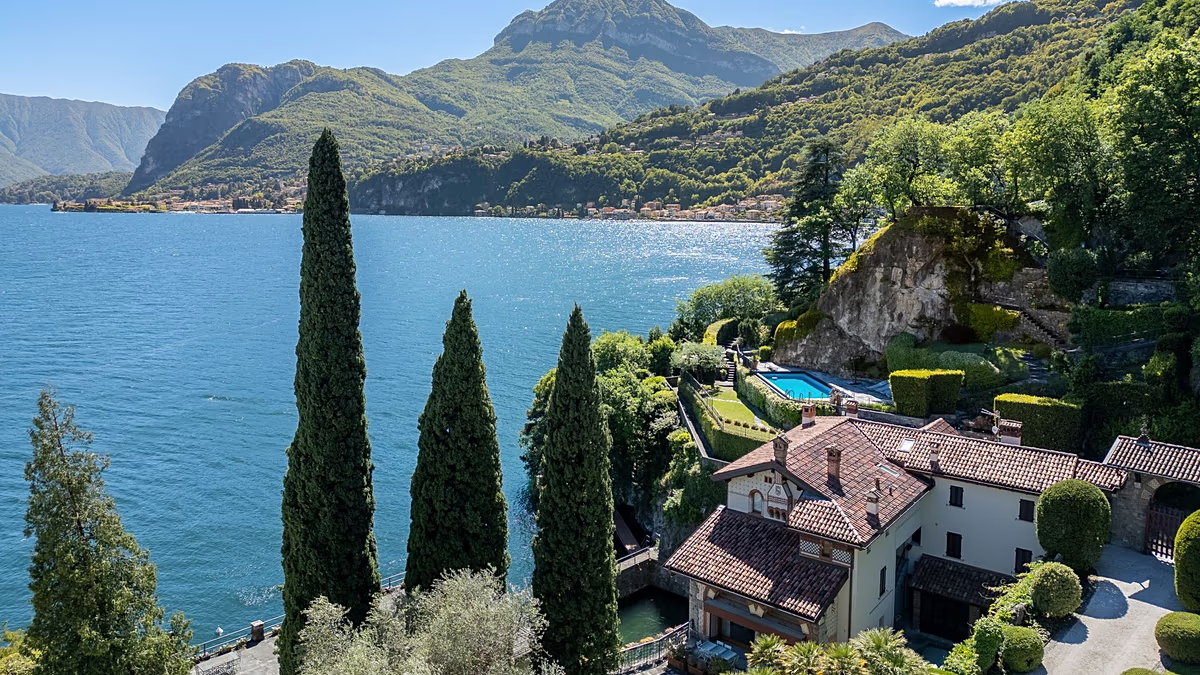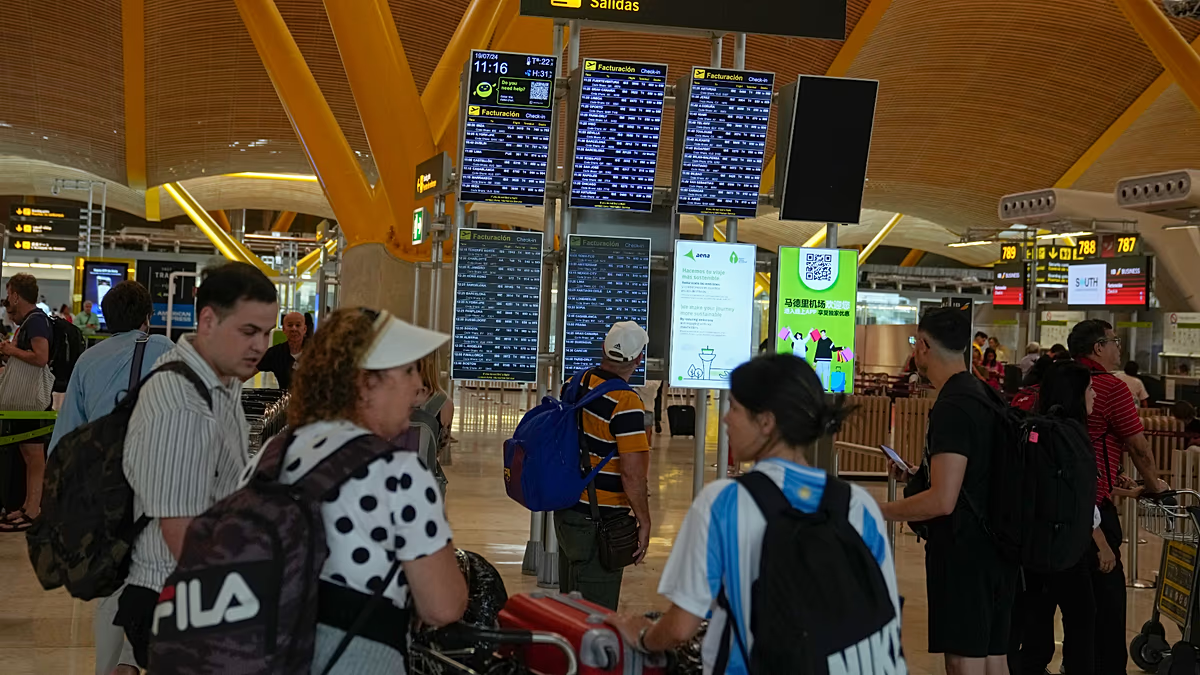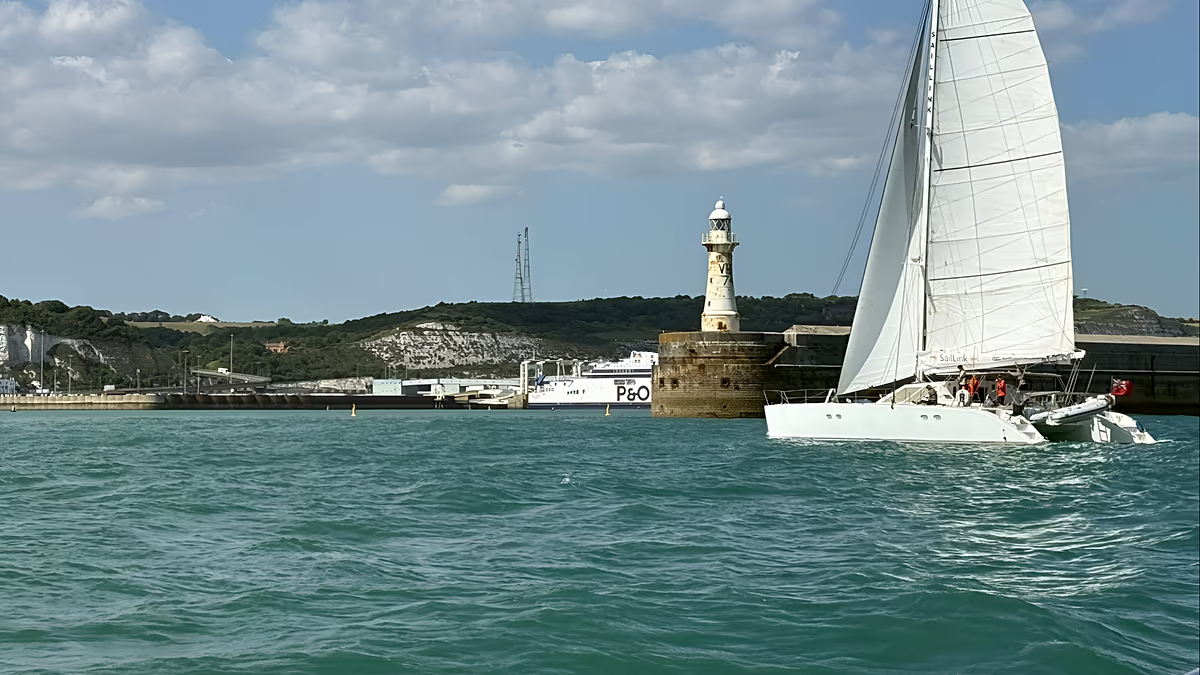



Across the sun-drenched landscapes of Europe, from the maze of history-soaked cobblestone alleyways in Rome to the dramatic, windswept cliffs of Brittany, a remarkably resilient and heartwarming phenomenon is unfolding this season: the absolute, fierce refusal of Europeans to surrender their hard-earned summer holidays. Despite the looming clouds of global economic uncertainty, persistent inflation that has nipped relentlessly at monthly household savings, and skyrocketing flight costs that make budget traveling feel like a relic of a bygone era, the collective appetite for a seasonal escape remains completely undiminished. For many, travel is no longer viewed as a negotiable, dispensable luxury or an easily discarded seasonal expense, but rather as an essential, non-negotiable pillar of mental well-being, familial bonding, and personal rejuvenation. After years of navigating relentless daily pressures, political anxieties, and economic squeezes at home, the emotional and psychological value of stepping away from the daily routine, feeling the radiant warmth of a foreign sun, and hearing the gentle, rhythmic lull of unfamiliar ocean waters is intensely prioritized across all demographics. Citizens from Paris to Warsaw, and from Madrid to Stockholm, are proactively and creatively adjusting their daily expenditures throughout the year—deliberately cutting back on commercial conveniences, takeout coffee, expensive winter garments, and redundant subscription services—simply to ensure that their summer travel itinerary remains intact. This unyielding drive is a striking, beautiful testament to human resilience and our deeply rooted love for connection, proving that while our wallets might feel noticeably lighter this year, our collective desire to explore, rest, and discover new horizons cannot be cooled by a challenging economic climate. The traditional holiday is no longer merely a slot on a calendar, but a vital mental sanctuary, a sacred ritual where we can shed our daily worries and remember how to live fully in the present moment, making it something worth protecting at almost any cost.
To navigate this high-cost landscape without sacrificing the sheer joy of travel, a wave of savvy vacationers is mastering the art of the “destination dupe” and shifting their geographical focus toward hidden gems that offer breathtaking beauty without the heavy price tag of fame. The traditional, hyper-famous hotspots of the continent are undeniably charming, but they come with premium tourist taxes and inflated pricing that can quickly drain a family’s life savings; instead of fighting for a square inch of sand on an overcrowded beach along the Amalfi Coast, modern travelers are turning their eyes to the pristine, spectacular sands of the Albanian Riviera, or choosing the affordable, crystal-clear coastal towns of Montenegro over the increasingly expensive Greek islands. Within classic European tourist giants like France and Spain, shifting away from the coastlines to explore majestic inland regions like Andalusia’s white-walled villages or the rugged, historic beauty of Galicia can result in massive savings on lodging and food while offering a deeper, more authentic cultural immersion. Beyond “duping” destinations, timing has become the most powerful weapon in the budget-conscious traveler’s arsenal. Slipping into the shoulder seasons of late spring or early autumn, or simply choosing to depart on a Tuesday or Wednesday rather than a weekend, can slash international transit fees and hotel accommodation costs by nearly half, revealing a quieter, more poetic side of Europe where you can actually hear the whispers of history rather than the din of tourist crowds. This fresh approach proof-tests the idea that luxury and beauty are not confined to expensive brand-name destinations, showing that travel is often far richer when we step off the beaten path and allow ourselves to be surprised by the underrated corners of the continent.
While destination mapping is key, managing the practical choreography of foreign finance is where travelers can claw back significant amounts of cash that usually slip away in hidden bank fees and predatory transaction costs. In our increasingly cashless society, navigating foreign ATMs and credit card transactions can feel like walking through a financial minefield, particularly with the ubiquitous trap of “Dynamic Currency Conversion.” Whenever a foreign card terminal or ATM asks whether you would prefer to be billed in your home currency or the local denomination, the golden rule is to always choose the local currency; opting for your home currency allows the local merchant’s bank to apply their own heavily inflated exchange rates, pocketing a hefty premium for an unnecessary convenience. Furthermore, bypassing traditional high-street banks in favor of modern multi-currency digital banking cards allows travelers to exchange money instantly at near-market rates, completely dodging the predatory transaction and conversion fees that quietly accumulate on holiday bank statements. Ironically, while digital banking is a financial lifesaver, keeping a modest stash of physical cash remains deeply practical and culturally valuable within Europe’s diverse local communities. In the sleepy, family-run trattorias of southern Europe, the remote mountain refuges of the Alps, or the sprawling weekend flea markets of Central Europe, cash is still the lifeblood of daily commerce, and using physical currency not only helps you support small local merchants directly but also serves as a natural, tactile psychological boundary that prevents mindless overspending by making your holiday budget visible and tangible.
One of the most beautiful silver linings of the current high-cost travel landscape is the spectacular renaissance of the European railway, a shift that is fundamentally redefining how we conceptualize the journey itself. For a generation, low-cost budget airlines dominated our getaways, but the hidden costs—such as exorbitant baggage fees, expensive airport transfers, and the immense stress of rigid check-in security queues—have stripped flying of its romantic allure and left travelers physically and financially drained before they even arrive. By contrast, embracing the ethos of “slow travel” through Europe’s expansive high-speed and overnight rail networks transforms transit from an agonizing chore into a core, pleasurable part of the holiday experience. Settle into a comfortable passenger car, watch the rolling vineyards, medieval castles, and dramatic mountain peaks glide smoothly past your window, and enjoy the freedom of packing your own food and luggage without facing a single hidden surcharge or unexpected fee. The quiet rise of modern night trains means you can fall asleep under the stars in Brussels and wake up to the morning hum of Vienna or Berlin, saving the cost of an expensive hotel night while starting your day directly in the heart of your destination. By choosing closer, rail-accessible destinations, travelers can completely bypass the chaotic, unpredictable energy of modern airport terminals, saving precious euros and drastically reducing their carbon footprints, proving that sometimes the most rewarding travel experiences are those that happen close to the earth rather than high above the clouds.
To stretch your vacation budget even further once you arrive, there is immense value in shifting away from a consumer-centric tourist lifestyle and fully embracing the day-to-day culinary and social rhythms of local residents. Instead of dining at flashy restaurants decorated with tourist-trap English menus and inflated prices, wander a few blocks off the main tourist avenues to seek out local morning food markets, where you can source fresh bread, locally made cheeses, sun-ripened olives, and seasonal fruits for a fraction of restaurant costs. Choosing self-catering accommodations like local apartments over conventional hotels allows you to easily prepare casual, delicious lunches to be enjoyed as a scenic picnic in a public park, on a riverbank, or overlooking a beautiful historic square, turning mealtime into a creative and cultural adventure. Additionally, almost every major cultural center across Europe is brimming with free or low-cost activities that offer a far deeper, more rewarding connection to the destination than expensive commercial attractions. From booking free walking tours led by passionate local students who share raw history to taking advantage of the designated free-entry days at world-famous museums and galleries, you can immerse yourself in art and history without spending a single cent. Finding joy in these simple, localized interactions highlights that the most memorable, soul-stirring aspects of travel—a friendly conversation with a café owner, a hike through a public nature reserve, or watching a magnificent sunset over a city terrace—cannot be purchased at any price.
Ultimately, the current economic climate challenges us to beautifully redefine what a successful, fulfilling, and deeply memorable holiday actually means in the modern world. It invites us to remember that the true magic of travel does not reside in the dizzying price tag of our hotel room, the exclusivity of a resort, or the prestige of a far-flung destination, but rather in the glorious, simple sensations of freedom, novelty, and authentic connection. When we thoughtfully map our destinations, swap stress-filled flights for leisurely, scenic trains, dodge hidden banking fees, and embrace the vibrant, simple rhythms of local culture, we are not sacrificing our travel experience; we are enriching it with authentic substance and local connection. This budget-conscious, slow-paced approach encourages us to look closer, behave more mindfully, and appreciate the hidden wonders that exist right in our own backyards or just beyond our domestic borders, showing that you don’t need to cross oceans to discover worlds. Summer remains a deeply sacred time of the year—a precious season designed to help us slow our heart rates, reconnect with our loved ones, and feel truly alive in a world that is often distracting and fast-paced. By adopting these practical, heart-centered financial strategies, the long-awaited absolute joy of summer travel can be fully realized and preserved, ensuring that your precious holiday finances stretch further as you create rich, everlasting memories that will endure long after the sun sets and the autumn leaves begin to fall.