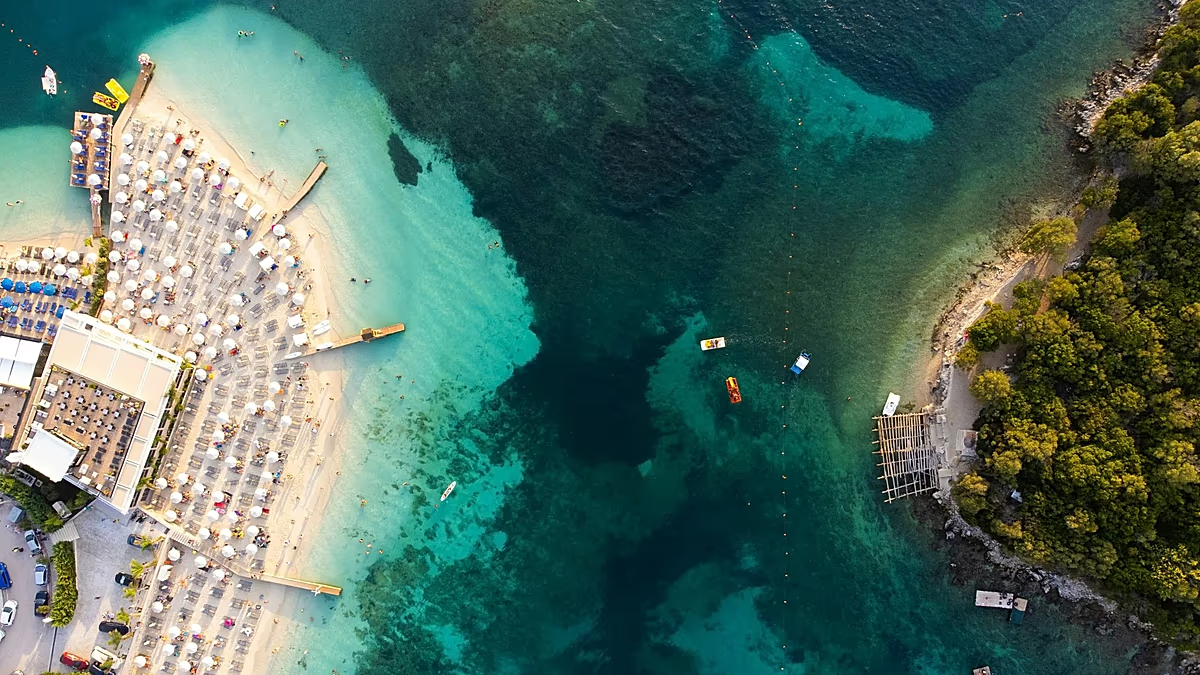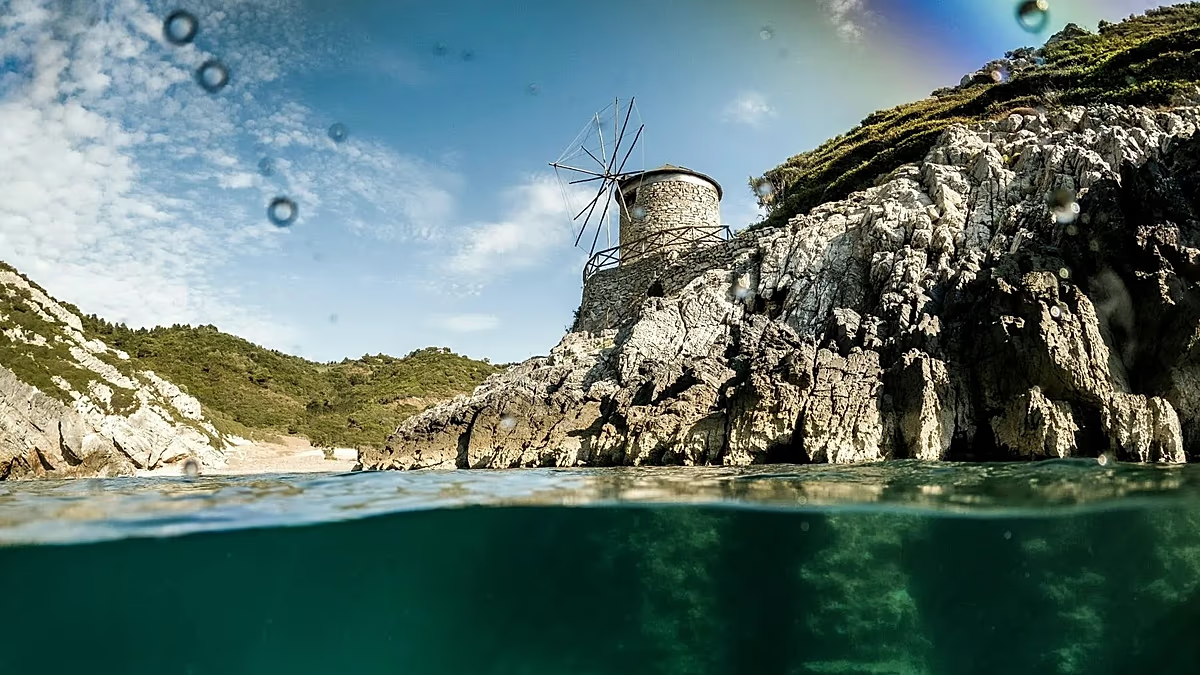




Imagine waking up every morning to the gentle, rhythmic whispering of the Aegean Sea, where the horizon is an unbroken line of deep sapphire blue and the air carries the fragrance of wild thyme and salty ocean spray. For many, the dream of escaping the exhausting, relentless grind of modern city life leads to fantasies of private sanctuaries on sun-drenched Greek islands, places where time seems to slow down and the cares of the high-tech world melt away under a warm Mediterranean sun. This dream recently appeared to become a tangible, astonishing reality when news spread of an extraordinary offer: the opportunity to live rent-free on the stunning, ruggedly beautiful island of Antikythera, nestled halfway between Crete and the Peloponnesus. This tiny haven, famous to historians as the discovery site of the world’s oldest analog computer, the ancient Antikythera Mechanism, is offering selected newcomers a rent-free house, a generous plot of land to cultivate or build upon, and a monthly stipend of five hundred euros for their first three years of residence. It sounds like an dream come true, a modern-day fairy tale designed for those longing for simplicity, beauty, and peace. Yet, this idyllic proposition comes with a profound catch, a strict and unyielding condition that immediately filters out casual vacationers and solitary dreamers, reserving the opportunity only for those willing to embark on a deep, life-altering journey of community rebuilding.
Behind the postcard-perfect imagery of whitewashed houses and crystalline waters lies a quiet, poignant crisis that has been slowly eroding the heart of this ancient island for several decades. Antikythera is suffering from a severe demographic collapse, a slow-motion tragedy shared by many remote, rural communities across southern Europe as younger generations migrate to bustling urban centers like Athens in search of employment, education, and modern excitement. This steady exodus has left the island with a tiny, aging population of fewer than forty permanent residents, whose days are quiet and whose futures are clouded by the fear that their beloved home will eventually become a abandoned ghost town, devoid of human warmth. The silence that envelops the island during the winter months is beautiful but heavy, marked by the absence of the lively, chaotic sounds of youth, the closure of local shops, and the shuttering of the island’s primary school, which sat silent for over twenty-four years because there were simply no children left to fill its classrooms. For the elderly locals who have spent their entire lives tending to the island’s rocky soil and fishing in its rich, turbulent waters, the decline of their community is a source of deep sorrow, fueling a desperate collective yearning to see their home rise again, filled with life, laughter, and the promise of a future.
To combat this existential threat and breathe new life into the island, the local council, in close partnership with the Greek Orthodox Church, devised a bold and highly selective migration initiative that serves as the foundation of this rent-free offer. The “strict catch” that governs this application process is simple yet challenging: applicants must be young families with children, preferably those with three or more, who are genuinely committed to making Antikythera their permanent, year-round home, rather than treating it as a temporary holiday escape. The organizers are not looking for digital nomads who will remain isolated behind glowing laptop screens, nor are they seeking retirees looking for a quiet place to watch the sunset; they are searching for active, resilient pioneers who are willing to roll up their sleeves, integrate into the local culture, and actively participate in the island’s daily survival. The primary, non-negotiable goal of this strict condition is the immediate rejuvenation of the educational system, as the presence of young children is the only way to justify the reopening and continued operation of the school. By targeting larger families, the organizers hope to create a sudden, vital influx of youth that will act as a catalyst for a wider economic and social revival, turning a quiet sanctuary back into a living, breathing community.
However, choosing to accept this generous offer and meet the strict conditions requires an honest, clear-eyed assessment of what daily life on a remote Greek island actually entails, far beyond the filtered, romanticized lifestyle depicted on travel blogs. Antikythera is a place of raw, untamed beauty, but it is also a environment characterized by geographical isolation and limited infrastructure, where the modern convenience of popping to a supermarket or visiting a specialist doctor at a moment’s notice simply does not exist. The island has only one small grocery store, a single local tavern that serves as the communal hub, and a basic medical clinic, leaving residents heavily dependent on a ferry service that is frequently delayed or canceled during the stormy, wind-swept winter months. To thrive here, newcomers must possess a deep emotional resilience, a practical skill set—such as farming, fishing, or building—and a willingness to embrace a lifestyle of self-sufficiency where neighbors rely on one another for survival and companionship. The transition from a hyper-connected, fast-paced city to an isolated island requires a profound psychological shift, transforming one’s relationship with time, solitude, and the natural world as the changing seasons and weather patterns dictate the flow of daily life.
Despite these daunting challenges and the strictness of the selection criteria, the human response to this initiative has been incredibly heartwarming, proving that the desire for genuine connection and a simpler way of living still burns brightly in the hearts of many. When the program was first announced, applications flooded in from all corners of the globe, including families from Greece, other European nations, and even as far away as the United States, all eager to exchange the chaotic stress of modern life for a purposeful existence in paradise. Among the successful applicants was a young Greek family with three children who took the courage to leave Athens, allowing their young sons to become the very reason the island’s long-abandoned school building finally unlocked its doors and rang its bell once again. The sight of these children playing in the village square and exploring the sun-drenched hillsides has brought tears of joy to the eyes of the elderly residents, bridging a generational divide and fostering a beautiful, symbiotic relationship where the old guard teaches the newcomers the ancient secrets of the land, while the youth bring a vibrant energy and hope that had been missing for a quarter of a century.
Ultimately, the story of Antikythera is much more than a narrative about a peculiar real estate deal with an unusual catch; it is a profound, illuminating reflection on what it truly means to belong to a community in our increasingly fragmented, digital world. It challenges us to look beyond consumerism and convenience, asking whether we are willing to trade the superficial connections of city life for the deep, interdependent relationships that define a small, close-knit village. The “catch” of having to uproot one’s family and dedicate oneself to the survival of a remote island is indeed a heavy responsibility, but for those who have taken the leap, it has proven to be a golden key that opens the door to a richer, more authentic human experience. In giving these families a place to call home, the island of Antikythera receives something far more valuable than rent in return: a future, a legacy, and the continuation of a vibrant culture that has weathered the storms of history for thousands of years and will now continue to shine brightly under the Mediterranean sun.