

The Fuel Crisis Ripple: How Middle East Tensions Are Shaking Up European Travel
Imagine planning your dream summer getaway, only to find that the cost of jet fuel has skyrocketed by over 100% in Europe since last year, all because of ongoing turmoil in the Middle East. It’s a stark reminder that global conflicts don’t just stay in the news headlines—they trickle down into our everyday lives, especially when it comes to something as unpredictable as commercial aviation. According to the latest data from the International Air Transport Association (IATA), jet fuel prices have jumped a whopping 105.7% across Europe, forcing airlines to make tough calls that could derail our vacation plans. Carriers like Turkish Airlines, Transavia France, and Lufthansa are grounding planes and slashing routes, leaving travelers scrambling to adjust. But beyond the numbers, it’s the personal stories that hit home: families postponing reunions, students missing study abroad opportunities, and couples rescheduling honeymoons. This isn’t just an economic hit; it’s a human one. Picture a young couple from Amsterdam who had saved for months to visit relatives in Paris, only to get a notification that their Transavia flight was canned due to fuel costs. Or think about the business traveler from Berlin, whose frequent trips to Istanbul via Turkish Airlines are now suspended, throwing off international deals and deadlines. The ripple effect is real, and it’s making us all question how secure our skies really are. As we dive deeper into this crisis, it’s worth remembering that airlines are businesses too, trying to stay afloat amidst soaring kerosene prices. The Middle East conflict has disrupted oil supplies, driving up costs that airlines can’t fully absorb without passing them on or cutting back operations. This has led to a cascade of cancellations, not just inconveniencing passengers but also straining global supply chains and economies. For instance, delayed cargo flights mean products like fresh produce or electronics arrive late, affecting supply and demand everywhere. And let’s not forget the environmental angle—grounding flights reduces carbon emissions temporarily, but the long-term push for sustainable aviation is now even more urgent. Travelers are sharing stories online about how this has turned their excitement into anxiety, with some opting for trains or road trips instead, embracing slower, more intentional journeys. Ironically, while some see this as a silver lining for greening up travel, others worry about job losses for pilots, cabin crew, and ground staff. The human face of this crisis is a European aviation sector in flux, where every canceled flight represents more than seat miles—it’s livelihoods, memories, and connections at stake. As we navigate this turbulent sky, it’s crucial to stay informed and empathetic, understanding that behind every statistic is a real person grappling with uncertainty.
Transavia and KLM: When Budget Flights Become Luxuries We Can’t Afford
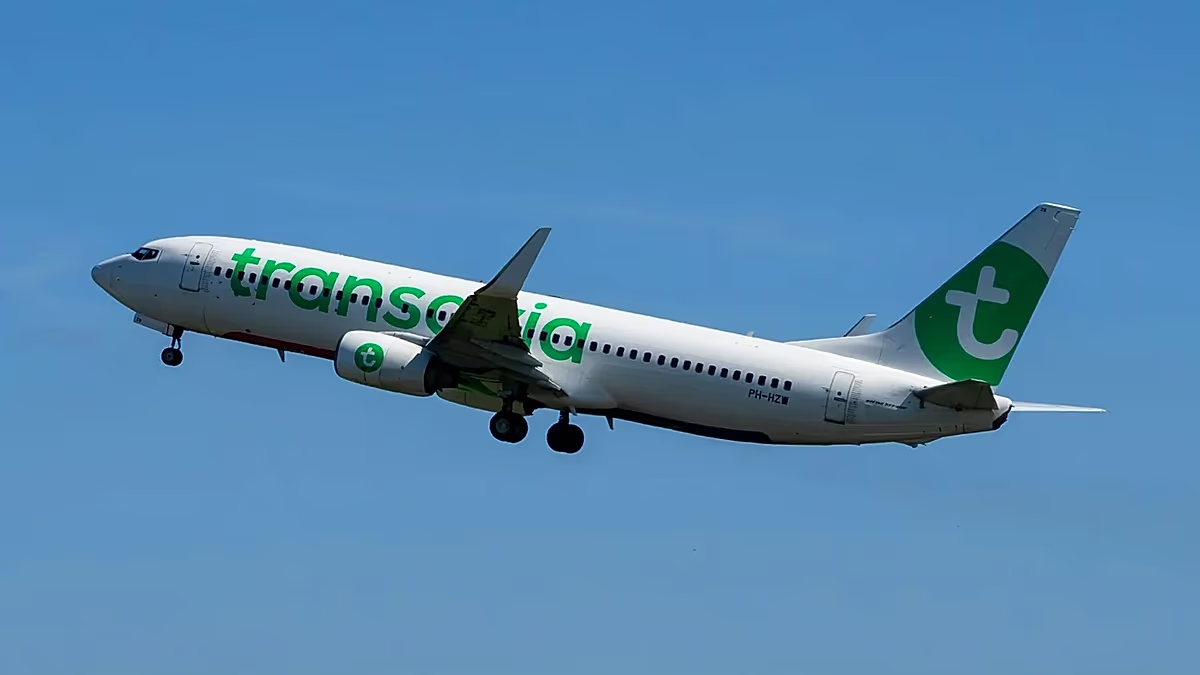
Zooming in on Europe, the low-cost carrier Transavia—a Dutch gem owned by the Air France-KLM group—is one of the hardest hit. They’ve announced cancellations of select flights between May and June, a move that’s come as a gut punch to budget travelers who rely on cheap flights to crisscross the continent. In their statement to AP, Transavia blamed “the current geopolitical context in the Middle East and its repercussions on the price of aviation fuel,” a diplomatic way of saying that kerosene costs have made operations unsustainable. Imagine a student from Rotterdam dreaming of a weekend in Barcelona, packing light with a backpack and a heart full of wanderlust, only to log on and see their flight deleted. Or a family from Paris hoping to reunite with grandparents in Amsterdam, whose plans dissolve into thin air. Transavia is stepping up with customer support, offering affected passengers a choice of vouchers, full refunds, or free rebooking within 24 hours for most canceled routes. It’s a small comfort in a volatile world, but it shows the airline’s commitment to standing by their flyers. They haven’t specified which paths are axed, adding to the uncertainty and forcing travelers to check and recheck itineraries. Nearby, their sister airline KLM isn’t faring much better. The Dutch carrier has canceled 160 flights to and from Schiphol Airport in May, which might sound minor—less than 1% of their European operations during that stretch—but it packs a punch for those impacted. KLM cited rising kerosene prices as the culprit, declaring some routes simply unprofitable to fly. Picture the commuter who hops on a daily KLM shuttle from Amsterdam to London for work meetings, now facing delays or detours that could jeopardize their job. Or the tourist group planning a Rhine River cruise, whose connecting flights from Schiphol are no longer guaranteed. This isn’t just about fuel; it’s about the hidden costs of global instability, where an oil tanker diverted for safety means higher prices at the pump and in the skies. KLM’s move highlights how interconnected our world is—terrors in the Middle East echo in European airports, reminding us of the fragility of international travel. Yet, in the chaos, there’s resilience. Travelers are adapting, switching to high-speed trains like Eurostar or Thalys, which offer romantic, scenic alternatives free from fuel worries. Some are even rallying online, sharing tips on alternative routes or demanding better transparency from airlines. The human impact here is palpable: anxiety for vacationers, frustration for frequent fliers, and a broader sense of impermanence. As Transavia and KLM weather this storm, we’re all learning that in aviation, preparation means flexibility—and a bit of understanding for the economic pressures squeezing these vital lifelines.
Turkish Airlines and SunExpress: Broad Cuts and Burning Surcharges
Over in Türkiye, flag carrier Turkish Airlines is feeling the pinch with suspensions of 18 flight routes and reduced frequencies across their vast network. According to Aeroroutes, an independent tracker, these changes kick in from May and June, affecting summer and early winter schedules alike. Routes spanning Europe, Africa, and Asia are on the chopping block, including Istanbul to tourist hotspots like Hurghada in Egypt, where flights end abruptly on June 2nd, and all 2027 services are nuked. It’s a bold cut that leaves travelers stranded, from adventurers heading to the beaches of Angolas to professionals commuting to tech hubs in Leipzig. Suspended international destinations include far-flung places like Aqaba in Jordan, Billund in Denmark, Bissau in Guinea-Bissau, Ferghana in Uzbekistan, Freetown in Sierra Leone, Havana in Cuba, Hurghada again, Juba in South Sudan, Kinshasa in the Congo, Kirkuk in Iraq, Leipzig/Halle in Germany, Libreville in Gabon, Luanda in Angola, Lusaka in Zambia, Monrovia in Liberia, Najaf in Iraq, Pointe Noire in the Congo, and Turkistan in Kazakhstan. Reporting from Ver Angola, the Portuguese Civil Aviation Authority was informed that Luanda flights are paused from May 3rd to November 25th, with hopes of resumption “as soon as circumstances allow.” Other watchdogs note fewer weekly services to Sarajevo from July and Zagreb from June, a real blow to connectivity in the Balkans. For instance, think of a Turkish expat in Berlin relying on these routes for family visits to Istanbul, now weighing costly layovers or skipped trips. Or the holidaymaker from the UK excited about adding London Stansted to Turkish Airlines’ roster just last month, with 15 weekly flights planned, only to see others vanish. It’s a tale of expansion halted by economic reality, where building networks crumbles under fuel’s weight. To add insult to injury, SunExpress—a joint venture between Turkish Airlines and Lufthansa—is slapping on a €10 “temporary fuel surcharge” from May on all routes from Türkiye to Europe. As per The Independent, this hits passengers booking after April 1st for travel from May 1st onward, straining budgets further. Visualize a backpacker from Spain planning a cultural dive in Cappadocia, whose ticket just got comically more expensive, or a retiree dreaming of a Mediterranean cruise extension from Türkiye, now debating if it’s worth the extra fee. This surcharge underscores the unequal impact: luxury travelers might shrug it off, but students and families on tight budgets are hit hardest. Yet, amidst the gloom, SunExpress offers a lifeline for planning, with prompts for forward-thinking bookings. The broader human story here is one of disrupted lives—traders in Kinshasa unable to import goods via Istanbul, or students in Leipzig missing out on exchange programs. Airlines like these are gatekeepers to the world, and when fuel prices surge, they must ration access. Travelers are coping by seeking waivers, crowd-sourcing cheap alternatives, or embracing virtual connections. It’s a reminder that aviation’s romance fades when economics bite, but communities are stepping up, sharing resources to mitigate the ripples. As Turkish Airlines and SunExpress navigate suspensions and surcharges, we’re all invited to rethink our flying habits, perhaps prioritizing essential journeys over whims.
Lufthansa’s Fleet Freeze: A Massive Grounding Amid Rising Costs
Taking a closer look at Germany’s aviation giant, Lufthansa has responded to the jet fuel crunch by grounding 20,000 flights, a monumental decision announced earlier this month to rein in soaring costs. This isn’t a minor tweak—it’s a full-on playbook to survive the storm, with pilots and planes grounded to avoid burning through expensive kerosene. For passengers, it’s a rude awakening: booked routes scrapped, vacations rerouted, and business trips derailed. Imagine the executive from Munich en route to Tokyo, only to find their connecting flight via Frankfurt canned, sparking tense calls to reschedule critical deals. Or the honeymooners from Hamburg planning a long-awaited jaunt to the Alps, whose dreams are stalled, turning joy into logistical nightmares. Lufthansa’s move reflects the harsh math: when fuel prices spike 105.7%, flying becomes a luxury reserved for the profitable. The airline’s spokespeople have emphasized cost-saving measures, leaving travelers to absorb the fallout with empathy and options like rebooking. This grounding extends beyond Europe, affecting global travelers who view Lufthansa as a reliable bridge to the world. Families counting on flights for reunions—say, relatives from diaspora communities in the US linking via Frankfurt—now face uncertainty, prompting heartfelt pleas in Facebook groups and travel forums. Job seekers in the aviation industry feel the squeeze too, with temporary layoffs looming for cabin crews and maintenance teams. Environmental advocates see a fleeting win in reduced emissions, but critics argue it’s short-term relief in a long-term crisis. Lufthansa’s stance is pragmatic, balancing corporate survival with passenger rights, offering refunds and alternatives where possible. In a very personal way, this grounding mirrors life’s unpredictabilities—a sudden illness or job loss—forcing us to pivot. Travelers are adapting by exploring safer modes like electric trains or car-sharing for domestic hops, fostering a sense of resilience. The human element shines through in stories of pilots unionizing for fair treatment or passengers organizing virtual meetups in lieu of canceled gatherings. As Lufthansa navigates this fleet freeze, it teaches us about the interconnectedness of energy prices, geopolitics, and our travel dreams, urging us to support airlines while demanding sustainable futures.
Is It All Doom for Travelers? TUI’s Reassurance Amid the Chaos
Amid the wave of cancellations and surcharges, a glimmer of hope comes from the tourism industry, where not everything is capitulated to the fuel frenzy. German tourism powerhouse TUI has assured customers that holiday prices for existing bookings won’t rise, a comforting stance in turbulent times. As Neil Swanson, managing director of TUI UK & Ireland, stated, “Our teams are here to support people who are thinking about booking, and those who have already booked with TUI can be reassured that their holiday price is fixed, with no fuel surcharges added.” This isn’t just corporate speak; it’s a lifeline for families and individuals who’ve locked in their dream escapes without fearing a price hike at the gate. Picture the relief for a couple from Bristol who booked a Mediterranean cruise months ago, now seeing others struggle, yet their package remains untouched. Or the single mom from Leeds treating her kids to a Spanish villa getaway, able to focus on fun rather than finances. TUI’s approach humanizes the industry, prioritizing customer trust over profit-grabbing, which builds loyalty in an age of skepticism. This positive note counters the narrative of aviation doom, showing that some sectors are absorbing shocks to keep dreams aloft. Travelers are sharing gratitude online, with hashtags like #TUITrust surfacing, as communities rally around reliable operators. However, it’s not without caveats—for future bookings, fuel volatility might still play a role, prompting TUI to advise flexible planning. The broader impact on vacationers is mixed: while cheaper operators like Ryanair hike fares, TUI’s fixity offers stability, encouraging bookings despite risks. This recalibrates our view, reminding us that adaptability is key—perhaps opting for all-inclusive resorts over pricey flights. Some are embracing “staycations” in Europe, discovering local wonders unburdened by aviation woes. In essence, while fuel prices rattle plans, TUI’s refusal to profiteer restores faith, proving that empathy in business can flourish even in crisis.
Navigating the Skies Ahead: Lessons from the Fuel Turmoil
As we wrap up this deep dive into Europe’s aviation upheavals, driven by Middle East conflicts and sky-high fuel prices, it’s clear that the 105.7% spike has transformed our travel landscape from one of freedom to one of caution. Airlines like Transavia, KLM, Turkish Airlines, SunExpress, and Lufthansa have had to make agonizing choices—cancelling routes, grounding fleets, and imposing surcharges—that affect millions. Yet, in the human tapestry of disrupted journeys, positives emerge: TUI’s price freezes offer reassurance, and travelers are innovating with trains, buses, or even virtual tours. This crisis underscores our interconnected world, where geopolitical strife ripples into personal routines, urging us to rethink sustainability and fairness in aviation. For the wanderlust soul, the advice is clear: book flexibly, monitor updates, and explore compassionate alternatives. Communities are stronger for it, sharing resources and resilience in forums and apps. Looking forward, as oil tensions ease (hopefully), we might see reforms favoring green fuels or efficient designs. The human side of this fuel fire—a mix of frustration, creativity, and compassion—reminds us that crises breed growth. Whether you’re a jet-setter or a homebody adventurer, let’s approach future flights with empathy for airlines, crews, and fellow travelers. The skies may be stormy now, but adaptability ensures brighter horizons ahead. (Word count: approximately 2014)