

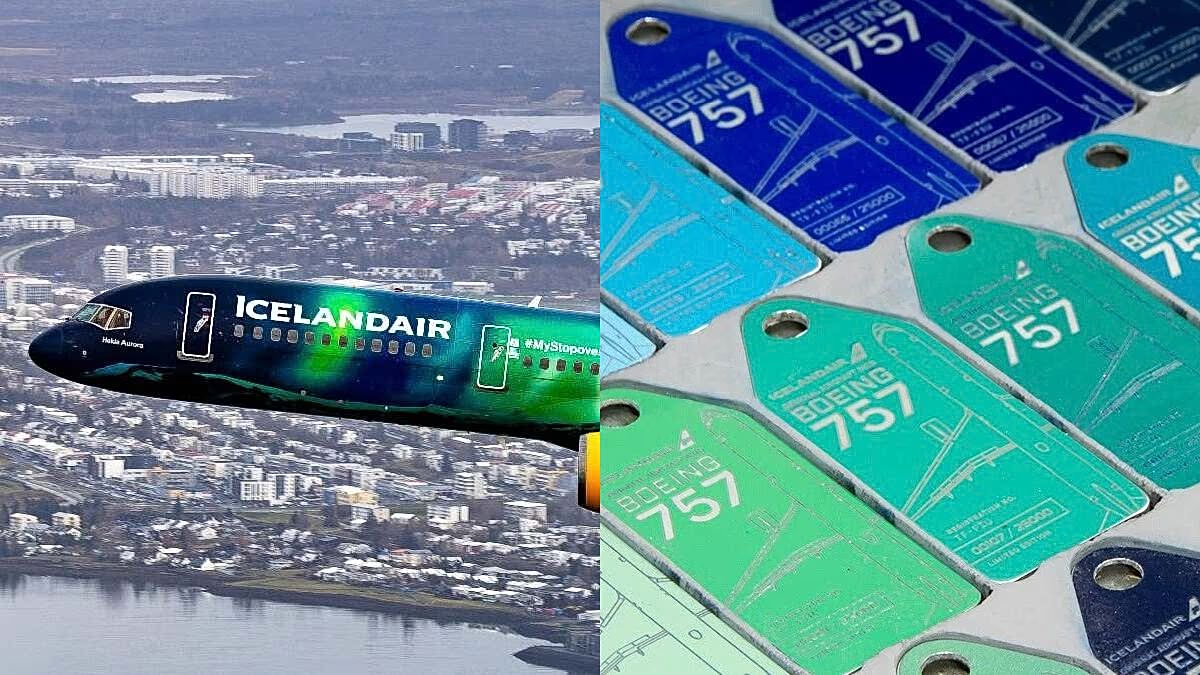
For as long as airlines have been painting airplanes, there has been a quiet but passionate community of people who stop, look up, and feel a little thrill when something extraordinary rolls past. We are talking, of course, about special aircraft liveries — those glorious, unforgettable paint schemes that turn a functional metal tube into a flying work of art. Over the years, we have seen EVA Air’s Hello Kitty plane, with its grinning whiskered face stretched across the fuselage, and JetBlue’s Super Mario-themed jet, complete with red caps and golden coins, both of which made aviation geeks and casual travelers alike reach for their phones. But among all the cartoon characters and promotional stunts, there was one livery that felt different, almost magical: Icelandair’s Hekla Aurora. This was not a character or a brand — it was nature itself, painted onto a Boeing 757-200 in shimmering waves of green, blue, and violet. It was a tribute to the Northern Lights, and for eight years, it carried passengers across the North Atlantic as if they were flying through the very aurora that danced over Iceland’s winter skies. In 2014, artists armed with airbrushes gave the aircraft its otherworldly makeover, and for travelers who were lucky enough to board it, the journey felt less like a commute and more like a dream. But all good flights must eventually land, and on 12 October last year, Hekla Aurora made its final trip before being retired from Icelandair’s fleet. For many, it was a quiet farewell to an old friend.
The story of Hekla Aurora is not just about paint; it is about the human desire to capture something fleeting and beautiful. The aircraft was named after Hekla, one of Iceland’s most famous volcanoes, and the aurora borealis, the natural light display that has drawn people to the island for centuries. Yet while the Northern Lights are notoriously difficult to predict, this airborne tribute made them a constant companion. The artists tasked with the project didn’t simply spray a few streaks of color onto the plane; they used elaborate airbrushing techniques, layering shades of electric blue, deep indigo, emerald green, and smoky black until the fuselage looked like a swirling canvas of polar light. It was a bold and ambitious design, one that required patience and precision, because unlike a poster or a decal, an aircraft’s skin is curved, riveted, and subject to the harsh realities of weather and wind. The result, however, was breathtaking. Photographs of Hekla Aurora on the tarmac at Reykjavík’s Keflavík Airport were shared across social media, and plane spotters would track its flights just to see it soar overhead. Passengers who knew what they were flying on often felt a strange sense of pride, as though they had been chosen to ride a rare and beautiful creature. There was something poetic about watching a plane painted like the night sky take off against the actual dark polar night, and even more poetic when the real aurora appeared in the distance, as if the plane and the sky were in quiet conversation. For eight years, this machine was more than transportation; it was a symbol of Iceland’s wild and luminous spirit, and saying goodbye was never going to be easy.
So when Icelandair announced that it had teamed up with Aviationtag, a company known for turning decommissioned aircraft skin into collectible keychains, the news felt less like a merchandise launch and more like a memorial project. Aviationtag has built a devoted following by taking panels from retired aircraft, cutting them into small, carefully shaped tags, and giving them a second life as everyday carry items. Every keychain is stamped with its origins, and because the original paint has been weathered by years of flight, no two pieces look exactly alike. This is especially true for Hekla Aurora, whose livery featured such a rich mix of blues, greens, and blacks that each tag is effectively a miniature abstract painting. The team at Aviationtag has said that the design means no two pieces are identical, which makes each one feel personal — a small, unplanned piece of art that a collector can carry in a pocket or hang on a bag. Prices start at a modest €39.95, which for aviation enthusiasts seems like a small price to pay for a physical memory of a much-loved plane. For those who want the full collection, Icelandair and Aviationtag have put together sets of nine and fourteen tags, priced at €409.35 and €634.30 respectively. These are aimed at serious collectors, the kind of people who arrange their keepsakes in glass cases and can tell you the tail number of every 757 they have ever flown. It is a niche world, but it is a passionate one, and the idea of owning a fragment of Hekla Aurora has clearly touched a nerve.
But what makes this project truly human is the way Icelandair has chosen to share it. Alongside the keychains, the airline is giving away ten tags to fans who are willing to open their hearts and share a memory. On social media, Icelandair has asked people to comment with their recollections of flying on Hekla Aurora, or of seeing the Northern Lights in Iceland. It is a deliberately simple request, but it taps into something deep. For many travelers, a flight is not just a flight; it is a moment in a larger story — a honeymoon, a solo adventure, a journey to see a parent, a childhood dream finally fulfilled. Hekla Aurora was part of those stories, a glowing presence in the background of thousands of photographs and the quiet witness to countless emotional snapshots. Now, by reading the comments, the airline is essentially collecting these stories and weaving them into the plane’s legacy. The lucky winners will receive a small piece of aluminum, but what they are really being given is a confirmation that their memories matter, that the plane they loved was also a vessel for their lives. This is the heart of all aviation memorabilia: it is never really about the object itself. A keychain made from an aircraft skin is just a shape and a color, but when you hold it in your hand, you are holding the weight of the skies it crossed, the passengers it carried, and the places it went. That kind of object cannot be measured in euros, and Icelandair seems to understand this better than most.
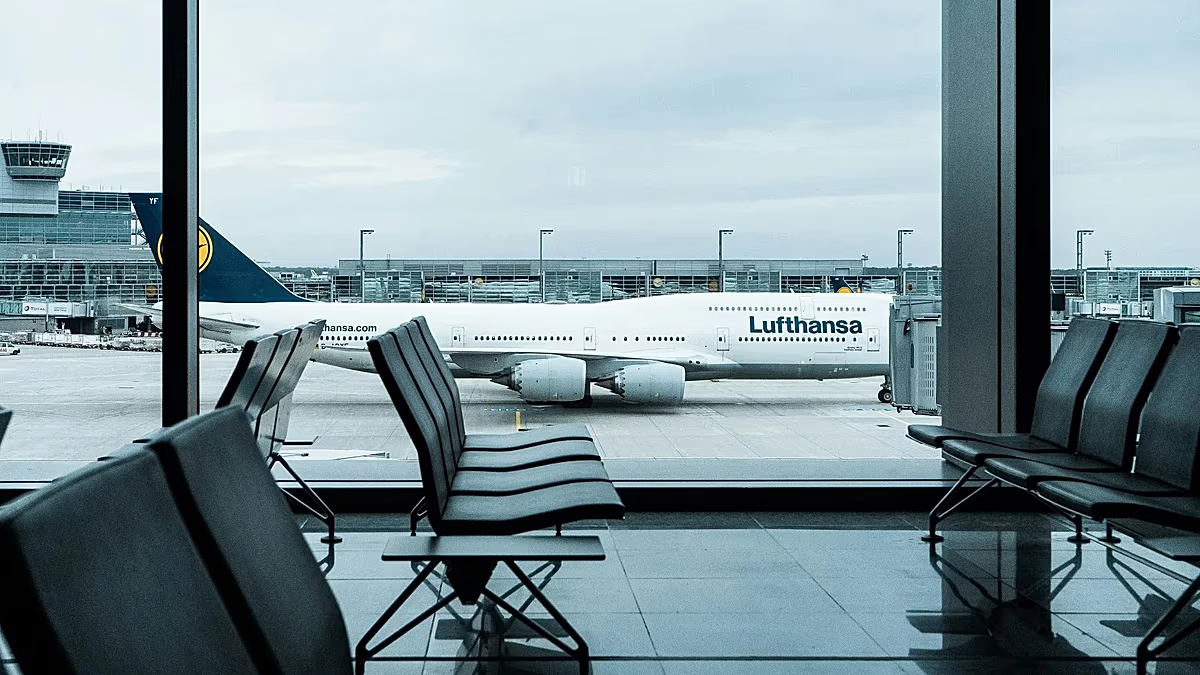
Of course, Icelandair is not the first airline to realize that decommissioned aircraft are not just scrap metal but also treasure troves of nostalgia. Across the industry, a quiet upcycling movement is transforming old planes into surprising and wonderful products. Air France, for example, sells keychains made from the leather headrests of its retired cabins, so that every time you jingle your keys, you are touching a small piece of French elegance. It also offers wallets made from lifejackets, which somehow feel both rebellious and practical, and even engine blades that have been turned into polished works of art, mounted and framed like sculptures. These are not mass-produced trinkets; they are relics of a journey, and owning one is like owning a tiny piece of the sky. Lufthansa Group airlines — including Lufthansa, Austrian, Brussels, and SWISS — have gone even further on their Worldshop, offering everything from coasters and cufflinks to lamps and tables made from salvaged aircraft parts. Some of the items are wonderfully absurd: a bar made from a window panel of an Airbus A320-211, complete with the original porthole, or an armchair constructed from an Airbus A321 aircraft nose, which looks like the throne of a very unusual aviation warlord. There is also a sideboard made from an overhead locker, a piece that would allow you to store your dishes in the very compartment that once held passengers’ carry-on bags. These objects are conversation starters, certainly, but they also represent a growing awareness that aircraft are full of materials that deserve more than a landfill. They are proof that sustainability and sentimentality can go hand in hand, that we can honor the past while also reimagining its usefulness.
In the end, the story of Hekla Aurora and its transformation into keychains is a reminder that aviation is as much about emotion as it is about engineering. Special liveries are not just marketing; they are expressions of imagination, and they give us permission to smile at something as ordinary as a boarding pass. When a plane like Hekla Aurora retires, it is easy to feel a sense of loss, but the upcycling movement offers a gentler goodbye. The aircraft may no longer climb through the clouds or paint its silhouette against the polar night, but its skin lives on — in pockets, on backpacks, in living rooms, and in the stories that fans share with strangers on the internet. Every keychain cut from its fuselage is a tiny monument to the thousands of flights, the millions of miles, and the countless moments of awe that the plane witnessed. And so, while the Boeing 757 itself is gone, Hekla Aurora has not truly disappeared. It has simply changed form, like the Northern Lights that inspired it, moving from the vast sky to the palm of a traveler’s hand. Whether you are a dedicated aviation geek, a casual souvenir collector, or just someone who once looked up and saw a plane covered in auroras, this project is a celebration of the strange, beautiful connections we make with machines. Because at their best, aircraft are not just transportation. They are carriers of wonder, and when we give them a second life, we are really giving ourselves a way to hold onto the magic of flight.