


The English Channel, historically known as a turbulent yet vital gateway between Great Britain and mainland Europe, has evolved over the centuries into one of the most crowded and carbon-intensive shipping lanes on the planet. Day and night, massive cargo ships, colossal container vessels, and towering diesel-guzzling car ferries plow through its grey waters, leaving behind a thick trail of greenhouse gas emissions and a relentless underwater hum that disrupts marine ecosystems. For decades, the modern traveler has accepted this industrial compromise as the inevitable price of convenience, trading the soul of seafaring for sterile, indoor cabins, fluorescent-lit duty-free shops, and the monotonous, vibrating rumble of heavy marine engines. Yet, as the global climate crisis demands that we radically rethink not just where we travel but how we get there, a quiet, wind-powered revolution is taking shape on the water. A pioneering company named SailLink is challenging this carbon-heavy status quo by reintroducing the ancient, romantic art of wind propulsion to passenger travel across the Channel. By harnessing the raw, natural power of the wind, SailLink is proving that crossing the sea can once again be an active, ecological partnership with nature rather than a forceful, mechanical domination of it. This innovative venture is not merely about shifting from fossil fuels to clean energy; it is a profound philosophical shift back to the restorative philosophy of “slow travel.” It invites us to slow down our frantic lives, respect the elements, and experience the journey across the open water as an unforgettable, sensory adventure in its own right, rather than a mindless chore to be endured in a hurry.
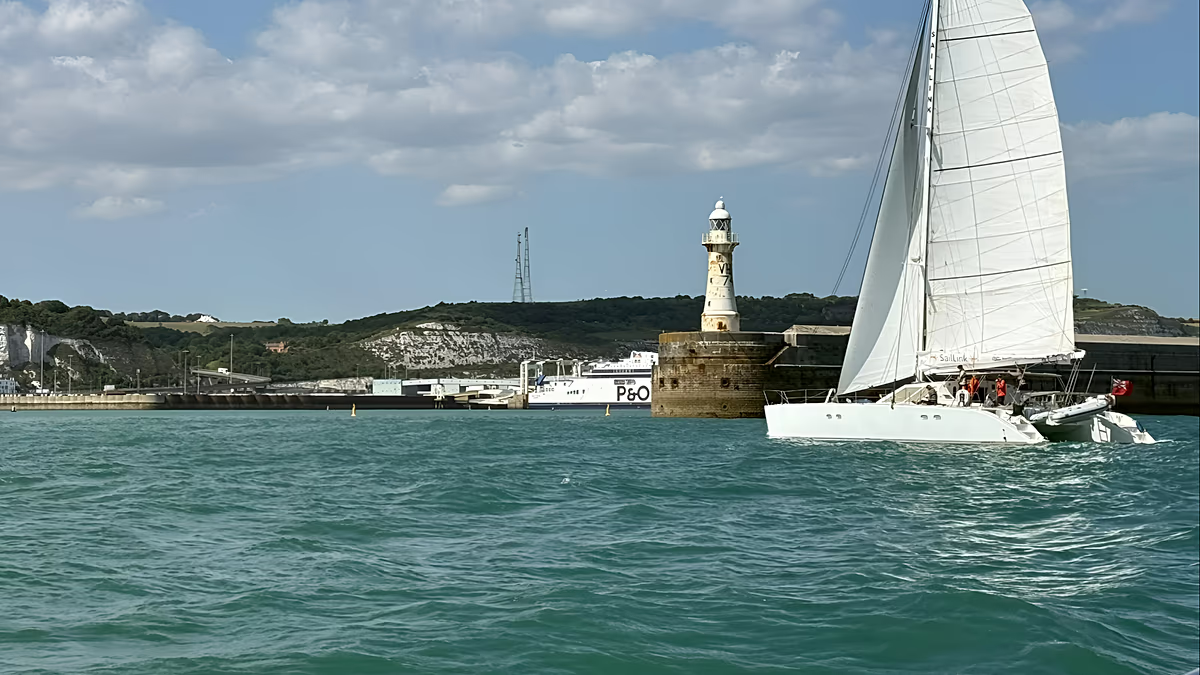
At the heart of this eco-conscious revolution is a remarkable 18-meter sailing catamaran, a vessel that beautifully bridges the gap between high-performance ocean racing and sustainable passenger transport. Rather than commissioning a brand-new, resource-intensive build from scratch, SailLink creatively constructed this vessel using recycled parts salvaged from high-performance ocean-racing yachts, including the mast and rudders from a former IMOCA 60 race boat that once braved the world’s harshest seas. Speaking of legends, the vessel is skippered by none other than Michel Desjoyeaux, an absolute icon in the sailing community and a two-time winner of the grueling, solo, non-stop round-the-world Vendée Globe race. Alongside him is SailLink’s visionary founder, Andrew Simons, whose passion for sustainable transit drives the project forward. Together, they guide a vessel designed specifically for speed and stability, boasting a soaring 23-meter mast and a staggering 165 square meters of high-tech sail that catch even the gentlest Channel breezes. Yet, despite its racing pedigree, the catamaran’s cockpit has been thoughtfully redesigned to offer a spacious, open-air, and highly comfortable sanctuary for everyday foot passengers. On board, there are no stuffy, windowless cabins or noisy passenger lounges; instead, travelers sit directly on deck, deeply connected to the marine environment. Here, the sensory experience of travel is fully restored: you feel the deck rise and fall gently with the swells, listen to the rhythmic snapping of canvas sails, smell the crisp salt air, and watch the legendary White Cliffs of Dover slowly recede into the horizon while receiving the occasional, refreshing spray of cool sea foam.
The success of SailLink’s mission is already proven by its initial operations on its established flagship route between Dover and Boulogne-sur-Mer. Throughout the previous sailing season, this self-funded, grassroots enterprise successfully transported 465 adventurous passengers and 135 bicycles across this busy stretch of water, demonstrating that a genuine demand for alternative, eco-friendly transit truly exists. What makes this achievement even more remarkable is that nearly 70 percent of these voyages were completed entirely under sail, with the vessel gliding silently across the waves powered by nothing but the coastal winds. The small auxiliary diesel engines on board are treated as a strict backup, engaged only when the wind completely dies down or during the delicate, tight maneuvering required inside historic harbor walls. This operational integrity highlights SailLink’s absolute commitment to minimizing its ecological footprint, offering a stark and inspiring contrast to traditional commercial ferries that burn hundreds of tons of heavy, polluting fuel oil daily. By choosing to work in harmony with the weather rather than fighting against it, the company demonstrates that low-carbon, commercial maritime transport is not a distant utopian dream, but a practical, safe reality that can be achieved today through smart design, expert seamanship, and a willingness to embrace the natural rhythms of our planet.
Building on the triumph of their primary route, SailLink is now embarking on an exciting new chapter by launching an exclusive one-week pilot route designed to connect two highly picturesque, historic coastal communities: Shoreham-by-Sea in West Sussex, England, and Fécamp in Normandy, France. Scheduled to run from September 8 to September 13, 2026, these trial crossings will alternate directions daily, offering travelers a rare opportunity to participate in a pioneering moment in modern maritime history. What sets this pilot route apart from standard, industrial ferry services is the deliberate avoidance of massive, stressful, and heavily concrete-laden ferry terminals in favor of charming, town-center marinas. Instead of navigating asphalt jungles, border queues packed with idling semi-trucks, and sprawling parking lots, passengers can simply stroll down to the quiet docks of Shoreham or Fécamp, step aboard the catamaran, and begin their voyage in a relaxed, intimate, and deeply human setting. Shoreham-by-Sea, with its rich shipbuilding heritage and tranquil river estuary, and Fécamp, famous for its dramatic Alabaster Coast cliffs and historic Benedictine Palace, serve as perfect cultural bookends for a journey that celebrates local heritage, beauty, and sustainable tourism. If this week-long trial proves successful and captures the public’s imagination, SailLink plans to make this second route a permanent fixture of their schedule, creating a vital, green travel corridor between the south of England and northern France.
This bespoke sailing experience is intentionally intimate, with the catamaran accommodating a maximum of just twelve passengers and eight bicycles per crossing, fostering a warm, communal atmosphere where travelers can share stories, learn the basics of sailing from the crew, or simply lose themselves in the vast horizon. SailLink has deliberately designed this service to appeal to cycling tourists, active adventurers, and slow-travel enthusiasts who wish to integrate their transit seamlessly into an outdoor holiday. The chosen ports are strategically positioned to connect directly with some of the most famous and breathtaking cycling and hiking trails in Western Europe. On the English side, passengers can immediately pedal onto the National Cycle Route 2 or embark on the historic Downs Link path through the rolling hills of West Sussex. Upon arriving on the French shore, travelers find themselves at the trailhead of La Vélomaritime (EuroVelo 4), a magnificent coastal cycling route, as well as the famous GR21 hiking trail, which winds along the dramatic chalk cliffs of the Alabaster Coast. By accommodating bicycles for a nominal fee, SailLink encourages a completely fossil-fuel-free holiday, allowing travelers to leave their cars at home, sail across the Channel, and continue their journey on two wheels, exemplifying a truly holistic approach to sustainable tourism that respects both local communities and the global environment.
For those eager to embark on this unique trans-Channel adventure during the September pilot week, the practical details reflect the personalized, hassle-free ethos of SailLink’s operations. While the precise daily timetables remain subject to final adjustments based on tide charts and marine weather forecasts, the crossing time is estimated to take approximately eight hours, allowing passengers ample time to unplug from the digital world, read, meditate, or watch for marine wildlife such as dolphins and seabirds. To ensure a smooth, stress-free journey, immigration and passport controls are handled directly at the dockside within the quiet marinas of Shoreham and Fécamp, bypassing the notorious, multi-hour delays often experienced at major UK-France border crossings. Tickets for this exclusive pilot voyage are priced at £220 (€256) for a one-way ticket and £440 (€513) for a return journey, with a modest surcharge of just £10 (€12) to secure a spot for a bicycle. Bookings can be made directly through the official SailLink website, where spaces are expected to fill up rapidly due to the highly limited capacity of each sailing. While the cost is higher than a standard, mass-transit ferry ticket, the value lies in securing a spot on a historic, highly personal, and carbon-neutral journey that transforms a routine border crossing into the highlight of your travel memories, showing us all how we can tread more lightly upon our beautiful, shared earth.