



For nearly three years, the vibrant heart of Southeast Asia beat in a muted, agonizing whisper. The bustling night markets of Bangkok, where the aroma of charred lemongrass and sweet mango once filled the humid air, stood in shadow; the iconic limestone cliffs of Vietnam’s Ha Long Bay rose out of silent, tourist-free waters; and the sacred shorelines of Bali lay untouched, save for the locals who watched their livelihoods vanish overnight. When borders finally reopened, it felt like the dawn of a long-awaited spring. Across the region, there was an outpouring of pure, emotional relief as dusty guesthouses were scrubbed clean, colorful tuk-tuks were polished, and families reunited with the trade that had sustained them for generations. For the millions of individuals who form the backbone of this hospitality engine—from the humble street-food vendors to the dive instructors of the Philippines and the boutique hotel owners in historic Luang Prabang—the return of travelers was not merely an economic statistic to be celebrated on paper. It was a restoration of dignity, a return of hope, and a promise that the financial and emotional starvation of the pandemic years was finally over. Travelers from all corners of the globe were once again filling flights, eager to lose themselves in the rich tapestry of Asian cultures and tropical landscapes, setting the stage for what promised to be a triumphant and restorative summer travel season.
Yet, just as this fragile recovery began to find its footing, a chilling and distant wind swept across the continents, threatening to undo the hard-won progress. The sudden escalation of geopolitical conflict in the Middle East, particularly the rising tensions tied to Iran, has sent immediate, destabilizing shockwaves through the global economy, reminding us how intimately interconnected our modern world truly is. For Southeast Asian travel, this political volatility translated instantly into an acute and painful crisis: the soaring price of crude oil and jet fuel. Airlines, which were already operating on incredibly thin margins as they labored to restore their pre-pandemic fleets, suddenly found themselves hit with astronomical operational costs. Because major air corridors over the Middle East became volatile or entirely restricted, carriers were forced to execute complex, time-consuming detours. These longer flight paths do not just mean extra hours in the air for weary passengers; they require gargantuan amounts of extra fuel, driving up expenses at a time when carriers can least afford it. This sudden geopolitical friction has cast a dark cloud over the horizon, turning what should have been a seamless summer travel boom into an anxious, high-stakes navigation of inflated budgets and disrupted schedules.
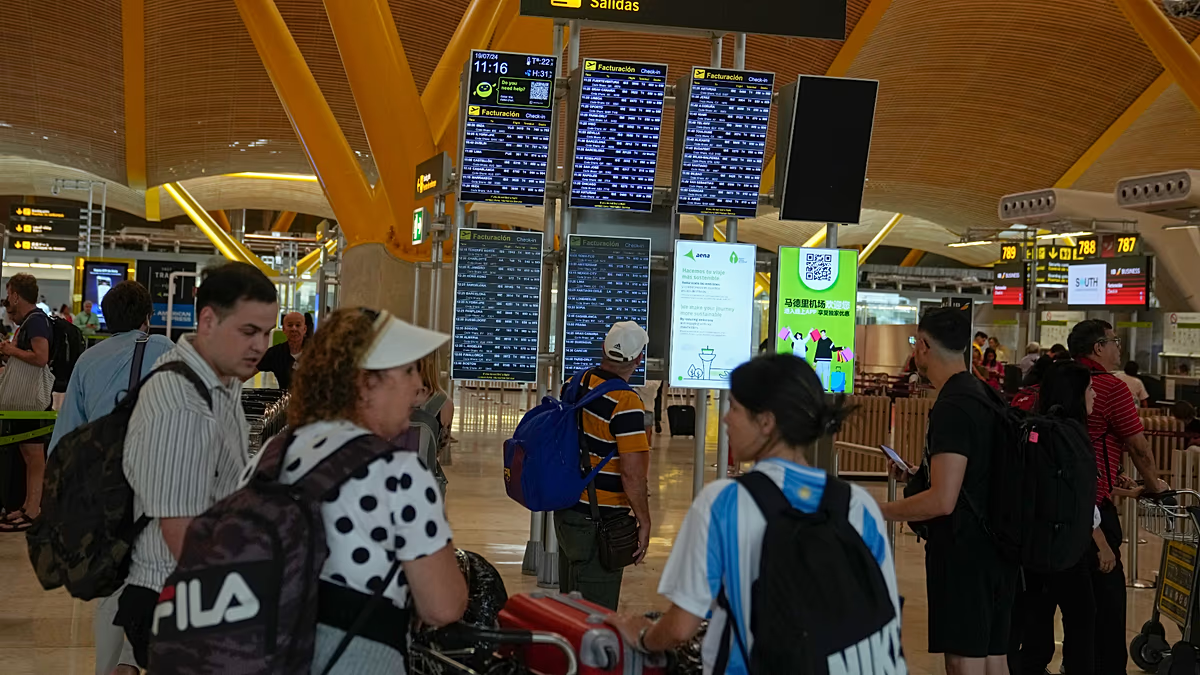
The human cost of this sudden economic shift is felt deeply by everyday travelers who have spent years saving, planning, and dreaming of their perfect tropical escape. For a middle-class family in Europe or North America, a summer holiday to Southeast Asia is often a once-in-a-lifetime journey, but the sudden compounding fees have placed this dream painfully out of reach. Ticket prices have soared to staggering heights as airlines pass jet fuel surcharges directly down the line, meaning that a flight which once cost a family a reasonable sum now requires a small fortune. Beyond the financial barrier, travelers are facing a stressful gauntlet of canceled routes, missed connection flights, and chaotic airport bottlenecks caused by sudden reroutings. Faced with these overwhelming hurdles, many are reluctantly unpacking their bags, choosing instead to opt for closer, domestic destinations or cancel their hard-earned vacations altogether. This collective retreat of international travelers is a devastating blow, as long-haul tourists are the economic lifeblood of the region, typically staying longer, exploring deeper, and distributing their wealth across rural and urban communities alike.
When these global flights are canceled, the ripple effect does not stop at the airline headquarters; it travels rapidly down to the smallest streets, beaches, and villages of Southeast Asia, touching real lives with devastating precision. Consider the local boatman in Thailand’s southern islands who relies on daily charters to pay for his children’s school books, or the traditional massage therapists in Bali whose entire day’s income depends on the foot traffic of weary wanderers. For these people, a dip in tourism numbers is not an abstract corporate setback; it is the difference between a secure home and financial ruin. Unlike international hotel conglomerates, these micro-entrepreneurs have no safety net, no venture capital, and no reserves left after surviving the multi-year drought of the pandemic. Every empty resort room and quiet restaurant table represents a family struggling to afford basic necessities, creating a profound psychological burden for communities that had only just begun to heal. The cruel irony that their survival is dictated by political standoffs and fuel prices decided thousands of miles away is a heavy truth that weighs on every vendor waiting by an empty dock.
Despite the gravity of these circumstances, the story of Southeast Asian tourism is not one of passive defeat, but of profound and inspiring resilience. Having weathered domestic political upheavals, devastating natural disasters, and the unprecedented catastrophe of COVID-19, the people of this region possess an extraordinary capacity to adapt and reinvent themselves in the face of hardship. To counter the loss of long-haul Western travelers, local tourism boards and business owners are rapidly shifting their strategies to court regional and domestic visitors. Countries like Malaysia, Singapore, and Thailand are strengthening regional travel alliances, offering localized promotions, and creating seamless land-crossing initiatives to entice neighboring travelers who are not dependent on long-range flights. Homestays and eco-tourism projects are focusing heavily on community-based, low-impact travel that utilizes local resources and bypasses expensive global supply chains entirely. By showcasing the authentic warmth of their hospitality and the enduring beauty of their cultural heritages, these communities are actively proving that their spirit cannot be extinguished by global volatility or economic headwinds.
Looking ahead, this challenging summer travel season serves as a vital reminder of the delicate and essential nature of global travel as a force for human connection. Tourism is far more than a luxury transaction or an industrial sector; it is a living bridge of empathy, curiosity, and mutual support that binds diverse peoples together. While soaring fuel prices and political conflicts may temporarily narrow our pathways and scatter our plans, they cannot destroy the fundamental human desire to explore, share stories, and witness the wonders of our world. As Southeast Asia navigates this turbulent period, the global community must remember the human faces behind the economic data and strive to support these communities however possible. There remains a deep, unshakeable hope that as skies clear, airspaces stabilize, and calmer minds prevail, the warm and welcoming shores of Southeast Asia will once again be filled with the laughter of travelers, standing as a beautiful testament to our shared resilience and our enduring love for discovery.