





For generations, the quintessential dream of a European summer trip has lured millions of travelers from every corner of the globe. It is a romantic vision woven from images of strolling leisurely along the banks of the Seine, witnessing the iconic, timeless pageantry of London’s royal guards, or standing in quiet contemplation before ancient, sun-splashed Mediterranean ruins. Today, however, this collective dream is colliding with a harsh, suffocating reality as an unprecedented early-summer heatwave blankets the European continent, transforming some of our most cherished cultural touchstones into sweltering, nearly unbearable hot zones. From the historic, stone-paved avenues of Paris to the sprawling plazas of London and the vulnerability of Southern Europe, local authorities are being pushed to make difficult compromises to protect public health. The luxury of carefree exploration is rapidly being replaced by a chaotic scramble of early closures, cancelled events, and strict safety protocols. Families and solo adventurers alike, who spent many months planning budgets and dreaming of their vacations, now find themselves staring at locked gates, carrying umbrellas for shade rather than rain, and experiencing firsthand how a changing climate is reshaping the geography of global tourism. This extreme weather event is more than a passing disruption; it represents a profound, emotional shift in how we interact with history and travel, turning what should be a journey of leisure into a test of physical endurance.
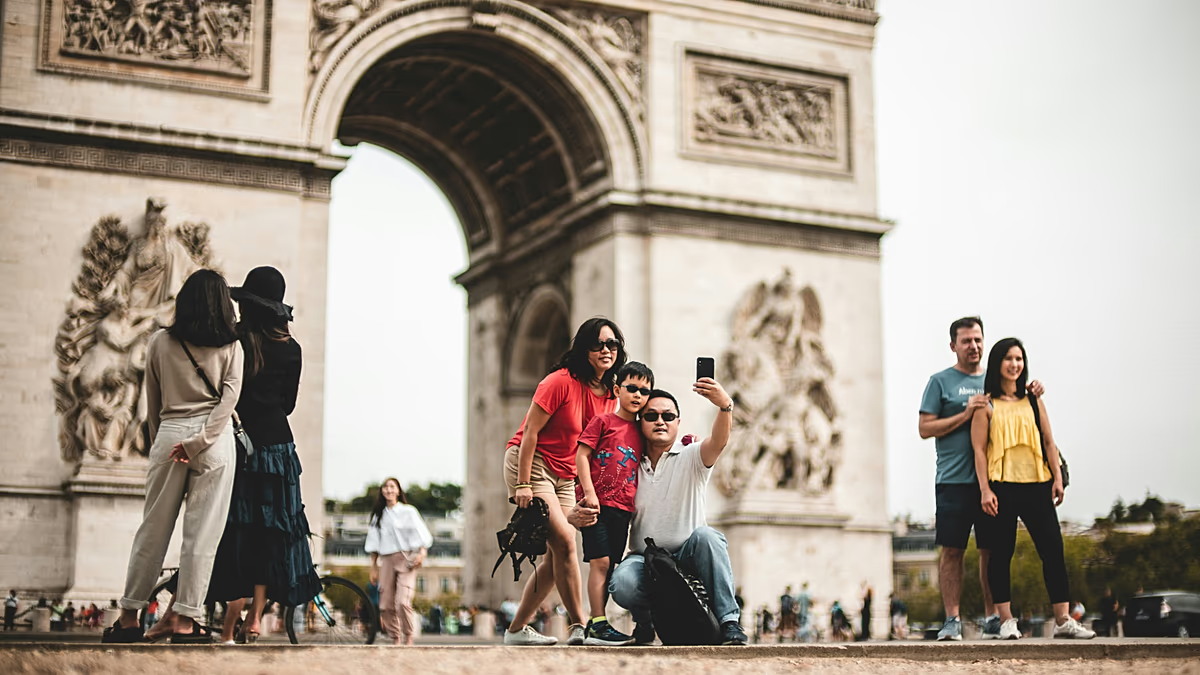
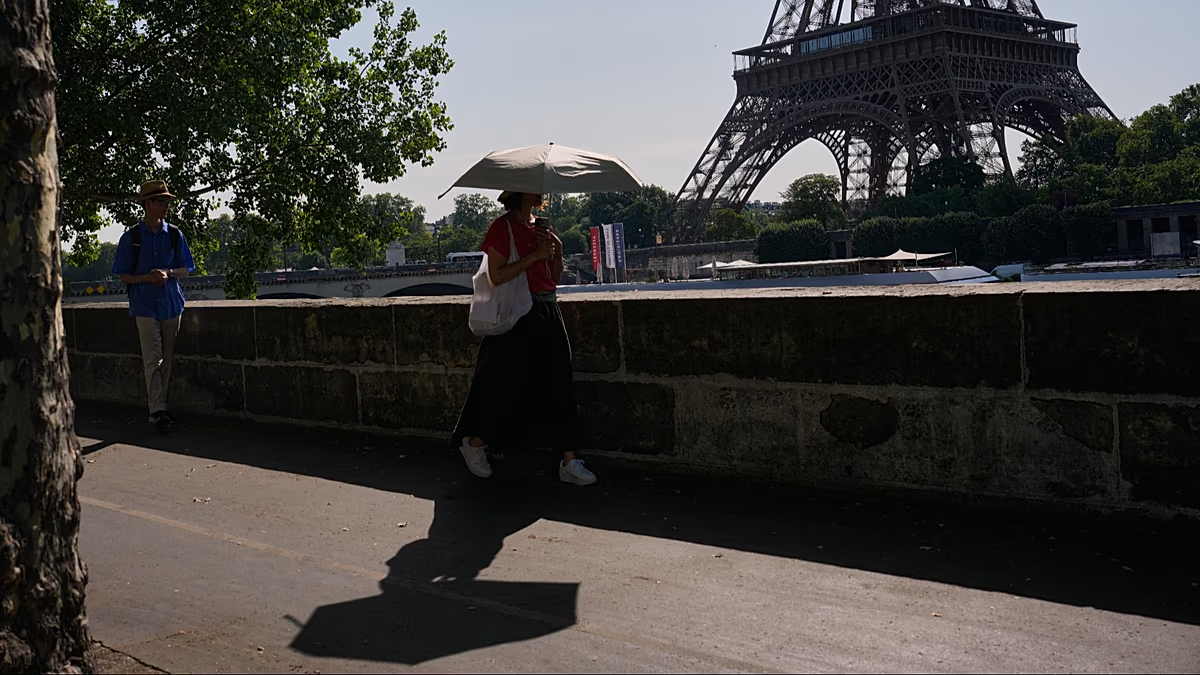
Nowhere is this transformation more apparent than in Paris, where the beloved City of Light has found itself trapped under an oppressive, energy-sapping dome of heat. France is currently grappling with a severe heatwave that has shattered historical records, recently registering its hottest June day since meteorological record-keeping began, with a nationwide average temperature of 29.8 degrees Celsius and localized highs soaring deep into the 40s. Faced with these dangerous conditions, municipal leaders and curators have had to make painful decisions to shutter or restrict access to Paris’s most famous landmarks. The Louvre, which normally welcomes tens of thousands of culture lovers throughout the long summer evenings, has announced early closures at 4:00 PM, shortening the precious window for tourists eager to glimpse the Mona Lisa or walk through its grand galleries. Similarly, the towering iron structure of the Eiffel Tower—a massive metal monolith that absorbs and radiates the sun’s intense energy—has had to turn away afternoon visitors, closing early with last admissions cut off just after midday at 12:15 PM. The surrounding city offers little relief: the historic Arc de Triomphe has trimmed its operational hours, the contemporary art halls of the Palais de Tokyo have closed multiple exhibitions, and even Disneyland Paris has been forced to shut down several of its beloved outdoor attractions. For travelers, the physical toll of navigating asphalt streets that radiate heat long after sunset, balanced against the frustration of securing refunds for canceled bookings, has turned a Parisian holiday into an unexpected exercise in heat management.
Across the English Channel, London is experiencing an equally historic and jarring confrontation with the elements, as a capital city built for damp rain and cool breezes struggles to cope with temperatures threatening to reach 39 degrees Celsius. This extraordinary warmth has led to the cancellation of one of Britain’s most celebrated spectacles: the Changing of the Guard ceremonies at Buckingham Palace and Windsor Castle. While the cancellation is undoubtedly a disappointing blow to the crowds gathered outside the iron gates, it remains a vital act of compassion and safety for the human and animal participants alike. Standing in formation under a blazing sun while wearing heavy wool trousers, thick red tunics, and towering bearskin hats is a recipe for heat stroke, and authorities rightly prioritized the well-being of the guards and their horses over tourism traditions. The oppressive heat has also penetrated London’s historic cultural spaces. The legendary Victoria and Albert Museum was forced to temporarily close several of its magnificent upper-floor galleries and delicate exhibits, highlighting how many of Europe’s older, un-airconditioned brick and stone buildings simply cannot handle extreme modern summers. Throughout London, the atmosphere is surreal and subdued; tourists seek refuge under the historic trees of Hyde Park, drinking warm water and wondering how a city famously characterized by its cold winters is now adapting to a warmer globe.
The consequences of this extreme weather extend far beyond disappointed sightseers; the heatwave has struck a direct and punishing blow to the region’s transport infrastructure, exposing how vulnerable modern travel networks are to escalating temperatures. In the United Kingdom, Network Rail has issued urgent warnings of widespread transit disruption across England and Wales, taking the precaution of imposing strict speed limits across its entire rail grid. This is a critical safety measure because sustained, high temperatures can cause heavy steel railway tracks to expand, bend, and buckle dangerously, while simultaneously causing the overhead electric lines that deliver power to sag out of alignment. This infrastructure fatigue has also disrupted major international corridors, including the Eurostar service that connects the British capital with continental Europe. Because of the adverse weather conditions, multiple high-speed trains running between London and Paris had to be cancelled entirely on Wednesday and Thursday. Travelers who expected a seamless, swift journey beneath the English Channel instead found themselves stranded in crowded, hot railway halls, their tightly scheduled European adventures derailed by the physical limitations of the very steel and iron that built the modern world. It is a stark reminder that the systems we rely on to explore the earth are remarkably fragile when pushed past their physical limits.
As the week progresses, this stubborn dome of high pressure shows no signs of moving, instead threatening to spread its stifling embrace further across Western and Central Europe. Severe heat warnings have been activated for the Netherlands, Belgium, and Germany, where temperatures are predicted to peak over the weekend, while Eastern European nations such as Poland, Croatia, and Hungary are also steeling themselves for dangerous thermal conditions. Further south, in the Mediterranean heartlands of Spain, Italy, and Greece, where high summer temperatures are more common, local governments are relying heavily on extreme heat protocols to protect human lives. These measures often include closing unshaded ancient ruins during the peak daytime hours, recalling the dramatic events of last July when authorities in Athens closed the historic Acropolis when temperatures climbed to a staggering 42 degrees Celsius. These actions highlight a growing consensus among European leaders: when extreme weather strikes, preserving public safety must take absolute priority over tourism revenue. As ancient stone monuments absorb heat like giant brick ovens, the physical act of exploring history has become a high-risk activity, prompting a fundamental reevaluation of what it means to be a responsible tourist in an era of climate extremes.
Ultimately, this extraordinary early-summer heatwave serves as an urgent wake-up call for the global travel community, signaling a future where vacations can no longer be planned with the same predictable ease. As Europe’s architectural masterpieces and ancient cities struggle to cope with a climate they were never designed to endure, both travelers and hosts are being forced to adapt, pivot, and cultivate a deeper sense of empathy. Disappointed tourists must learn to navigate disrupted plans with patience, understanding that the closure of a museum or the cancellation of a parade is done to protect the workers and performers who keep these cultural institutions alive. Looking forward, the tourism industry will likely need to undergo a massive structural transformation, perhaps shifting the traditional summer peak season to the cooler, safer months of spring and autumn, while investing heavily in sustainable, climate-resilient architecture. Until then, as global temperatures continue to climb and break historical records, we must approach travel with a renewed sense of humility and flexibility, recognizing that our desire to witness the wonders of the world must always be balanced by a deep respect for the physical boundaries of our warming planet.