





The Long-Awaited Reunion in the Skies
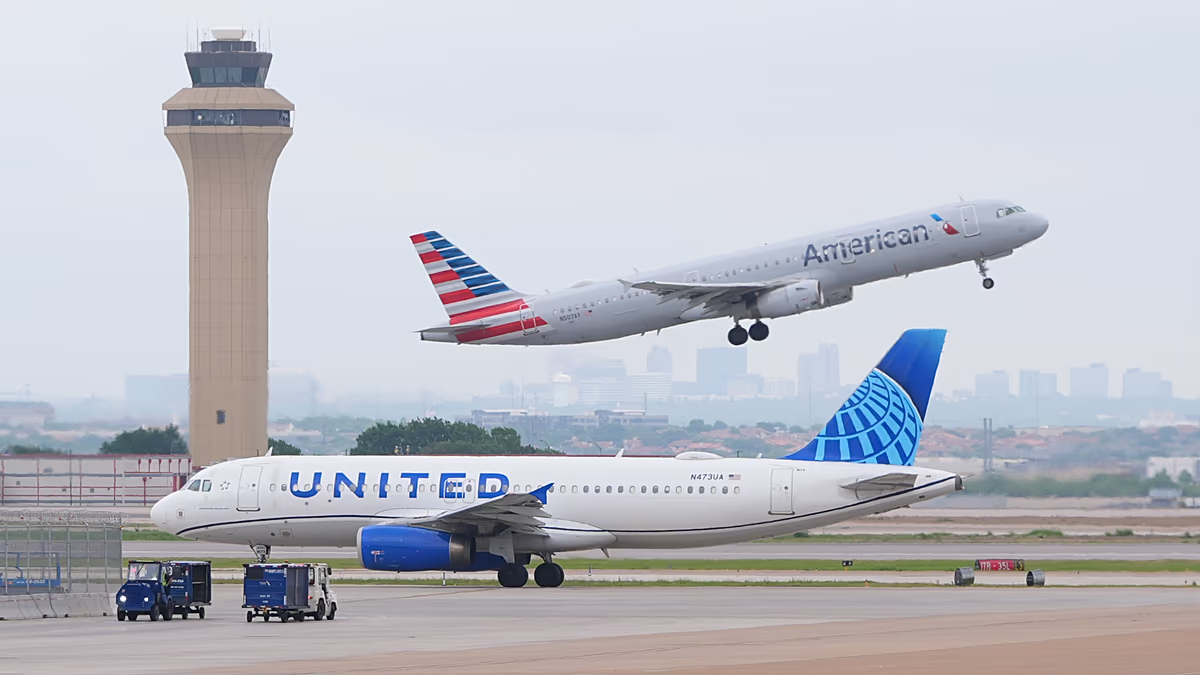
It was a crisp Thursday morning in January 2026, the kind of day that whispers false promises of normalcy after years of fractured ties. The world had watched, with a mix of skepticism and hope, as diplomatic ripples began to mend the bridge between the United States and Venezuela, two nations whose relationship had been a tempest of sanctions, political drama, and missed opportunities. Seven years earlier, in 2019, the skies between them had gone silent—direct flights suspended like an old quarrel left unresolved. Travelers, particularly the vibrant Venezuelan diaspora scattered across American cities like Miami, New Orleans, and New York, had been forced into exhausting detours through third countries, adding hours and heartache to visits home. Families reunited only after layovers in Bogotá or Panama City, whispering dreams of a simpler time. Now, on May 1, 2026, American Airlines Flight AA- something-undoctored-number was poised to break that spell. Departing from Miami with the hum of anticipation, it carried not just passengers, but the weight of history—a tangible step toward reconnection. Imagine the passengers boarding: a young mother clutching a worn photo of her abuela back in Caracas, a businessman scrolling through emails about oil deals, a student dreaming of studying at Venezuelan universities again. The plane itself was no ordinary vessel; adorned in red, white, and blue to commemorate the 250th anniversary of the U.S. Declaration of Independence, it symbolized shared histories, even as it underscored the chasm they’d bridged. As the jet taxied into the runway, engines roaring like a symphony of progress, you could feel the collective exhale—a breath held too long finally released. For these travelers, it wasn’t just a flight; it was a homecoming in motion, a defiance against the bureaucratic walls that had kept them apart. Elders reminisced about flights in the pre-suspension era, when Caracas was a hop away, not a saga. The diaspora, often lionized in tales of resilience, saw this as their victory—a reminder that bonds forged in Revolution Avenue protests or salsa nights in Little Caracas could withstand policy winds. Children, wide-eyed and fidgety, asked questions about the Venezuelan flag they’d heard stories about, while adults exchanged nervous smiles, wondering if this time, stability would hold. The captain’s voice over the intercom wasn’t just routine; it was a rallying cry, acknowledging the significance: “Ladies and gentlemen, we’re about to make history.” And as the wheels lifted, Miami’s skyline fading below, it felt like hope taking flight itself—wobbly at first, but determined.
Emotions Soaring Three Hours in the Air
What unfolds over those three hours is more than geography; it’s a tapestry of human stories woven against the backdrop of the Caribbean Sea below. The flight, a short but profound journey, becomes a communal space for reflection and release. Picture Maria, a 45-year-old nurse from Miami originally from Valencia, Venezuela, sitting by the window, her fingers tracing the outline of her homeland on a map. She’d last seen her parents via pixelated video calls, strained by spotty internet and emotional distance. Now, huddled with her family, they share stories—tales of childhood beaches, the tangy taste of arepas fresh from the pan, the chaotic joy of Carnival parades. Tears well up unsolicited, not from sadness, but from the thrill of closing the gap. Across the aisle, Eduardo, a software engineer in his thirties, juggles work calls with dreams of investing in Venezuela’s tech scene, long stifled by economic sanctions. He’s reading news articles on his tablet about thawing relations, but it’s the personal anecdotes that grip him—the uncle who smuggled goods to keep the family afloat, the sister pursuing a medical degree despite odds. The crew, attuned to the mood, serves drinks with extra warmth, engaging in light banter that breaks the ice. Laughter erupts over shared jokes about Miami’s humidity versus Caracas’s perpetual spring-like climate. One passenger, an elderly man named Luis, recounts his 2019 exile as if it’s a legend: how a canceled flight derailed his nephew’s wedding plans, leading to Zoom vows that felt hollow. Now, cradling a small Venezuelan flag, he passes it around like a talisman, its tricologor hues evoking pride and perseverance. The children, initially restless, scribble drawings of animals they’d soon see in Caracas zoos, their imaginations ignited by the unknown. It’s a microcosm of diaspora life—excitement layered with apprehension, hope threaded with realism. Conversations turn to the future: would jobs follow the flights? Could investments in Venezuela’s oil-rich fields trickle into community pockets? As the plane descends, the mood shifts from meditative to electric. Announcements hint at the welcoming party below, and passengers press against windows, craning for that first glimpse of Caracas’s sprawling expanse, the Andes framing it like protective arms. In these three hours, time compresses years of longing into intimate confessions, transforming strangers into kindred spirits bound by a shared flight path.
Touchdown and Waves of Celebration
The landing in Caracas is no gentle emergence but a crescendo of emotion, as if the earth itself rejoices. Thursday afternoon air greets the plane, warm and infused with the scent of tropical flora—jasmine and hibiscus drifting up from the runway. Passengers cheer before the wheels even touch down, hands clapping in unison, a spontaneous applause that echoes the plane’s history-defying role. As doors open, the captain leans out a window, waving a Venezuelan flag with theatrical flair, drawing roars of approval. Families descend the stairs, not merely debarking but claiming the land anew. Small banners flutter—hand-painted flags declaring “Bienvenidos” or “A Census of Heroes”—held high by those who’d waited so long. One woman, tears streaming, kisses the tarmac, a ritual of gratitude for the direct path home. Vendors on the periphery hawk agua fresca and empanadas, while relatives wait beyond the fence, phones recording every moment to share with those left behind. It’s a public spectacle, media cameras capturing the smiles, hugs, and high-fives that make this event more than policy; it’s people reconnecting. A young couple reunites, embracing as if no borders ever divided them—the girlfriend flown in from Florida, her boyfriend steadfast in Caracas despite economic turmoil. Stories unfold organically: a grandfather meeting grown grandchildren for the first time, their journeys marked by online photos but never flesh. The air buzzes with chatter in Spanish-infused English, “¡Estamos aquí!” blending with “We’re home!” The plane’s patriotic decorations add irony and unity—the red, white, and blue oddly complementary to Venezuela’s flag-waving crowd. Amid the joy, there’s poignancy: a few passengers pause at memorials for those lost to the interim years—illnesses untreated due to travel bans, or dreams deferred. Yet the mood is overwhelmingly triumphant, a Madrid-like fervor where Southern hospitality meets Latin passion. Officials mingle peripherally, but this is the people’s moment—a diaspora returning not as exiles, but as contributors, ready to inject American ideas into Venezuelan innovation. As the crowd disperses toward terminals, handshakes turn to stories, and the flight cements itself not just in records, but in hearts, a chapter-ending suspension rewritten as revival.
Delegations and Dreams of Cooperation
Weaving through the jubilant throng on the tarmac are the更高-stakes players, dignitaries whose presence elevates the event from personal triumph to geopolitical milestone. A White House delegation, led by figures embodying pragmatic diplomacy, steps off the plane with purposeful strides, accompanied by a cadre of U.S. businessmen—executives from energy giants like Chevron and ExxonMobil, their briefcases heavy with proposals. Their aim isn’t tourism but transformation: forging agreements in oil, gas, and energy sectors that promise mutual prosperity. Venezuela’s Minister of Transport, Jacqueline Faria, a poised woman with a background in engineering and civic leadership, stands ready to welcome them, her handshake firm and symbolic. Beside her, Deputy Foreign Minister Oliver Blanco, a sharp communicator known for his role in international negotiations, exchanges smiles and small talk, bridging the verbal gap with ease. The U.S. Chargé d’Affaires, John Barrett, adds a layer of formality, standing as a liaison in the absence of a full embassy, his presence underscoring ongoing stabilization efforts. Other authorities pepper the group—Venezuelan oil officials, American trade advisors—forming a tableau of potential. They applaud as the doors open, the plane’s colors reflecting a shared history of independence, though nuanced by differing narratives. Conversations flow into substantive talks: explorations of joint ventures to harness Venezuela’s vast reserves, perhaps stabilizing prices for American consumers while providing jobs in Caracas refineries. Businessmen speak of sustainable practices, environmental safeguards introduced post-pandemic, and how reopening routes could boost tourism—eco-trips to the Orinoco Delta or urban redevelopments in Maracaibo. Faria shares visions of modernized airports, safer skies, and integrated tech for seamless flights. Blanco nods at opportunities for cultural exchanges, perhaps film festivals or academic partnerships between U.S. universities and Venezuela’s historic ones. Barrett, ever the diplomat, emphasizes resilience: “This flight isn’t just about distance; it’s about dismantling barriers.” Beneath the banter, there’s ambition—dreams of a partnership that transcends oil, exploring renewables or even tech transfers. The delegation’s return journey, planned with follow-up meetings, signals earnestness. Passengers observe with interest, some offering insights from their diasporic perspectives, turning the tarmac into a impromptu forum. It’s a moment of optimism, where economic jargon meets human enterprise, potentially reshaping economies battered by past isolations.
Stable Skies and Expanding Horizons
As the sun sets on Caracas that Thursday, perspectives shift to the future, with plans to scale up these direct flights if stability prevails. American Airlines, emboldened by this successful venture, teases more frequencies—perhaps daily or twice-weekly routes in the coming weeks, contingent on radar systems remaining clear and diplomatic assurances holding. Experts on the ground optimistically cite improving relations, buoyed by multilateral talks that eased sanctions gradually. For travelers, this means cheaper fares, flexible itineraries, and a revival of direct commerce—Venezuelan exports like cacao and coffee flowing smoother to U.S. markets, while American goods arrive without intermediaries. The airline promises enhanced services: bilingual crews, in-flight menus featuring fusion dishes—tamales with cornbread accents—and entertainment celebrating binational icons, from Bob Dylan’s cultural impact to Venezuelan jazz pioneers. Broader implications ripple out: potential boosts to Venezuela’s tourism industry, long dormant due to image issues, attracting American retirees to affordable estates in Isla Margarita. For the diaspora, it means accessible homecomings for holidays, easier remittances, and perhaps even dual opportunities in a revitalized economy. Skeptics whisper concerns—flights could be canceled if tensions flare, as they have before—but the momentum suggests a tipping point. News outlets buzz with coverage, humanizing the event through interviews: a Caracas chef dreaming of New York apprenticeships, a Miami entrepreneur eyeing Venezuelan agrotech investments. Communities across borders share social media reels of the landing, hashtags like #ViasLibres uniting voices. Airlines like Copa or JetBlue eye similar routes, potentially fostering regional connectivity. Health protocols, refined post-COVID, ensure safe travels, with digital boarding passes and rapid tests standard. It’s a renaissance in mobility, where skies once sealed now open endless possibilities, fostering understanding and interdependence.
Echoes of Humanity and Enduring Connections
In the quiet aftermath, as the plane prepares for its return flight, the human element endures, reminding us that flights like this are vessels for more than transport—they’re carriers of hope, resilience, and reinvention. Reflect on ana, a student boarding the return to Miami, her mind swirling with Caracas memories: the warmth of relatives, the vibrancy of street murals depicting resistance and renewal. She’s inspired to advocate for binational exchanges in her university, perhaps a study-abroad program blending U.S. innovation with Venezuelan creativity. Or consider Roberto, an artist from Caracas who hitched a ride to New York for exhibits, his paintings now fusing Andean motifs with urban abstractions. Histories live on through these journeys—tales of 19th-century immigrants swapping shores, echoes in today’s generation. The diaspora, often portrayed in headlines as statistics, reveals its soul: families stitching together divided lives, businesses planting seeds of cooperation. Esteemed figures like author Julia Phillips or journalist Rocio Mondragon inspire narratives of reconnection, their works paralleling this flight’s symbolism. It’s not just policy; it’s people—rebuilding trust one handshake, one shared meal at a time. As frequencies increase, stories multiply: reunions at airports turning into lifelong alliances, economic ties yielding cultural hybrids. Challenges linger—inequities, environmental impacts—but this flight ignites dialogues for equitable progress. By 2026, it’s a beacon: skies once silent now hum with possibility, humanizing diplomacy into tangible change. From Miami’s diaspora enclaves to Caracas’s bustling plazas, the message is clear—bridges, once burned, can soar anew, carrying dreams across horizons. And in that, a narrative unwinds: not of nations at odds, but humanity aloft, seeking harmony in the heights. This inaugural flight, captured in memories and milestones, promises more than routes; it heralds a shared future, where indirect paths give way to direct hearts. The Venezuelan flag, waved defiantly, becomes a emblematic plea for inclusion. Travelers depart enriched, authorities committed, and a world watching how two lands, once estranged, rediscover their proximity—emotionally, economically, eternally. As the sun dips, one can’t help but feel the pitter-patter of progress under open skies.