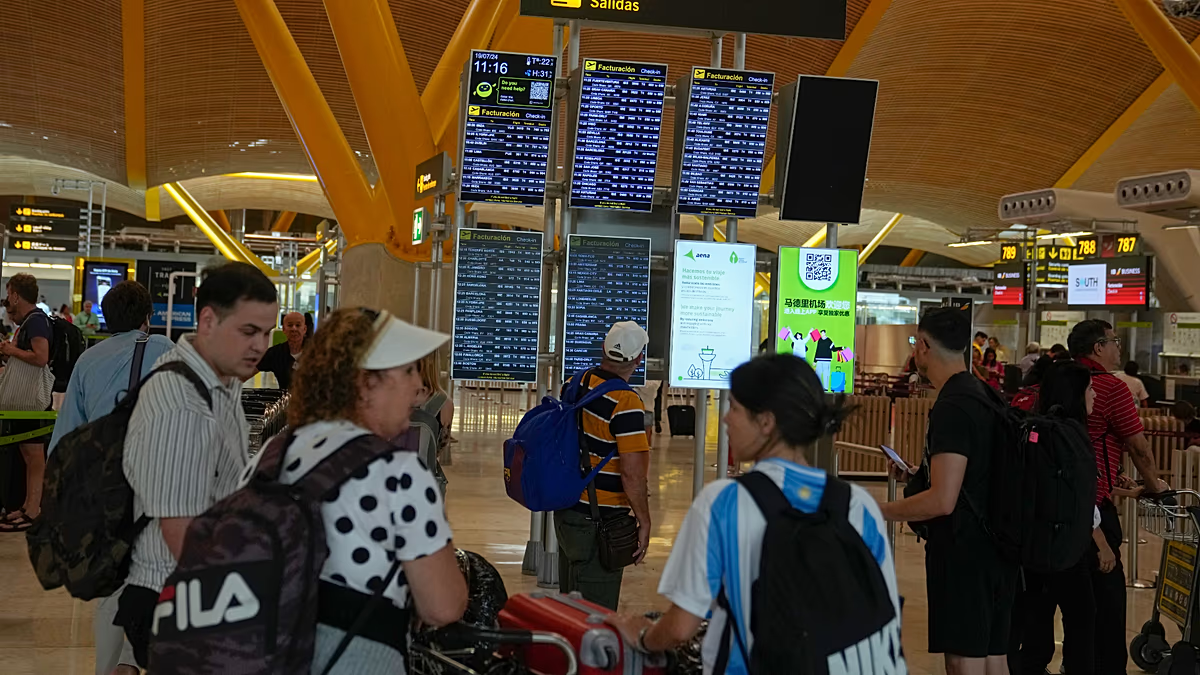







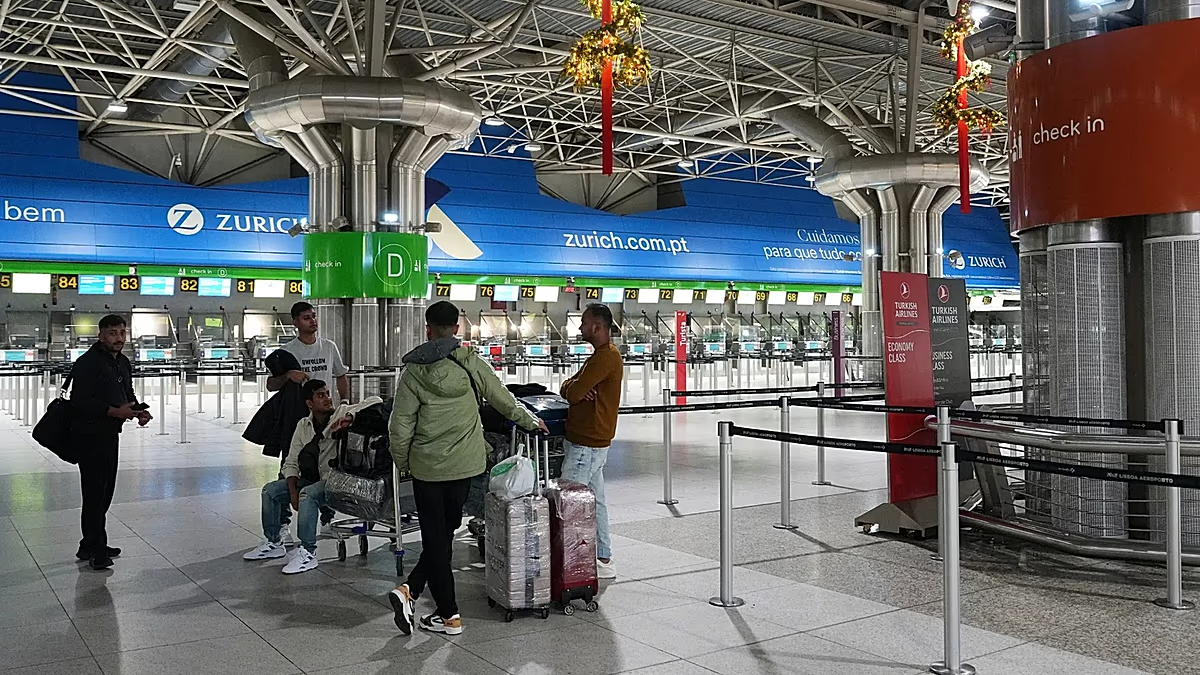
For millions of travelers every year, the prospect of visiting Portugal is a beautiful dream filled with visions of sun-drenched coastlines, historic cobblestone streets, and the warm, melodic sounds of fado music drifting through the evening air. However, in recent months, the journey to this European paradise has often begun not with leisure, but with sheer exhaustion, as travelers arriving at Lisbon’s Humberto Delgado Airport have been greeted by daunting, slow-moving queues at border control checkpoints. Recognizing that an international airport is a country’s primary handshake with the global community, Portugal’s Ministry of Internal Administration has stepped in with a comprehensive, rapid-response plan to dismantle these frustrating bottlenecks and restore comfort to the actual travel experience. In a statement recently clarified to the Lusa news agency, state officials announced that a substantial reinforcement of forty-eight additional officers from the Public Security Police (PSP) will be deployed to Lisbon’s airport starting on Friday. This swift deployment of personnel represents a direct, compassionate intervention designed to address the physical and emotional toll that long travel delays take on families, business professionals, and tourists alike. By placing more human faces at the front lines of border control, the government hopes to not only speed up the processing of documents but also soften the highly stressful airport environment. Aviation and border security are complex mechanisms where even a minor disruption can ripple across an entire terminal, leaving passengers stranded in frustrating delays for hours on end, which is why this immediate bolster of police presence is deemed so critical. Ultimately, this temporary mobilization of forty-eight PSP officers is just the initial wave of a much larger, highly organized strategy designed to reshape the arrival experience at the country’s busiest gateway, signaling a renewed, urgent commitment to public efficiency, structural reform, and traditional Portuguese hospitality.
To complement this sudden influx of human resources, the Ministry of Internal Administration is also targeting the physical infrastructure of the airport itself, dramatically expanding the touchpoints where travelers interface with border security. Under this new initiative, an additional fourteen manual document control booths, colloquially referred to as “boxes,” will be constructed and opened at the arrivals terminal, effectively lifting the total number of operational booths from twenty to thirty-four. At the same time, the departures sector will receive four additional booths, raising its overall operational capacity to eighteen, thereby smoothing the exit journey for those wrapping up their travels. Alongside these traditional, officer-staffed booths, the airport is receiving a massive technological upgrade with the installation of next-generation “e-gates,” or electronic gates, which automate the verification process for eligible passengers. The arrivals hall will see its e-gate capacity nearly double, climbing from seventeen to thirty-one through the addition of fourteen new electronic portals, while another four e-gates will be integrated into departures to bring their total to eighteen. For the exhausted traveler who has just survived a long transatlantic flight, these physical and digital expansions are far more than just dry statistics; they are the difference between a swift, stress-free path to their baggage claim and a grueling, hours-long wait inside a crowded corridor. The integration of these advanced kiosks promises to create a seamless flow, minimizing human friction points and transferring routine tracking data processing to automated systems, which in turn frees up highly trained security personnel to focus on complex, high-priority safety cases that require deep, nuanced human judgment. Through this hybrid model of security management, the ministry aims to create a streamlined, modern transport hub that respects both passenger time and international safety protocols.
Crucially, the Portuguese government understands that the challenges plaguing Lisbon are not isolated anomalies, but are indicative of a broader national and continental trend that requires a comprehensive, multi-phase plan. According to the strategic information shared by the Ministry of Internal Administration with the Lusa news agency, the immediate physical upgrades in Lisbon are merely the opening salvo in a nationwide effort that will extend into the peak summer months. Throughout June and July, both Porto and Faro airports—which serve as vital gateways for the rich cultural heritage of the north and the sun-soaked beach resorts of the Algarve, respectively—will undergo parallel infrastructure expansions. These regional hubs will see a substantial increase in their own manual document control “boxes” as well as the installation of brand-new, high-efficiency “e-gates” to prevent summer congestion from crippling local tourism. To ensure these new installations are fully operational and properly managed, a massive, nationwide mobilization of security personnel is scheduled to take place in July. This expansion will see an incredible three hundred and sixty new personnel assigned directly to the National Foreigners and Borders Unit (UNEF), representing a highly trained contingency of police officers who will be strategically distributed across all of Portugal’s major airports. This proactive, national posture underscores a deep understanding of the tourism economy, recognizing that a negative experience at a regional airport can deter future visits and harm local businesses. By investing heavily in Faro and Porto alongside the capital, Portugal is safeguarding its entire hospitality ecosystem, reassuring international travel operators that the country is fully prepared to host millions of holidaymakers with the utmost efficiency and standard of care.
To fully understand the necessity of these urgent, resource-intensive reforms, one must look at the underlying causes of the recent airport crises, which are rooted in a sweeping, EU-wide regulatory shift. In recent months, Lisbon Portela Airport has witnessed unprecedentedly long queues, with delays directly attributed to the rollout of the landmark Entry/Exit System (EES/SES) implemented at the wider European Union level. Introduced gradually since October of last year, this ambitious digital system aims to replace traditional passport stamping with a more robust, biometric-based tracking system for non-EU travelers. While the long-term goals of the EES are undeniably noble—enhancing continental security, identifying visa overstayers, and preventing identity theft—the real-world transition has proved to be a logistical nightmare for airport operators. Data released by ACI Europe, the representative association of European airports, reveals that wait times at border checkpoints have shockingly reached up to three and a half hours during periods of peak congestion across the continent. This is nearly double the already frustrating two-hour delays recorded at the beginning of April, painting a bleak picture of travelers standing in suffocating lines, missing connecting flights, and suffering from physical exhaustion. When a family travels across the globe, the last thing they should have to endure is a multi-hour bottleneck caused by software integration friction and insufficient staff training, highlighting a stark gap between the idealistic policies of Brussels and the practical realities of airport floors. The friction of capturing biometrics, such as digital fingerprints and high-resolution facial scans, has created a compounding delay effect, where a few extra seconds per traveler translate into cascading hours of gridlock for those at the back of the queue. Portugal’s decisive action to add more machines and physical staff is a direct attempt to absorb this operational shockwave, smoothing over the bureaucratic wrinkles of a massive European policy experiment that has threatened to turn the simple act of crossing a border into a test of human endurance.
The human toll of these administrative delays has not escaped the highest levels of Portuguese leadership, sparking an intense political imperative to rectify the situation before the lucrative summer travel season begins. Portuguese Prime Minister Luís Montenegro has been highly vocal about his deep dissatisfaction with the performance of the country’s border control services, particularly pointing out the unacceptable conditions at Lisbon’s airport. Montenegro’s public criticism serves as a powerful catalyst, signaling to government agencies and private transport partners that the status quo is no longer tolerated by the administration. In a series of urgent declarations made to the public, the Prime Minister announced his unyielding intention to adopt sweeping measures “as a matter of utmost urgency and in an effective manner” to resolve these systemic bottlenecks once and for all. This political pressure has effectively transformed a bureaucratic challenge into a high-priority national security and economic initiative, rallying various state sectors to cooperate with unprecedented speed. In a nation where tourism represents a primary driver of economic growth, employment, and international premier branding, a dysfunctional airport is not just an inconvenience—it is a direct threat to the national livelihood. Montenegro’s hands-on approach reflects a growing realization among modern leaders that infrastructure management is deeply tied to national prestige, and that swift, visible actions are required to maintain public trust and reassure international allies. By taking personal accountability for the state of the nation’s borders, the Prime Minister has set a high standard of expectations for the Ministry of Internal Administration and the aviation sector. This top-down push has galvanized a rapid, coordinated response, breaking through typical bureaucratic inertia to ensure that funding, hardware, and human resources are deployed onto the tarmac and into the terminals without delay. It is a clear demonstration that behind the complex web of European regulations, a sovereign government must ultimately prioritize the comfort, safety, and warm reception of the human beings who choose to visit its shores.
As Portugal marches steadily toward a bright and highly anticipated summer, these newly announced measures represent a critical milestone in balancing the twin demands of national security and genuine human hospitality. The physical expansion of document control booths, the major influx of advanced “e-gates,” and the strategic deployment of hundreds of dedicated police officers are poised to forever alter the passenger experience across Lisbon, Porto, and Faro. By confronting the challenges of the European Entry/Exit System head-on, Portugal is showing the rest of the European Union how to navigate the complex, often turbulent waters of modern border management without losing its cultural soul. Travel, at its core, is a deeply human endeavor—an act of vulnerability, exploration, and connection that deserves to be handled with respect and efficiency from the very moment a passenger steps off an aircraft. The lessons learned during this challenging period of long queues and political pressure will undoubtedly shape Portugal’s transport policies for decades to come, resulting in a more resilient and welcoming gateway. Ultimately, when the new officers take their positions, and the electronic gates hum to life this Friday, it will mark the beginning of a smoother, more compassionate journey for millions of global citizens seeking to experience the magic of Portugal. In this way, Portugal does not just secure its borders; it reopens its arms to the world, proving that even in an era of digital tracking and high-tech security, the spirit of hospitality remains the true guiding light of the nation. This comprehensive overhaul serves as a reminder that travel infrastructure must always evolve to meet the needs of those it serves, ensuring that the heavy burden of modern bureaucracy never oversaturates the simple joy of discovery. Through quick thinking, heavy investment, and a profound commitment to the human experience, Portugal has successfully turned a crisis into an opportunity for enduring progress.