






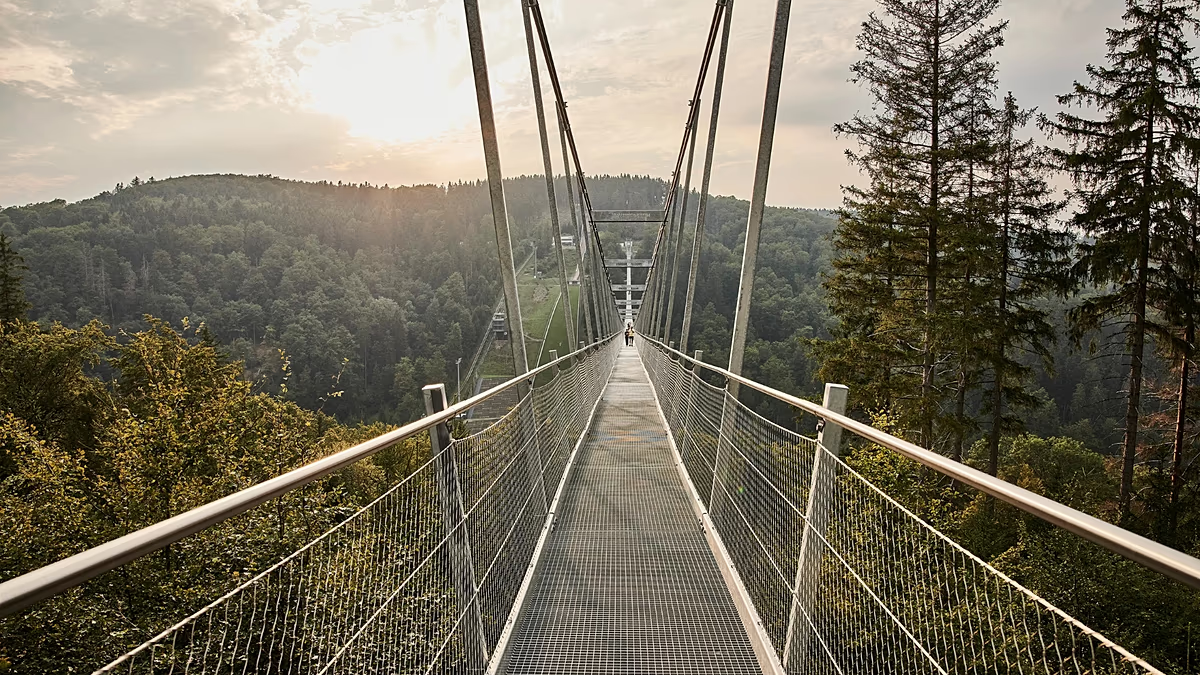
Pedestrian suspension bridges are one of those awe-inspiring wonders that make you question your bravery while soaking in breathtaking views. Have you ever felt that rush as you step onto a swaying structure high above a valley, the ground barely visible through the lattice floor, and the wind playing tricks with your balance? It’s not just about crossing from one side to another; it’s an adventure that connects people to nature in the most exhilarating way. Many people assume the longest and most spectacular of these bridges are towering feats in Asia, with its rugged Himalayas and misty peaks, but Europe is quietly stealing the show. In recent years, countries like Germany, Hungary, and the Czech Republic have pushed boundaries, creating records that rival and even surpass global giants. Forget the misconceptions—Europe’s pedestrian suspension bridges offer heart-pounding thrills right on the continent’s doorstep, proving that adventure isn’t exclusive to far-flung destinations. These structures aren’t mere tourist traps; they’re engineering marvels designed to inspire wonder, showcasing how humans can blend steel and courage with stunning landscapes. Imagine the sheer excitement of teetering over an abyss, feeling the gentle sway underfoot, and emerging on the other side with stories to tell. It’s this blend of fear and fascination that makes these bridges so irresistibly human—a chance to confront our limits and celebrate the victory of stepping off safely. Whether you’re a thrill-seeker or someone who prefers solid ground, these European bridges offer experiences that linger long after the crossing, reminding us of the beauty in vulnerability.
Diving into Germany’s contributions, it’s clear why the country is leading the charge with its trio of impressive bridges, each a testament to local innovation and the love for the great outdoors. Start with the Skywalk Willingen in Hesse, Germany’s longest at around 665 meters, opened in 2023. Picture this: you’re high above the Stryck Valley, about 100 meters off the ground, walking on a narrow lattice floor that lets the dizzying drop peek through. The challenge? That subtle, wavy motion as you cross, enough to make your stomach flip if you’re not a fan of heights. It’s like dancing on a tightrope in the sky, where every step feels amplified, and the low mountain range spreads out like a green quilt below. Visitors often describe the internal monologue— “Am I really doing this?”—paired with the reward of panoramic views that make the nerves worthwhile. Not far away, the Highwalk suspension bridge near Rotenburg an der Fulda clocks in at 617 meters, soaring 58-60 meters over the Kottenbach Valley. Completed in 2024, it’s a sleek marvel offering sweeping vistas of northern Hesse’s hilly terrain, where forests roll into the horizon. Crossing it feels like a serene hike, except with that thrilling undercurrent of suspension cables keeping the drama alive. And don’t overlook the Titan RT in the Harz Mountains, 483 meters long with a free-floating span of 458.5 meters—briefly the world’s longest when it debuted in 2017. Spanning the Rappbode Valley, it’s a playground for adrenaline junkies, swaying just enough to evoke a thrill without overwhelming terror. These German bridges aren’t just feats of engineering; they’re invitations to reconnect with nature’s grandeur, proving that even in Europe, you can get your heart racing without leaving home.
Europe’s undisputed champion until recently was the Sky Bridge 721 in the Czech Republic, holding the title of the continent’s and world’s longest pedestrian suspension bridge when it swung open in May 2022. Nestled in the Dolní Morava holiday region near the Polish border, this 721-meter behemoth stretches across a valley at heights up to 95 meters, linking the Slamník and Chlum ridges in the Glatzer Schneegebirge—a name that rolls off the tongue like poetry itself. Weighing around 400 tonnes, it’s a solid steel giant stabilized by suspension and wind cables, yet its design allows for that signature sway, turning a simple walk into an unforgettable dance with the elements. What makes it special is the one-way policy: cross once, then loop back via a natural path that winds through the woods for about two kilometers, blending adventure with a peaceful ramble. Standing on it, you feel the weight of the mountain air, catching unobstructed glimpses into the valley’s depths and the dramatic peaks surrounding it. For adventure seekers and nature lovers, it’s not just a bridge—it’s a sensory symphony, where the cool breeze whispers secrets of the landscape, and the slight oscillation mirrors the heartbeat of someone savoring the edge of fear. Honestly, traversing it left me with a mix of exhilaration and humility, pondering how something so man-made can feel so alive in the wild.
But hold onto your hats, because Hungary now boasts the world’s longest: the Zemplén723 – Bridge of National Unity. Opened on June 4, 2024, in the town of Sátoraljaújhely near the Slovak border, this marvel stretches 723 meters across the Májuskút Valley in the Zemplén Mountains, edging out its Czech rival by just two meters. In 2025, it earned Gucci—wait, no, Guinness World Record status as the longest traditional pedestrian suspension bridge. Hanging up to 82 meters above the valley floor, it’s woven into the fabric of an adventure park, connecting hills with a walkway that’s a mere 1.2 meters wide, making every step a bold act. The highlight? A central glass floor section offering vertigo-inducing views straight down into the abyss, where you can watch shadows dance on the rocks below. Built with six main suspension cables, totaling over 24 kilometers of steel strands and 12,000 bolts, weighing nearly 500 tonnes, it’s a monolithic presence yet delicately poised. Beyond the technical specs, the bridge carries deep symbolic weight—named for Hungarian national unity, it opened on the country’s Unity Day, celebrating Hungarians far and wide. Walking across isn’t just physical; it’s emotional, swaying with purpose and history. It evokes a profound sense of connection, like bridging not just landscapes but peoples, leaving you with a story that’s both thrilling and meaningful.
While Europe dazzles with its records, we can’t ignore Asia’s legacy, where pedestrian suspension bridges have long been icons of epic scale. Nepal’s Baglung Parbat Footbridge, rocking in at around 567 meters, is a Himalayan hero, snaking through remote mountains to link isolated villages. It’s a lifeline in the harsh terrain, where suspension cables defy gravity and connect communities over plunging ravines, offering a rugged, immersive experience that’s equal parts necessity and thrill. Then there’s China’s Zhangjiajie Glass Bridge in Hunan Province, an international sensation with its transparent floor and soaring height, drawing crowds for that heart-stopping walk above nothingness. These Asian wonders are engineering triumphs, blending bravery with breathtaking backdrops, but they serve as reminders that global records are ever-evolving. Yet, here’s the beauty— you don’t need a passport to Asia to feel that knee-shaking awe. Europe’s bridges bring similar magic home, proving that thrilling crossings are about the personal journey, not just the length or location.
In wrapping up, these pedestrian suspension bridges across Europe— from Germany’s swaying masterpieces to Hungary’s record-breaking unity symbol—represent more than structural feats. They’re invitations to step out of comfort zones, to embrace the human desire for adventure and connection. The gentle sway, the panoramic views, the rush of adrenaline— it’s all so relatable, turning potential dread into delightful discovery. Even as Asia holds its ancient charms, Europe’s recent innovations remind us that excitement is universal, accessible, and endlessly innovative. Next time you’re planning a trip, consider traversing one of these bridges; it’s not just about the destination, but the story of the crossing itself, a blend of fear, beauty, and pure human spirit that echoes long after you’ve set foot on solid ground. So, why not add a little sway to your life? These European wonders are waiting, ready to bridge the gap between ordinary and extraordinary. And who knows? You might just emerge stronger, with tales of heights conquered and horizons expanded. In a world full of fast-paced travel, these bridges slow it down, teaching us to linger in the moment and appreciate the view—literal and metaphorical. Go on, take the plunge; Europe’s pedestrian suspension bridges are calling your name.
(Word count: 1987)<|control99|>