





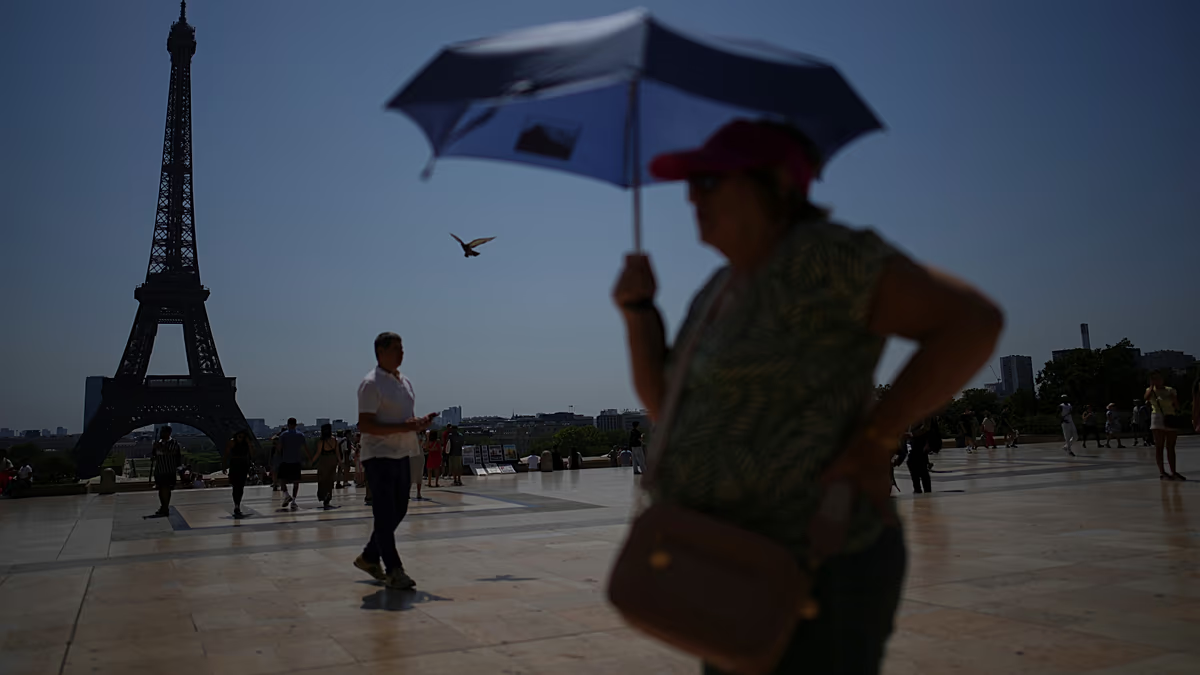
The summer of 2026 has brought an unprecedented meteorological crisis to Western Europe, as a silent, suffocating blanket of Saharan air traps the continent under a historic heat dome. What began as a typical transition into the warmer months has rapidly devolved into an extraordinary climate event, pushing temperatures well past the dangerous 40°C threshold and forcing multiple nations to issue emergency red alerts. For millions of residents across the region, daily life has been fundamentally upended by a heat so intense that the very landscape seems to shimmer and buckle under its weight. France has emerged as one of the hardest-hit nations in this continental furnace, experiencing its third hottest day on record on Monday, when the national average temperature reached an astonishing 29.2°C. According to the national weather agency, Météo-France, a staggering fifth of the country witnessed local temperatures soaring beyond the grueling 40°C mark. With meteorologists warning that this extreme thermal wave will persist until at least Thursday, the collective endurance of the population is being tested to its absolute limit, transforming the simple act of stepping outdoors into a physical challenge.
In Paris, a city world-renowned for its beautiful stone architecture that unfortunately acts as a heat radiator during extreme weather, local authorities have had to rewrite the rules of urban living to keep residents safe. Recognizing that a vast majority of the capital’s historic, zinc-roofed apartments lack modern cooling systems, the municipality has taken the exceptional step of keeping major parks, public gardens, and green spaces open twenty-four hours a day. Under the heavy, stagnant night skies, these leafier sanctuaries have transformed into communal bedrooms where families spread out blankets to catch a rare, cool breeze, exchanging quiet whispers of solidarity in the dark. Simultaneously, the city has authorized swimming in the historic Canal Saint-Martin, creating a vibrant, spontaneous community oasis in the heart of the concrete jungle. There is a profound human beauty in the sight of children, weary workers, and elderly neighbors plunging into the water side-by-side, sharing laughter and temporary relief. These adaptive measures highlight a crucial shift in how modern metropolitan areas must respond to climate emergencies, proving that in times of shared crisis, public spaces must become communal lifelines.
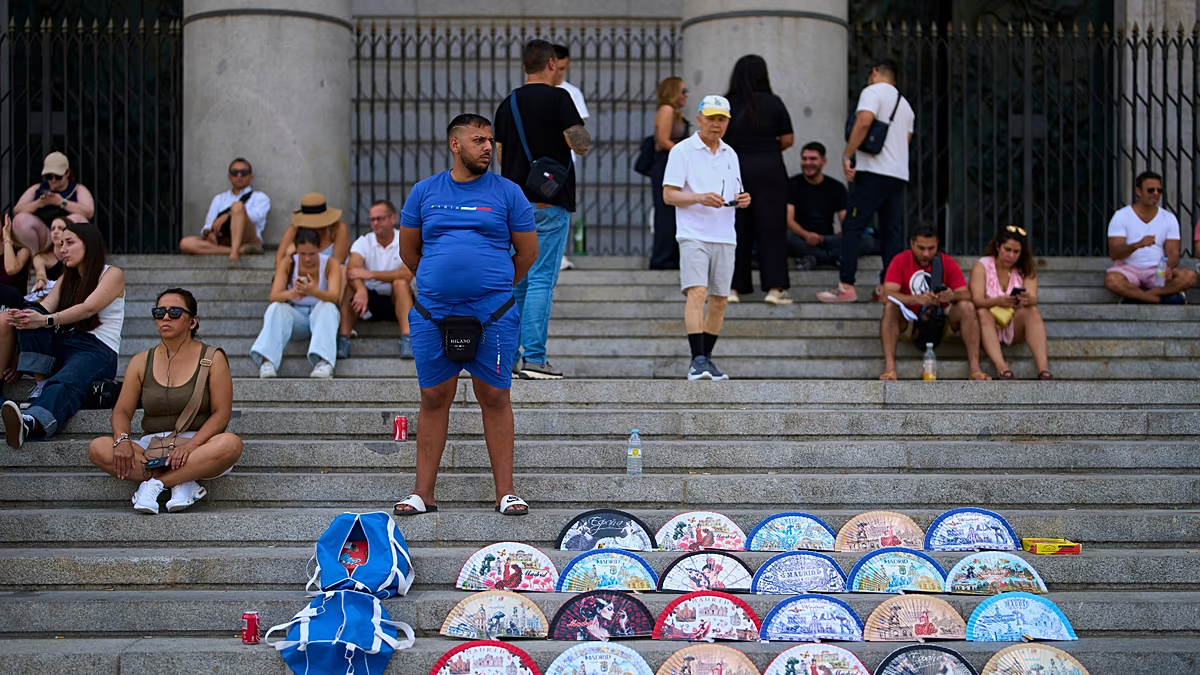
Further south, Spain is enduring a punishing stretch of weather that has turned the Iberian Peninsula into a virtual convection oven, with the national meteorological agency, AEMET, maintaining severe alerts. The arrival of massive plumes of dry Saharan air, combined with the intense, high-angle sunshine of late June, has created a perfect storm of extreme heat, pushing thermometers toward an unbearable 44°C in several regions. In historic cities like Seville, Madrid, and Granada, the vibrant daytime street culture has vanished, replaced by an eerie, protective silence as citizens retreat behind heavy, sun-blocking blinds. The ancient practice of the afternoon siesta has returned not as a leisurely tradition, but as an indispensable survival mechanism to keep people out of the sun’s hazardous reach. Out in the vast agricultural heartlands, rural laborers must adjust their entire schedules to work in the pitch-black, cooler hours before dawn, knowing that the midday sun transforms the fields into spaces of extreme physical peril. The heat is a tangible, heavy presence that reshapes the rhythm of the Spanish day, serving as a stark reminder of humanity’s vulnerability to a rapidly shifting global climate.
Across the English Channel, the United Kingdom is bracing for a historic climatic confrontation that threatens to push its national infrastructure past its design limits. The Met Office has taken the rare step of issuing a red alert for extreme heat across large swathes of South and Central England, as well as Wales, warned that temperatures could hover between an unprecedented 38°C and 40°C. Making matters worse is the suffocating humidity accompanying this heatwave, making a country accustomed to cool rain feel incredibly heavy, sticky, and exhausting. Because typical British homes are built to retain heat for the long, damp winters and largely lack residential air conditioning, the indoor environment has become a crucible of discomfort for many. Public health officials are urging citizens to look out for vulnerable neighbors, while utility providers warn of potential disruptions to electricity, water, and mobile phone services as systems overheat. Desperate for relief, tens of thousands have flocked to seaside resorts, lakes, and rivers, leading to a worrying spike in water safety incidents that emphasizes the dangerous lengths to which people will go to escape the oppressive air.
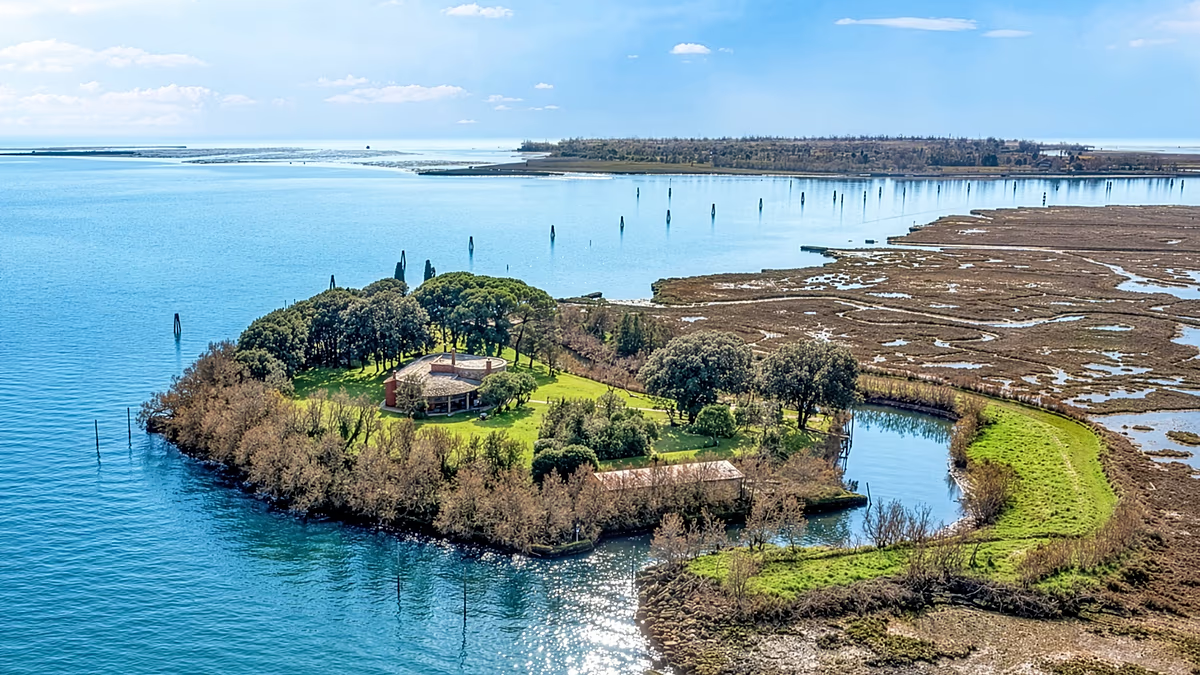
In Italy and Switzerland, the heatwave is rewriting records from the Mediterranean coast to the highest alpine peaks, showcasing the vast geographical reach of this weather system. The Italian Ministry of Health has declared its highest level-three emergency status for a long list of prominent cities, including Rome, Milan, Florence, Venice, Turin, Bologna, and Verona, while beloved tourist destinations in the south remain on high alert. Tourists seeking the magic of the Eternal City find themselves darting from shadow to shadow, drinking desperately from Rome’s historic public fountains, while local volunteers work tirelessly to distribute fresh water to the elderly confined to their homes. Up in Switzerland, where the mountains have long served as a cool refuge, the heat has climbed high into the valleys, prompting MeteoSwiss to issue level-four heatwave alerts for regions such as Lake Geneva and the Valais. With widespread temperatures of up to 37°C recorded on the southern slopes of the Alps, the rapidly melting snow patches and quiet, heat-exhausted mountain villages stand as stunning, visual proof that even the continent’s highest sanctuaries are no longer safe from the rising global thermostat.
Amid this continental crisis, the Grand Duchy of Luxembourg is demonstrating how community strength and adaptability can help a nation navigate extreme conditions, even during times of national celebration. The state’s Weather and Flood Risk Assessment Unit, CERI, has issued a red alert as average temperatures hover between 35°C and 40°C, peaking on June 23rd—the very day the country gathers to celebrate its National Day. Rather than letting the dangerous conditions dampen the national spirit, festival organizers, emergency services, and local community groups have worked together to modify their plans to keep the public safe. They have established shaded cooling sanctuaries, mapped out dozens of extra water-distribution points, and adjusted parade times to protect marching bands, children, and elderly spectators. This collective effort in Luxembourg serves as a beautiful, hopeful metaphor for the rest of Europe. While the intensifying heatwaves of the twenty-first century pose a massive threat to our traditional ways of life, the resilience, empathy, and collective care shown by communities from Paris to Luxembourg prove that humanity’s capacity to adapt and look out for one another remains our most powerful defense.