



Travel has traditionally been a sacred time to disconnect, a chance to step away from the relentless rhythm of daily obligations and immerse ourselves in the unfamiliar. Once upon a time, deep travel meant crossing borders into a zone of beautiful isolation, where updates were sent via slow-traveling postcards and your social circle only heard about your adventures weeks after you returned. Today, however, that romantic sense of distance has been almost entirely dismantled by the double-edged sword of modern connectivity. With airlines aggressively competing to install ultra-fast, high-altitude Wi-Fi in their cabins and the relentless social pressure to keep friends, family, and followers updated in real-time via Instagram stories, our hard-earned downtime has quietly transformed into a continuation of screen time. We flee our offices for physical distance, yet drag our entire digital lives along in our pockets, reacting to the same notifications and consuming the same anxiety-inducing information streams that drain us at home. The resulting hyper-connectivity robs travel of its restorative magic, reducing vibrant local landscapes to mere backdrops for our digital curation and leaving us just as exhausted on our journey home as we were when we left.
Recognizing this profound cultural fatigue and the paradox of modern tourism, forward-thinking hospitality pioneers are beginning to realize that the ultimate luxury they can offer guests is not just high-speed connectivity, but the rare and elusive gift of uninterrupted presence. In a delightful and timely response to this modern crisis of attention, the globally recognized hotel chain YOTEL has launched a creative initiative designed to help travelers reclaim their vacation time: the “anti-appy hour.” Designed to coincide with Global Wellness Day, this campaign is a friendly, supportive challenge to the status quo of constant scrolling, helping guests step away from the digital noise and tune back into their immediate surroundings. Rather than taking a heavy-handed approach by forcing guests to lock their phones in lobby safes, YOTEL meets travelers exactly where they want to be—at the lively, atmospheric hotel bar—and offers a voluntary, experiential way to temporarily step off the digital grid, creating the literal and mental space necessary for deeper, more meaningful travel encounters.
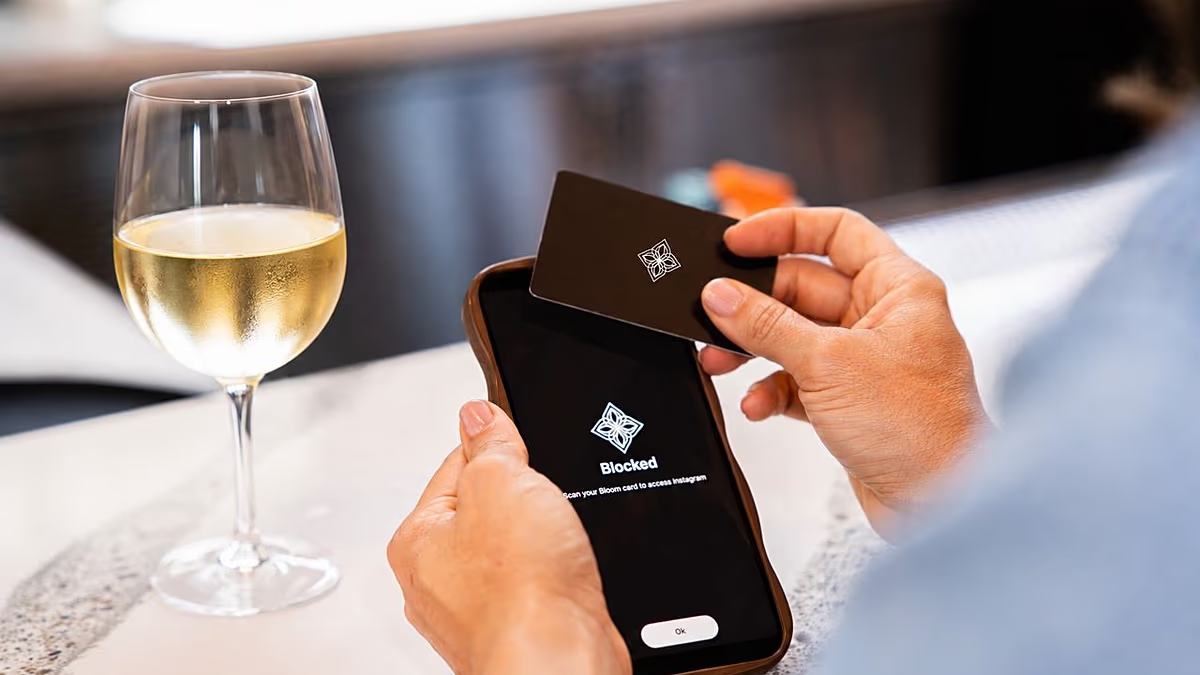
The elegant simplicity of this digital detox is powered by an innovative partnership with Bloom, a pioneering mental wellness application launched in 2024 that approaches screen boundaries through a tactile, physically grounded lens. To participate in the anti-appy hour, guests begin by downloading the Bloom app on their smartphones before heading down to the warm, communal energy of the hotel bar. Once there, instead of trying to rely solely on fragile willpower to ignore their notifications, guests tap a physical Bloom card directly against their mobile device. This simple, physical interaction initiates a customized block on their chosen social media applications, allowing users to voluntarily quarantine their most distracting platforms—such as Instagram and X—for a structured, sixty-minute period. Because your phone is securely locked via the physical card, the temptation to sneak a quick peek at your feed is eliminated; you are locked in your offline sanctuary until the hour is up, at which point the friendly bar staff will let you know and assist you in tapping the card once more to regain access to the digital world.
This temporary return to the analog world is being rolled out across some of Europe’s most culturally rich and visually arresting cities, including Amsterdam, Edinburgh, Glasgow, London City, and Manchester, giving travelers the perfect excuse to explore these destinations with open eyes and quiet minds. During this designated phone-free hour, the atmosphere of the Yotel bar shifts from a collection of isolated individuals illuminated by blue-light screens to a warm, buzzing hub of genuine human connection and slow leisure. To replace the habit of mindless scrolling, guests are encouraged to dive into tactile, satisfying activities that nourish the soul. You might find yourself writing a physical YOTEL postcard to a friend or relative you miss, rediscovering the slow, meditative pleasure of putting pen to paper. Alternatively, you can sip on a specially crafted Bloom cocktail, engage in unhurried conversations with your companions or fellow globetrotters, or simply sit back, listen to the music, and take in the living, breathing environment of the city you worked so hard to visit.
The brilliant design philosophy behind Bloom lies in its understanding of human behavioral science: standard digital screen-time limits almost always fail because they are too easy to override with a simple, impulsive tap on a screen. When a basic app blocker flashes a warning, our hyper-conditioned thumbs automatically dismiss the alert, pulling us straight back into the infinite scroll before we even realize we have made a choice. By requiring a physical Bloom card to lock and unlock the phone, the system introduces a crucial element of physical friction into our habitual loops. If you want to check your notifications, you have to physically get up, find the card, and scan it; that brief physical journey acts as a cognitive speed bump, giving your brain enough time to pause, reflect, and consciously choose to stay present in the moment. To encourage travelers to bring this mindful practice back home into their daily routines, YOTEL is also offering a 10% discount on Bloom cards for guests to use outside of the hotel properties, turning a fun vacation experiment into a lasting, healthy lifestyle tool.
Ultimately, the partnership between YOTEL and Bloom serves as a beautiful, much-needed reminder of what the art of travel is truly about: a process of personal transformation, curiosity, and resting our weary minds, all of which require us to be fully conscious of our physical surroundings. As we look at the shifting landscape of hospitality, it is clear that the industry’s next major frontier will not be defined by who can provide the fastest internet or the most integrated smart-room technology, but by who can help us successfully unplug and remember how to live in the moment. Initiatives like the “anti-appy hour” prove that we do not have to abandon modern technology entirely to find balance; rather, we simply need to design healthier, more intentional spaces where our devices serve us instead of controlling us. By stepping away from our screens for just one uninterrupted hour, we give ourselves permission to look up, feel the cool air of a new city, taste our drinks fully, look our travel partners in the eye, and rediscover the profound, irreplaceable joy of being exactly where we are.