





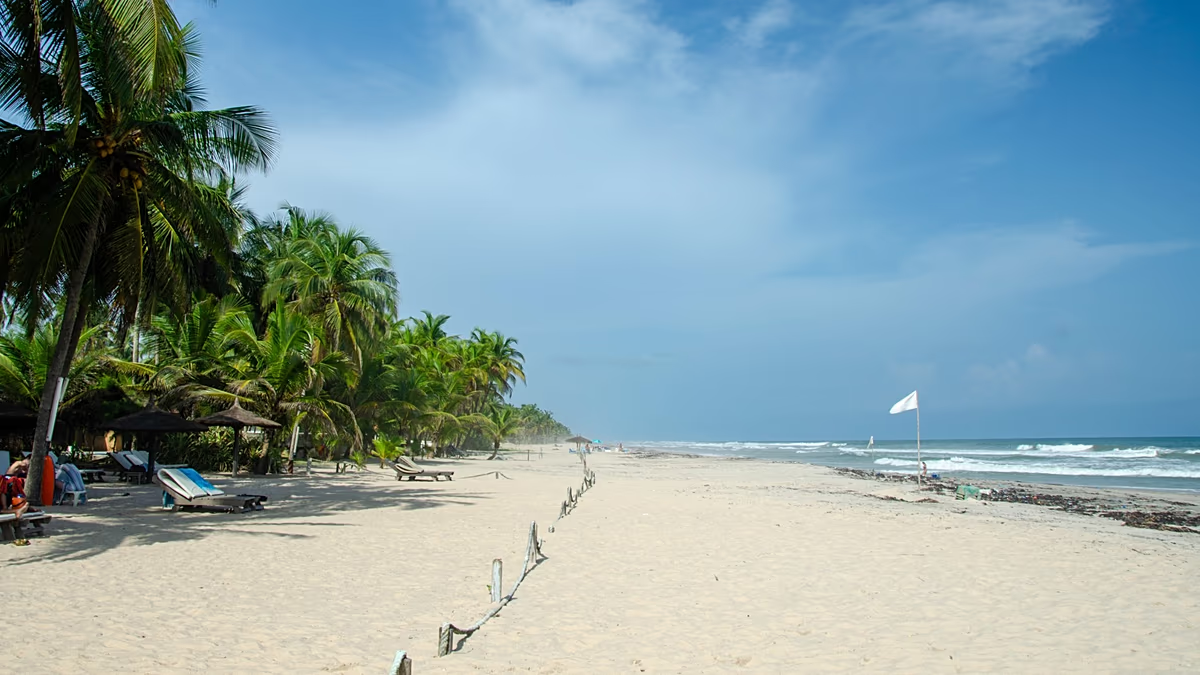
The lagoon stretching out before me is an absolute picture of afternoon tranquility, bathed in the golden, unfiltered warmth of the West African sun, broken only by the rhythmic rustle of a tropical breeze blowing through the palms and the soft, steady putter of a wooden boat engine making its slow way toward my wooden jetty. Across this two-hundred-meter expanse of shimmering, glass-like water lies a narrow, pristine finger of sand punctuated by the swaying silhouettes of coconut palms, where the faint, low rumble of the Atlantic Ocean’s breaking waves hints at the wild, untamed energy of the open sea just beyond the tree line. Looking at this idyllic scene, you would be entirely forgiven for letting your mind drift toward the familiar postcards of the Caribbean, imagining yourself on some secluded cove in Jamaica or a quiet, breeze-swept lagoon in the Grenadines. Yet, this is the magnificent Côte d’Ivoire, a vibrant West African nation that captured the world’s attention during its triumphant performances in World Cup football, but remains curiously overlooked as a prime travel destination despite possessing some of the most spectacular, untouched Atlantic coastlines and richly preserved tribal cultures on the continent. With major airlines now offering smooth, direct flight connections from European hubs like Paris, Brussels, and Istanbul straight into the bustling metropolis of Abidjan—one of the largest and most dynamic cultural and economic engines in all of Africa—the time to rewrite your travel wish list and put this breathtaking country at the very top of your global itinerary has officially arrived, promising an adventure that balances luxurious relaxation with deeply profound, raw human connection. It is a place of incredible contrasts, where soaring modern skyscrapers give way to ancient primary rainforests, and where the timeless echoes of indigenous tribal traditions coexist beautifully with the modern pulses of art, music, and high fashion that define the contemporary, forward-looking Ivorian spirit today.
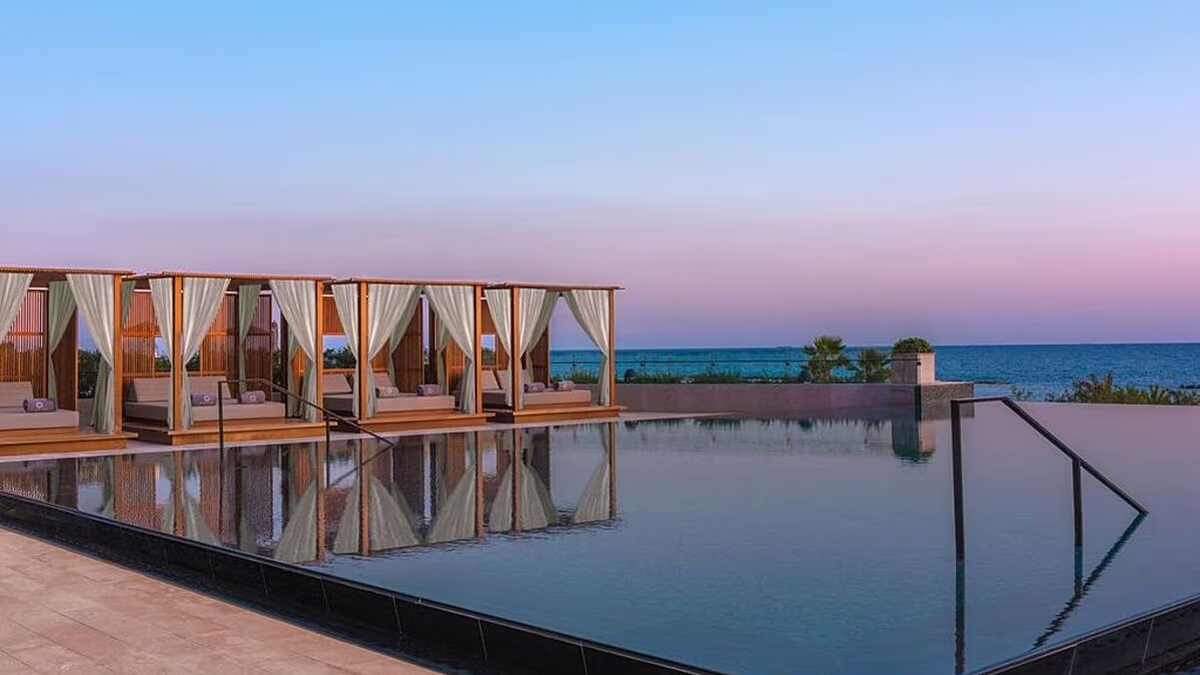
My journey of discovery begins along the coast in the beautiful sanctuary of Assinie-Mafia, situated just an hour-and-a-half’s drive east of the towering skyscrapers and infectious urban energy of Abidjan. Here, the world slows to a peaceful crawl, revealing a landscape where boutique hotels, fishing villages, and beach clubs line the serene, brackish waters of the Aby Lagoon. I find myself waiting for a private boat at the jetty of La Maison d’Akoula, an eco-chic boutique hotel that feels more like an open-air art gallery, designed to transport guests to its beach club across the mirror-like water. Behind me, the soft, sophisticated hum of laughter fills the warm air, punctuated by the clink of glassware as members of Abidjan’s elite sip champagne under the sprawling canopy of an ancient fig tree adorned with contemporary Ivorian art. Next to me, a brilliant yellow weaver bird darts into its intricately woven nest, a flash of gold against the emerald foliage. While Assinie’s sands are highly sought after by wealthy city dwellers, you will encounter almost no European tourists here, providing a rare, coveted sense of having stumbled upon a secret paradise before the rest of the world catches on. Beyond the beach, the region beckons with natural wonders; birdwatchers can embark on serene boat excursions through the Aby Lagoon, passing traditional fishing hamlets to reach the dense mangroves of the Ehotilé Islands National Park, a protected wetland teeming with avian life. Just forty-five minutes further west, the crumbling colonial architecture of Grand-Bassam serves as a historic backdrop where local ceramic artisans shape clay in their open-air workshops. Combined with the sparkling pools and elegant hospitality of La Maison d’Akoula and its neighbor, Hotel Coucoué Lodge, you get all the hallmarks of a world-class beach escape, but with an open-hearted authenticity that stands in contrast to the overcrowded resort zones elsewhere.
Leaving the sea breeze behind, I journey inland for three and a half hours, past verdant plantations and rolling hills, arriving in the historic village of Kondeyaokro, near the quiet capital of Yamoussoukro, where a completely different facet of the nation’s soul awaits. Here, under the shade of massive trees, I am invited to witness the legendary Goli dance, a sacred ritual practiced by the Baoulé people—one of the country’s sixty-plus ethnic groups—to establish a vital connection with their ancestral spirits. The drumming begins as a low, deep vibration, quickly growing into an intense, hypnotic rhythm that commands the absolute attention of everyone present, reaching a fever pitch as two beautifully masked figures, cloaked in dried palm fronds, sweep into the center of our spectator circle. The dancers move with an astonishing, almost supernatural agility, taking turns to outdance one another, their feet kicking up clouds of red dust as they stomp and glide with impossible speed to the syncopated beats. As the afternoon unfolds, the boundary between performance and daily life dissolves completely; more villagers gather, and local young men shout encouragement, cheering on their favorite dancer with wild enthusiasm. What had initially begun as an organized cultural demonstration for a handful of visiting outsiders quickly transforms into an authentic, high-energy community celebration that crackles with raw electricity and shared laughter. Over a communal dinner that evening, punctuated by warm toasts, the village King, Nana Yao Daniel, speaks to us with quiet gravity about the existential importance of tourism to his community’s survival. He explains that while the nation’s brand-new, smooth dual-carriageway has revolutionized travel between the coast and the remote north, it has also bypassed Kondeyaokro, causing a devastating drop in the roadside sales of the village’s acclaimed hand-woven textiles that once sustained local families.
During a quiet interlude in the drumming, I am led to the village’s outdoor weaving workshops, where the true depth of Baoulé craftsmanship is revealed. Here, beneath the open sky, artisan weavers operate hand-carved wooden looms, their hands and feet moving in a highly coordinated, rhythmic dance as they weave incredibly long, narrow strips of cotton cloth, which will later be meticulously hand-sewn together to create the magnificent, flowing loincloths worn by community members during formal ceremonies. The entire process is a beautiful, gender-balanced collaboration: while the men masterfully operate the complex looms, the village women dedicate their days to spun cotton cultivation, dyeing the threads with natural, plant-based pigments to achieve rich hues. There is absolutely no aggressive sales pitch or commercial pressure to buy anything, which makes the experience feel incredibly respectful and pure; instead, there is only a quiet, justifiable pride in their ancestral heritage. I find myself deeply moved by the striking indigo blues and intricate, geometric patterns of a particular cloth that catches my eye, and as I purchase it directly from the weaver, I feel an overwhelming sense of honor to be bringing home a piece of living history that has been officially inscribed on UNESCO’s prestigious list of the Intangible Cultural Heritage of Humanity. This simple economic transaction highlights the profound, circular benefit of responsible travel: by visiting these overlooked interior communities, travelers provide a vital economic lifeline that incentivizes the preservation of ancient art forms that might otherwise be lost to modernization and urban migration. Buying a piece of Baoulé cloth is not just about acquiring a beautiful souvenir, but about participating in a physical act of preservation, ensuring that the rhythmic clacking of Kondeyaokro’s looms will continue to echo through the village for generations to come, keeping their ancestors’ stories dynamically alive.
Continuing our journey further north along the smooth dual-carriageway, the landscape shifts into a mosaic of dry savannah and dense forest near the outskirts of Bouaké, where a pioneering chapter of environmental conservation is currently being written. Here, Karl Diakite, a visionary Ivorian eco-entrepreneur, has transformed his family’s former private fishing estate into the sweeping, forty-one-thousand-hectare N’Zi Wildlife Reserve, a sanctuary designed to protect the region’s rapidly disappearing biodiversity. This ambitious conservation model is entirely funded by eco-tourism revenue generated through stays at the N’Zi River Lodges, an exquisite collection of comfortable wood-and-thatch cottages built on tall stilts and connected by suspended canopy walkways where guests sleep to the evocative calls of tree hyraxes echoing through the darkness. In an inspiring testament to community engagement, Karl explains that many of the reserve’s most dedicated rangers were once local poachers who, over years of close collaboration, have come to understand the vital ecological importance of preserving their environment and are now proud, salaried protectors of the land. This shift is critically urgent: since gaining independence in 1960, Côte d’Ivoire has tragically lost nearly eighty percent of its original forest cover and over ninety percent of its magnificent, native forest elephants. Although N’Zi’s restoration project is still in its early stages, the air here is filled with a palpable sense of hope as wildlife numbers begin to bounce back, with safari drives through the savannah revealing herds of forest buffalo, Western Kob antelope, defassa waterbuck, and joyful troops of vervet monkeys. Karl recalls with a smile how, in the beginning, seeing mammals was a rare miracle, and how the existence of local buffalo was laughed off as a myth, until large, magnificent herds suddenly began reclaiming their ancestral grazing grounds, offering a clear blueprint for broader conservation efforts across the country.
Now, back on the warm, powdery sands of Assinie-Mafia, I run my toes through the cool grains, holding a glass of refreshing, crimson-colored hibiscus juice as a lively, spontaneous game of beach volleyball unfolds before me, sound-tracked by the infectious rhythms of Zouglou music drifting softly from a nearby beach pavilion. It is a moment of pure, unadulterated bliss that rivals any luxury beach destination on earth, yet the true magic of traveling through this captivating country lies far beyond the aesthetic pleasures of its sun-drenched coastlines. The true appeal of Côte d’Ivoire is the opportunity to be an active, positive force in its unfolding story; by venturing here now, your travel spend directly sustains the invaluable cultural heritage of weavers in remote villages like Kondeyaokro and funds urgent wildlife conservation work at places like N’Zi. For those inspired to experience this West African jewel firsthand, reaching Abidjan is remarkably straightforward, with major airlines including Air France, Brussels Airlines, and Turkish Airlines offering regular direct flights from Paris, Brussels, and Istanbul, typically taking around seven comfortable hours. Accommodations cater to a diverse range of styles, from the wild luxury of N’Zi River Lodges, which start at £198 per night including all meals and an expert-led game drive, to the seaside sophistication of La Maison d’Akoula’s over-water suites starting at £450 per night. For those seeking coastal comfort at a gentler price point, the charming Hotel Coucoué Lodge offers lovely garden rooms starting at £112 per night, while ethical travel specialists at Responsible Travel curate comprehensive tours starting from £2,450 per person, excluding flights, ensuring your journey is as smooth as it is highly impactful. Ultimately, Côte d’Ivoire offers a rare, ocean-scented, and transformative journey where you can lose yourself in the rhythms of the sea, the drums of the village, and the whispering winds of the savannah, while simultaneously helping to protect, nurture, and preserve one of the world’s most beautiful cultural landscapes before the crowds inevitably begin to swarm and arrive there tomorrow.