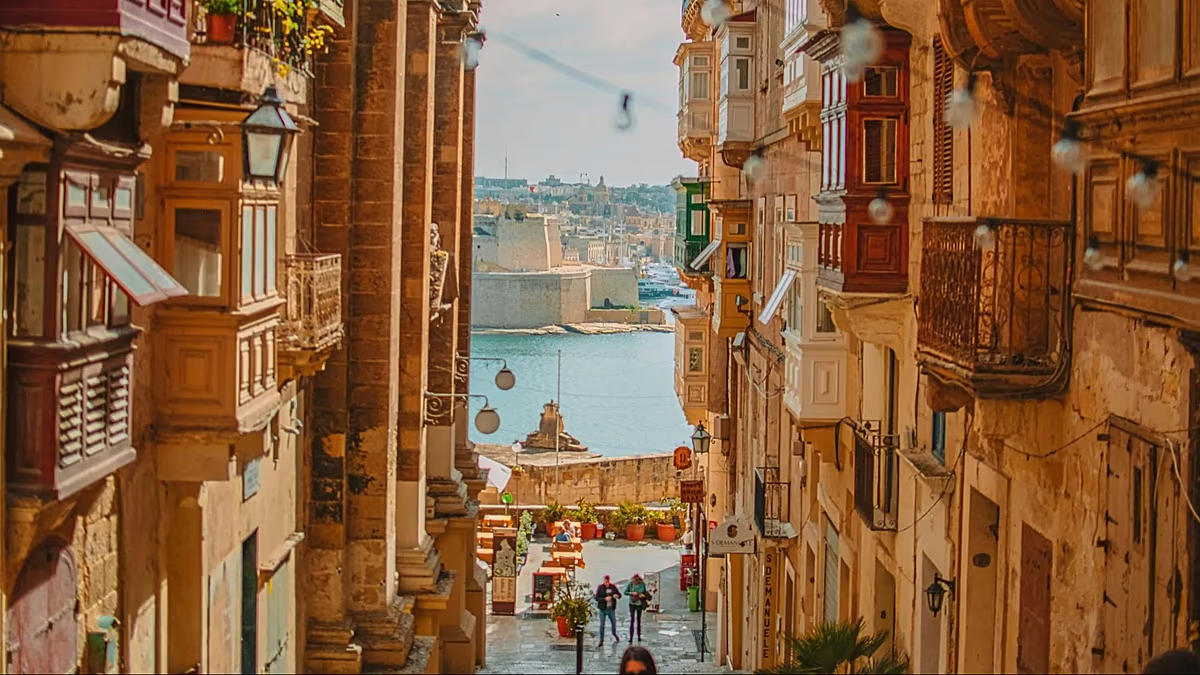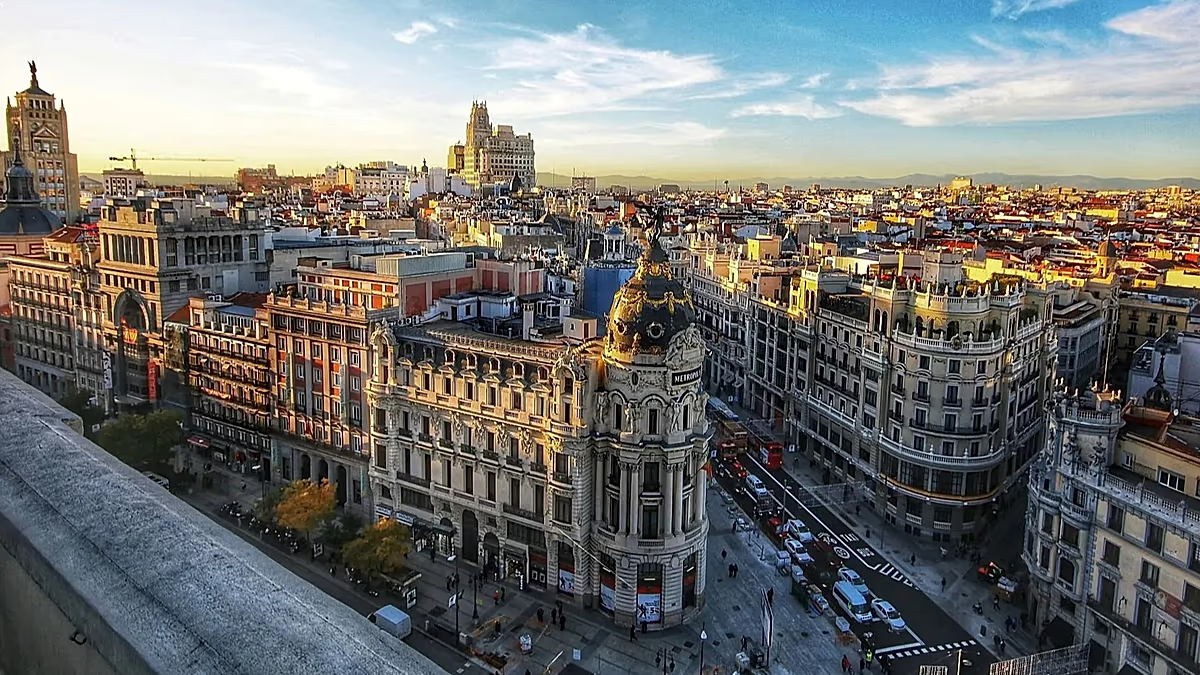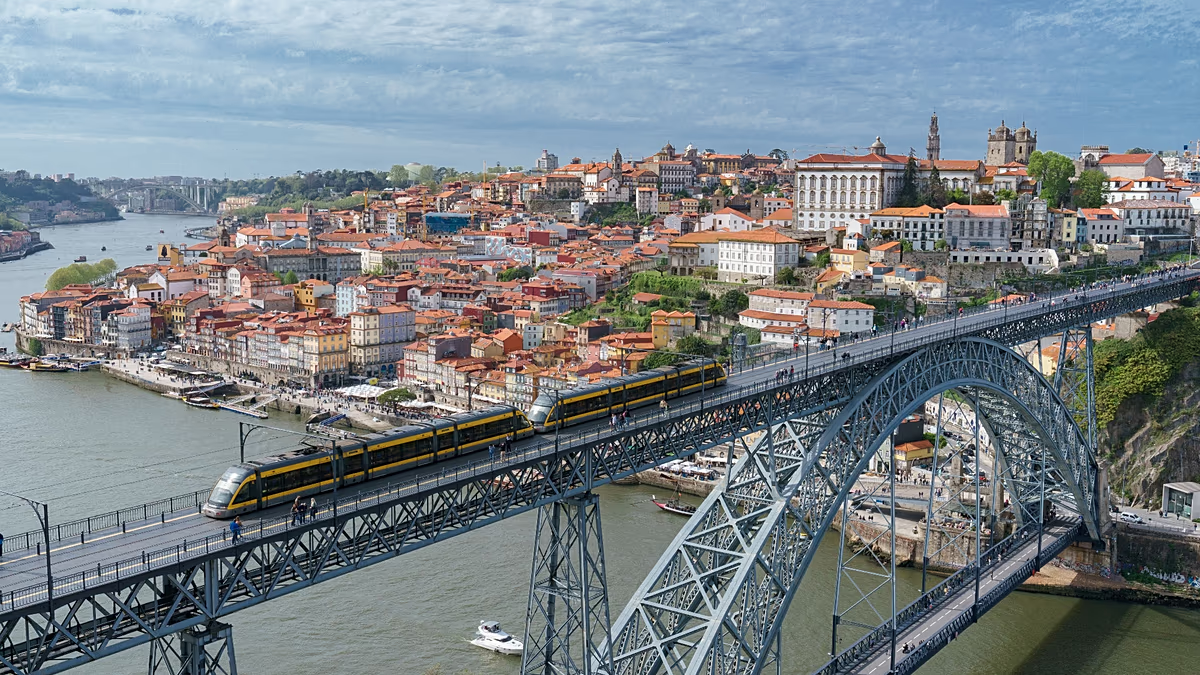



The sun-drenched coastlines of the Mediterranean have served as the romantic playground of Europe for generations, drawing millions of travelers year after year to bask along its azure edges and unwind under its golden skies. However, beneath the timeless rhythm of the tides, a profound cultural and structural transformation is reshaping how we interact with this iconic region. According to the freshly released MGallery Trends 2026: The Mediterranean Briefing, a comprehensive report co-produced by the boutique luxury brand MGallery Hotel Collection and the traveler-focused trend forecasting agency Globetrender, our relationship with this historic sea is undergoing an existential pivot. While the elemental pull of warm sunshine and sparkling salt water remains an undeniable anchor, modern visitors are increasingly searching for something far deeper, more spiritually restorative, and culturally immersive than a simple beach holiday. As Jenny Southan, the visionary founder and CEO of Globetrender, articulates, the Mediterranean has officially reached a critical tipping point where record-breaking demand is colliding with a growing collective desire for mindfulness and selectivity. Today’s travelers are actively rejecting the chaotic, hyper-commercialized spaces of mass tourism in favor of slower, quieter, and more authentic environments, forcing the hospitality industry to completely re-evaluate how it delivers genuine meaning and value in one of the world’s most mature and established travel destinations.
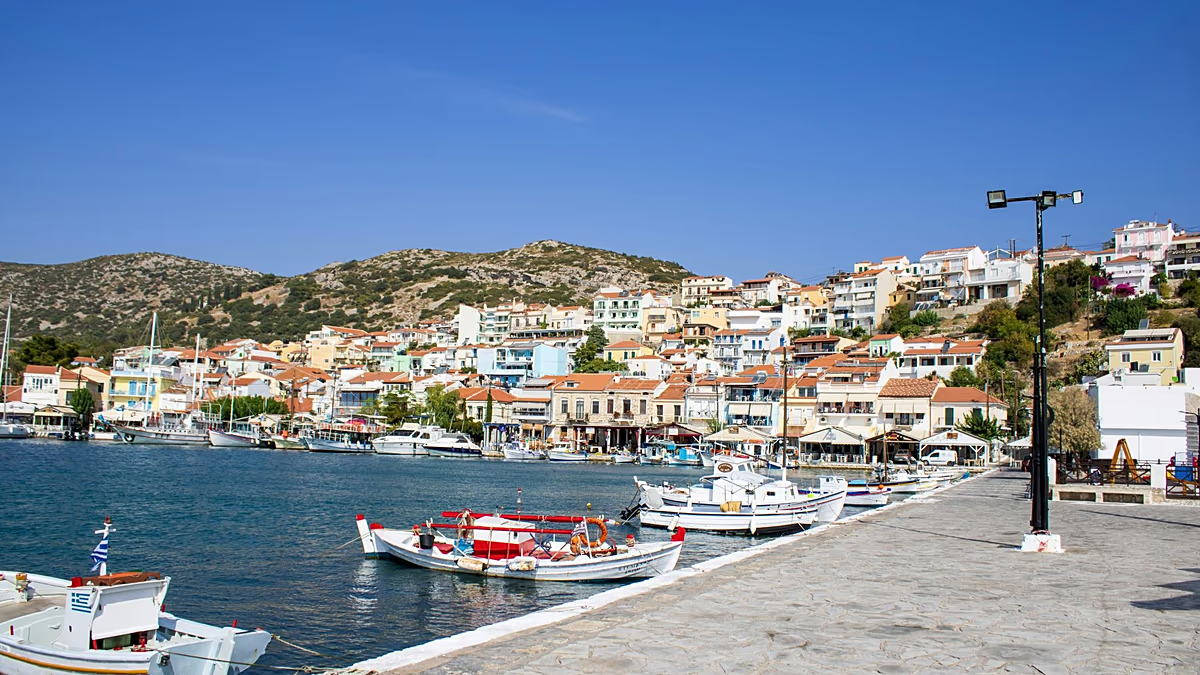
This cultural awakening is fundamentally dismantling the old, transactional model of the classic “fly-and-flop” vacation—a routine where tourists would fly into a generic resort, lay passively by a pool for a week to acquire a tan and a few curatible photos for social media, and return home without ever truly engaging with the world outside their hotel gates. In 2026, visitors are increasingly seeking to leave a destination with a renewed sense of self and an authentic connection to the local people, recognizing that the Mediterranean is not a homogenous, single-note monolith but a rich, incredibly diverse tapestry woven from twenty-two entirely distinct coastal states and territories. Rather than searching for a generic seaside setting, people are selectively choosing destinations based on the specific cultural souls of individual nations, yearning to discover the unique traditions, local lore, and historical micro-identities that define them. This manifests in a desire for profound, tactile experiences, whether that means traveling into the rugged highlands of Albania to listen to the haunting, polyphonic folk singing that has echoed through the valleys for centuries, or visiting the Greek island of Samos, not just for its beaches, but to sit with master wooden-boat builders preserving a heritage of craftsmanship threatened by modernization. By prioritizing these rich cultural interactions, travelers are moving away from passive consumption, choosing instead to become mindful observers and active participants in the preservation of local history.
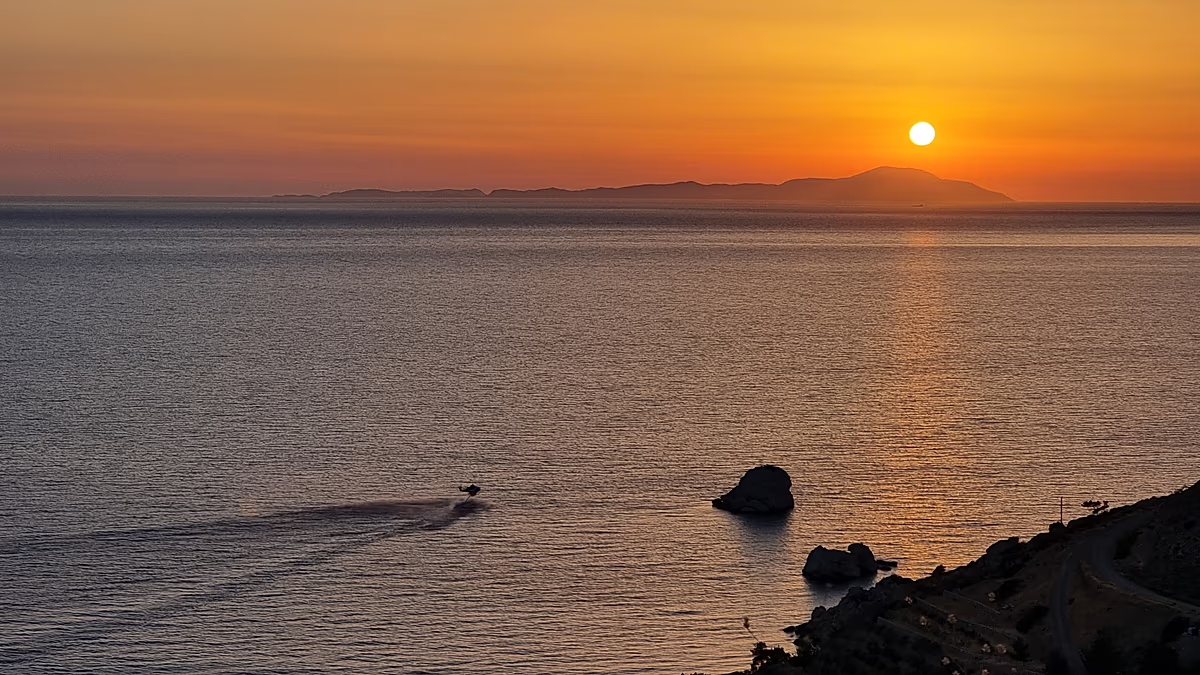
At the same time, our relationship with the Mediterranean waters themselves is shifting from simple recreation to deep, somatic healing, driven by a global epidemic of digital burnout, professional exhaustion, and chronic everyday stress. More than ever, modern life leaves us feeling perpetually overstimulated and disconnected, prompting travelers to seek out therapeutic environments that can actively quiet the nervous system and restore emotional balance. This desperate search for mental tranquility has fueled the rise of what marine biologist Wallace J. Nichols famously coined “blue mind experiences”—the mildly meditative, peaceful state that the human brain naturally enters whenever we are in, near, on, or under water. The glassy, calm, and swimmable nature of the Mediterranean Sea provides the perfect natural amphitheater for this cognitive reset, causing travelers to design entire itineraries around the restorative properties of the sea. Rather than jostling for space on crowded, noisy resort beaches, visitors are opting for private boat charters to lose themselves in the meditative silence of secluded coves, or specifically seeking out boutique hotels that have integrated water into the very core of their architectural design. By blurring the physical boundaries between indoor spaces and the natural ebb and flow of the tides, these thoughtfully designed spaces allow the soft, rhythmic lull of the sea to act as an organic sedative, transforming a simple vacation into a profound journey of neurological recovery and emotional healing.
This pursuit of depth has also fundamentally altered the psychology of the repeat traveler, sparking an intriguing behavioral shift that the Globetrender briefing identifies as “The Comeback Effect.” Historically, returning to the exact same country, town, or hotel year after year was occasionally viewed as a safe, uninspired travel choice—a predictable routine born out of a comfort zone or a lack of imagination. Today, however, returning to a familiar place is being recognized as an act of great emotional sophistication, where familiarity does not breed complacency, but rather serves as a catalyst for a deeper, highly nuanced curiosity. Because these returning visitors have already checked off the major monuments, bypassed the navigational stress of arriving in a new place, and established a baseline comfort with their surroundings, they are uniquely positioned to look at the destination through an entirely different lens. Freed from the pressure of sightseeing checklists, they begin to develop a highly intimate, multi-faceted relationship with their home away from home, focusing their attention on the delicate, quiet details that first-time tourists invariably miss. They transition from foreign spectators to welcome acquaintances, shifting their focus toward the small-scale, the local, and the subtle, transforming their relationship with the destination from a superficial romance into a lifelong, meaningful partnership.
In practice, “The Comeback Effect” manifests as a conscious, deliberate rejection of the typical tourism narrative in search of the real, unvarnished life of the community. Travelers participating in this movement actively seek out the hidden corners and quiet moments that define the everyday beauty of local existence, such as secluded, rocky paths down to beaches that are conspicuously absent from social media maps, or the tiny, family-run neighborhood trattorias where the menu is handwritten, the ingredients are sourced from the morning market, and the patrons are exclusively locals. They make a point of traveling during the quieter, cooler shoulder seasons when the summer rush has dissipated, allowing them to experience the destination’s true personality and engage in unhurried, genuine conversations with the regional artisans, fishermen, and shopkeepers who form the heartbeat of the community. This shift toward the off-the-beaten-path not only offers a richer, more soulful experience for the traveler, but also fosters a much healthier, highly sustainable, and deeply respectful model of tourism. By intentionally distributing their financial support directly to local producers and independent family businesses outside of the major commercial centers, these returning travelers help mitigate the damaging effects of overtourism, ensuring that their presence leaves a positive, nurturing footprint on the places they have grown to love.
As we look toward the horizon of 2026 and beyond, it is clear that the future of travel in the Mediterranean lies in the hands of those who are willing to slow down, listen, and tread softly upon its ancient shores. Progressive hospitality brands like the MGallery Hotel Collection are stepping up to meet this mindful revolution, proving that luxury is no longer defined by opulent isolation and generic extravagance, but rather by thoughtful integration, cultural stewardship, and emotional resonance. The modern traveler is demanding environments that serve as portals to the local culture, spaces that protect the local ecosystems while providing a sanctuary for guests to disconnect from the chaos of modern life and reconnect with the simple joys of human connection. Ultimately, the Mediterranean remains as captivating as it has always been, but our collective approach to exploring it is maturing into a beautiful journey of mutual respect, healing, and authentic curiosity. By choosing the slow path, seeking the quiet water, and embracing the distinct soul of each unique coastal community, we are doing more than just changing how we spend our holidays; we are rediscovering the ancient, human art of truly being present in the world.