






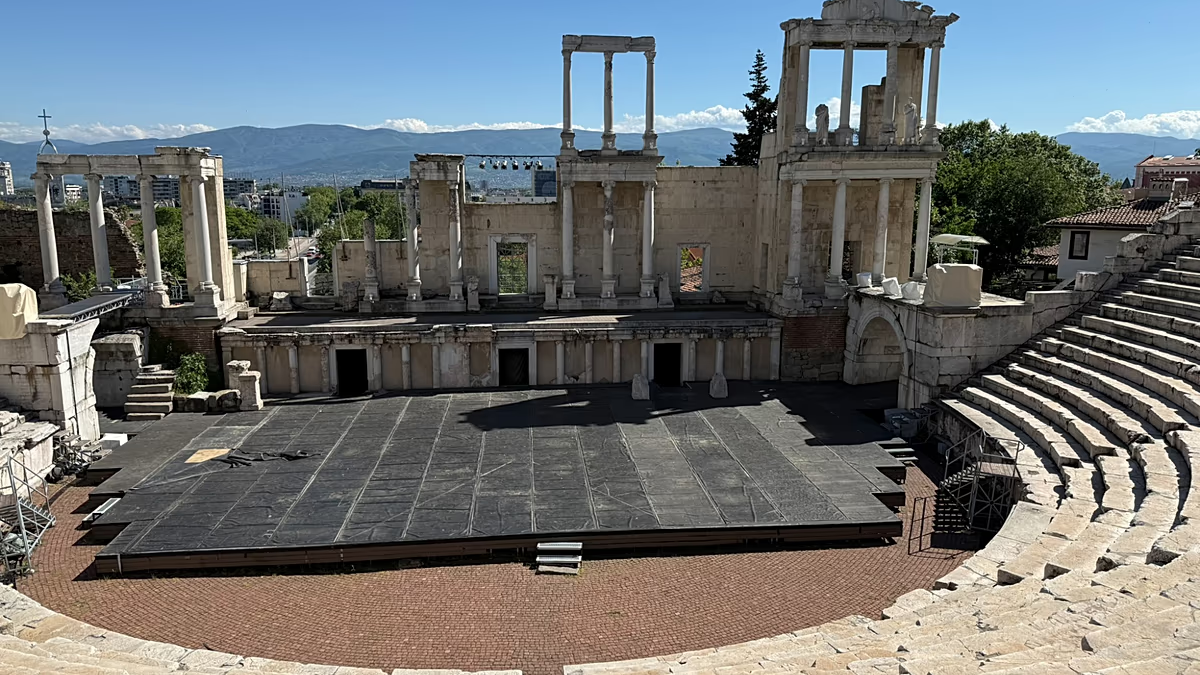
While our historical imaginations are often captured by the famous landmarks of the western Roman Empire, a journey to Eastern Europe reveals wonders that rival the Colosseum but without the overwhelming crowds. In Plovdiv, Bulgaria, history does not just sit in a museum; it breathes through the cobblestone streets. Known as the oldest continuously inhabited city in Europe, Plovdiv’s origins stretch back to 6000 BC. Having survived the rise and fall of Thracians, Macedonians, Romans, Bulgarians, and Ottomans, this cultural gem remains remarkably peaceful. Today, visitors can stand in the magnificent Roman theatre of Philippopolis, built in the 1st century AD and beautifully restored in the 1980s, and share the ancient stone tiers with only a handful of travelers and the occasional friendly local cat. With the city currently vying to host major events like Eurovision, this tranquil atmosphere is a rare luxury that travelers should experience before the rest of the world catches on.
Walking through modern Plovdiv feels like stepping through different portals of time, where ancient monuments are woven directly into the fabric of daily life. At the end of the main pedestrian promenade lies the Ancient Stadium of Philippopolis. Built during the reign of Emperor Hadrian, this massive arena once held 30,000 spectators who gathered to cheer on gladiators and athletic champions. Much of the stadium now rests quietly beneath the floors of modern shopping boutiques, leaving a uncovered section that serves as a dramatic centerpiece for passersby. Just a short walk from these grand Roman ruins stands the statuesque tribute to “Milyo the Crazy,” a beloved eccentric historical resident. Local lore says that rubbing his brass knees brings good luck to your love life, a whimsical ritual that keeps his memory shining bright in the hearts of visitors and locals alike.
Just a few steps away from the Roman ruins, the city’s architectural skyline shifts to tell the story of its Ottoman past. Rising elegantly in the city center is the Djumaya Mosque, constructed in the 15th century on the site of an earlier 1363 building. As one of the oldest Ottoman religious structures in the Balkan region, its design beautifully reflects a fusion of Byzantine and Old Bulgarian architectural styles, using alternating layers of red brick and cut stone. To enter this active place of worship is to step into a quiet sanctuary of intricate artistry, requiring visitors to cover up and embrace a moment of serene contemplation amidst the bustling energy of the surrounding shopping district.
To truly feel the artistic soul of the city, one must wander upward into Plovdiv’s historic Old Town, which has been on UNESCO’s tentative World Heritage list for two decades. The hilly streets are lined with cobblestones and dramatic, asymmetrical houses built during the 19th-century Bulgarian Renaissance. Walking past these colorful facades feels like exploring an open-air gallery. Inside preserved estates like the Hindliyan House, built in 1834, visitors can admire the lavish hand-painted murals and opulent period furniture that detail the lives of wealthy merchants. For a deeper look into the region’s traditional clothing, musical instruments, and agrarian roots, the nearby Regional Ethnographic Museum offers a deeply human perspective on how ordinary Bulgarians lived, worked, and celebrated through the centuries.
As the sun begins to set, the natural landscape of Plovdiv invites travelers to seek higher ground. Built upon seven hills, the city offers its best panoramic views from the ancient fortress complex of Nebet Tepe. This strategic northern hill has been settled since 4000 BC, and its stone ruins hold secrets from Thracian fortresses, Roman walls, and Ottoman outposts. Clambering over these ancient stones at dusk offers a breathtaking view of the city sprawling below, backdropped by the distant silhouette of Bunarjik Hill. After twilight falls, life moves down to the vibrant Kapana district. Once a historic commercial quarter for craftsmen, this labyrinth of streets was revitalized when Plovdiv served as the European Capital of Culture in 2019. It is now a thriving creative hub filled with cozy cafes, craft beer bars like Cat and Mouse, and local bakeries serving “mekitsa,” a delicious traditional Bulgarian fried dough best enjoyed with coffee.
While many travelers make the mistake of visiting Plovdiv as a hasty day trip from the capital city of Sofia, its rich layers deserve a much slower pace. Beyond the city limits, adventurers can use Plovdiv as a base to explore nearby relics of the twentieth century, such as the futuristic, abandoned communist-era Buzludzha Monument nestled in the mountains just two hours away. Returning to the city, the ultimate travel goal is to catch a live opera or theatrical performance under the stars at the Ancient Theatre during the summer Opera Open festival, experiencing the venue exactly as audiences did two thousand years ago. Accessible by a scenic two-hour bus ride from Sofia or direct flights from major European hubs, Plovdiv stands as a brilliant reminder that some of the world’s greatest historical journeys are found just slightly off the beaten path.