

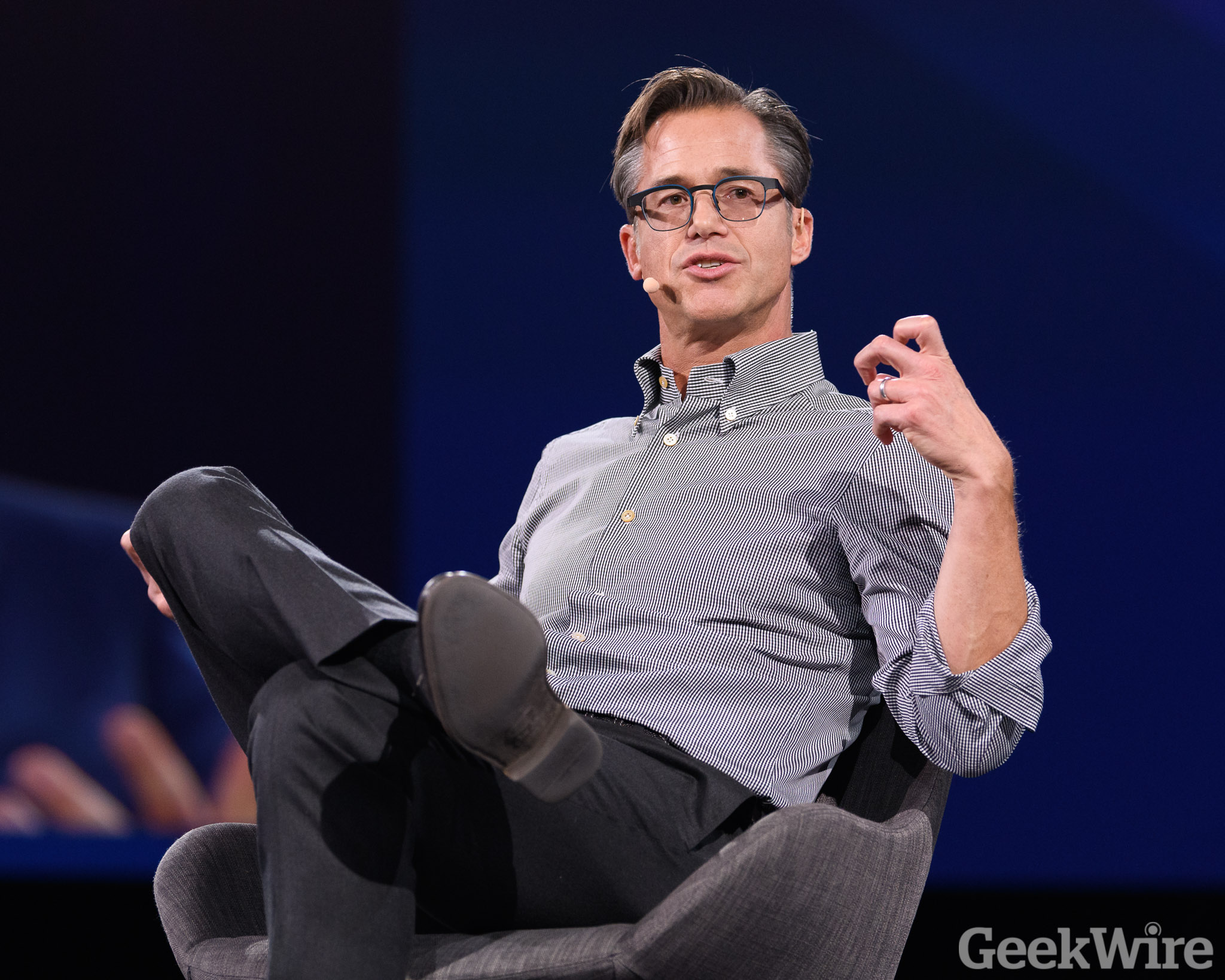
There is a quiet, universally felt milestone that eventually arrives in the lives of even the most extraordinarily successful pioneers: the day the children grow up, the busy hallways fall silent, and the immense, bustling family home suddenly feels far too large. For Rich Barton—the visionary entrepreneur whose digital creations fundamentally restructured how modern society searches for homes, plans travels, and evaluates careers—this poignant human transition recently catalyzed a major geographic relocation. In a surprisingly candid and understated social media post on X, the co-founder and co-executive chairman of Zillow Group shared with the public that he and his wife have officially packed up their Pacific Northwest life to start a brand-new chapter as residents of Las Vegas, Nevada. “Kids are launched, empty nest achieved, and we’re excited to start this next chapter,” Barton remarked, capturing a deeply relatable shift from the exhausting, beautiful chaos of active parenthood to the open-ended freedom of later maturity. While his announcement was framed in the gentle, introspective vocabulary of personal milestones and domestic transitions, its ripple effects have vibrated loudly across the entire Pacific Northwest technology ecosystem. For Seattle, a city that has spent the last several decades establishing itself as a global empire of innovation, Barton’s quiet migration represents far more than a simple household move; it marks the symbolic end of an era for one of the region’s most prolific, culturally transformative, and beloved self-made business icons.
To truly understand why Barton’s quiet departure feels like such a heavy, structural blow to Washington State, one must look closely at the sheer scale of the legacy he leaves behind in the rain-slicked valleys of the Emerald City. Exactly thirty years ago, as an ambitious young Microsoft employee in his late twenties, Barton conceived a radical idea to take the opaque, gatekeeper-dominated travel industry and hand the pricing and booking power directly to everyday consumers. That audacious experiment became Expedia Group, which spun out of Microsoft, went public in 1999, and has since grown into a colossal $27 billion global travel empire. Not content to revolutionize only one archaic industry, Barton turned his disruptive gaze to the real estate market two decades ago, co-founding Zillow in any effort to democratize the home-buying process and dismantle the information asymmetry that kept ordinary buyers in the dark. Today, Zillow stands as an $8 billion juggernaut that has become a permanent staple of American culture, changing how we daydream about, buy, rent, and sell our physical sanctuaries. By repeatedly applying his signature philosophy of “giving power to the people” through radical transparency, Barton did not just build massive corporations—he pioneered the very concept of the self-made tech “unicorn” in Washington, cementing Seattle’s reputation as a fertile breeding ground for world-changing ideas and establishing himself as an indispensable cornerstone of the local business community.
Yet, as momentous as Barton’s relocation to the desert sun is on an individual level, it cannot be analyzed in a vacuum; rather, it represents the latest high-profile departure in a worrying, increasingly normalized exodus of Seattle’s grandest industrial royalty. Only a few years prior, in late 2023, Amazon founder Jeff Bezos sent shockwaves through the community when he announced he was leaving his decades-long Seattle home for the sun-drenched, business-friendly shores of Miami, Florida, citing a mix of nostalgic family reasons, his parents’ relocation, and the geographic needs of his aerospace endeavor, Blue Origin. Not long after, Howard Schultz, the legendary former CEO who transformed Starbucks from a local coffee distributor into a global cultural phenomenon, similarly declared he was packing his bags for Miami, subsequently publishing a highly critical, deeply frustrated opinion piece in The Wall Street Journal lamenting that Seattle’s political leadership actively “vilifies” the very employers who built the city’s modern prosperity. When you line up these consecutive departures—Bezos, Schultz, and now Barton—a dramatic and undeniable pattern begins to crystallize, showing how the pioneering giants who once poured their hearts, fortunes, and creative genius into the civic foundation of the Pacific Northwest are increasingly seeking refuge, warmth, and fresh beginnings in states like Florida and Nevada, leaving a glaring vacancy at the top of Seattle’s social and economic hierarchy.
While these departures are almost always polished with the gentle, diplomatic luster of personal storytelling, family reunions, and retirement goals, they are playing out against the backdrop of an intensely bitter, highly polarized political and fiscal transformation within Washington State. For decades, the local tech ecosystem thrived under the unique competitive advantage of Washington’s lack of a state personal income tax, a financial reality that served as a powerful magnet for ambitious engineers, brilliant developers, and risk-tolerant venture capitalists. However, in response to growing wealth inequality and a desperate need for public infrastructure and education funding, state lawmakers began systematically dismantling this tax-free status, first introducing a highly controversial 9.9% capital gains tax on investment profits exceeding $1 million. The fiscal tightening did not stop there; progressive lawmakers pushed forward a sweeping “millionaire’s tax” that levies a 9.9% personal income tax on Washington’s highest earners, a policy scheduled to officially take effect in January 2028 despite ongoing, aggressive legal challenges. This changing landscape has created a deep sense of unease among startup founders and wealth managers, who argue that the state’s aggressive pivot toward taxing high earners is transforming a once-welcoming sanctuary of upward mobility into a punitive environment that actively disincentivizes long-term local investment.
This growing socioeconomic friction reached a highly publicized fever pitch recently, exposing a massive, painful cultural divide between Seattle’s political establishment and its entrepreneurial class. Seattle Mayor Katie Wilson, who took office with a bold progressive mandate, openly dismissed warnings from business leaders that aggressive tax policies would trigger a severe case of capital flight, offering a literal wave of her hand and a blunt, dismissive “bye” to any wealthy residents threatening to leave the city. The mayor’s casual, point-blank rejection of the business community’s concerns sent shockwaves through local venture capital circles and startup hotbeds, where many interpreted the gesture as a profound, arrogant betrayal of the symbiotic partnership that historically allowed Seattle to transform from a quiet, isolated timber and aerospace town into a glittering, wealthy global tech capital. To many creators who spent their lives working eighteen-hour days to build companies, employ thousands of local citizens, and fund civic programs, the political rhetoric has shifted from collaborative gratitude to outright hostility, making the decision to relocate to states with zero state income tax, like Nevada or Florida, feel not just financially pragmatic, but emotionally relief-inducing.
Ultimately, Rich Barton’s transition from the misty, evergreen canopy of Seattle to the shimmering, neon-lit horizons of Las Vegas leaves behind a city that must now engage in some deep, uncomfortable soul-searching about its collective identity and future trajectory. When a city begins to lose the very builders who constructed its modern skyline—not because they failed, but because they no longer find the cultural or political climate hospitable to their presence—it must confront the reality that its golden age of unchecked growth is no longer guaranteed. Seattle remains a breathtakingly beautiful center of gravity for human talent, home to world-class research institutions, a resilient natural landscape, and a deep-seated legacy of creativity that will undoubtedly continue to inspire new generations of dreamers. However, as Rich Barton settles into his new desert home, looking out over a landscape defined by reinvention and endless horizons, his departure stands as a gentle yet urgent warning to the Pacific Northwest: a city’s charm lies in its people, its prosperity lies in its builders, and if a community ceases to honor, respect, and nurture those who take the terrifying leaps of faith to build the future, it may eventually find itself left with only the quiet echoes of a brilliant, departed era.