


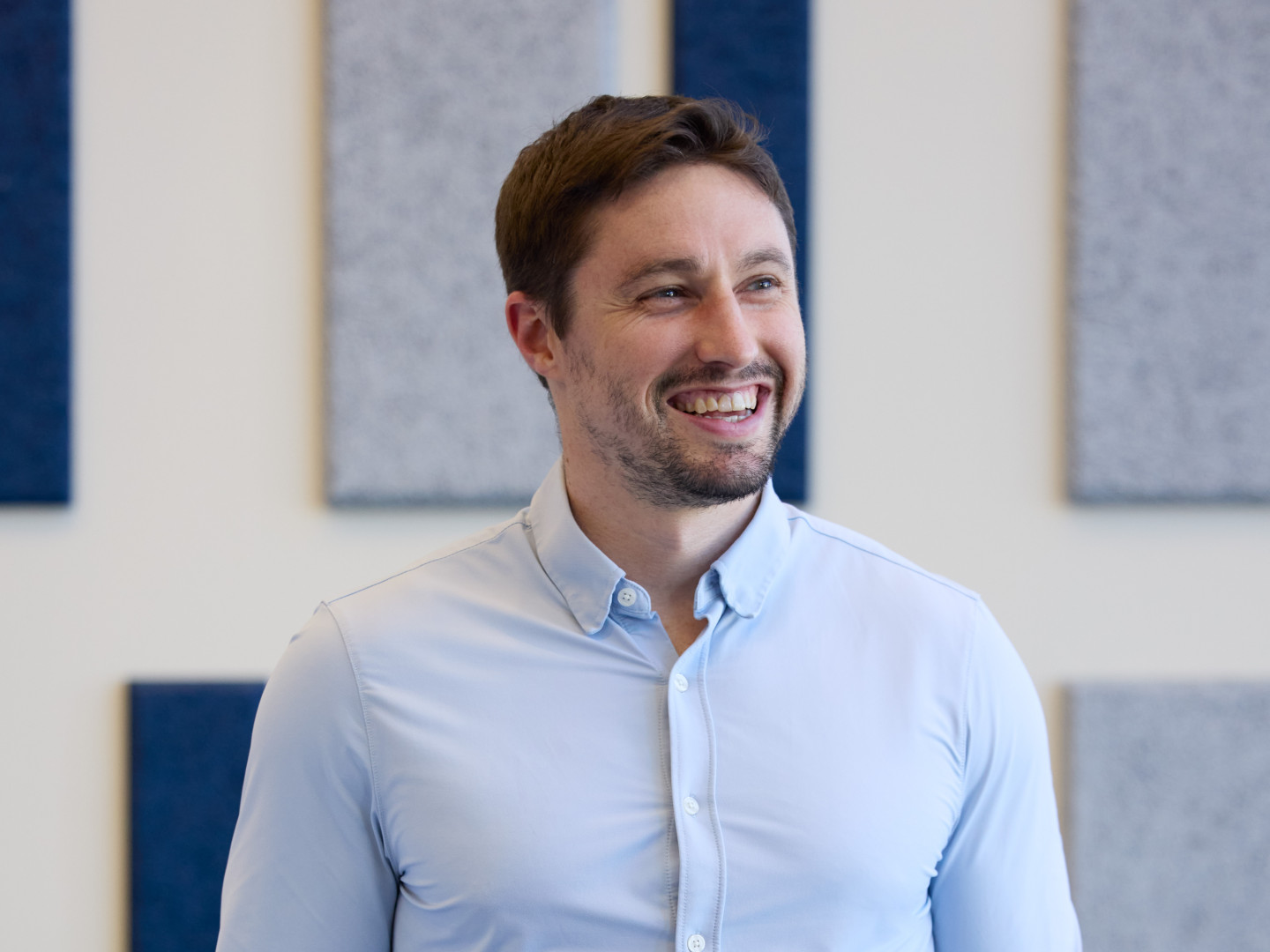
Matt Allen never expected to find his life’s work at the company his grandfather helped build. McKinstry, the Seattle-based firm co-founded in 1960, began as a modest plumbing and piping business before evolving into a national construction and energy services powerhouse. For years, Allen kept a respectful distance from the family legacy, unsure whether it was the right place for him. But when he finally joined in 2012, something shifted. He began to see McKinstry not just as a business, but as a quiet force for change in the world. The company helps customers find affordable, planet-friendly ways to run their operations, and Allen found himself drawn into that mission in ways he hadn’t anticipated. It could be something as seemingly ordinary as swapping an aging natural gas boiler for a high-efficiency heat pump. Yet in that simple act, Allen discovered a deeper meaning. “You feel like you’re part of that customer’s journey, and our societal journey, to get to a carbon-free environment,” he says. That sense of shared purpose transformed his relationship with the company and with the work itself. Now, as McKinstry’s chief client officer, Allen spends his days thinking about sustainability, climate action, and the practical steps that can move the needle. He carries with him both the weight of the challenge and the conviction that progress is possible, one project at a time.
For all his optimism, Allen is not immune to the anxieties that haunt many people who work on climate issues. When asked about his biggest worry, he doesn’t hesitate. The rapid expansion of energy consumption, especially the race for compute power behind artificial intelligence and data centers, keeps him up at night. He worries that the momentum around decarbonization could stall as the demand for energy surges. And as a father of a young son, he feels the personal weight of rising temperatures and an uncertain future. “I do worry about what the world is going to look like for young people,” he admits. But his worry is tempered by a pragmatic sense of hope. He sees continued emphasis on decarbonization across industries, and he points to the hyperscalers—the massive cloud and data center companies—that McKinstry works with. They are evolving their designs to prioritize sustainability as much as possible, even as they scale. That gives him reason to believe that the trajectory is not lost. The challenge is real, but so is the response. Allen’s concern is not paralysis; it’s a kind of fuel. He channels it into the work of helping customers make smarter, cleaner choices, knowing that every decision matters in the larger fight against climate change.
What gives Allen hope for the planet? Human ingenuity, plain and simple. He has seen how creative problem-solving can push through even the most difficult spots. Western Washington, he notes, has become a hotbed for clean nuclear solutions, deep geothermal energy, and other emerging clean power technologies. The region is buzzing with brainpower and capital, and Allen believes that combination is powerful. “When enough brain power is focused on those pieces, combined with capital infusion, progress is made,” he says. He is particularly encouraged by the motivation to increase clean energy generation through innovative solutions. It’s not just about incremental improvements; it’s about breakthroughs. Companies like Helion, Zap, and Avalanche are chasing the dream of clean nuclear fusion, while Fervo Energy is developing commercial deep geothermal projects in Utah. These aren’t abstract concepts. They are real efforts, with real money and real minds behind them. Allen’s hope is grounded in the belief that humans have a remarkable capacity to innovate their way out of trouble. That doesn’t mean it will be easy, but it means it is possible. And for someone who spends his days in the practical world of construction and energy services, possibility is enough to keep going.
If Allen could invent one sustainability solution overnight, he knows exactly what it would be: clean nuclear fusion. He says it with a laugh, but he’s serious. “If you could accelerate Helion, Zap or Avalanche, that would be great,” he says. Or, failing that, deep geothermal—the kind of technology Fervo Energy is bringing to market. If we could snap our fingers and make those technologies commercially viable, Allen believes we could rapidly accelerate the world’s willingness to electrify everything and connect to a clean grid. So much of the climate puzzle comes back to the grid. When buildings switch from fossil fuels to electric systems, they need confidence that the electricity they’re using is clean. A green grid makes every electrification project more meaningful. But Allen is also quick to highlight an underrated solution that doesn’t require a scientific breakthrough: operations. “We joke that everyone talks about first cost when they’re building or doing a retrofit, but they don’t talk about the ongoing operation and maintenance costs,” he says. McKinstry focuses heavily on finding optimized ways to operate buildings, turning down systems when appropriate, and reducing strain on the grid. These operational efficiencies may not be glamorous, but they deliver real savings and real emissions reductions. It’s the kind of quiet, practical progress that Allen believes deserves far more attention than it gets.
Allen is a man who watches the numbers. He tracks greenhouse gas emissions rigorously, with a baseline set in 2019, around the time McKinstry signed the Amazon Climate Pledge, which targets net zero by 2040. Allen hopes the company will get there even sooner. But he doesn’t just look at the raw totals. He tracks emissions on a per-revenue basis, asking whether the company is still cutting emissions as it grows. He also tracks emissions per full-time employee, holding the institution accountable at the human scale. “Those two measures hold us accountable as an institution to make sure we’re not taking our eye off the ball moving toward net zero,” he explains. One of the biggest challenges is McKinstry’s own vehicle fleet—600 service vans and another 300 utility trucks on the road. That fleet is the company’s largest source of carbon emissions, and Allen and his team are working to electrify it. They’re maybe 10 or 15 percent of the way there, but the approach is steady and disciplined: every time a vehicle needs to be replaced, they replace it with an electric one. It’s not a dramatic leap; it’s a series of deliberate steps. And that’s exactly how Allen likes to work.
The scope of the climate challenge can feel daunting, but Allen refuses to be overwhelmed. His approach is simple: take it quarter by quarter, project by project. Focus on doing a good job for customers, bring things in on time and on budget, and help strategize about the most cost-effective ways to make progress. “There is no magic bullet, so you take it one piece at a time,” he says. McKinstry does the same thing internally, creating a glide pattern toward net zero. It’s about consistency and persistence, not perfection. When Allen looks ahead twenty years, he hopes the world has avoided an existential climate crisis. He hopes that collective action—whether through the Paris Climate Accord or other macro commitments—has brought society together. He hopes we can look back and say we left the campsite in a better place than we found it. “Our world remains a habitable, thriving, healthy environment for the next generation to live in,” he says. That’s the future he wants for his son, for his customers, and for the planet. It’s a future that won’t be built in a single stroke of genius, but in the accumulation of small, meaningful actions. And Matt Allen is determined to be part of that effort, one heat pump, one electric van, one smart operational decision at a time.