






As the warmth of mid-summer settles in, the tech world shows absolutely no signs of cooling down. This past week of July 5, 2026, has delivered a whirlwind of industry-shaking restructurings, high-stakes funding rounds, and unsettling philosophical warnings about where our digital obsession is leading us. If there is a unifying theme to this week’s most read stories on GeekWire, it is the undeniable friction between rapid technological advancement and the very real human cost that comes with it. From corporate boardrooms making painful talent decisions to visionaries urging us to look up from our screens, the Pacific Northwest tech corridor is grappling with what it truly means to innovate responsibly in an increasingly automated world.
Perhaps the most sobering wake-up call of the week came from HashiCorp co-founder Armon Dadgar, who publically voiced a concern that has been quietly brewing in the minds of many tech consumers. Dadgar argued that our relentless pursuit of seamless digital convenience, supercharged by the sudden ubiquity of artificial intelligence, is rapidly steering humanity toward the complacency-ridden dystopia famously depicted in Pixar’s 2008 film WALL-E. In his view, by outsourcing our daily thinking, decision-making, and physical efforts to algorithms, we risk losing our collective agency and vitality. To steer us away from a future of hovering chairs and screens glued to our faces, Dadgar has issued a passionate plea for robust regulatory guardrails and a return to “intentional living.” It is a rare and refreshing moment of self-reflection from a major tech figure, reminding us that just because we can automate a human experience does not mean we should.
In local corporate boardrooms, however, the immediate focus is less on philosophical futures and more on economic survival. Microsoft has captured headlines with a staggering announcement of 4,800 job cuts, alongside a massive, historic overhaul of its Xbox gaming division. Driven by a record-high financial commitment to AI infrastructure and a painful 30% slide in its stock price, the tech giant is radically reshaping its sales and consulting arms to stay lean. This corporate belt-tightening has hit home in Washington state, with several high-profile departures including Xbox Vice President Kevin LaChapelle, alongside Amazon announcing its own targeted layoffs of 57 local management and director-level roles. Amid these brutal workforce reductions, GeekWire also took a deep dive into the leadership style of an unnamed tech titan who is notoriously obsessive about talent, fiercely loyal to handpicked allies, and utterly relentless when facing the word “no”—painting a vivid picture of the sheer intensity required to survive at the peak of this cutthroat industry.
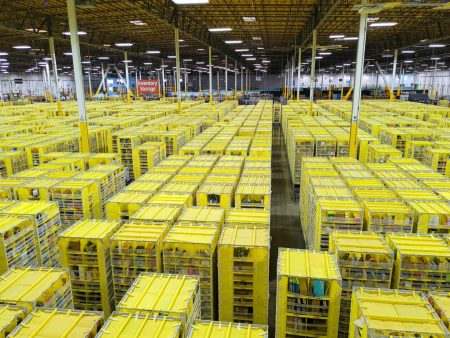
Despite the heavy wave of legacy tech layoffs, innovation and capital continue to flow toward ambitious new startups. Former Amazon supply chain veteran Dave Clark is proving that big ideas still command massive market confidence, securing a fresh $50 million investment for his logistic-focused startup. Now sitting on a formidable $150 million war chest, Clark’s venture is rapidly scaling its operations to support heavy-hitting clients like Meta, Fanatics, and Kimberly-Clark. Meanwhile, former GitHub CEO Thomas Dohmke is launching “Entire,” a bold new startup designed to challenge the very centralized code repository model he once championed under Microsoft. Dohmke argues that traditional, centralized code platforms simply cannot keep pace with the voracious processing demands of modern AI coding agents. Entire proposes a distributed, mirrored network instead, signaling a major paradigm shift in how global software infrastructure might operate in the age of automated programming.
Beyond software and code, the physical landscapes of commerce, robotics, and logistics are shifting beneath our feet. While American tech giants are often valued for their sleek, theoretical prototypes and the long-term promises of what could be, a growing contingent of industry observers notes that Chinese manufacturers are quietly winning the global robotics race through a much more practical strategy: getting paid for actual, physical deliveries today rather than promising miracles tomorrow. Closer to home, Chicago-based compliance software company LogicGate is placing a physical bet on the Pacific Northwest, signing a new lease in Bellevue to house a growing team of up to 25 employees by the end of the year. This steady corporate movement is mirrored by a flurry of executive shake-ups across the region’s tech ecosystem, with Dropbox appointing its first-ever Chief Product Officer, and T-Mobile elevating new leadership into its C-suite to navigate the complex telecommunications landscape.
Finally, the week’s news took us far beyond the boundaries of Earth to examine the physical realities of human ambition. Scientists took a hard, evidence-based look at Elon Musk’s grand vision of establishing a million-person city on Mars. While the dream of turning humanity into a multi-planetary species captures our collective imagination, planetary scientists have poured cold, scientific water on the timeline. They warn that the process of terraforming Mars to make it even remotely habitable for humans would take centuries of concerted effort, if it is even scientifically possible at all. Whether we are struggling to manage our workloads on Earth, trying to prevent an AI-driven WALL-E future, or looking up at the red sky of Mars, this week has proven that the path to the future is paved with immense hurdles—and it will take much more than clever code to solve them.