


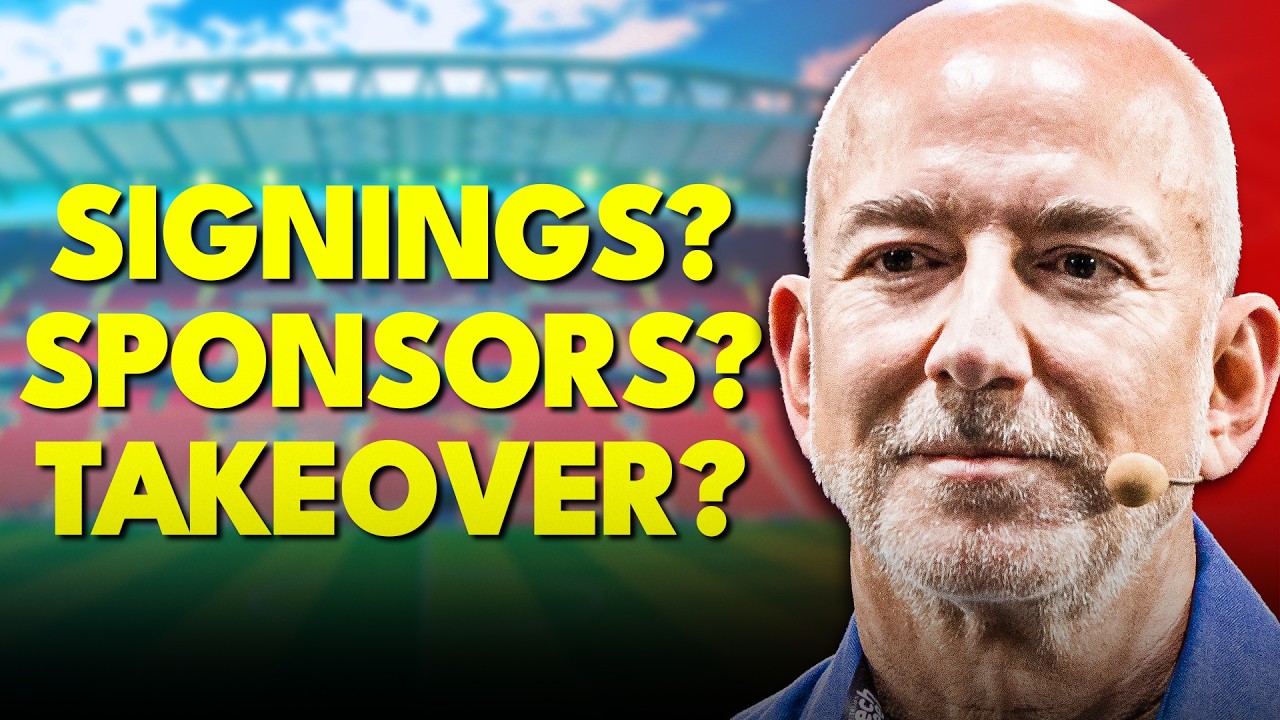
When Dan Clubbe of The Redmen TV invited me to talk about Jeff Bezos and Liverpool, I knew it would be an unusual conversation. The Redmen TV isn’t a typical business podcast; it’s the voice of fans who treat football as life, where lineups and transfer windows feel more urgent than quarterly earnings. But here we were, discussing the Amazon founder’s first real move into sports ownership. It was a strange collision of worlds: the tech billionaire who sends rockets into space and the dirty beauty of Anfield on a rainy Merseyside evening. The question at the center of our 45-minute chat was simple: What does Jeff Bezos’ new ownership stake in Liverpool FC actually mean? On paper, it was another headline in the endless financialization of football. But beneath the numbers, there is a more human story about what happens when a global icon decides to place his enormous wealth and restless ambition into an institution built on history, community and ritual. We talked about his transformation from a nerdy, khaki-wearing entrepreneur to the tan, muscled “Buff Bezos” who now walks red carpets and dates astronauts. We talked about the awkward dance between power and culture. We also laughed about the image of a man who once explained the internet to bookstore owners now explaining expected goals to football pundits. And we tried to make sense of a man who seems to be everywhere at once—space, artificial intelligence, media, and now Liverpool. By the end, I didn’t have a clean answer. But I had a much better understanding of the forces at play. It was the kind of discussion where footballing passion meets tech economics.
Part of what made the conversation fun was watching old assumptions crack. The Jeff Bezos of the 1990s—awkward laugh, khakis, a desk made from a door—would have looked out of place in football’s jet-set boardrooms. He was the internet guy who disrupted bookstores, not the celebrity billionaire who buys Premier League clubs as toys. But that Bezos is gone, replaced by a chiselled, media-trained figure who speaks in measured soundbites and spends his weekends on yachts. This “Buff Bezos” seems far more at home in the stadium ownership stakes than the awkward college kid who used to hand-deliver books. Yet the deeper you look, the more you understand that the transformation isn’t just cosmetic. His ambitions have expanded from retail to cloud computing to space travel to artificial intelligence. He doesn’t collect things; he builds mountains. Liverpool, then, becomes less of a novelty and more of a symbol: a storied institution with global reach, passionate fans and the kind of deep cultural resonance that even a rocket company can’t buy. There is a poetic side to it too. Lauren Sanchez Bezos, his new wife, appears to be the true sports fan in the family; her energy around games and competition is hard to miss. That detail matters because it humanizes the deal. It wasn’t simply a cold spreadsheet decision made in a boardroom; it was a partnership between a man who can buy almost anything and a partner who loves the game. The nerds who grew up on Star Wars and spreadsheets might be skeptical. But the new Jeff Bezos, the one with the helicopter and the transformed body, clearly enjoys the glamour, the stakes and the roar of a crowd. There is a kind of romance in that image, even for those of us who usually prefer spreadsheets to scoreboards. He has become a person who wants to leave a mark, not just a portfolio. Whether he can operate with the humility that football fans demand is another question.
So what exactly has Bezos bought? Not the club itself—at least not yet. He has invested through a consortium named 1892 Holdings, a deliberate nod to Liverpool’s founding year, and that consortium holds about 38% of the team with an option to buy the whole thing outright. The structure gives Bezos a very real influence while also allowing him to keep one tailored sleeve at arm’s length from the day-to-day chaos of football. For now, he won’t be sitting in the dugout, arguing with referees, or negotiating with agents in the small hours of transfer deadline day. That is both reassuring and strange. Reassuring because Liverpool fans have learned to fear the wrong kind of wealthy owner—the one who treats the club as a status symbol for his own ego. Strange because a man of Bezos’s ambition rarely takes a passive stake in anything. Yet there is an obvious reason for this cautious approach: Jeff Bezos is absurdly busy. His true passion, the one he talks about with the glint of a sci-fi nerd, is Blue Origin, the space company designed to take humanity to the stars. There is no greater ambition than that. Meanwhile, he has stepped in as co-CEO of Prometheus, a newly formed AI startup that is consuming enormous amounts of attention. And then there is his new life with Lauren Sanchez Bezos, a relationship that delights the tabloids and seems to take up more of his emotional bandwidth than any quarterly report. Living in Miami, with yachts and rockets and an AI company, the man simply does not have the time to learn the nuances of offside traps and Liverpool’s transfer strategy. So he delegates. He invests. He waits. It is the same playbook he used when experimenting with new businesses: enter quietly, learn quickly, then strike. For now, that is probably the smartest thing he can do—both for himself and for Liverpool.
Still, a man with this much money doesn’t need to be at Anfield every day to change the club’s fortunes. While the initial structure is cautious, Bezos brings two things that every football club craves: enormous capital and the operational imagination to put it to good use. The money alone can upgrade the training ground, improve data analytics, and make the transfer budget more frightening. It can also fund the kind of reimagination that older clubs rarely attempt, from digital fan experiences to modern stadium upgrades. But the more interesting question is how Amazon’s famous Leadership Principles might translate to football. Look at “Ownership,” for instance. Amazon leaders are taught to think long-term and not trade lasting value for a quick result. Liverpool fans know this philosophy from their own club’s history—great teams are not built on panicked signings; they’re built over years of patient recruitment, youth development and a coherent style. “Customer Obsession” is even more obviously relevant. At Amazon, you start with what the customer wants and work backward. For Liverpool, the customers are the fans in the Kop, the millions watching around the world, the people who pay for jerseys and travel to Merseyside. What do they want? They want a team that plays fearless, attacking football, that honors the club’s traditions and doesn’t sell its soul for a sponsor’s check. If Bezos treats fans like customers worth obsessing over, Liverpool could become a model of modern sports ownership. Then there is “Insist on the Highest Standards.” Bezos has built his career on raising the bar beyond what seems reasonable—from one-day delivery to reusable rockets. Applied to a football club, that means no mediocre seasons accepted, no complacency, no settling for fourth place when the aim is a trophy. It’s the mentality of champions. There is a catch, however. The Amazon principle of “Frugality”—accomplish more with less—does not play well in the modern football transfer market, where wages and fees are measured in absurd millions. Liverpool’s fans, standing in stadiums built more than a century ago, might smile at the idea of a billionaire seeking discounts. That is not how this world works.
Our conversation kept circling back to something bigger than Bezos—the changing nature of global soccer itself. The game has become a playground for sovereign wealth funds, hedge-fund managers, and celebrities with egos that could fill a stadium. It is a world of big personalities and even bigger money, where a single transfer fee can exceed the GDP of a small island nation. In that world, a serious owner has to perform a balancing act: build a profitable business while staying true to a community that sees the club as cultural inheritance, not inventory. Liverpool, historically, has been better than most at preserving its soul. The city’s identity is woven into the club’s fabric, from the “You’ll Never Walk Alone” anthem to the working-class pride of the Kop. That is the thing that money can’t buy and money can very quickly destroy. I had to point out that Bezos has not always managed this balance well in his own backyard. His relationship with Seattle—the city that gave Amazon its start—has been complicated, sometimes even painful. Amazon transformed Seattle into a booming tech hub, bringing jobs and prosperity. But it also fuelled soaring rents, gentrification, the feeling that billionaire decisions were made above the heads of ordinary residents. The city council war and the homeless crisis were just the ugly public edges of a deeper sense that Bezos’s vision and the local community were no longer aligned. Liverpool fans, who have seen their city struggle with reinvention, might watch this history and feel a cold knot in their stomachs. They have seen clubs swallowed by distant owners who never understand what the badge means. If a billionaire can strain a relationship with a city that housed his empire, what might he do to a football club that he sees primarily as a globally marketable asset? The tightrope is real. The question is whether Bezos can learn the difference between a city and a club, between a community and a customer database. The answer won’t come from his bank account; it will come from his character.
In the end, our 45-minute conversation never reached a neat conclusion, because there isn’t one yet. Jeff Bezos’s investment in Liverpool is a bet on the future, not a verdict. The consortium structure and the option to buy outright give him time to test the waters before deciding whether to dive in. And in that waiting period, the most important thing to watch is not his net worth, but his behavior. Will he show up on match days? Will he listen to supporters? Will he trust the people who know football, or will he try to disrupt the sport the way Amazon disrupted retail? The answers will reveal whether this is a love story or a takeover. For Liverpool fans, the hope is that Bezos brings the best parts of his Amazon playbook—the obsession with the customer, the refusal to accept mediocrity, the long-term patience to build something lasting—while leaving the cold, corporate ruthlessness at the door. The fear is that he treats the club the way a tech mogul might treat a failing data center: optimize it, monetize it, and forget that football is played by people who bleed for the badge. My own feeling after the discussion is that Bezos is too disciplined to make the obvious mistakes. He didn’t build one of the world’s most valuable companies by alienating every community along the way; he did it by being relentlessly adaptive. But football is a different beast. The customer isn’t always right—but the fans are always there, long after the owners and the trophy-winning players have moved on. If you want to see the full version of this conversation, the highlights are in the video above, and my complete sit-down with Dan Clubbe is available on The Redmen TV. For a shorter slice, you can listen to last week’s GeekWire podcast. But if you can’t watch or listen, just remember this: Liverpool has seen dynasties, dramas and everything in between. Now it has Jeff Bezos, with his rockets, his AI dreams and his mysterious smile. Nobody knows exactly what he will do next. That is what makes this story so human—and so worth following. Because at its heart, this is not a story about money. It is a story about belonging—and whether the world’s richest dreamers can ever truly belong to a city’s oldest traditions.