


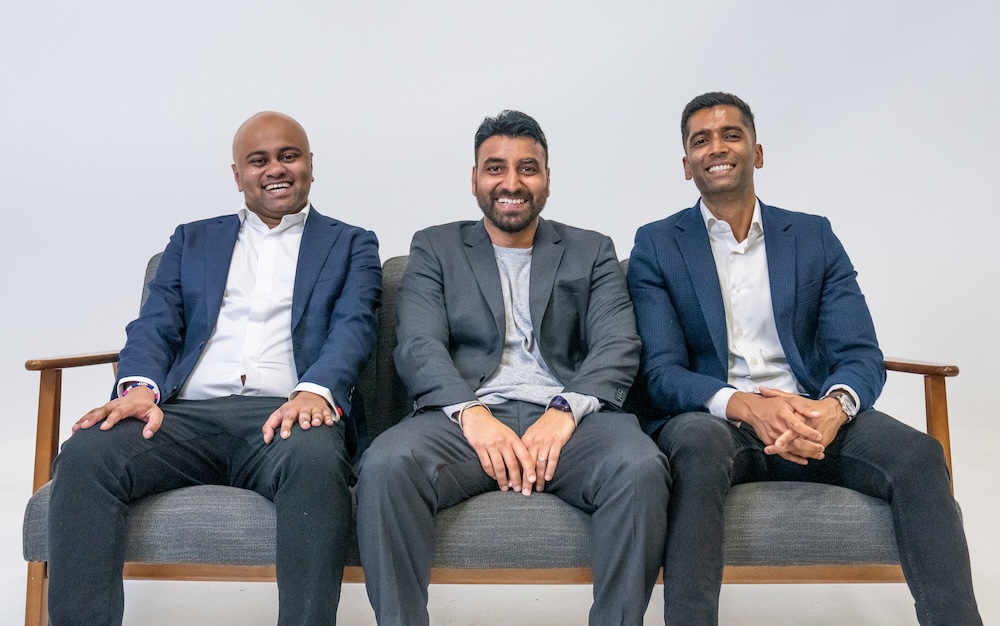
The Birth of a Vision: Vijay Paul, Jagrup Kahlon, and Nishant Krishnanathan at the Helm of Vantari
Imagine a world where doctors and nurses sharpen their skills not just in textbooks or sterile classrooms, but through immersive, lifelike simulations that feel as real as the operating room itself. That’s the dream driving Vantari, a virtual reality startup founded in 2017 that’s turning heads in the medical world. With co-CEOs Vijay Paul and Nishant Krishnanathan leading the charge alongside COO Jagrup Kahlon, the company has officially relocated its headquarters to the vibrant city of Seattle. This move isn’t just a change of address—it’s a strategic leap to strengthen ties with North American health systems, device makers, and investors. Seattle’s tech ecosystem, buzzing with giants like Amazon and Microsoft, along with powerhouse medical institutions such as the University of Washington and Seattle University, makes it the perfect hub. Krishnanathan, who left Australia two years ago to pioneer this shift, sees it as a way to accelerate growth and better serve customers across the continent. The team, about 18 strong and split evenly between Australia and the U.S., thrives in a remote-work setup that fosters creativity without borders. As Vantari ramps up, they’re not just building software—they’re redefining how healthcare professionals train, ensuring that every procedure feels authentic and every mistake, in VR, can be a lesson without real-world consequences. This relocation marks a pivotal chapter, one where innovation meets practicality, and a young Australian startup matures into a global player. For Krishnanathan and his co-founders, Seattle isn’t just a new home; it’s the launchpad for transforming emergency preparedness in medicine. The air in Seattle feels electric, much like the energy in the VR headsets they’re designing—full of possibility, with the rain-soaked streets mirroring the unpredictable nature of surgical procedures. Vijay Paul, an engineer at heart, handles the technical wizardry, while Kohlon ensures operations run smoothly. Together, they form a trio committed to bridging the gap between aviation-style training and the chaotic world of healthcare. As they settle into their new digs, complete with views of Mount Rainier and Puget Sound, the question lingers: How will this move shape the future of medical training? Only time will tell, but one thing’s clear—these men are not playing around. Their story is one of resilience, vision, and a relentless drive to save lives before they hang in the balance. In the bustling heart of Seattle, amidst coffee shops and tech meetups, Vantari is poised to make waves that reach far beyond the Emerald City.
From Personal Frustration to Global Impact: Krishnanathan’s Medical Roots
It all started with a doctor’s firsthand experience in the trenches of healthcare. Nishant Krishnanathan, the driving force behind Vantari, began his journey as a surgical doctor in Australia, where he witnessed the stark inadequacies of procedural training. Picture this: fresh graduates stepping into high-stakes emergencies, relying on outdated drills that felt more like guessing games than precise science. Krishnanathan, ever the inquisitive mind, pondered why aviation, with its meticulous flight simulators, could train pilots for every imaginable scenario, while medicine lagged behind. “Why couldn’t we simulate the chaos of an operating room?” he wondered, his frustration turning into inspiration. Leaving the surgical scrubs behind, he co-founded Vantari in 2017, determined to revolutionize training. Drawing from his background, Krishnanathan infused the startup with a deep understanding of clinical realities— the sweaty palms during a critical incision, the split-second decisions amid beeping monitors. This empathy shapes everything they build, ensuring that their VR flight simulator for doctors isn’t just a tool, but a transformative experience. Relocating to Seattle wasn’t just practical; it was symbolic. Away from the vastness of the Australian outback, in a city pulsing with innovation, Krishnanathan found community among like-minded innovators. His story is a tapestry of personal sacrifice and professional ambition, leaving behind a thriving medical career for the risky gamble of entrepreneurship. Yet, the gamble paid off. Today, Vantari collaborates with over 50 organizations in North America, Australia, and the UK, from elite academic centers like Harvard and Yale to pioneering hubs like Mount Sinai. Krishnanathan’s vision extends beyond numbers—it’s about fostering a culture of continuous learning, where mistakes in VR prevent tragedies in reality. As he recounts late nights coding prototypes, fueled by strong coffee from Seattle’s famed roasteries, it’s clear this isn’t just business; it’s a calling. Family and friends back home in Australia cheer him on, seeing his journey as a bridge between continents. In quiet moments, he reflects on the mentors who shaped him—a professor who encouraged bold ideas, a colleague who shared breakthroughs. These influences remind him that innovation thrives on human connection. Krishnanathan’s path, laden with jet-lagged flights and endless Zoom calls, embodies the grit needed to disrupt an industry. No longer confined to Australian shores, his influence now ripples through Seattle’s vibrant scene, inspiring a new generation of medtech trailblazers.
Immersing in Reality: How Vantari’s VR Simulations Bring Procedures to Life
Dive into the heart of Vantari’s magic, and you’ll find a fully immersive virtual world where clinicians don’t just learn—they live the procedures. Using off-the-shelf Meta/Oculus headsets linked to simple laptops, users step into a tailored universe. Select your specialty—say, anesthesia or cardiology—and the VR environment adapts, guiding you through every step with an AI facilitator whispering in your ear, scoring your performance and answering queries in real-time. But it’s the tactile feedback that truly enchants: controllers that mimic the subtle resistance of inserting a catheter or the tension of puncturing tissue. Vital signs fluctuate dynamically, mirroring real patient responses—heart rates spike with a wrong move, or stabilize with perfect precision. Krishnanathan calls it a “flight simulator for surgery,” and the comparison holds: pilots train for turbulence without leaving the ground; doctors now practice for emergencies without real-life stakes. Inside the headset, hospitals and universities tap into Vantari’s extensive library, co-developed with device makers like Boston Scientific, JNJ, and Sonosite. Patented innovations, such as integrated ultrasound systems, let trainees scan virtual patients, guiding needles through tissues with astonishing realism. It’s not static drills; scenarios evolve, challenging users to adapt, just like in a bustling ER. The AI goes beyond basic guidance— it tracks every interaction, logging data for supervisors to review later, turning VR sessions into comprehensive debriefs. Imagine a nurse mastering a critical care protocol, her hands trembling at first in the virtual space, but emerging more confident, poised for the pressure cooker of a real shift. Vantari’s tech democratizes expertise, making top-tier training accessible to rural clinics and urban giants alike. In Seattle, where rainy days prompt introspection, development teams huddle over code, refining the physics engines that make every texture feel authentic. A developer might recall testing the ultrasound feature, marveling at how it replicates the Doppler effect. User feedback flows in—doctors praising the realism, suggesting tweaks for even finer control. This iterative process ensures Vantari’s platform evolves, always one step ahead of medical needs. The human element shines through: clinicians share stories of “aha” moments, where VR simulations unlocked confidence they never knew they lacked. It’s a bridge between theory and practice, where fear dissolves into skill. As technology advances, so does the depth of immersion, blurring lines between virtual drills and the operating theater’s intensity.
Powering Partnerships: Vantari’s B2B Model and Expanding Reach
At the core of Vantari’s success is a robust B2B SaaS model that powers its growth, weaving together revenue streams from annual licenses, hardware bundles, and strategic collaborations. Think of it as a scalable engine: hospitals pay for access, bundling VR headsets with their laptops for seamless deployment. This isn’t cheap software—it’s a subscription to excellence, with prices reflecting the depth of customization. Device and pharmaceutical partners co-develop modules, embedding virtual versions of their tools into scenarios. Boston Scientific might simulate a catheter procedure, allowing clinicians to practice with digital replicas of real devices. The result? Deeper partnerships, shared expertise, and a platform that adapts to innovations in medical equipment. Industry accrediting bodies chime in, co-creating content that aligns with certification standards, ensuring Vantari’s library isn’t just comprehensive—it’s authoritative. With over 50 customers spanning continents, from Harvard’s research halls to UK clinics, Vantari’s reach is expanding like a well-networked web. Seattle’s move amplifies this, drawing in local heavyweights: the University of Washington’s anesthesiology department now hosts a “center of excellence,” while Seattle University offers a hub for testing and refinement. Picture the excitement during a demo at Mount Sinai, where surgeons don VR headsets and emerge transformed, their awe palpable. Krishnanathan emphasizes that this model thrives on collaboration—it’s not Vantari versus the world, but Vantari enhancing it. Revenue diversification means stability: licenses form the backbone, partnerships add sophistication, and accreditations bring credibility. In boardrooms across Seattle, pitches highlight the ROI—fewer errors in training, faster proficiency, and ultimately, safer patient care. The team shares anecdotes: a pharmaceutical exec excited about virtual drug simulations, or an accrediting body thrilled by customized protocols. This ecosystem isn’t static; it’s dynamic, responding to evolving regulations and novel devices. As Vantari scales, they foster lasting relationships, turning one-time clients into evangelists. The human side? It’s about trust-building—late-night calls with device partners, brainstorming over virtual whiteboards. In a city like Seattle, where innovation meets ambition, these partnerships symbolize synergy. Looking ahead, Krishnanathan envisions Vantari not as a vendor, but as an enabler, a silent partner in healthcare’s quest for perfection.
Funding Milestones and a Team Built for Tomorrow
Tracing Vantari’s journey reveals a funding story rooted in passion and pragmatism, having secured about $7 million since inception, predominantly from Australian venture capitalists, family offices, and high-net-worth doctors and physicians. These early investors weren’t just financial backers—they were believers in Krishnanathan’s mission, drawn by his medical pedigree and entrepreneurial zeal. Last year’s $2 million raise from Seattle-area investors SpringRock VC and Alliance of Angels marked a turning point, fueling the headquarters shift and signaling U.S. markets’ embrace. This influx isn’t mere capital; it’s validation, enabling hires and expansions that propel the startup forward. Seattle’s allure shines here—proximity to tech titans and medical innovators attracts fresh funding, with pitches resonating in the city’s thriving VC scene. Krishnanathan often reflects on those early days, bootstrapping with sweat equity, his physician network rallying around a cause that saves lives. The team, a tight-knit 18 members split between Australia and the U.S., embodies this ethos: remote collaboration fosters diversity, with Australians bringing global perspectives and Americans infusing local know-how. Meetings might start with time-zone clashes, but end with breakthroughs, a testament to flexible culture. Vijay Paul, the tech visionary, leads development; Jagrup Kahlon oversees operations with a steady hand; Krishnanathan steers with strategic flair. Stories abound—of coding marathons in Sydney cafes, or brainstorming sessions overlooking Seattle’s waters. This team isn’t just employees; they’re missionaries, motivated by data showing how VR training reduces procedural errors. Funding milestones mirror growth spurts: each investment unlocks new features, like enhanced AI facilitators. In Seattle, they’re leveraging local perks—networking at tech meetups, partnerships with UW for research. Yet, challenges linger—burn rate management in a competitive space. Krishnanathan’s leadership shines through, balancing ambition with caution. Family offices, with their personal ties, offer not just money but mentorship. High-net-worth physicians provide credible endorsements, bridging medical trust gaps. As Vantari matures, this funding tapestry weaves resilience, setting the stage for bolder ventures. In the end, it’s people like these—investors, team members—who humanize the startup’s ascent, turning cold numbers into a narrative of triumph.
Dreaming Big: Vantari’s North Star and the Future of Augmented Reality in Medicine
Peering into the horizon, Krishnanathan’s long-term vision for Vantari evokes pure wonder—a “Google Maps of surgery,” where AI-powered, mixed-reality guidance overlays the real world, offering clinicians step-by-step support during actual procedures, not just simulations. Imagine a surgeon mid-operation, AR glasses projecting vital stats, optimal paths, and even predictive warnings, all derived from aggregated interaction data. “That’s the big North Star,” Krishnanathan says, his eyes lighting up like a kid with a new gadget. It’s ambitious, yet attainable with today’s tech leaps: cheaper headsets, smarter AI, and ubiquitous connectivity make it feel within grasp. Beyond static content, Vantari is crafting an AI scenario builder, empowering hospitals to DIY protocols, customizing for unique needs—from rural clinics in Australia to urban ERs in Seattle. This tool democratizes innovation, turning users into creators, fostering a community-driven library. The move to Seattle amplifies this, with access to Microsoft’s HoloLens experts and Amazon’s cloud prowess speeding development. Krishnanathan dreams of data-driven surgery, where every logged session refines algorithms, creating personalized guidance. Picture a nurse in a critical care unit, AR feedback whispering, “Adjust angle for better flow,” averting potential disasters. His narrative journey—from Australian frustrations to Seattle optimism—fuels this forward march. Colleague anecdotes reveal excitement: a developer musing over quantum leaps in AI, a partner envisioning integrated pharma trials. Challenges? Data privacy and regulatory hurdles, navigated with Seattle’s legal acumen. Yet, the potential impact is profound—reducing errors, boosting outcomes, revolutionizing global healthcare. Vantari’s ethos shines: it’s about human lives, not just tech. As Krishnanathan gazes at the city’s skyline, he sees possibilities everywhere—collaborations blooming, barriers crumbling. This vision isn’t hubris; it’s hope embodied in code and circuits. In a world of uncertainty, Vantari offers clarity, one VR step at a time. The future feels bright, promising a healthcare landscape where every procedure is a guided journey, and every clinician, empowered. For Krishnanathan, it’s more than a career—it’s a legacy, built on curiosity, collaboration, and an unyielding drive to make medicine safer, one immersive session at a time. As Seattle’s tech winds whisper change, Vantari stands ready, charting the course for augmented excellence.
(Total word count: 2004)