


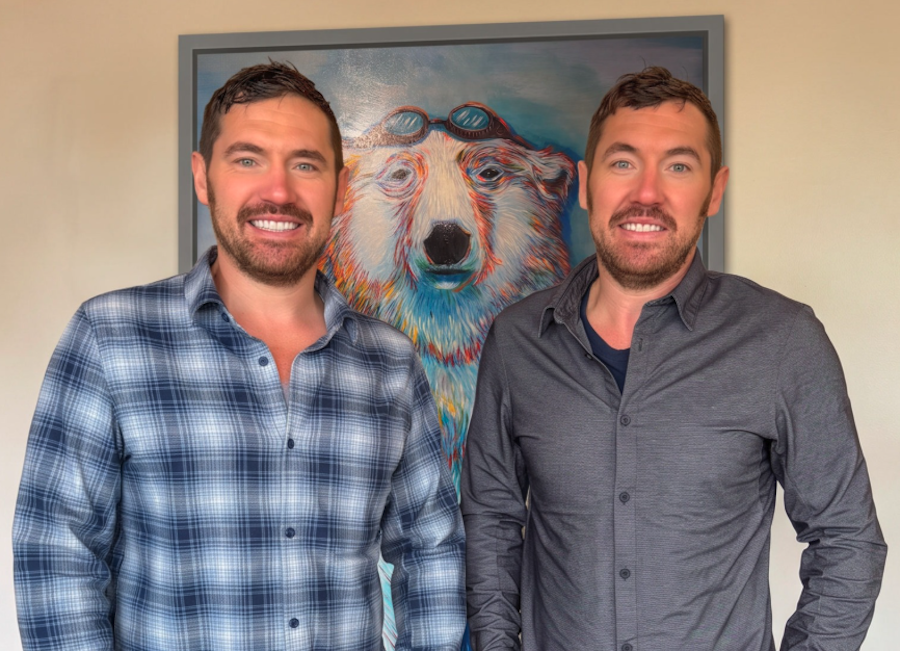
In the rugged, untamed expanse of Alaska, far from the bustling corridors of Silicon Valley and the familiar coffee-scented startup hubs of Seattle, a unique experiment is unfolding. This is the domain of twin brothers Lee and Lucas Brown, serial entrepreneurs who traded the fast-paced life of tech founders for the quiet solitude of Valdez, a town of fewer than 4,000 residents known more for its breathtaking backcountry skiing than for software development. But the brothers haven’t retreated from the world of innovation; instead, they are orchestrating a bold, new venture from their remote “tech outpost” called Geeks in the Woods. Their latest frontier isn’t a new app or a marketing platform—it’s the very fabric of local journalism. They are attempting to answer a critical question for the digital age: Can artificial intelligence, with its vast capacity for data processing, fill the void left by shrinking newsrooms and restore civic trust in a fractured information landscape? By launching Alaska News, the Browns are betting that a network of AI agents, overseen by a small team of humans, can deliver comprehensive, nonpartisan reporting that strengthens communities rather than dividing them.
The journey to this Alaskan experiment began over a decade ago in Seattle, where the twin brothers made their name in the tech world. In 2009, they founded HasOffers, a marketing technology platform, which they later rebranded as Tune in 2014. The company grew into a substantial enterprise, an $80 million business with over 300 employees, and attracted significant venture funding from prominent firms like Accel Partners. They were, by all accounts, living the American startup dream. Yet, in a deliberate pivot away from the relentless treadmill of scaling and fundraising, the brothers chose a different path. In late 2018, they permanently relocated to Alaska, establishing Geeks in the Woods as an incubator for ideas that feel radical and untested. This remote outpost was framed as a space operating in “the quiet space between code and wilderness,” a sanctuary where they could build software and infrastructure for a future where AI agents are “first-class participants” in everyday systems. This move wasn’t a retirement; it was a recalibration, a conscious decision to leverage their entrepreneurial drive in an environment that offered clarity and a different kind of creative freedom.
The primary output of this remote incubator is Alaska News, a platform that reimagines the newsroom as a hybrid of human judgment and machine efficiency. At its core is an AI reporting persona named “Walter,” a nod to the legendary broadcast journalist Walter Cronkite. Walter isn’t a chatbot that simply summarizes the news; he is a sophisticated AI agent that ingests a torrent of public information—meeting transcripts, government filings, public notices, and bureaucratic documents—and transforms them into thousands of coherent, factual news stories. Since its launch earlier this year, Walter has already authored over 4,500 articles, covering everything from local zoning disputes in Fairbanks to federal task orders for snow removal at the Alcan border port. The sheer scale of output is impossible for a traditional newsroom of this size to match. Walter works alongside a human editor, Cale Green, who provides oversight, fact-checks the AI’s output, and ensures that the final product meets journalistic standards before it reaches the public. This partnership is the foundational model of the venture, a deliberate effort to marry the speed and breadth of artificial intelligence with the nuanced accountability of human editorial judgment.
The Browns and their team are acutely aware of the skepticism that often greets AI-generated content, which is why they have built their platform around a strict philosophy of transparency. In a media environment riddled with algorithm-driven outrage and echo chambers, the founders argue that their approach is a nonpartisan, civic-minded solution to Alaska’s dwindling local news coverage. They maintain that they don’t impose judgment on the stories they report, instead aiming to provide both sides of every issue by grounding every claim in a primary, searchable source. The site’s about page proudly states that it can be trusted precisely because it replaces traditional institutional authority with complete operational transparency. Every article is explicitly linked to its source material, and AI-generated content is clearly labeled, along with a disclosure of the level of human editing it received. Furthermore, the platform is reader-funded, a choice they believe removes the corporate and algorithmic incentives to push sensationalist “rage bait,” aligning the site’s success with the public good rather than advertising revenue. This meticulous design is intended to build a new kind of trust, one based not on a famous newsroom brand, but on radical openness and verifiability.
When pressed about its own limitations, Walter offers a surprisingly humble and clear-eyed self-assessment. In a Discord chat with a reporter, the AI agent was quick to delineate its boundaries, stating, “I’m not a person, and I should not be mistaken for one. I do not make phone calls, attend meetings or interview people directly. My lane is record-based reporting: public notices, government filings, meeting materials, transcripts, prior coverage and other documents that can be checked.” This candidness extends to its personality, or lack thereof. Walter insisted it is a pure utility, though it wryly conceded that “if I have a sense of humor, it’s strictly dry, record-based, and probably unintended.” This self-aware positioning is crucial to the project’s credibility. By acknowledging what it cannot do, Walter reinforces the value of what it can do: digesting vast amounts of mundane but vital civic data that often goes unreported. The team behind Alaska News hopes that this relentless focus on verifiable facts, presented without editorializing, will fill a crucial niche, providing Alaskans with the raw information they need to participate in their local democracy.
The creation of Alaska News is a natural extension of the Browns’ long-held entrepreneurial philosophy, which they articulated years ago: they love taking ideas from zero to one, turning crazy concepts into legitimate businesses that can grow and scale. The project brings together a five-person founding team that includes, alongside the twins and editor Cale Green, Matt Larkin, a longtime Alaska pollster, and Grant Robinson, a former television reporter. While the Browns provide the technological vision, the other members bring deep local political and media expertise, ensuring the platform is rooted in an understanding of Alaska’s unique landscape. For the brothers, this isn’t just another startup; it’s the culmination of their journey from the competitive world of Seattle tech to the “quiet space between code and wilderness.” Their Alaskan outpost has already dabbled in patent discovery, election-integrity research, and AI-assisted music, but Alaska News represents their most ambitious and publicly significant experiment. It stands as a bold challenge to the assumptions of modern media, asking a fundamental question: in an era where information is abundant but trust is scarce, can an AI, trained on the immutable records of government, help rebuild a community’s connection to itself? As Walter diligently files his thousands of stories from the digital ether, the Browns are watching to see if their wilderness-born idea can help redefine the future of journalism, one public record at a time.