


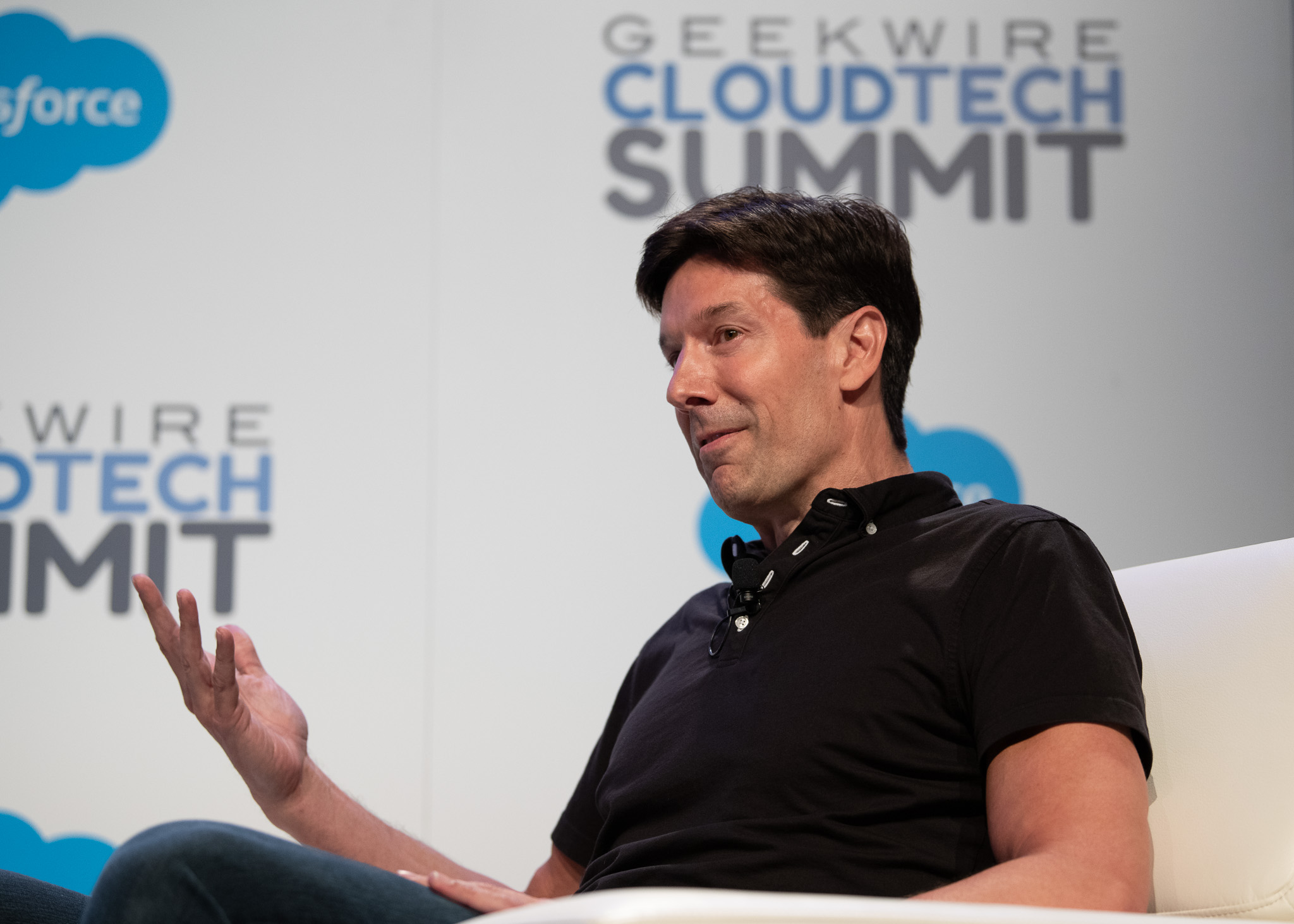
Mark Russinovich, the legendary Chief Technology Officer of Microsoft Azure, is a titan in the software engineering world. Known for creating the invaluable Sysinternals suite and architecting complex cloud infrastructure that powers global enterprises, he is a figure who operates at the absolute peak of technical complexity. Yet, despite his profound expertise in operating system kernels and massive cloud platforms, Russinovich recently found himself grappling with a surprisingly mundane, yet universally frustrating modern nuisance: writing and formatting posts on LinkedIn. Like many thought leaders, executives, and professionals, Russinovich frequently uses the Microsoft-owned social network to share tech insights, event updates, and industry wisdom. However, the experience of drafting these updates has long been marred by a major design flaw—the platform’s persistent lack of native rich-text formatting tools. For a network dedicated to professional branding and communication, the inability to easily bold, italicize, bullet, or stylize text directly within the post composer is an ongoing source of friction. To circumvent this, creators have traditionally been forced to rely on various sketchy, ad-riddled, and clunky third-party font generators scattered across the web. These free tools are notorious for broken unicode characters, awkward user interfaces, and annoying copy-paste behaviors that disrupt the creative flow, leaving users frustrated with a system that should make professional self-expression seamless and effortless.
Refusing to tolerate this sub-optimal writing experience any longer, Russinovich took matters into his own hands and built a elegant solution: a clean, agile, and highly efficient web application called the “LinkedIn Post Formatter.” This custom utility is engineered to address the exact limitations of existing online tools by providing a seamless, real-time, in-place text editor. Instead of copying and pasting text back and forth between different generator fields and risking corrupted formatting, users can type their copy directly into the workspace and apply stylizations like bolding, italics, underlinings, list formats, and emojis with fluid ease. Alongside these essential style mechanics, the application incorporates several practical features designed to optimize a writer’s workflow. It features a built-in character counter to ensure posts remain within LinkedIn’s strict character limits, and most impressively, it offers dynamic visual previews that show exactly how the post will look on both desktop browsers and mobile screens. Adhering to the collaborative, open-source ethos of modern software engineering, Russinovich chose not to lock this tool behind a paywall or keep it as a private asset. Instead, he hosted the entire project on GitHub Pages as an open-source repository. This allows anyone, from social media managers to hobbyist developers, to freely use the utility, examine the underlying code, propose feature enhancements, or clone the repository to customize it for their own personal needs.
The public debut of the LinkedIn Post Formatter quickly sparked a wave of good-natured amusement and lighthearted teasing across the professional network, illuminating a fascinating corporate paradox. In 2016, Microsoft acquired LinkedIn in a monumental $26.2 billion transaction, a deal designed to seamlessly integrate professional networking with Microsoft’s massive productivity ecosystem. Because of this high-profile corporate relationship, users on the platform were quick to point out the hilarious irony of the situation: one of Microsoft’s most senior and celebrated technical executives had to spend his free time building an external utility just to bypass the user experience limitations of a service his own company owns. The comments section of Russinovich’s announcement post quickly filled with witty observations highlighting this organizational disconnect. One user candidly asked, “No offense, but don’t you literally work at the company that owns the formatting UX?” while others playfully urged the platform’s product development teams to quickly cut through the corporate red tape and natively integrate Russinovich’s elegant solution directly into the standard LinkedIn editor. The situation served as a gentle reminder that even within the world’s largest tech giants, internal bureaucratic priorities and massive product roadmaps can often move so slowly that a lone executive using creative ingenuity can outpace corporate development cycles to deliver simple features that standard users have wanted for years.
Beyond the obvious humor of the Microsoft-internal discrepancy, the technical methodology Russinovich used to build the Formatter represents a profound shift in how software is developed in the modern era. In his social media announcement, Russinovich openly revealed that he “vibe coded” the utility—a colorful, contemporary term that describes a style of software creation where the programmer shifts focus away from manually writing lines of code and instead guides an artificial intelligence model to do the heavy lifting. In a vibe coding workflow, the human developer acts more like a creative director, editor, or product manager. They provide high-level conceptual ideas, user interface designs, and functional requirements to an AI assistant using standard conversational English. The AI then instantly generates the necessary HTML, CSS, and JavaScript, while the human developer reviews, tests, and refines the outputs dynamically. This iterative process radically compresses development timelines, converting what once would have been a multi-day effort of tedious syntax writing, stylesheet debugging, and cross-browser testing into a highly enjoyable, fast-paced dialogue between human imagination and machine execution. By embracing vibe coding for this project, Russinovich showed how AI has altered the creative landscape, allowing even highly busy executives to rapid-prototype functional solutions to their personal pet peeves over the course of a single afternoon.
This hands-on experiment serves as a highly practical validation of Russinovich’s own nuanced, level-headed philosophy regarding the role of artificial intelligence in the future of software development. Just a year prior, during an insightful keynote address delivered at a Technology Alliance startup and investor event, the Azure CTO had urged the tech sector to adopt a more balanced, realistic perspective on AI-assisted coding tools. In his speech, he cautioned eager developers and investors that “vibe coding” and automated code-generation platforms are not magic cure-alls, nor are they currently capable of replacing experienced human software engineers when it comes to highly complex, large-scale, or safety-critical software architectures. Human oversight remains completely indispensable for making high-level architectural decisions, securing sensitive data pipelines, managing complex system dependencies, and handling logical nuances. Despite those limitations, however, Russinovich enthusiastically recognized the sheer revolutionary potential of AI systems when applied to simpler web pages, utility applications, database mockups, and rapid prototyping. The creation of his LinkedIn formatter serves as the perfect proof of concept for this balanced view: a relatively straightforward utility that doesn’t require deep system architecture, but is highly useful, simple to construct with an AI partner, and incredibly fast to deploy to the public.
Ultimately, Mark Russinovich’s open-source weekend project is far more than just a convenient tool for adding bold text and emojis to a social media feed; it is a compelling glimpse into a future where the line between programmer and user continues to blur. By showcasing how a veteran tech leader can utilize casual, AI-driven development practices to solve a stubborn user experience flaw on a platform owned by his own multi-billion-dollar employer, the story touches on themes of corporate agility, open-source collaboration, and technological democratization. It paints a picture of a world where individuals are no longer passive consumers of software, but active creators who can easily manifest digital solutions to their everyday frustrations by simply conversing with intelligent machines. As we move further into this era of AI-human partnership, the future of coding will not be defined by the elimination of the human programmer, but by the amplification of human creativity, where developer tools remove the friction of syntax and leave room for pure, unadulterated problem-solving. Until LinkedIn eventually integrates native styling directly into its interface, Russinovich’s formatter will remain a highly practical tool for creators worldwide, a monument to the power of rapid prototyping, and a stellar example of how a great developer can vibe with technology to make the digital world a little more polished.