



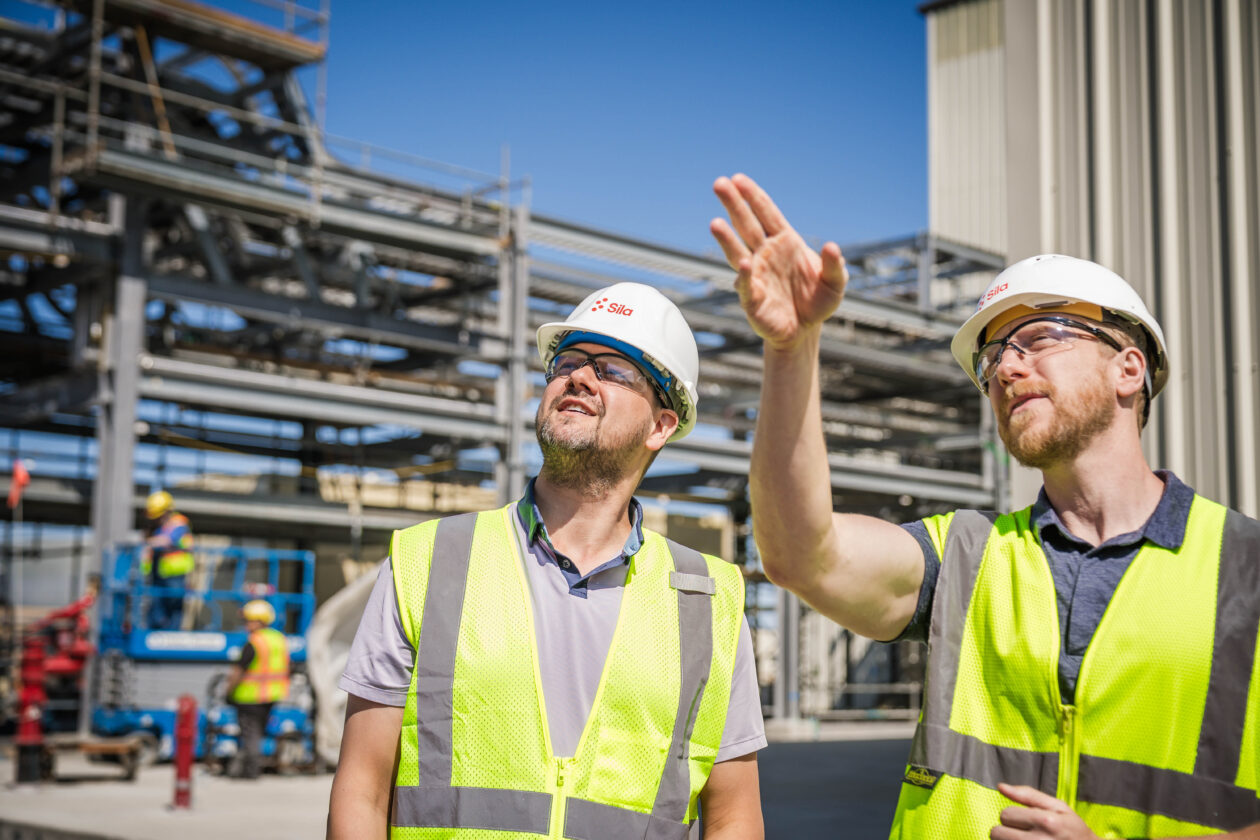
In September 2011, the clean-technology landscape in the United States lay in ruins. The spectacular, high-profile bankruptcy of solar power pioneer Solyndra had sent shockwaves through Wall Street and Silicon Valley alike, casting a long, icy shadow over any startup attempting to innovate in the physical sciences. For many venture capitalists, investing in physical chemistry or hardware-based sustainability felt like a fool’s errand compared to the rapid, asset-light returns of software, apps, and the burgeoning social media ecosystem. Under this heavy blanket of skepticism and market hesitation, Sila’s co-founders, Gene Berdichevsky and Chris Dougher, decided to chart a different, far more difficult path. Rejecting the prevailing panic of the era, they founded Sila with a quiet conviction that clean energy was not a passing investment fad but an existential industrial necessity. Rather than seeking quick wins, they hunkered down for a decades-long journey of steady, methodical laboratory work, recognizing that revolutionary material science cannot be rushed or simulated on a screen. This long-term grit bore remarkable fruit when Sila began manufacturing its pioneering material at its state-of-the-art facility in Moses Lake, Washington. Serving as the nation’s very first automotive-scale, silicon-anode production plant, the Moses Lake facility represents a massive step toward establishing a robust, independent domestic battery manufacturing ecosystem in the United States. For Berdichevsky, this milestone is a testament to the power of pure perseverance. He notes that in the unpredictable, cyclical world of deep-tech entrepreneurship, you cannot let short-term market anxieties or political shifts dictate your long-term roadmap; instead, you must keep putting one foot in front of the other, plugging away at the hard engineering challenges, and building the resilience required to ride out the inevitable economic waves.
To understand the roots of Gene Berdichevsky’s unshakeable dedication to energy, one must travel back to his freshman year at Stanford University. Like many young, ambitious students, he was searching for a sense of purpose when he stumbled upon the Stanford Solar Car team, a discovery that would reshape his entire life. Unlike structured academic classes overseen by professors and rigid syllabi, this was a wild, self-contained universe run entirely by students with virtually no adult supervision. The project was audacious: to build an ultra-efficient, solar-powered electric vehicle from scratch and race it 2,300 miles across the baking tarmac of the American continent, from the windy streets of Chicago to the sunny coastline of Los Angeles. Immersed in grease, carbon fiber, and the complex thermodynamics of solar cells, Berdichevsky fell deeply and irreversibly in love with energy. He realized that energy is not merely a utility or a line-item on a bill, but the very scaffolding upon which our entire global civilization is constructed. The solar car project was a microcosm of what was possible, proving to him that young, dedicated minds could create highly sophisticated systems capable of turning raw sunlight into long-distance motion. It demystified the massive challenges of the physical world and left him with an enduring obsession as well as a comforting truth: the energy systems that power our cities, transport our goods, and heat our homes are not static monuments of the past, but dynamic, evolving architectures that are ripe for profound, scientific transformation.
When contemplating the looming crisis of climate change, Berdichevsky maintains a refreshing and deeply rational optimism that stands in stark contrast to the apocalyptic doom that often dominates modern discourse. His hope is anchored in a historical understanding of human creativity and the power of science to dismantle seemingly impossible roadblocks. He points back to the terrifying predictions of the early to mid-20th century, when global thinkers warned that humanity faced a grim choice between mass starvation and forced depopulation because the Earth simply could not produce enough food to sustain billions of people. This Malthusian crisis appeared insurmountable until crop science and chemical engineering intervened, ushering in the Green Revolution and saving billions of lives through agricultural innovation, synthetic fertilizers, and high-yield crops. Berdichevsky firmly believes that the global energy crisis today is a parallel challenge, and that materials science will be the savior of the 21st century just as crop science was of the 20th. At Sila, this philosophy is put into physical practice through the chemical reimagining of the lithium-ion battery. Traditional lithium-ion batteries rely on graphite anodes, which are heavy and have reached their physical limits of energy density. By replacing graphite with engineered, high-performance silicon, Sila can pack significantly more energy into the exact same physical space. Silicon historically posed a massive challenge because it swells by 300 percent when charging, causing batteries to quickly degrade and self-destruct. Sila’s breakthrough lies in creating a nanostructured composite silicon material that accommodates this swelling on a microscopic scale, solving an “impossible” engineering problem and proving that scientific innovation can expand our ecological carrying capacity.
A key pillar of Berdichevsky’s worldview is his rejection of the traditional environmental narrative of self-denial, guilt, and personal sacrifice. He argues that trying to “cut” or shame our way out of climate change is a losing strategy that runs contrary to basic human nature and aspirations for a better life. The only viable path to a sustainable future is through harnessing scientific breakthroughs and market forces to make the clean, environmentally friendly option the undeniably superior, more economical, and more desirable choice. Gene lives this philosophy in his own daily habits, refusing to greenwash his lifestyle for the sake of empty aesthetics. When he drives an electric vehicle, it is not out of a sense of moral obligation, but because electric powertrains deliver instantaneous torque and a thrilling, quiet ride that is simply more fun than a legacy combustion engine. When he travels internationally, he specifically seeks out Boeing 787 Dreamliners, not simply because they are highly fuel-efficient, but because their advanced composite design allows for a more comfortable cabin experience with higher humidity and better air pressure, which genuinely reduces post-flight jetlag. In major metropolises, he rides the subway because it is simply the fastest and most efficient way to navigate heavy traffic. This pragmatic approach translates directly to Sila’s business model. Berdichevsky knows that in the brutal, global energy market, there is no room for a “small but noble” energy startup. To make a real dent in global carbon emissions, an energy company must be built to scale immediately, aiming for a market presence of ten to one hundred billion dollars, because nothing smaller can survive the harsh economic realignments of the worldwide transition.
When asked to imagine having a conversation with any energy leaders from history, Berdichevsky bypasses modern tech titans to select a legendary 19th-century duo: Nikola Tesla and George Westinghouse. This choice reveals his deep appreciation for the delicate, often overlooked alchemy required to bring revolutionary technology to life. While Thomas Edison is widely remembered as the preeminent, cutthroat American businessman who dominated early electrical grids, it was the partnership between Tesla’s transcendent scientific vision and Westinghouse’s bold entrepreneurial execution that ultimately electrified the modern world. Tesla was an eccentric genius who thought decades ahead of his time, conceptualizing alternating current systems that seemed like science fiction to his contemporaries. Yet, without the industrial muscle, financial risk-taking, and operational brilliance of George Westinghouse, Tesla’s inventions might have remained confined to patents and laboratory demonstrations. This historic alliance perfectly mirrors Sila’s operational philosophy. It is not enough to invent a miracle material in a cleanroom in California; one must also possess the manufacturing chops, the supply chain logistics, and the industrial infrastructure of Chris Dougher and Sila’s operational teams to scale that material in massive facilities like Moses Lake. By bridging the gap between mind-bending, molecular-level science and heavy, steel-and-concrete manufacturing, Sila aims to recreate the magic of the Tesla-Westinghouse partnership to once again transform the physical architecture of our daily lives.
Looking ahead twenty years, Berdichevsky’s ultimate ambition is to help lay a more resilient, clean, and incredibly low-cost energy foundation for the entire world. He remains profoundly grateful for the fossil fuels—coal, oil, and natural gas—that drove the unprecedented industrial progress, wealth, and human development of the 20th century, acknowledging that they freed humanity from backbreaking labor and ushered in modern society. However, he also recognizes that we have reached a pivotal inflection point where we can build an even better engine for human progress. By pairing high-performance batteries with geothermal energy, wind, and solar, society can transition to a permanent state of clean, secure prosperity that does not rely on burning finite resources. This transition is not about entering an era of limits or forced reduction, but about upgrading to a superior technological stack that will unlock even greater economic abundance and human potential. Gene hopes that Sila’s silicon-anode materials will serve as a foundational pillar of this new era, enabling electric vehicles to go farther, electronics to last longer, and clean energy grids to operate flawlessly. Through innovation, bold commercialization, and rapid manufacturing scaling, Berdichevsky and his team are determined to prove that the path to a cleaner planet is simultaneously the path to a more prosperous, vibrant, and boundless future for all of humanity.