


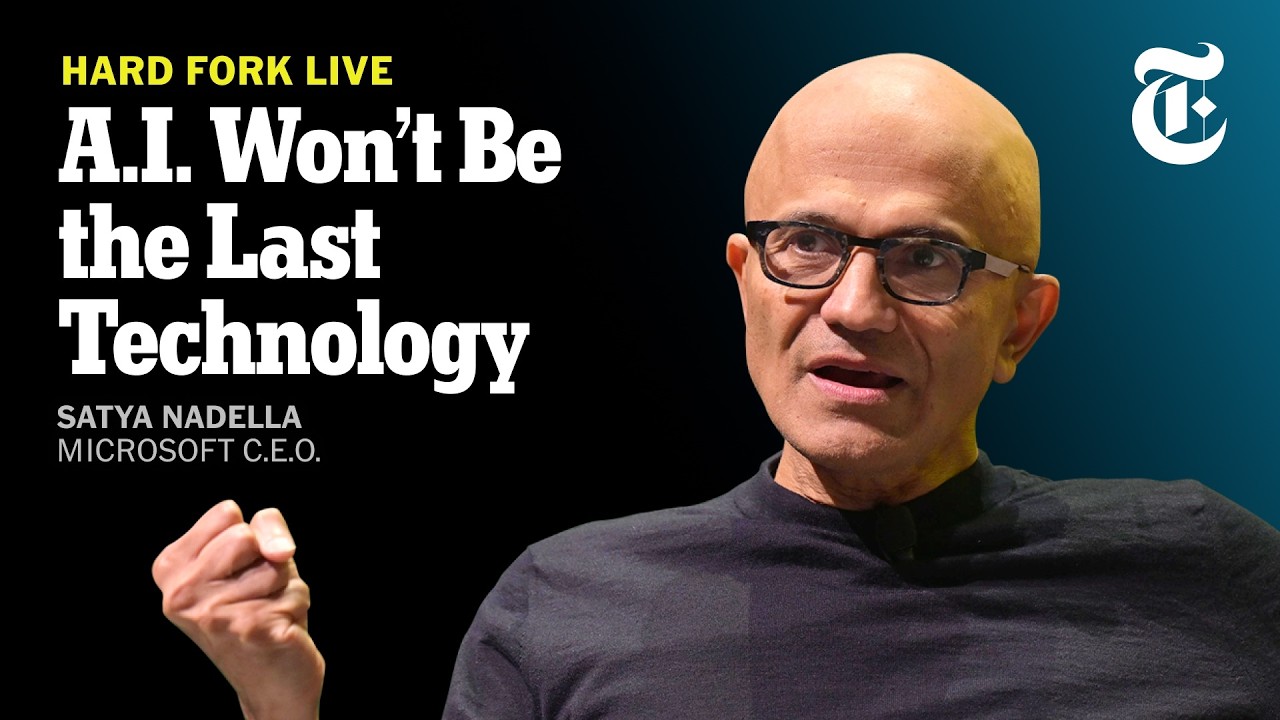
When Microsoft’s visionary leader Satya Nadella sat down on a warm Wednesday evening in mid-June 2026 for a recording of The New York Times’ “Hard Fork” podcast, the atmosphere carried a quiet weight that went far beyond typical corporate public relations. Speaking with hosts Kevin Roose and Casey Newton, Nadella did something rare for a chief executive of a trillion-dollar titan: he pulled back the curtain on the romanticized, long-tolerated financial struggle of the Xbox division, offering a candid and surprisingly human look into the reality of a global brand that has occupied the hearts of millions of gamers for a quarter of a century. For twenty-five years, Microsoft has treated Xbox not merely as a product line, but as a prestigious, high-stakes passion project, pouring billions of dollars into its development, acquisition strategies, and hardware engineering under the assumption that market dominance would eventually bring self-sustaining prosperity. Yet, with a mixture of executive weariness and a lighthearted chuckle, Nadella acknowledged the ultimate irony of their massive digital empire: Microsoft had essentially been subsidizing a massive playground for the world’s entertainment, while third-party entities, most notably content creators and platforms like YouTube, actually managed to monetize the cultural footprint of Xbox games far more effectively than the historical tech giant itself. This realization marks the end of an era of endless patience and bottomless corporate checkbooks, signaling a profound shift from a luxury brand supported by enterprise software profits to a business unit that must finally learn to stand firmly on its own financial feet.
The weight of this transition is felt most acutely within the hallways of Xbox headquarters, where newly appointed CEO Asha Sharma find herself facing the monumental task of steering a legendary but leaking ship through stormy waters. Barely one hundred days into her challenging tenure, Sharma laid bare the cold, hard mathematical truth in an emotional but direct internal memo to employees, declaring that the division’s cycle of aggressive, unbridled spending alongside steadily declining revenues is a path that simply cannot continue. Over the past five years, Microsoft has funneled more than $20 billion into the gaming ecosystem—funding massive studio acquisitions, loss-leader hardware cycles, and ambitious cloud infrastructure—only to project a meager three percent profit margin for the current fiscal year by internal metrics. For the thousands of creative minds, developers, and engineers who poured their souls into building these virtual environments, this corporate reckoning is not just a collection of numbers on a spreadsheet; it translates to immediate, deeply personal anxieties as reports circulate from sources like Bloomberg News regarding significant layoffs scheduled for the coming month. Sharma’s communication was a sobering reminder that behind every grand corporate pivot are real human beings whose livelihoods are caught in the gears of industry recalibration, highlighting the immense pressure on modern tech leaders who must balance the human cost of restructuring with the uncompromising demands of corporate survival.
This sudden financial reckoning is driven by two distinct, powerful pressures that Nadella neatly categorized during his podcast appearance, dividing the company’s challenges into temporary macroeconomic headaches and permanent, existential crises. The first pressure is a stubborn, physical reality that has plagued the entire consumer tech industry: a persistent and highly disruptive surge in the prices of critical raw materials, semiconductors, and specialized memory components. This supply chain squeeze has driven up the cost of manufacturing everything from consoles to high-end PCs and smartphones, creating an environment where Microsoft can no longer afford to absorb the losses of selling state-of-the-art gaming hardware at a discount. However, while Nadella expressed confidence that the industry would eventually navigate past these temporary supply issues, it is the second pressure—the ultimate destiny of the Xbox business model—that keeps executives awake at night. The traditional dynamic of selling a cheap box to customers acting as a gateway to expensive software purchases is fundamentally broken in an era where development cycles stretch over many years and costs swell to hundreds of millions of dollars per game, forcing Microsoft to explore uncharted territory to discover a framework that remains economically relevant and fair for both the consumer and the corporation.
For the global community of gamers who have grown up with a controller in their hands, this transition represents a deeply personal and potentially painful shift in their relationship with Microsoft. For years, the gaming community viewed Xbox as something of a benevolent, wealthy uncle—a platform holder so desperate for market share and player loyalty that it was willing to offer astonishing deals, such as the initial, incredibly cheap iterations of Xbox Game Pass, while tolerating massive financial losses on hardware. As Casey Newton pressed Nadella on whether the future of Xbox would offer any positive incentives or “carrots” for players, or if consumers would simply have to brace themselves for more expensive consoles and pricier individual games, the tension between corporate necessity and consumer expectation became painfully obvious. Xbox is currently walking a delicate tightrope, trying to convince a highly passionate, sometimes cynical, and fiercely vocal audience that the golden age of corporate-subsidized play must evolve without making them feel exploited. The challenge lies in redefining the value proposition of interactive entertainment, moving away from the expectation of nearly free experiences toward a sustainable ecosystem where players understand that supporting the developers they love requires a more realistic and balanced financial commitment.
To weather this transition, Microsoft’s leadership is refusing to rule out any radical structural options, opening the door to rumors of a profound corporate realignment that could alter the landscape of the gaming industry forever. Reports emerging from The Information suggest that behind analytical closed doors, leadership is contemplating unprecedented structures for Xbox, including transforming the division into a completely independent, wholly owned subsidiary, forming a strategic joint venture, or even orchestrating a historic spin-off. As Asha Sharma prepares to spend her next hundred days mapping out a comprehensive, fresh strategy for the brand, the emerging blueprint highlights a heartbreaking paradox of modern entertainment: in order to preserve and invest heavily in iconic, multi-generational intellectual properties like Halo and Fallout, the division must simultaneously implement painful layoffs and downsize its experimental divisions. This strategy, which has reportedly received the explicit blessing of both Satya Nadella and Chief Financial Officer Amy Hood, represents a safe but agonizing corporate retreat toward established franchises, potentially stifling the kind of risky, artistic, and offbeat game development that often provides a platform with its unique heart and culture, all in the name of fiscal security and survival.
Ultimately, the drama unfolding at Xbox cannot be viewed in isolation; it is a fascinating, humanized microcosm of the broader shifts occurring across the entire technological landscape as the mid-2020s progress. During the wide-ranging “Hard Fork” discussion, Nadella’s insights into gaming seamlessly intertwined with larger conversations about the explosive rise of generative artificial intelligence, the environmental and political backlash surrounding energy-hungry data centers, and the profound anxiety of workers fearing automation. In this new era, where tech giants are redirecting hundreds of billions of dollars to build the infrastructure of tomorrow’s AI, there is no longer room for the casual, subsidized indulgence of unprofitable passenger divisions, no matter how iconic their branding or legacy. The tightening of the belt at Xbox is directly linked to the massive capital requirements of the artificial intelligence race, demonstrating that in the modern corporate theater, every single resource must prove its value and justify its existence. As Microsoft strives to find a harmonious balance between innovative entertainment and logistical sustainability, the evolution of Xbox will serve as an instructive tale for the entire digital age, proving that even the most culturally beloved, heavily funded playgrounds must eventually grow up, face the light of day, and pay their own way forward.