



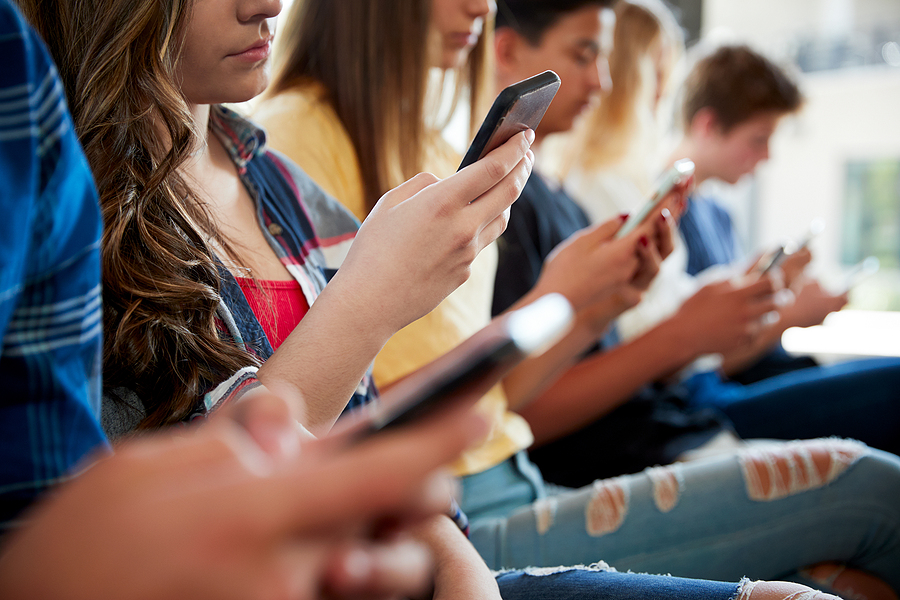
On a warm June morning in 2026, journalist Lisa Stiffler captured a pivotal moment in the battle for the minds and mental health of Washington state’s youth. Walk into almost any public school classroom today, and you will witness a subtle, quiet war being waged for the attention of our children. Beneath the desks, hidden in the pockets of hoodies, and tucked inside backpacks, the soft, persistent glow of cellphones casts a shadow over the educational landscape. For years, teachers have stood at whiteboards competing not just with the standard daydreams of youth, but with multi-billion-dollar algorithms engineered by the world’s most sophisticated technology companies to capture and hold human attention. While over half of the states across the country have recognized this digital hijack and enacted decisive statewide legislation to banish these devices from classrooms, Washington has historically taken a more tentative, cautious path. Indeed, in March of 2026, state legislators passed a slow-moving law instructing the Office of the Superintendent of Public Instruction to merely study district phone policies and gather student feedback for a report not even due until the tail end of 2027. To many educators, parents, and community leaders who see the daily toll of screen addiction on kids, this bureaucratic foot-dragging felt like trying to extinguish a five-alarm fire with a dropper. But on Tuesday, June 9, 2026, Washington Governor Bob Ferguson drew a line in the sand, declaring that the state’s sluggishness must end and that implementing a total, statewide kindergarten-through-12th-grade cellphone ban during school hours would be one of his defining legislative priorities when lawmakers reconvene this coming January.
Governor Ferguson’s declaration is a sweeping political pivot that seeks to bypass years of circular debate and replace hesitancy with bold, immediate action. Standing before a crowd of educators, parents, and students, Ferguson made it clear that Washington’s passivity on this front is no longer acceptable. His ambitious proposal demands a comprehensive, “bell-to-bell” restriction on cellphones across all public schools, aiming to have these policies fully implemented of the start of the 2027–2028 academic year. This aggressive timeline is designed to shake the state out of its regulatory slumber and bring it in line with a rapidly growing national consensus. Ferguson is not fighting this battle alone; he has found a powerful ally in the state’s Superintendent of Public Instruction, Chris Reykdal, who has thrown his full weight behind a matching policy. By framing the cellphone ban as an urgent issue of student well-being and academic integrity rather than a partisan talking point, Ferguson and Reykdal are building a broad, common-sense coalition. They argue that in a state that prides itself on being a global hub of technological innovation, we must also be courageous enough to recognize when technology has overstepped its boundaries and begun to erode the foundational, human experiences of childhood. The governor’s strategy is clear: transform Washington from a state lagging behind national standards into a model of proactive, child-first policymaking.
The scientific and developmental urgency driving this political push is laid bare by recent, sobering research. A landmark study published in January 2026 by the University of Washington School of Medicine, alongside other research institutions, revealed that American adolescents between the ages of 13 and 18 are spending upwards of an hour of their precious school day actively using their phones, with highly addictive social media applications devouring the lion’s share of that time. This is not merely a matter of teenagers sending quick texts to their parents or checking their schedules; it represents a deep, algorithmic immersion that occurs during periods meant for intellectual growth and social development. To make matters worse, recently unsealed industry documents have shed a harsh light on the deliberate strategies deployed by social media giants to target young users, showing how these platforms are meticulously designed to maximize screen time, trigger dopamine loops, and bypass a young person’s developing self-control. This constant digital pull creates a state of perpetual cognitive fragmentation, where students are physically present in classrooms but mentally miles away, trapped in a relentless cycle of notifications, likes, and digital drama. Teachers find themselves forced into the exhausting, disheartening role of “device police,” constantly monitoring hands and desks, which drains their energy and detracts from the creative, joyful aspects of teaching.
While critics of such bans often look purely at standardized academic metrics, the true value of removing phones from schools lies in the intangible, profound shift in school culture. Some recent research, highlighted by the New York Times, suggested that test scores did not dramatically surge immediately following school cellphone bans. However, this narrow focus overlooks the human heart of the issue: the daily, lived experience of the children and their teachers. Educational researchers and school staff report that when cellphones are locked away for the entire day, classroom distractions plummet, and students report a dramatic increase in their overall sense of personal well-being, safety, and focus. This qualitative transformation is precisely why support among frontline educators is so overwhelming. At the Washington Education Association’s annual meeting in April, close to a thousand teachers passed a near-unanimous resolution advocating for a statewide ban on cellphones during school hours. Larry Delaney, the president of the WEA, spoke for thousands of exhausted but hopeful teachers when he asserted that a statewide “away for the day” policy is the only way to help students cut through the digital noise, reclaim their focus, and reach their full potential. This powerful endorsement from the state’s largest teachers’ union underscores a simple, undeniable truth: those who spend their lives in classrooms know that learning cannot truly happen without presence.
Fortunately, local communities are not waiting for the slow wheels of state government to turn before rescuing their children from digital saturation. Just a month prior to Governor Ferguson’s announcement, Seattle Public Schools—the state’s largest school district—pioneered a district-wide policy that has since served as a beacon of hope for neighboring communities. Under this progressive framework, students in kindergarten through eighth grade are required to put their cellphones completely out of sight for the duration of the entire school day, creating a beautiful, screen-free bubble of protected time for younger children. For high school students, the district struck a practical compromise: phones must be stored away securely during active instruction periods, though students are permitted to access them during lunch breaks and passing periods. Crucial exemptions are woven into these policies to accommodate students with specific medical conditions—such as those monitoring blood sugar—or unique educational needs, proving that a phone-free school can still be highly compassionate and inclusive. This grassroots success story illustrates that practical, common-sense regulations are not only achievable but are met with immense relief by families desperate for boundaries in an increasingly digital world.
The deep emotional and social value of these policies was perhaps best expressed not by any politician, educator, or researcher, but by a seventh-grade student who has experienced the change firsthand. Speaking at the Robert Eagle Staff Middle School press conference where Governor Ferguson announced his legislative plans, student Zoe Taggart shared a remarkably mature perspective on her school’s all-day phone ban. While admitting that she, like any typical teenager, sometimes misses having her phone nearby, she spoke with glowing enthusiasm about the unexpected joy of a phone-free school day. Taggart observed that without screens to retreat behind, her classmates are talking to one another more, building stronger friendships, and living fully in the present moment. Rather than sending a cold, digital text to a friend sitting just down the hallway, students are actually walking down the hall, looking each other in the eye, and engaging in spontaneous, real-world conversations. Currently, national advocacy groups give Washington and three other states a failing grade on the Phone-Free Schools State Report Card for their lack of statewide regulations, while several states have earned top marks for requiring phones to be completely inaccessible “bell-to-bell.” As Washington prepares to join the ranks of progressive states reclaiming the sacred, analog spaces of childhood, stories like Zoe’s remind us that of the heart of this legislative push is a profoundly human goal: giving children back their childhoods, one conversation at a time.