


The news landed quietly, but it speaks volumes about where the social internet is heading. On a late August morning in 2026, Portland’s independent social media upstart Graze announced that it was joining forces with Flipboard, the Los Altos-based content discovery platform that has spent years championing a more open, decentralized web. On its surface, this looks like another modest startup acquisition—a two-person team folding itself into a larger company with more resources. But for those who have been watching the slow, often messy evolution of social media, it feels far more meaningful. This is a story about the growing resistance to the closed, algorithm-driven empires of Facebook and Instagram, and about a small group of builders who believe there is a better way to shape what we see and why we see it. The acquisition is strategic, yes, but it is also philosophical. It brings together two organizations that share a conviction: that users, creators, and curators should own their social experience, not be owned by it. In an era of generative AI flooding legacy platforms with noise, Graze and Flipboard are betting that human curation—not black-box algorithms—will be the compass that guides us back to a more meaningful attention economy.
At the heart of this deal is a tiny tool that has already achieved something remarkable. Graze began with a simple blog concept and grew into an engine for the open social web. Founded by Devin Gaffney, Peat Bakke, and Andrew Lisowski, the company formally took shape just twenty-one months before the acquisition—a blink of an eye in the tech world. Yet in that short time, Graze delivered more than 41 billion posts to 12 million users. Those numbers are staggering on their own, but what makes them truly special is the product behind them. Graze allows creators, publishers, and everyday users to build, tune, and monetize their own custom social algorithms, especially on platforms like Bluesky, without writing a single line of code. It turns the idea of the algorithm inside out. Instead of an invisible force deciding what you deserve to see, Graze puts the controls directly in the hands of the people who make and share content. You can create a feed that reflects your taste, your values, or your niche community, and you can adjust it in real time. For Gaffney, the project became the most important work of his career. He described it as a new “playbook for how to re-orient the attention economy, and start pulling us back out of the widening gyre.” The phrase sounds lofty, but it captures a real and growing anxiety: the more we rely on gigantic platforms designed to maximize engagement, the more we lose our bearings, drifting in a sea of outrage and distraction. Graze offered a small, elegant lifeline.
The acquisition makes even more sense when you look at Flipboard’s own journey over the past few years. Under the direction of CEO Mike McCue, the company has gone all-in on open social protocols like the AT Protocol, ActivityPub, and RSS. It has launched Surf, a browser for the open social web, and championed what it calls “Social Websites”—a bold attempt to let websites participate in social conversations directly, rather than through the gatekeepers of closed networks. Flipboard already had the front-end experience: beautiful magazines, thoughtful discovery, and a design language that treats reading and curation as an act of care. What it needed was a powerful back-end engine to make those feeds more customizable, more personal, and more sustainable for the people who build them. Graze is exactly that. As Gaffney put it, “Combined, we become two halves of one machine. Surf will be the browser for the open social web—where people go to read and discover feeds across Bluesky, Mastodon, Threads, RSS, and more. Graze will be the engine under those feeds—how a curator builds, tunes, and monetizes one without writing a line of code.” It’s a compelling vision, and one that feels almost obvious in hindsight. If the open social web is going to thrive, it needs tools that make decentralized platforms as easy and enjoyable as the centralized ones. Flipboard brings the polish and the user base; Graze brings the raw power to build and control the streams themselves. Together, they form a complete alternative to the closed, ad-driven feeds that have defined social media for two decades.
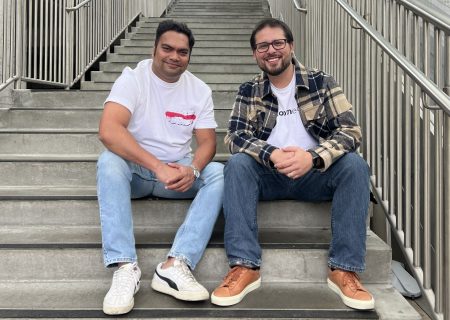
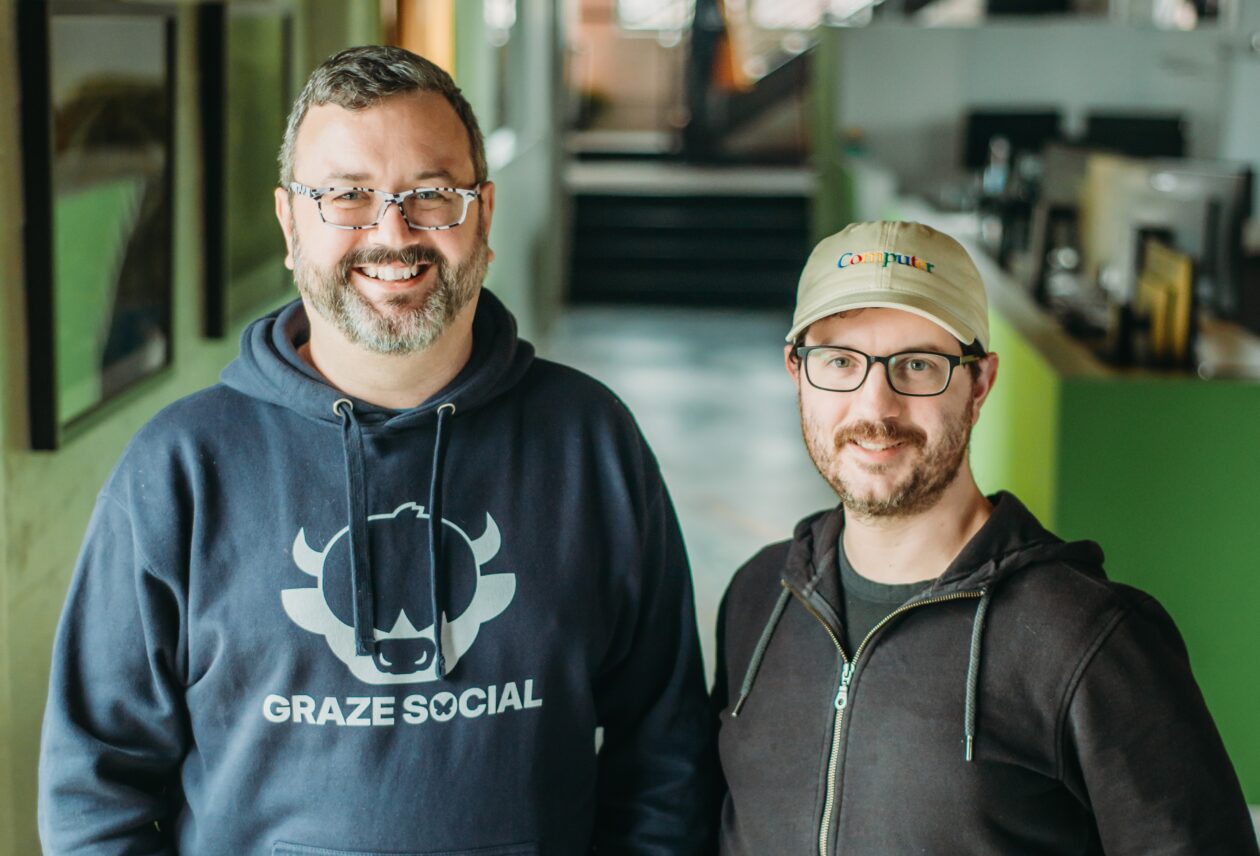
But the path to this moment was not easy for Graze’s small team. In fact, the company was as lean as a startup could possibly be. At its peak, Graze employed just two people: Gaffney and software engineer Nick Gerakines. Bakke and Lisowski, two of the original co-founders, had already left the company the previous year. For Gaffney, the experience was both exhilarating and exhausting. He wrote candidly about the operational struggles of running a growing platform with such a tiny crew, describing how they ended up “wearing a half dozen hats we didn’t know we needed at the start.” That honest admission is a reminder that behind every seemingly magical product is a mountain of mundane work—support tickets, server maintenance, billing, legal, marketing, and a thousand other invisible tasks. Joining Flipboard changes that equation completely. Instead of rebuilding infrastructure from scratch, Graze can plug into Flipboard’s established systems and focus on what it does best: making the open social web more tunable, more accessible, and more rewarding for curators. For Gaffney, the appeal goes beyond operational relief. It is a chance to realize a shared dream with McCue, who he said shares his vision of creating an attention economy that works for everyone. “As the onslaught of generative AI starts to clog the pipes of legacy platforms,” Gaffney wrote, “we both deeply believe that a curatorial role in shaping ‘the algorithm’ is the only sustainable way to run that attention economy into the future.” That belief feels particularly urgent right now. AI-generated content is already beginning to overwhelm social platforms, making it harder than ever to find authentic voices and genuine human connection. In that environment, the algorithm is no longer just a recommendation system—it is a responsibility. Graze and Flipboard are betting that the best response to a flood of machine noise is human judgment, carefully embedded in the tools themselves.
For Graze’s existing users, the news should bring comfort rather than concern. The company confirmed that the core product and service will remain online, and those who have already built feeds on Graze can keep using them. The acquisition is not a shutdown or a pivot; it is a scale-up. The combined entity will aim to offer a creator-first alternative to closed, legacy platforms like Facebook and Instagram, giving users ownership not only over what they see, but also over how they earn. That last point is crucial. In the legacy social model, creators are constantly at the mercy of algorithm changes and platform policies. They have no ownership of their audience, no control over their monetization, and no way to guarantee that their work reaches the people who care about it. Graze flips that model. Because feeds are open and built on open protocols, curators can take their communities with them if they choose to move. They can also earn directly from their work, without a platform taking a massive cut. The funding structure of Graze already hinted at its ambitions. In April 2025, the company raised $1 million in a pre-seed round led by Betaworks, with participation from Salesforce Ventures, Factorial, Apertu Capital, Skyseed, and angel investors from Mozilla and Protocol Labs. It was a modest amount by Silicon Valley standards, but the investor list reads like a who’s who of the open web movement. These are the people who believe that decentralization is not just a technical preference, but a democratic necessity. With Flipboard’s resources behind them, Gaffney and Gerakines will now be able to advance Graze’s mission much faster, and with far more support, than they ever could alone.
Flipboard’s McCue certainly seems eager to get started. In an email to GeekWire, he praised the Graze team for building something special, a tool that has benefited many curators, community builders, creators, and developers. “I’m inspired by their vision and can’t wait to work closely with them to continue building out the open social web,” he said. “Devin and Nick will continue to advance Graze as the ultimate feed building and hosting platform while Surf and Flipboard will enable millions of additional users to discover and experience feeds in new ways we’re going to design together.” That last phrase is worth pausing on, because it suggests more than just technical integration. It implies a shared design philosophy, a collaborative process that will shape the future of how we read, share, and connect online. Financial terms of the transaction were not disclosed, but Gaffney told GeekWire that he is “confident that this is a great outcome for the team, the company, and the investors.” That confidence feels well-earned. For a two-person startup to reach 12 million users and 41 billion posts, and then to find a home in a company that shares its values, is a remarkable achievement. But the larger story here is not about Graze or Flipboard as individual companies. It is about the direction of the social web itself. For years, we have been told that the only way to connect online is through massive, closed platforms that profit from our attention while giving us little control in return. The acquisition of Graze is another sign that this era is ending. Slowly, but with increasing confidence, a new generation of builders is creating something better: a web where users own their feeds, curators shape their communities, and the algorithm answers to us, not the other way around. The widening gyre may not be closed yet, but thanks to this partnership, the path back is getting clearer.