



The Electric Freight Alliance Takes Shape
In the grand, dusty tapestry of global freight, a quiet revolution is being stitched together with steel, software, and a stubborn commitment to shedding carbon. On a brisk Tuesday morning in August, the Swedish electric trucking company Einride dropped a bombshell that reverberated across the logistics world: they are deploying 500 Tesla Semis across North America—a monumental order that represents the largest fleet of Tesla’s Class 8 big rigs ever assembled. But the polished cherry-red trucks hauling cargo between California and Georgia are only half the story. The deeper, more fascinating narrative involves the colossal shadow looming behind them: Amazon. The e-commerce behemoth has been quietly accumulating a financial stake in Einride—a stake so substantial and strategically entwined that it threatens to blur the lines between customer, investor, and puppet master. As Einride announced its first earnings since its June initial public offering, the numbers painted a picture of explosive growth, but glancing at the fine print in SEC filings reveals that Amazon now holds warrants for 25.2 million shares of the company—roughly 12% of Einride’s entire equity—which vest only as Amazon continues to buy freight services. This isn’t merely a partnership; it’s a financial symbiotic union where every mile driven by those futuristic trucks for Amazon inches Einride closer to the e-commerce giant’s embrace, ensuring that the largest online retailer in history has a dedicated, electrified artery pumping goods across the continent while simultaneously padding its own balance sheet with a growing piece of a promising clean-energy startup.
The Hidden Financial Strings and a Revenue Surge
For months, this financial entanglement was a secret hidden in plain sight. Einride’s prospectuses, filed with the Securities and Exchange Commission, carefully referred to Amazon only under the innocuous codename “the Specified Party,” obscuring the true nature of the deal from casual investors and journalists alike. Now, with this first post-IPO report, the veil has been decisively lifted, and the revelation is staggering. These aren’t standard equity purchases; they are performance-based warrants engineered to reward scale and loyalty. The more freight Amazon ships through Einride’s network, the more shares Amazon accrues. It’s a brilliant, self-reinforcing economic loop—a financial ratchet that deepens with every haul. This mechanism clearly explains Einride’s staggeringly bullish forecast: they are projecting a 60% to 73% year-over-year revenue increase in the second half of 2026, a growth spurt they explicitly attribute to “the Amazon ramp.” For Einride, this is a make-or-break moment; securing Amazon’s freight volume is the lifeblood that will catapult them past competitors and justify their public market valuation. For Amazon, it’s a brilliant hedge. Instead of spending billions of dollars to build out its own long-haul electric fleet and roadside charging infrastructure—a capital-intensive nightmare—Amazon is effectively paying Einride to do the heavy lifting, while simultaneously converting those operating expenses into a future equity stake. It’s a textbook financial maneuver from a company known for squeezing every last drop of efficiency, leverage, and value out of its extended supply chain.
The Tesla Semi Deployment: A Milestone for the Big Rig
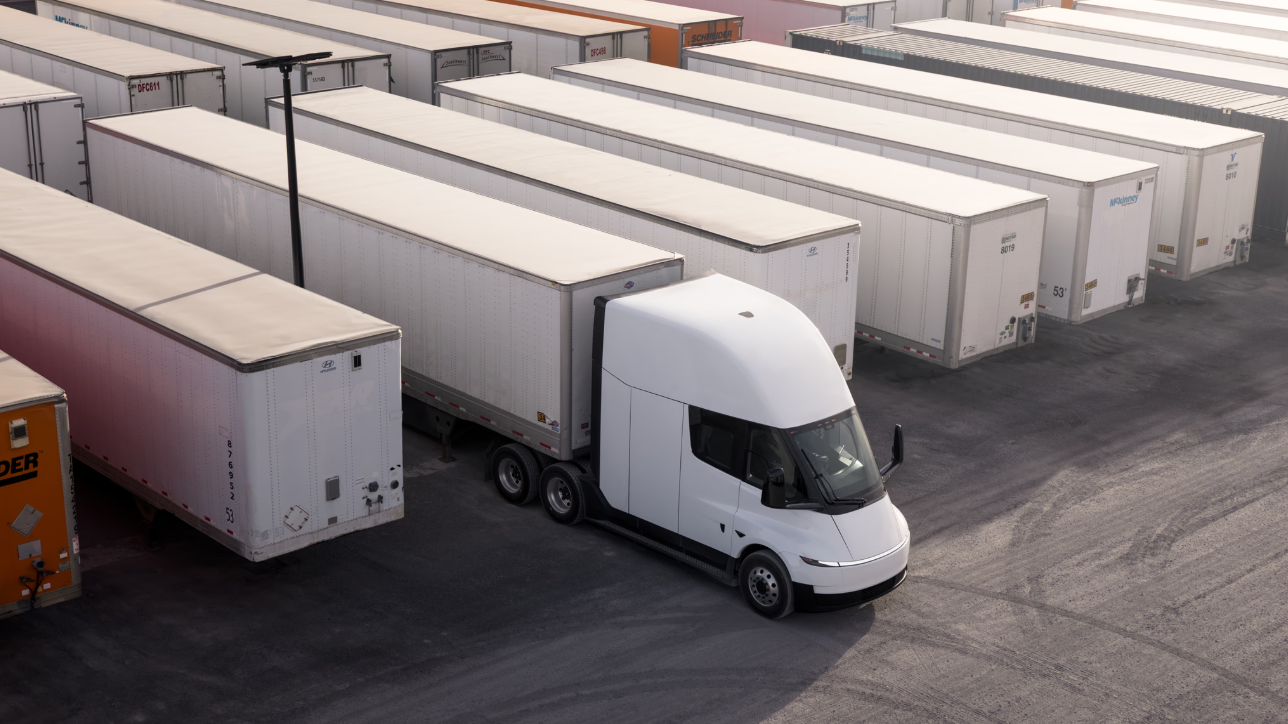
The centerpiece of this strategic alliance is the deployment of 500 Tesla Semis. These are not theoretical blueprints; they will traverse the congested, sun-baked concrete arteries of California, the sprawling oil-and-gas corridors of Texas, the manufacturing hubs of New Jersey, Illinois, and Georgia. The rollout will be phased, beginning in September of this year and stretching out over two years, with the trucks financed by third-party capital—a crucial detail that keeps Einride lean and nimble, allowing them to scale without tying up their own balance sheets in depreciating hardware. The significance of this order extends far beyond Einride’s own bottom line. It represents the definitive validation Tesla has been desperately seeking for its Semi program. While PepsiCo operates the largest current fleet—a respectable but modest roster of nearly 100 trucks—Amazon has never been a named user of the Tesla Semi. Until now. Having Amazon goods loaded onto Tesla Semi trailers is a public relations goldmine, a proof-of-concept that shatters lingering doubts about the truck’s real-world viability, range, and infrastructure support. The choice of Tesla over other established truck makers also signals that Einride trusts Tesla’s advanced aerodynamic design, dramatic fuel savings, and the expanding network of Megachargers. It whispers that Tesla’s bet on the megarig is not just viable but preferable, bridging the gap between what was once considered a niche curiosity and the undeniable future of mainstream retail logistics.
Amazon’s Broader Electrification Strategy and the Saga AI
This move with Einride and Tesla is merely one chapter in Amazon’s ruthless, comprehensive playbook to achieve net-zero carbon emissions across all its operations by 2040. Last-mile delivery vans from Rivian are now a common sight outside suburban homes, but the middle mile—the treacherous stretch between massive fulfillment centers and sprawling, industrial delivery stations—poses a far greater logistical mountain. In response, Amazon has already deployed nearly 50 Volvo electric semis at the port complex in Southern California, and has ordered more than 200 Mercedes-Benz electric big rigs to serve its European network. So why partner with Einride instead of directly purchasing 500 Tesla Semis themselves? The answer lies in the profound complexity of this middle-mile segment. It requires advanced telemetry, nuanced route optimization, and painfully unreliable access to charging windows. Einride offers a brilliant “trucking as a service” model. They don’t sell trucks; they operate a complete ecosystem. They buy, finance, and maintain the vehicles. They hire and train the drivers, or contract established carriers. They invest millions in building the charging infrastructure. And crucially, they deploy their proprietary software platform, Saga AI, which acts as a central nervous system—planning routes around battery range, coordinating charging schedules, and managing real-time power demands across the entire fleet. For Amazon, this is pure elegance. They avoid the enormous capital expenditure of purchasing the vehicles, avoid the operational headache of building out Megachargers at their facilities, and avoid the massive liability of managing truck drivers and unionized labor. They simply outsourced the entire electric trucking operation to Einride, gaining all the environmental benefits and operational capacity without the downstream friction—a masterclass in strategic outsourcing.
The Autonomy Horizon and the Human Element
Beneath the gleaming hoods and lithium-ion batteries lies an even more dystopian or utopian prospect—depending on your perspective—that threatens to render the human driver obsolete. Einride is already a pioneer in this domain, being one of the select few companies operating fully driverless (Level 4) autonomous trucks in commercial service in the United States. Their fleet has accumulated over 5,400 driverless transportation hours for customers on the highways of Ohio, navigating complex traffic patterns without a human hand on the wheel. However, for the foreseeable future, the trucks hauling Amazon’s freight retain human safety drivers, and that will be the case for the initial rollout of the Tesla Semis. But the clock is ticking. During a Tesla earnings call in July, Elon Musk confidently asserted that Level 4 autonomy for the Semi is roughly a year away—a timeline that sits squarely inside Einride’s two-year rollout plan. If that prediction holds, imagine the scenario: a 100,000-pound Tesla Semi, carrying a mountain of Amazon parcels, autonomously gliding from Los Angeles to Dallas, summoned and monitored remotely via Einride’s Saga AI, while overhead, a human dispatcher watches a live feed like a video game, only intervening in the rarest of emergencies. This isn’t science fiction; it’s a roadmap being financed in real-time. The transition will be gradual—drivers become safety monitors, then fleet supervisors—but the economics are immutable. Removing the driver slashes costs by roughly 25%, making electric freight not just carbon-friendly but demonstrably cheaper than diesel, inevitably hastening the technological convergence of AI, autonomous chassis, and massive battery packs.
The Unspoken Power Dynamics and a Pattern of Influence
What unites this entire narrative is the raw, unspoken power dynamic between Amazon and its suppliers. Einride’s CEO, Roozbeh Charli, offered a revealing glimpse into the psychological effect of the April announcement, when Amazon initially selected Einride to deploy 75 electric trucks at five US sites. Charli explained that the news triggered a veritable flood of inbound inquiries. The marketing message to other shippers was unmistakably effective: if Einride can handle the terrifying complexity of Amazon’s sprawling network, they can certainly handle yours. This is the ultimate Amazon certificate of credibility. Yet, this also underscores the inherent asymmetry. Amazon is infamous for its relationship with Plug Power, where in 2017 it acquired warrants for up to 55.3 million shares in exchange for purchasing fuel-cell equipment for its warehouses. Fast forward to today, and Amazon owns a substantial 12% stake in Rivian, having invested early and then placed a massive 100,000-van order a year later. The pattern is unmistakable: Amazon exploits its immense purchasing power to secure structural ownership stakes in its key logistics partners, simultaneously securing preferential rates, guaranteed capacity, and future equity upside. Neither Amazon nor Einride immediately responded to inquiries regarding the precise terms of their mutual warrants, but the silence is deafening. It signals a level of secrecy that buffers them from scrutiny. In the end, this isn’t just a partnership; it’s a takeover of capacity, camouflaged as an electrification milestone. Amazon’s hand is guiding the steering wheel of the entire green freight revolution, carefully steering Einride, Tesla, and countless other startups toward its own insatiable need for speed, efficiency, and absolute control over the physical movement of goods that silently underpin the vast digital empire we shop in every day.