


In the grand theater of modern technological ambition, few endeavors are as fiercely contested or as physically daunting as the race to drape the Earth in a seamless web of satellite-delivered internet. For years, Amazon has been quietly assembling its champion in this arena: the Amazon Leo broadband constellation, a massive project once known to the public as Project Kuiper. The engineering challenge alone is staggering, but the regulatory hurdles have proven to be just as intimidating. Until recently, Amazon found itself staring down an existential barrel: a strict federal mandate requiring the company to deploy at least half of its planned fleet—amounting to exactly 1,616 satellites—into low Earth orbit by July 30, 2026. This looming deadline was a stringent condition of the initial license granted by the Federal Communications Commission (FCC) back in 2020. However, in a major sigh of relief for the thousands of scientists, engineers, and supply chain managers working behind the scenes, the FCC has stepped in to lift this immediate regulatory sword of Damocles. By granting a conditional waiver, the commission has freed Amazon from the crushing pressure of that mid-summer milestone, acknowledging that the global commercial launch market has simply not kept pace with the explosive demand for satellite deployment. Rather than pushing back the timeline entirely, the FCC has chosen a nuanced path; Amazon is still strictly bound to its ultimate deadline of July 30, 2029, by which time it must have all 3,232 of its first-generation satellites fully operational in the night sky. Currently, Amazon has managed to place 331 satellites into orbit, with another 36 poised to lift off, representing a commendable start on a journey that still requires a dizzying ascent to reach its towering final objectives.
This regulatory detente, however, was not achieved without a bitter, high-profile struggle behind closed doors, illustrating the cutthroat nature of the modern space race. SpaceX, the undisputed titan of the low Earth orbit internet sector and the operator of the dominant Starlink network, served as the primary antagonist to Amazon’s request for regulatory leniency. Starlink, which boasts an impressive subscriber base of over ten million users globally, actively lobbied the FCC to reject Amazon’s plea for an extension. SpaceX argued that rules are rules, and that if Amazon could not meet its original commitments, it should be forced to wait for a future FCC processing round, effectively relegating it to the back of the queue while SpaceX cemented its near-monopoly on high-speed space internet. This clash highlighted the intense, personal rivalry between two of the world’s wealthiest visionaries, Elon Musk and Jeff Bezos, whose competing empires are locked in a struggle over the future of global communications. Yet, the FCC ultimately chose to look past this corporate sniping, prioritizing the broader public good over protectionist corporate interests. In its official order, the commission noted that its decision to grant the waiver was specifically “tailored to ensure that Americans quickly benefit from multiple, facilities-based providers of next-gen satellite services.” The regulatory body recognized that a monopoly in space-based internet would ultimately harm consumers, and that keeping Amazon in the game ensures healthy market competition, driving down prices, spurring technological innovation, and expanding access to remote regions that have long been left in the digital dark.
While the FCC’s waiver offers crucial breathing room, it is far from a free pass, acting instead as a complex compromise that introduces high-stakes regulatory penalties. Under the terms of the conditional waiver, any Amazon Leo satellites launched after the July 30 deadline will temporarily lose what is known as “priority status.” In the crowded spectrum of low Earth orbit, priority status is the ultimate shield; it determines who must yield when satellite networks threaten to overlap or interfere with one another’s signals. Without this status, the burden of protection falls entirely upon Amazon’s shoulders, requiring their engineers to perform complex orbital gymnastics and signal configurations to ensure that their newly launched hardware does not cause radio-frequency interference with established systems, most notably SpaceX’s Starlink. This puts Amazon at a distinct technical disadvantage, turning every subsequent launch into a delicate balancing act of avoiding electronic collisions. However, the FCC has dangled a highly motivating carrot to accompany this stick: Amazon can fully reclaim its prized priority status by March 2028, or even sooner if they can successfully reach their 50% deployment target ahead of schedule. There is even a fast-track provision built into the order that could restore their status as early as October 2027, provided Amazon can unequivocally prove to the commissioners that they have fully manufactured all necessary hardware and have rigidly secured the launch manifests required to hit that 50% milestone. This regulatory frame transforms a bureaucratic headache into a tense, gamified race against time, forcing Amazon to synchronize its manufacturing floors with its launch pad schedules with absolute, razor-sharp precision.
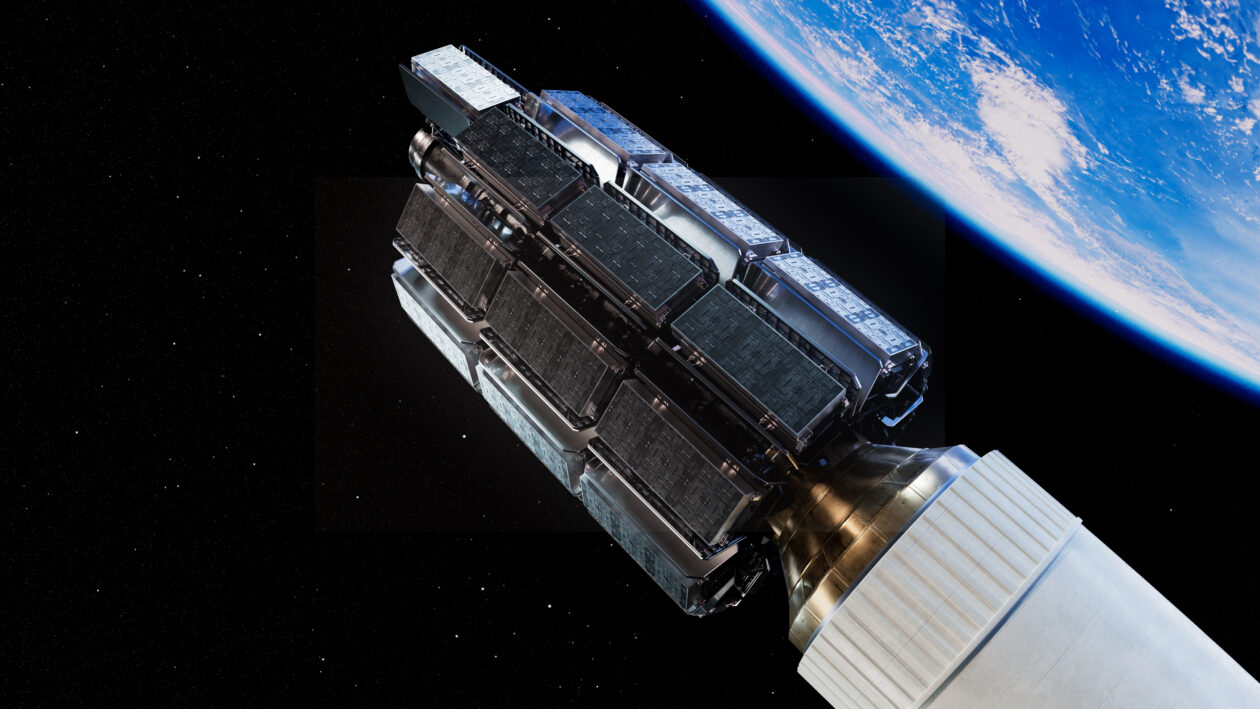
To appreciate the sheer scale of the mountain Amazon must climb, one must look at the astonishingly complex logistical web the company has spun to get its hardware off the ground. Because the global launch industry is currently experiencing a historic bottleneck, Amazon has been forced to buy up almost every available commercial rocket on the market, creating a diversified launch manifest of unprecedented scale. The company has secured dozens of launches across an eclectic fleet of vehicles, turning to United Launch Alliance’s legacy Atlas 5 and its next-generation Vulcan rocket, Arianespace’s European workhorse Ariane 6, and even, in a twist of rich irony, SpaceX’s own reliable Falcon 9. Coordinating these launches is a logistical masterpiece, requiring Amazon’s aerospace teams to design highly specialized dispensers capable of holding and systematically deploying the uniquely folded, flat-packed Amazon Leo satellites. On the factory floors, technicians work tirelessly to assemble these highly advanced machines, which must be built to withstand the violent vibrations of launch and the extreme thermal variations of vacuum space. Each rocket type requires a slightly different payload integration strategy, meaning Amazon’s engineering teams cannot rely on a one-size-fits-all approach; they must constantly adapt their systems to fit the distinct physics and structural demands of different launch providers. This massive logistical puzzle is further complicated by geopolitical tensions, supply chain disruptions, and the unpredictable nature of launch weather, turning the simple act of transporting satellites from the factory to the launchpad into an ongoing exercise in high-stress crisis management.
While diversifying its launch portfolio was a brilliant strategic move, Amazon’s timeline took a devastating emotional and physical blow just weeks ago during a critical test in Florida. For years, Amazon has heavily relied on its founder Jeff Bezos’ private space venture, Blue Origin, to provide a significant portion of its heavy-lift capability through the development of the massive New Glenn rocket. However, the fragile nature of rocket science was laid bare when a New Glenn rocket suffered a catastrophic failure, blowing up on its Cape Canaveral launch pad during what was supposed to be a standard static-fire test. For the engineers who had poured their lives, passion, and endless sleepless nights into building this colossal machine, watching years of hard work disintegrate into a ball of smoke and fire was a harrowing, heartbreaking experience. The explosion didn’t just destroy hardware; it severely fractured Amazon’s near-term deployment schedule, forcing Blue Origin into a period of intense accident investigation and rebuilding that will likely delay the New Glenn’s operational debut by several months. This setback served as a sobering reminder of the unforgiving nature of the aerospace industry, where a single microsecond valve failure or software glitch can erase billions of dollars and years of human effort in an instant. It has forced Amazon’s leadership to rapidly recalibrate their expectations, proving once again that in the quest for the stars, even the deepest pockets and most brilliant minds cannot entirely bypass the brutal learning curve of rocket propulsion.
Despite these compounding crises, heavy regulatory hand-wringing, and literal explosions on the launch pad, the human spirit driving Amazon Leo remains remarkably unbroken. The company continues to maintain its bold public promise to begin rolling out commercial satellite internet services before the year is out, powered by the resilient constellation of satellites already spinning quietly overhead. At its heart, this project is about far more than corporate dominance, stock prices, or billionaire rivalries; it is about the transformative power of connectivity. For the hundreds of millions of people living in rural isolation, rugged mountainous terrain, or developing nations where traditional fiber-optic cables will never reach, project-level efforts like Amazon Leo represent a bridge to the modern world. Access to high-speed internet means access to remote medical care, global educational resources, digital commerce, and the ability to connect with loved ones across oceans. It is this profound human impact that fuels the determination of the developers, analysts, and launch crews who continue to push forward against seemingly impossible odds. As they look up at the night sky, watching their 331 satellites steadily multiply, they are not just looking at pieces of machinery; they are looking at the beacons of a more equitable, interconnected future, proving that while the path to the stars is paved with setbacks, the human drive to connect with one another will always find a way to break through.