





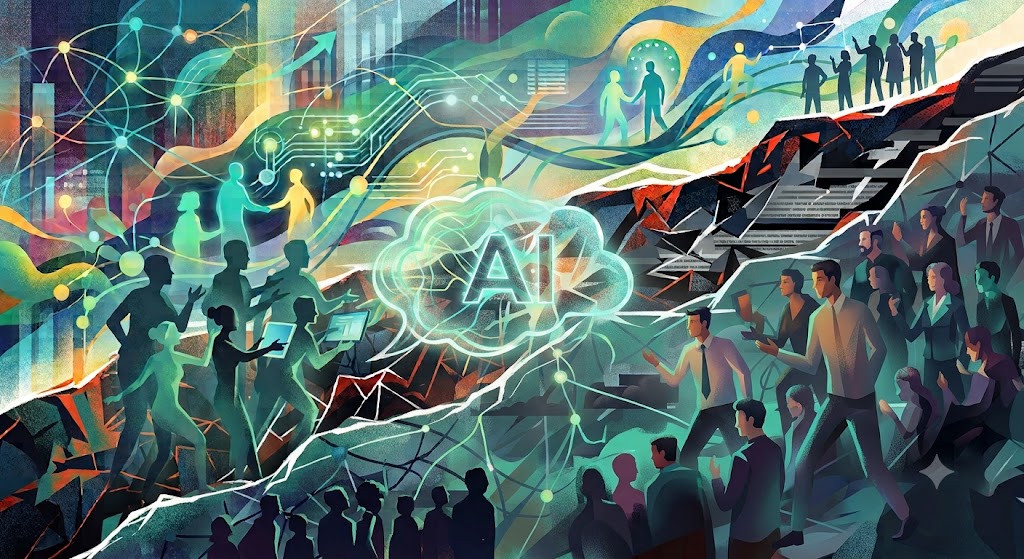
Our world is deeply divided over artificial intelligence, with opinions split sharply by geography, gender, generation, profession, and politics. At the global level, geography reveals the most dramatic chasm in how we view this technological frontier. According to data from the Edelman Trust Barometer and the Stanford AI Index, an overwhelming nine in ten people in China trust AI and believe its benefits far outweigh its drawbacks. In stark contrast, barely a third of Americans share this optimism. This division likely stems from differing economic outlooks: in rapidly growing, youthful Asian economies, AI is welcomed as an engine of upward mobility and personal gain, whereas in mature Western societies, it is widely feared as a threat to job security and established ways of life.
Gender and age demographics reveal equally striking paradoxes in how we interact with and perceive these new tools. A Pew Research Center study highlights that American men are twice as likely as women to believe AI will benefit society, a gap that is even more pronounced among the researchers developing the technology. While women have recently caught up to men in their day-to-day use of AI chatbots, they remain far more skeptical of the technology and are much more likely to warn that its development is moving too fast. Meanwhile, a generational paradox has emerged: while adults under the age of thirty use ChatGPT at double the rate of their elders, they are actually the most convinced that AI will harm society. For Gen Z, this skepticism is rooted in economic survival, as entry-level positions are the most vulnerable to automation.
The divide between those who build AI and the general public highlights how much our perspectives are shaped by our personal stakes in the industry. Pew’s surveys show that while the vast majority of AI researchers expect the technology to significantly improve the country over the next two decades, fewer than one in five everyday citizens agree. This disconnect is partly intellectual, as experts understand the actual limitations of these systems and dismiss sci-fi doomsday scenarios. However, it is also deeply material; as Miles’ Law suggests, where you stand depends on where you sit. The engineers and tech workers steering this revolution stand to gain immense wealth and prestige, while service and transportation workers face the direct threat of displacement.
Finally, the political landscape surrounding AI has shifted rapidly, reversing prior partisan alignments. Just a few years ago, Republicans were the primary skeptics of AI, but Democrats have since overtaken them in their anxiety over the technology. Today, a Harris Poll indicates that AI corporations enjoy higher favorability on the right than on the left. Trust in government oversight has also fractured along party lines: while over half of Republicans trust Washington to regulate AI responsibly, only about a third of Democrats share that confidence. While a majority in both parties agree that under-regulation is a major threat, they remain deeply polarized over who should be trusted to implement the guardrails. Ultimately, these diverse perspectives show that AI is being passionately built by a small group of enthusiasts for a global public that remains deeply anxious.