



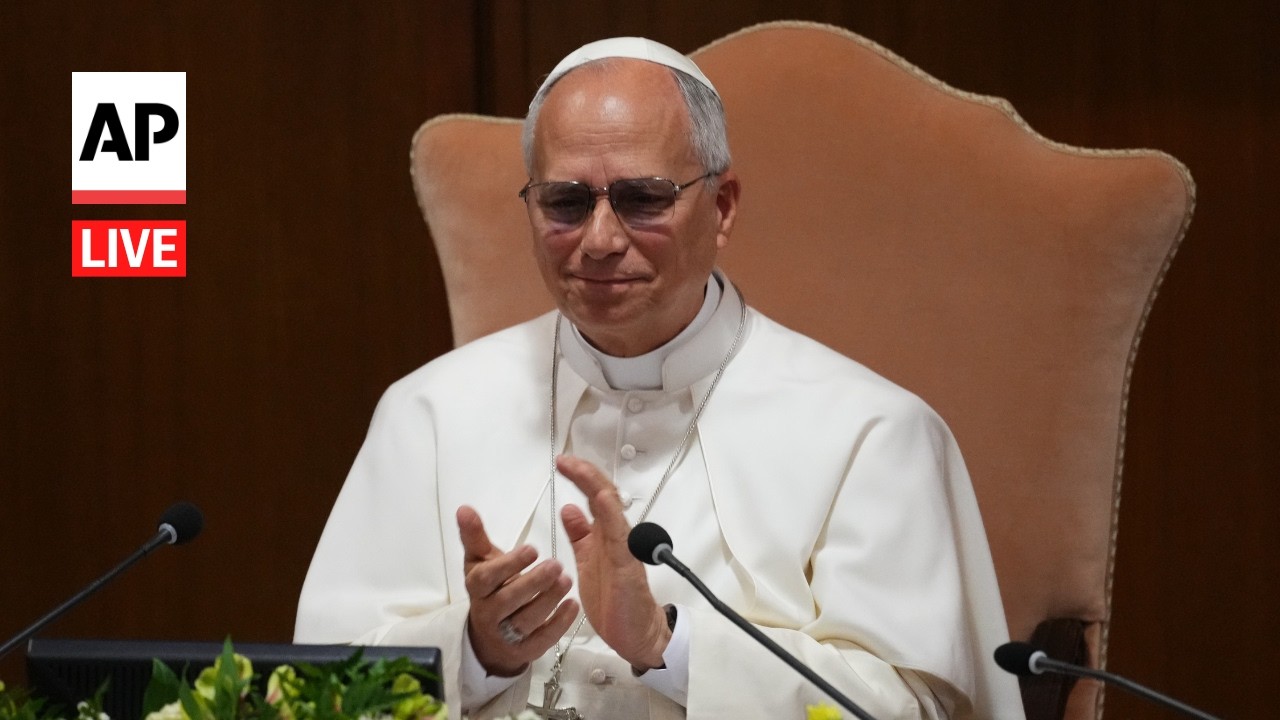
Seeking moral guidance on artificial intelligence’s hyper-accelerated frontier from the Catholic Church might initially strike modern observers as an irony. It is an ancient, slow-moving institution carrying two millennia of complex history, actively grappling with its own historic moral failures, systemic controversies, and painful institutional reckonings over the centuries. Yet, on May 25, Pope Leo XIV entered the contemporary digital storm by releasing Magnifica Humanitas—”Magnificent Humanity”—the very first encyclical of his papacy, subtitled with deliberate urgency, “On Safeguarding the Human Person in the Time of Artificial Intelligence.” While skeptics might scoff at a medieval hierarchy issuing directives on neural networks and machine learning, we must acknowledge the sheer scale of the Pope’s audience; with over a billion adherents worldwide, his voice commands a global megaphone that far surpasses the combined reach of our most famous pop icons, cultural influencers, and political leaders. Pope Leo is not approaching this issue as a distant, anti-modern reactionary, but rather as a highly informed, deeply sincere, and intellectually rigorous global leader who understands that the technological choices we make today will shape the spiritual trajectory of humanity for generations to come. By positioning the Church as a guardian of human dignity against the relentless tide of digital depersonalization, Magnifica Humanitas demands that we look beyond the seductive promise of efficiency and confront the deeper, existential question of what it truly means to preserve the human soul when our own creations begin to replicate our thoughts. It is an invitation to pause, step back from the dizzying speed of technological advancement, and listen to an ancient voice reminding us that progress without soul is merely a beautifully decorated trap.
In Magnifica Humanitas, Pope Leo XIV frames the rapid ascent of artificial intelligence not as a collection of neutral software programs designed to optimize office tasks, but as an epochal, foundational upheaval akin to a new industrial revolution—one capable of radically reordering human labor, wealth concentration, and societal stability on a global scale. He forcefully dismantles the widespread corporate narrative that technology is a morally neutral tool, insisting instead that every single algorithm, training dataset, and design choice is inherently loaded with values, reflecting the moral priorities of its creators. The encyclical systematically addresses the familiar litany of modern anxieties, warning against widespread job displacement, algorithmic bias, systemic erosion of privacy, and the terrifying prospect of fully autonomous military weapons systems. However, the emotional core of his message elevates far above this standard checklist of worries through his repeated, haunting invocation of the biblical story of the Tower of Babel. In this ancient narrative, humanity unites to build a tower whose summit would pierce the heavens, driven by a prideful desire to assert their own ultimate power and achieve a form of self-deification. For Pope Leo, the relentless, multi-billion-dollar race toward Artificial General Intelligence (AGI)—the pursuit of a singular machine capable of matching or exceeding human cognitive ability in every imaginable domain—is the ultimate modern manifestation of this ancient tower-building hubris. His warning is not that we will fail to construct this digital tower, but rather that a civilization desperately chasing godlike machine capabilities inevitably forgets, devalues, and ultimately crushes the frail human beings standing at its very base. The original story of Babel ends not in spectacular triumph, but in a chaotic fracturing of language, deep mutual incomprehension, and social collapse—a cautionary tale that the contemporary architects of our digital future, in their frantic rush to build, seem dangerously determined to ignore.
What prevents Magnifica Humanitas from drifting into the realm of warm, useless theological abstractions is its sharp, concrete focus on the physical and psychological casualties already being left in the wake of our digital march. Pope Leo descends from the heights of moral philosophy to engage directly with empirical contemporary research, expressing profound pastoral concern over the devastating impacts of early, unmonitored screen exposure on the neurological development, healthy sleep cycles, and emotional maturity of our children, who are increasingly raised by algorithms instead of humans. Rising above simple parenting advice, his words carry a blistering condemnation of what he explicitly terms “new forms of slavery” that silently prop up our clean, frictionless technology. He shines a bright, uncompromising light on the invisible underclass of the global tech economy: the desperately impoverished data annotators and content moderators in developing nations who are paid mere pennies to scroll through hours of horrific, traumatic digital content to train our algorithms, and the exploited children laboring under lethal, toxic conditions in African mines to extract the cobalt and rare earth minerals essential for our phones and servers. Pope Leo refuses to allow his readers to separate their daily digital convenience from the brutal human cost required to maintain it, noting with sharp irony that our seamless flow of computational power continues uninterrupted because we choose to ignore the sweat, blood, and broken lives of those at the absolute margins of society. By detailing these specific, ongoing tragedies, the encyclical transforms what could have been a dry academic paper into a passionate, living defense of the vulnerable, proving that the ethical crisis of artificial intelligence is not a theoretical debate about future master algorithms, but a burning humanitarian crisis occurring in our factories, homes, and mines right now, demanding immediate, systemic action.
Yet, for all the moral clarity and righteous force of Pope Leo’s message, history suggests a sobering truth: warnings from high moral authorities, no matter how eloquent, rarely change human behavior on their own. We have seen this screenplay play out before, perhaps most famously in 1968, when Pope Paul VI issued Humanae Vitae, a deeply firm and uncompromising encyclical reasserting the Church’s traditional ban on artificial contraception. It was a document written with absolute theological clarity, yet it was almost entirely ignored by the vast majority of lay Catholics in the developed world, who quietly chose to align their daily personal lives with modern convenience and social trends rather than Vatican decrees within a single generation. This deep disconnect between moral instruction and actual practice illustrates a painful lesson about human influence: a leader can speak with the unmatched authority of a global office, yet still watch helplessly as their followers chart their own path. This frustrating gap between ethical declaration and practical application is a feeling I know all too intimately on a far humbler, personal scale. Back in 2018, deeply concerned by the rapid, unregulated growth of the tech sector, I drafted and published a voluntary “Hippocratic Oath” for AI practitioners, hoping to inspire software engineers to self-regulate, only to be met with sweeping, collaborative silence. The harsh, uncomfortable reality we must confront is that a prophet, whether a sovereign Pope issuing an encyclical or an ancient Moses guiding his people through the desert, can only lead us toward the promised land if we possess the internal will to pack our bags and make the difficult journey. The failure of ethical words to change the world is not proof that the words themselves are flawed; rather, it is proof that beautiful, noble language has no power to move a crowd of people who are fundamentally unwilling to walk.
To avoid confronting this uncomfortable truth about our own passivity, we have constructed a highly convenient cultural narrative in which we are the innocent, helpless victims of external villains. We spend our days loudly decrying the unchecked tyranny of modern technology and the small cadre of elite, fabulously wealthy tech barons who wield enough concentrated power to alter national policies with a single, private telephone call. We saw a stark, alarming illustration of this undemocratic influence just recently, when President Trump’s comprehensive AI executive order was reportedly killed overnight following a series of quiet phone conversations with tech billionaires Elon Musk, Mark Zuckerberg, and David Sacks. While such direct corporate manipulation of public policy is deeply disturbing and worthy of public outrage, our collective obsession with these tech oligarchs often serves as a comforting self-deflection from our own complicity. The deeper, more insidious tyranny we face is not the one imposed on us by Silicon Valley executives; it is the quiet, domestic tyranny we willingly impose on ourselves through our daily personal choices. Years ago, Columbia law professor Tim Wu brilliantly illuminated this dynamic in his landmark essay “The Tyranny of Convenience,” pointing out that our desperate craving for ease and frictionless living has quietly become the single most powerful, unexamined force shaping modern human existence. We do not choose a future dominated by invasive surveillance, addictive attention-harvesting feeds, and synthetic deepfakes in one grand, dramatic moment of surrender; instead, we actively vote for this dystopian reality thousands of times every single day, choosing it incrementally, one comfortable, seamless, convenient click at a time. We willingly trade our privacy, our critical thinking faculties, and our democratic agency for the simple, addictive pleasure of an effortless user experience, making us willing partners in our own digital subjugation.
Our modern ethical paralysis in the face of artificial intelligence closely mirrors the systemic failures of the global war on drugs, where we futilely pour massive resources into capturing high-profile cartel leaders while completely ignoring the insatiable domestic consumer demand that funds the entire enterprise. We can choose to wage war against the tech cartels of Silicon Valley all we want, but it is our own voracious consumption, daily digital habits, and constant search for data-driven shortcuts that underwrites their multi-billion-dollar business models. We loudly blame the architects of these invasive algorithms for polluting our public square, yet we simultaneously hand our most intimate personal data to companies like Google and Meta without hesitation, enabling their surveillance systems. We wring our hands over the erosion of democratic truth and the rise of deepfakes, yet we continue to share sensational, unverified content, letting our own digital vanity fuel the spread of misinformation. We desperately want to have it both ways: we demand the moral high ground and public outrage, but we refuse to give up our frictionless feeds, our instant doorstep deliveries, and the constant hit of dopamine provided by our screens. A better, more humane technological future will never be handed down to us by the benevolence of tech giants or the passage of simple federal regulations; it is an active, difficult path we must consciously construct through our own personal restraint and structural sacrifices. Decades ago, we warned that humanity was drowning in a vast ocean of unorganized data while starving for true, spiritual wisdom. Today, we find ourselves drowning in artificial intelligence while starving for a reliable moral compass. The Pope has held up such a compass in Magnifica Humanitas, pointing toward a road of human dignity, labor rights, and mental peace; the ultimate question, however, is whether we are courageous enough to actually follow it.