


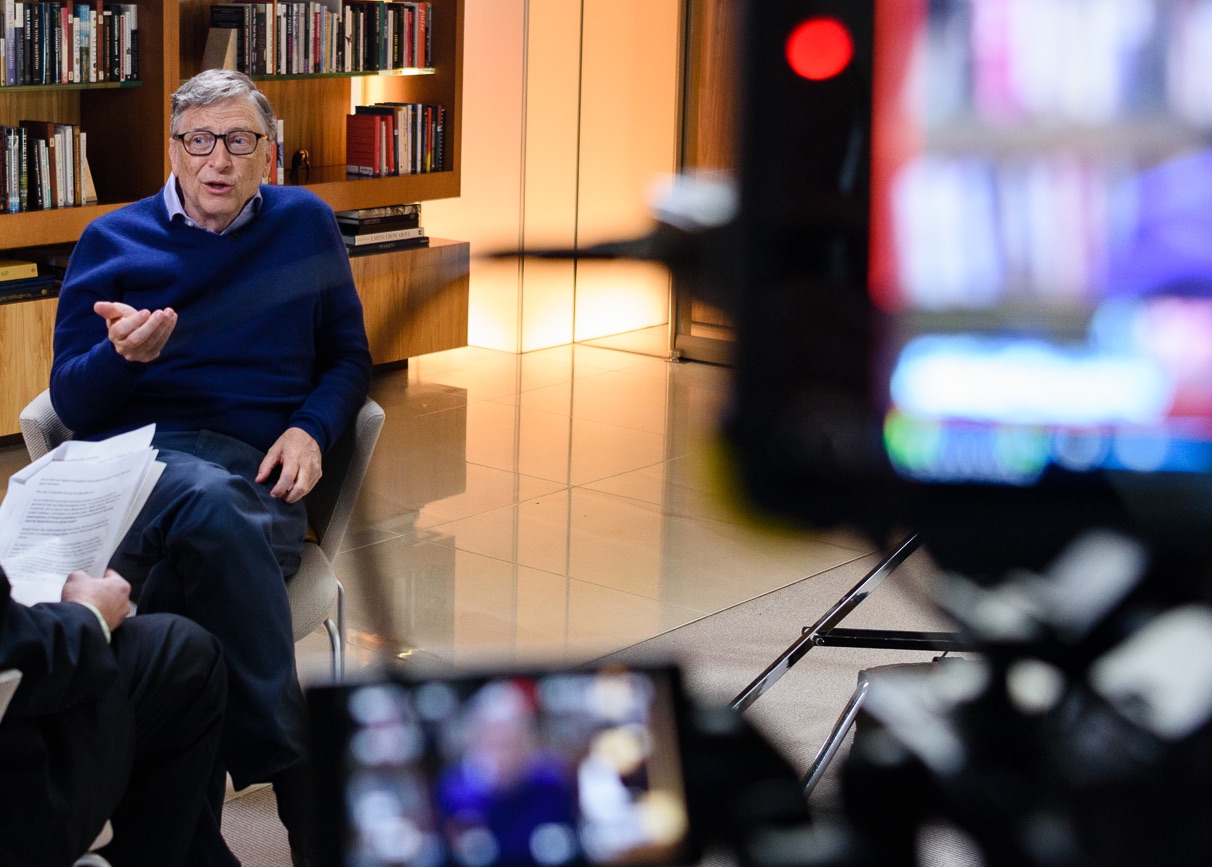
When Bill Gates talks about the future, even people who disagree with him tend to lean in and listen. His latest essay is a long, honest attempt to wrestle with what artificial intelligence is about to do to the way we work, and he does not sugarcoat the fear. In a conversation with GeekWire, he admitted something striking: the people inside AI companies who raise concerns about the downside are often told to keep quiet because they are hurting the industry’s image while it is trying to raise trillions of dollars. That one line captures the strange moment we are in. The people building the technology know it will upend jobs, but they are also being paid to sell a bright future. Gates is right about the hardest part. The disruption will not land evenly across society. It will hit young workers first, and the safety net that is supposed to catch them is funded by taxes on wages—the very thing AI is likely to erode. To deal with this, he offers three broad ideas: build new institutions at home and abroad, tax AI tokens and robots, and create a protected category of jobs called “Human Reserved” that only people are allowed to perform. Some of that is genuinely worth considering. Some of it, however, misses the point. The diagnosis is largely correct, but the prescription is uneven. I would sign a robot tax tomorrow, because the current system is backwards: hiring a person means paying payroll taxes year after year, while buying a robot can be written off in the first year. The rest, though, I would send back for revision.
Let’s start with the part where Gates is right, because it is more uncomfortable than it first appears. Stanford’s Digital Economy Lab recently updated its “Canaries in the Coal Mine” research, and the numbers should stop us cold. Employment for workers between the ages of 22 and 25 in the most AI-exposed occupations is now running 19 percent below where it would be if it had kept pace with their peers in less exposed work. Just a year ago, that gap was 15 percent. It is widening. And yet here is the strange thing: unemployment overall held at 4.1 percent in July, and the same researchers say they do not see widespread, economy-wide displacement yet. So what does that mean? It means the damage is not arriving as mass layoffs, at least not in the way we normally imagine. It is arriving as jobs that never get posted, as entry-level positions that quietly disappear, as ladders that no longer exist. The young worker who would have taken that first step into the labor market simply never gets the chance. That is much harder to see and much easier to ignore. Gates is right that the young get it first, and that is a particular kind of cruelty because they are the ones with the least savings, the least seniority, and the least power to push back. The public conversation often focuses on dramatic headlines about robots replacing entire factories, but the real story is quieter. It is a graduate sending out resumes and hearing nothing. It is a young person being told they are overqualified for one job and underqualified for everything else. It is the slow, steady disappearance of the bottom rung of the career ladder. And because the safety net depends on payroll taxes, the system that is supposed to help them gets weaker precisely when it is needed most. That is the core problem Gates identifies, and we need to be honest about how difficult it is to solve.
The first part of Gates’s prescription that I would reject is the token tax. To understand what that means, you have to understand what tokens are. In the world of AI, tokens are essentially the words or pieces of words that the system uses to generate responses, and they are also what AI companies bill by. Every time you ask a chatbot a question, you are using a certain number of tokens, and the company charges you based on that. Gates wants to tax tokens, in part as a way to capture some of the value that AI creates and to slow down the disruption. On the surface, it sounds clever. But taxing tokens is like taxing keystrokes: it measures effort, not impact. Think about what would actually happen. A high school class working through calculus with an AI tutor would burn tokens continuously, all day long, because that is exactly how a patient, endless tutor functions. Meanwhile, a model that quietly retires a forty-person customer service center might burn relatively few tokens, because it is doing the same task over and over in an efficient way. So the tax would land hardest on the very uses Gates says he wants to protect: education, human development, access. It would make the most beneficial, most human-friendly uses of AI more expensive, while doing almost nothing to slow the replacement of workers. The numbers make this even worse. Stanford’s AI Index found that the cost of GPT-3.5-level performance dropped from twenty dollars per million tokens in November 2022 to seven cents per million tokens by October 2024. That is a 280-fold drop in under two years. If you build a safety net funded by taxing tokens, you are building it on a number that collapses every single year, while the displacement from AI rises. On top of all that, you cannot even collect it. Inference now runs on laptops and phones, not just in giant server farms. It runs on servers in whatever country decides not to sign the tax agreement. In practice, a token tax would be a tax on whoever uses an American API, and every dollar it adds makes a Chinese model look cheaper. We would be slowing ourselves down, not slowing China. That is not a plan; it is a favor to our competitors.
Then there is Gates’s call for new institutions, both at home and abroad. He says these institutions will take years to build, and he also says we cannot afford to move slowly. He is right on both counts, and that is exactly the problem. He wants an international body to eventually govern AI, borrowing from the models used for nuclear inspections and aviation regulation. In the long run, something like that may be necessary. AI is a global technology, and no single country can fully protect its workers or its citizens from its risks. But the cautionary tale is the United Nations, which shows how easily international cooperation can turn into a bureaucratic nightmare. We could spend a decade negotiating a treaty while people lose their livelihoods in real time. Meanwhile, we already have institutions that could be doing something today. The FDA can rule on AI used in diagnosis. The FTC can go after AI-enabled fraud. We do not need a brand new agency to say that a bank cannot deny your mortgage because some opaque model felt like it. We need the banking regulator we already have to say it forcefully, clearly, and with real consequences for noncompliance. The desire for a grand, elegant solution is understandable, but it can be a form of avoidance. The boring work of using the enforcement tools we have right now is less glamorous, but it is also real. We need to be careful not to let the perfect become the enemy of the good, especially when the cost of waiting is paid by the people who are already most vulnerable.
That leaves “Human Reserved,” which is probably Gates’s most thoughtful idea and also his most privileged one. The concept is that certain jobs should be protected for humans only, either because the role is deeply personal, like a caregiver, or because the people who hold those jobs are unlikely to find other work if they are replaced. The first reason is genuinely defensible. There are moments when a human being is the point, not just a convenience. Gates makes this case well when he writes about a robot delivering the news that you have an incurable disease. There is no technical reason why a machine could not do that. It could be programmed to speak gently, to answer questions, to even hold the appropriate pause. Yet it should not. That kind of moment demands a presence, a person who can share the weight of it, and no algorithm can offer that. The second reason, though, is much weaker. Freezing headcount in a particular occupation because the workers have nowhere else to go protects those jobs for a while, but it also makes the service more expensive and less innovative, and it does not solve the underlying fact that those workers need a future. Worse, the whole idea of Human Reserved assumes that there is a human being available to do the job. In the caregiving sector, that assumption is shaky. Home health and personal care aides earn a median of $34,900 a year, and the Bureau of Labor Statistics projects roughly 765,000 openings in that occupation every year through 2034. At that wage, those openings keep happening because people keep leaving. A third of home care aides are immigrants, and tighter enforcement of immigration laws threatens that supply. If we pass a rule that reserves care for human beings, but there are no spare humans willing to do the work for the pay offered, then we have not protected care. We have simply reserved it for the families who can outbid everyone else. Gates half-anticipates this criticism. He told The New York Times that he might be a flawed messenger because of his wealth, and on this point he is absolutely right. The caregivers who gave his father something irreplaceable were in that room because someone could pay them to be there. That is not a dig at Gates; it is just the truth of how care works in an economic system. So instead of fencing AI out of the room entirely, we should put it to work in the hours when no human is being paid to be present. There is a wonderful example in a recent New York Times story about Jan Worrell, an 85-year-old woman living alone on Washington’s Long Beach Peninsula. She has an AI companion called ElliQ that talks with her about eight times a day and gently pushes her to stay hydrated and moving. Her goal, she told her doctor, is to never live anywhere else. That machine does not replace a caregiver; it extends a caregiver’s reach. It fills the lonely gaps. It watches over the hours when no one is scheduled to be there. The right approach is to fund enough human aides to cover the times that truly need a person, and to let the machine handle the rest.
So where does that leave us? I think we need to stop reaching for complicated, futuristic solutions and start with a few simple, honest adjustments. The first is to equalize the tax treatment of labor and capital. Right now, the market is rigged in favor of machines. When you hire a person, you pay payroll taxes every year, year after year. When you buy a robot, you get to write it off in the first year. That is not a neutral system. It is a subsidy for displacement. Congress could change that next session, and it should. That single change would not stop AI, but it would level the playing field and make employers think twice before replacing a human for no other reason than accounting convenience. The revenue from that change should be routed into two places: retraining programs that actually work, and pay supplements for workers who land in lower-paying jobs after being displaced. We also need to drop the token tax, because it is unworkable and it penalizes the wrong people. Instead of fencing off caregiving, we should build the caregiving workforce by making it a job that a person can build a life on. And while we are waiting for new global institutions to emerge, we should use the regulators we already have to protect consumers and workers from the worst abuses of AI. None of this is as elegant as a sweeping international agreement or a clever new tax on words. But it is real, it is doable, and it does not require waiting for a perfect future that may never arrive. Gates is right that we are entering a dangerous, uncertain period. He is right that we need a plan. But the plan needs to be grounded in how the world actually works, not in how we wish it did. We need to protect the people who are most exposed, create new pathways for young workers, and make sure the burden of this transition does not fall on those who are least able to carry it. We can argue about the details, but we cannot argue about the urgency. The future is already arriving, and the choice is not whether to adapt. The choice is whether we adapt in a way that leaves people behind or in a way that lifts them up.