


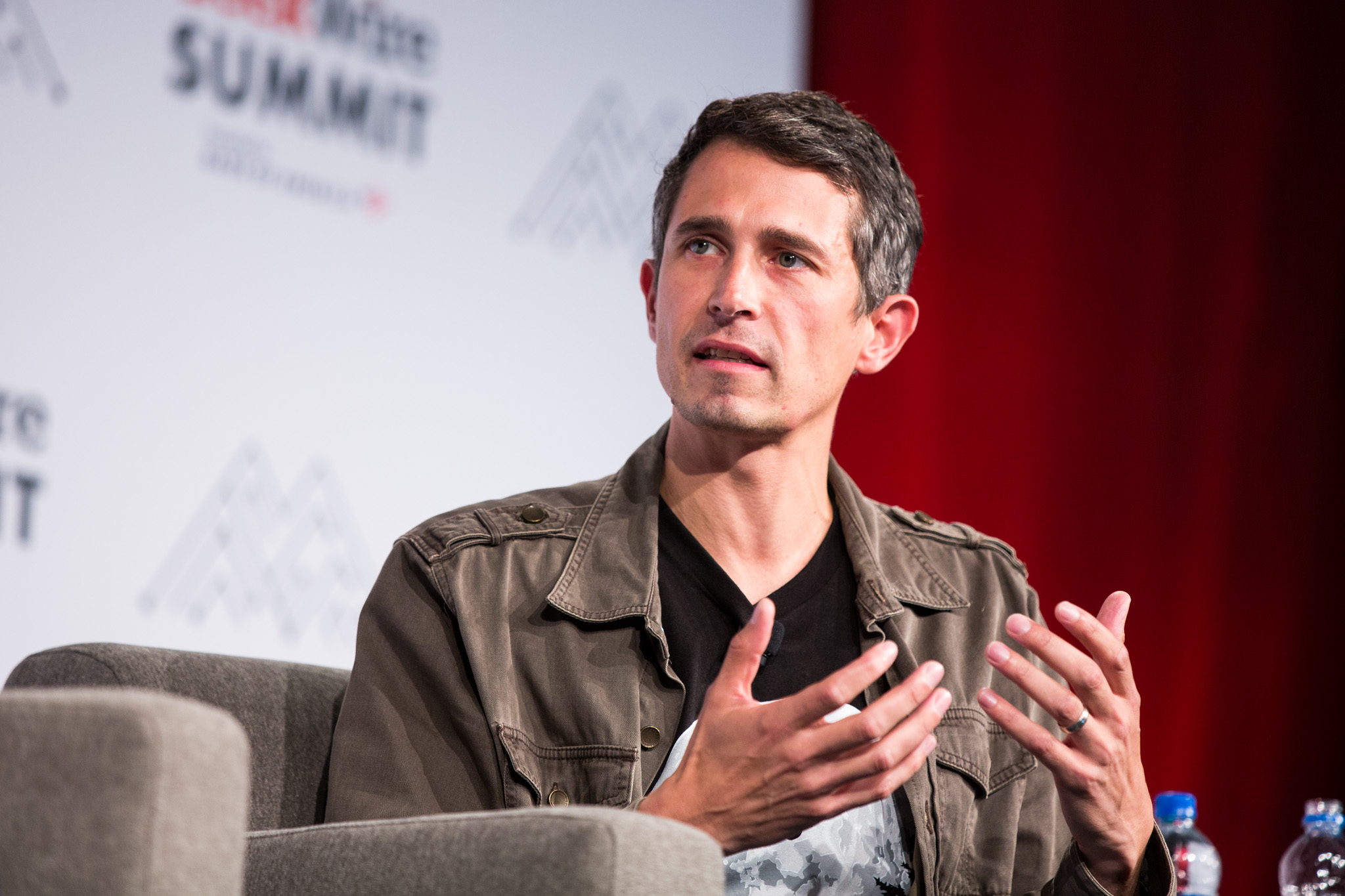
After a bruising and highly public period culminating in the collapse of Convoy—a digital freight marketplace that he co-founded and built into an industry disruptor once valued at nearly $4 billion—many executive leaders would have chosen the comfortable, lucrative, and secure harbor of a high-level role at a technology titan like Microsoft. But for Dan Lewis, the restless, persistent thrill of building something from absolute scratch proved far too magnetic to resist, pulling him back into the chaotic world of early-stage startups. His recent departure from a highly prestigious role as Corporate Vice President at Microsoft to launch a stealth artificial intelligence startup underscores a classic human truth about the entrepreneurial mindset: true builders are rarely satisfied with maintaining existing systems, even at the highest, most influential levels of global technology. This rapid transition marks a profound professional and personal pivot, shifting his focus from the physical highways of trucking logistics to the complex, invisible, and highly congested computational highways of modern artificial intelligence. By stepping away from the corporate safety net just months after arriving, Lewis is once again embracing the raw vulnerability, radical uncertainty, and razor-sharp focus required to build a company in one of the most volatile sectors of the modern economy. His journey is a testament to the resilient human spirit of entrepreneurship, highlighting a leader who is unafraid to dust himself off, analyze the painful lessons of his past, and step right back into the competitive arena to tackle one of the most daunting technical challenges of our generation. Instead of retreating into a quiet, comfortable executive career, he is leveraging his unique blend of machine learning expertise, corporate wisdom, and battle-tested resilience to embark on a completely new chapter, proving that the drive to innovate is often an incurable lifetime calling that cannot be silenced by past setbacks or satisfied by corporate prestige.
To understand why Lewis is throwing himself back into the grueling startup ecosystem, one must first grasp the silent, multi-billion-dollar bottleneck currently threatening the entire artificial intelligence revolution: the staggering, unsustainable expense of running these massive digital models. While the general public and tech enthusiasts have stood in awe of generative artificial intelligence’s creative, analytical, and conversational capabilities, major technology corporations and nimble startups alike are quietly bleeding cash just to keep these resource-heavy systems online. This issue belongs to the realm of “inference”—the day-to-day, real-time process of an AI model answering consumer queries, processing complex prompts, and generating outputs, as opposed to the initial, one-time phase of training the models. Every single time a user asks an AI platform to draft an essay, analyze a massive financial spreadsheet, write code, or generate an image, a massive chain of physical data centers, complex liquid-cooled computer chips, high-speed networks, and local power grids must instantaneously spring into action. This continuous computational processing is incredibly resource-intensive, consuming massive amounts of electricity and water while demanding hardware that is currently in critically short supply globally. As artificial intelligence integrates deeper into our daily lives, schools, work, and essential infrastructure, the underlying computing foundations are beginning to buckle under the immense, compounding weight of their own success. Lewis’s new venture aims to humanize and democratize this technology by directly confronting this systemic crisis, aiming to make deep machine intelligence affordable, accessible, and ecologically sustainable for everyday businesses rather than allowing it to remain an exclusive, prohibitively expensive luxury reserved only for the world’s wealthiest tech conglomerates. By seeking ways to run these systems more efficiently, his work addresses not just a financial problem for developers, but a critical societal issue regarding how we power our future world and allocate our shared electronic resources.
It is deeply poetic and strategically brilliant that Lewis, a man who spent nearly a decade of his life attempting to maximize and optimize how physical cargo moves across real highways, is now pivoting to optimize how digital information moves across virtual server racks. His new stealth startup is explicitly focusing on building what his professional profiles call a “supply chain for intelligence,” a brilliant metaphor that beautifully bridges his rich past in physical freight with his future in digital infrastructure. In his vision, this upcoming venture is designing a comprehensive platform that will tie together the physical and virtual aspects of computing, spanning across geographical data centers, high-speed networking, specialized computer chips, and the advanced routing software that handles AI requests in real time. When analyzed closely, routing an artificial intelligence query to the most cost-effective, least busy, and most energy-efficient server is shockingly similar to finding the absolute best carrier truck to haul a load of fresh produce across the country at the lowest possible cost. In both scenarios, the ultimate enemy is waste—whether that waste takes the form of “deadhead” miles driven by empty semi-trucks polluting the interstate, or idle, power-hungry computer processing cycles running aimlessly inside a server room. By applying his decades of deep spatial and logistical experience to the digital highway, Lewis is constructing an optimized logistics network for packets of virtual machine thought. This system will dynamically manage and route workloads to ensure that no electronic resource is squandered, bringing the principles of physical industrial engineering directly into our virtual future to prepare for an era where AI requests are as common, instantaneous, and cheap as basic cellular phone call connections in our everyday lives.
This ambitious pursuit is the natural, inevitable progression of a stellar professional career that has always blended advanced cognitive science, physical logistics, and an obsessive desire for system optimization. Long before he became a highly prominent tech executive, Lewis was a curious undergraduate student at Yale University studying cognitive science, an interdisciplinary major investigating the pathways of the human mind which laid the foundations for his early fascination with artificial intelligence. After university, he sharpened his product management skills at Wavii, a pioneering natural language processing startup in Seattle that was successfully acquired by Google in 2013, before eventually moving on to Amazon, where he designed complex, machine-learning-driven product personalization algorithms that impacted millions of consumers daily. In 2015, he channeled this accumulated experience to co-found Convoy with the bold, environmentally conscious goal of utilizing digital marketplaces and predictive analytics to seamlessly match commercial carriers with freight shippers. The startup rapidly became a true tech darling, bringing unprecedented transparency and reduced carbon emissions to a historically fragmented, dirty trucking market, eventually reaching a spectacular peak valuation of nearly $4 billion. However, a massive, prolonged post-pandemic freight recession coupled with tightening capital markets severely disrupted the global transportation industry, forcing Convoy to make the agonizing decision to shutter its operations in late 2023. Although the intellectual property and technology were safely acquired by logistics firm Flexport, the winding down of the company was a heartbreaking and humbling lesson for Lewis of how quickly macroeconomic shifts can dismantle years of passionate building. Yet, rather than letting vanity or disappointment define him, Lewis viewed this massive failure as a valuable, real-world masterclass in personal resilience, taking those hard-earned lessons in survival, rapid scale, and operational pressure straight into his next strategic chapters.
Following the emotional and physical landscape shift of winding down Convoy, Lewis transitioned to Microsoft in February 2025 as a Chief Product Officer, where his unique, hard-to-find experience in deploying machine learning to complex, real-world business environments was immediately leveraged. He quickly climbed the institutional ranks to become a Corporate Vice President, a massive executive role focused heavily on defining and executing Microsoft’s enterprise artificial intelligence strategies during a critical moment in tech history. His primary responsibility was to guide massive corporate clients through the highly complex, delicate task of building, testing, and deploying real-time AI agents and automated workflows to optimize tedious corporate operations. He even spearheaded a highly successful internal program called Camp AIR, designed specifically to foster, support, and accelerate fast-moving, AI-first product and engineering teams within the massive, sometimes bureaucratic corporate ecosystem of the Redmond-based tech giant. However, this high-level, front-row vantage point at one of the world’s largest cloud computing and software providers gave Lewis an intimate, unfiltered look at the sobering physical and fiscal reality of the modern tech landscape. Day in and day out, he saw massive global businesses that were completely desperate to deploy powerful artificial intelligence tools to transform their operations, but were constantly blocked by the staggering monthly cloud costs, slow processing response times, and severe hardware resource limits associated with running these models at scale. He realized with absolute clarity that while the global tech sector was hyper-focused on making algorithms smarter and parameters larger, the true bottleneck of the AI era was a physical routing and logistical problem, ultimately driving him to resign his highly paid corporate vice presidency to solve it on his own terms.
Today, Lewis stands at the helm of this quiet but highly collaborative new endeavor, listing himself on professional networks as Chief Executive Officer and co-founder alongside unnamed, talented technical partners who share his ambitious vision. Operating in strict stealth mode, the young startup has kept its official corporate name, early funding rounds, and specific technological architecture closely guarded secrets as the small team focuses entirely on building high-performance software and hardware prototypes. Yet, despite this lack of public disclosure, the tight-knit Pacific Northwest technology ecosystem is watching his movements with intense anticipation and profound respect, eager to see if he can pull off another massive disruption. This new startup represents far more than just another entry in the increasingly crowded database of modern technology ventures; it stands as a quintessential human story of professional rebirth, personal persistence, and quiet ambition. It serves as a powerful reminder that the authentic entrepreneurial spirit to solve highly complex, systemic problems is not a force that can be easily extinguished by commercial failure or subdued into permanent complacency by comfortable corporate salaries. As the global conversation surrounding artificial intelligence begins to mature from starry-eyed excitement down to a hard-nosed, practical demand for real economic returns, Lewis’s pursuit of an efficient, highly optimized “supply chain for intelligence” could not possibly be more timely. Inside the quiet, focused environment of stealth development, free from the distracting noise of viral marketing and corporate bureaucracy, he and his team are laying the physical and digital groundwork for the next major epoch of human computing. Their story serves as an inspiring reminder that behind every massive, world-altering technological shift lies a human story of endless curiosity, profound resilience, and the relentless search for a better way to design the world.