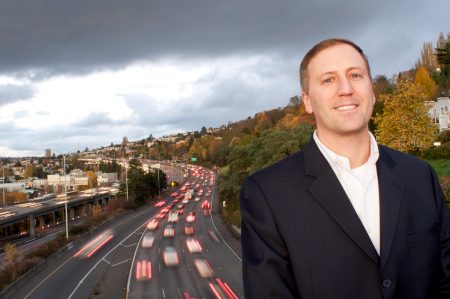




The global technology sector is undergoing an unprecedented reshuffling of talent, marked not just by a migration of capital, but by a profound realignment of human purpose. As artificial intelligence transitions from an experimental wonder to an operational reality, seasoned executives from legacy tech conglomerates are choosing to leave the comfort of established giants like Microsoft, Amazon, and Google. This movement is driven by a desire to reclaim agency, build intimate, mission-driven solutions, and solve the complex human and systemic challenges of our era. At the vanguard of this shift is Brian Hall, a distinguished business leader who recently stepped into the role of Chief Marketing Officer at Paris-based AI pioneer Mistral. Having spent two decades navigating the corporate corridors of Microsoft, followed by transformative tenures at Amazon, Doppler Labs, and Google, Hall’s pivot to a relatively young European startup signals a fundamental change in the industry’s gravity. Mistral represents a defiant alternative to the closed-door, highly centralized structures defining the current AI race. By collaborating with Microsoft to host its nimble, high-performance models on Azure, Mistral offers enterprise clients an invaluable commodity: sovereignty. Hall’s enthusiasm for his new role stems from a belief that businesses should not merely rent intelligence from a handful of American titans, but truly own, secure, and run these systems on their own terms. Ultimately, his journey from the upper echelons of Silicon Valley’s cloud infrastructure to a nimble European disrupter reflects a broader cultural realization among tech leaders that the next frontier of innovation will not be defined by corporate scale alone, but by flexibility, democratization, and community-driven scientific exploration.
As some executives seek new operational horizons, others are taking time to reassess their life’s work, reminding us that behind every massive product line is an individual carrying the immense pressure of global scale. After an extraordinary twenty-three years with Amazon, Aaron Rubenson, Vice President of Alexa Domains, has announced his retirement to dedicate himself fully to his family. Rubenson’s career at Amazon read like a history of modern consumer tech; he guided the expansion of the Appstore, oversaw the distribution of Fire tablets, managed mobile and wireless initiatives, and directed third-party electronics. His departure represents the closing of a foundational chapter for the Seattle giant, highlighting the intense, decades-long sacrifices required to construct platforms that hundreds of millions of people rely on daily. Meanwhile, fellow Amazon veteran Kimberly Schultz has also chosen a new path, stepping down after more than eleven years as the director and head of corporate development integration to join Seismic as Chief Human Resources Officer. At Amazon, Schultz mastered the intricate art of cultural and operational integration during complex acquisitions. Now, at San Diego-based Seismic, she is tasked with scaling a global team dedicated to building advanced, AI-driven enablement tools for corporate revenue organizations. Seismic CEO Rob Tarkoff’s enthusiastic welcome emphasizes that the true engine of any tech revolution is its people. By placing a seasoned organizational designer like Schultz at the helm of its human capital strategy, Seismic is positioning itself to scale mindfully and ensure its workforce remains connected and supported during a period of rapid product evolution.
This theme of applying world-class logistics and platform engineering to profoundly human systems is further illustrated by the recent career transitions of Nidhin George and Wasif Jamal. George, who dedicated over sixteen years of his life to Amazon—leaving in 2022 as the head of product for global logistics before a successful stint as Senior Vice President of Product at Grubhub—has stepped into the role of Chief Product Officer at A Place for Mom. Based in New York but remaining in the Seattle area, George is transitioning from optimizing commercial supply chains and food delivery networks to addressing a deeply emotional family milestone: helping families transition their aging loved ones into assisted living communities. His pivot demonstrates how technical marketplace expertise can be harnessed to bring clarity and comfort to families during highly stressful, vulnerable lifepoints. Similarly, Wasif Jamal has departed his role at Providence, a massive multi-state healthcare network, to become the Senior Vice President and Chief Information Officer for Pennsylvania-based WellSpan Health. Drawing on his rich foundational experience as an engineering leader at Microsoft and his six years securing and modernizing Providence’s digital architecture, Jamal represents the modern healthcare leader. His mission at WellSpan focused on expanding the clinical application of data and artificial intelligence while safeguarding patient privacy and strengthening cybersecurity. For both George and Jamal, the move away from pure-play tech towards services that protect, guide, and heal shows how the industry’s brightest minds are increasingly seeking roles where the metrics of success are measured in human dignity, relief, and well-being.
As organizations strive to protect these increasingly digitized services, the specialized field of cybersecurity is seeing its own infusion of veteran leadership to address emerging threats. Dropzone AI, a rising star in the Pacific Northwest’s cybersecurity ecosystem, has appointed Patrick Duffy as its new Head of Product. Duffy, who joins the company from Material Security and Expel, steps into a critical role at a time when security operations centers are overwhelmed by the sheer velocity and sophistication of modern cyberattacks. Dropzone AI, currently ranked nineteenth on the GeekWire 200 index, focuses on deploying elite AI agents that work alongside human security analysts to automate investigations and manage heavy workloads. Duffy’s move is fueled by his belief that cybersecurity cannot survive on manual triage alone; instead, it requires intelligent systems capable of autonomously investigating alerts across complex cloud environments. In a parallel effort to redefine how humans and artificial intelligence interact, Emory Clark has joined Seattle-based SageOx as Founder Designer. Launched at the beginning of the year and bolstered by a recent fifteen-million-dollar funding round, SageOx is designing tools for environments where human programmers work alongside sovereign AI coding agents. Clark, who co-founded the bill-splitting app Celipa and worked with the Learning Design Alliance, brings a specialized user-experience lens to this emerging paradigm. Her work at SageOx focuses on ensuring that the partnership between human creativity and AI-generated code remains collaborative and productive, rather than confusing and adversarial, creating a harmonious workspace for the future of software development.
While startups capture imaginations with their agility, legacy tech institutions remain powerful incubators of leadership, as seen in the steady ascent of leaders like Mike Gaal at Microsoft. In an era where tech employees frequently bounce between companies, Gaal’s fourteen-year tenure at Microsoft stands out as a testament to deep organizational loyalty and versatility. Having navigated ten distinct roles across the company’s massive portfolio, Gaal has recently been appointed as General Manager of Digital Natives and leader of the Software & Digital Platforms team for Microsoft Americas. Based in San Francisco, Gaal’s task is to help the next generation of digital-first startups leverage Microsoft’s cloud and AI ecosystems to scale their operations. This long-term commitment to institutional excellence is also mirrored in the scientific community, where Dr. Veena Shankaran has been named the inaugural recipient of the Lert Family Endowed Chair at the Fred Hutchinson Cancer Center. Dr. Shankaran, a renowned gastrointestinal oncology specialist, serves as the co-director of the Hutchinson Institute for Cancer Outcomes Research. Her work looks beyond immediate medical treatments to address “financial toxicity”—the devastating economic burden that cancer therapy frequently imposes on patients and their families. This prestigious endowment honors her holistic approach to medicine, ensuring her team has the resources to study and implement systemic changes that protect patients’ financial livelihoods while they fight life-threatening illnesses, illustrating how scientific achievement is amplified when combined with deep systemic empathy.
The Pacific Northwest’s tech landscape continues to prove itself as a self-renewing engine of curiosity and venture creation, marked by the constant return of seasoned founders to the building stage. This spirit of continuous reinvention is perfectly captured by Dan Lewis, the co-founder and former CEO of the digital freight marketplace Convoy. Following Convoy’s acquisition by custom software provider Flexport, Lewis spent a brief period at Microsoft before departing to launch a new, stealth-stage venture aimed at resolving one of the most pressing bottlenecks of the digital era: the astronomical, unsustainable computational costs of running modern AI models. Lewis’s new mission addresses an industry-wide challenge, seeking to make advanced computational intelligence economically viable for businesses of all sizes. This vibrant entrepreneurial energy is further supported by organizations like Seattle’s AI House, formerly known as the AI Incubator. With Sri Chandrasekar stepping in as Managing Director, the hub is positioning itself as a key collaborative space where founders, researchers, and builders can connect and share resources. Simultaneously, advocacy groups like Space Northwest are working to connect local government, academia, and private enterprise to establish the region as a hub for the growing space economy. Considered as a whole, these diverse career movements—spanning the horizon from localized senior care and cancer research to celestial exploration and sovereign AI development—reveal a deeply human truth: technology is not an abstract force driving us toward a predetermined future. Rather, it is a highly personal craft, continually shaped, redirected, and humanized by the conscious choices, values, and curiosity of the individuals who choose to build it.