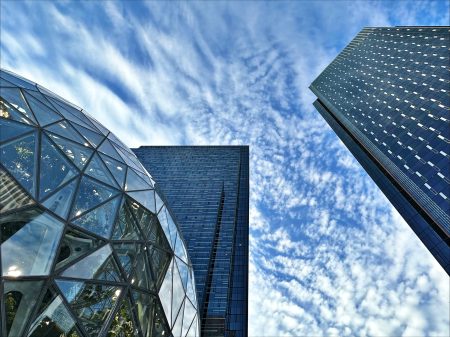

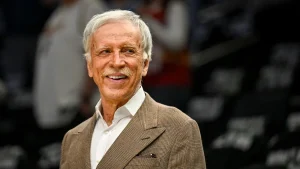


Luke Larson’s professional evolution reads like a study in profound contrasts, shifting from the intense, high-stakes arenas of military combat and public safety technology to the tranquil, mindful world of premium green tea. Before setting his sights on building a modern beverage empire, Larson served his country as a U.S. Marine Corps infantry officer, enduring two demanding tours of duty in Iraq and earning a Bronze Star with V for valor during his first deployment. Upon returning to civilian life, he brought that same disciplined focus and strategic grit to Axon, the company synonymous with Tasers and body-worn cameras. Rising to the role of president in 2017, Larson became a vital architect of the company’s massive global growth, successfully scaling its sales from roughly $100 million to an astounding $1 billion, while establishing a major, alien-themed engineering campus in Seattle that became legendary for its unique recruitment tactics and highly mission-driven culture. Yet, this relentless drive eventually came at a deep personal cost; in 2022, a sudden and alarming health scare forced Larson to abruptly halt his high-powered corporate career. Recognizing the fragile nature of personal balance, he stepped down from his role and took a six-month medical leave that ultimately transformed into a deeply restorative two-year sabbatical in Switzerland with his wife and three daughters. It was in this quiet European sanctuary, far removed from the constant tension of public safety and law enforcement tech, that Larson’s journey toward physical and mental wellness truly began. Urged by his family to embrace a healthier lifestyle, he was introduced to matcha, the ancient Japanese powdered green tea celebrated for delivering clean, focused energy. Though his first taste of the traditionally bitter, hot brew left him unimpressed, a fortuitous introduction to Chef Jeffrey Hayden—a Culinary Institute of America graduate with a rich pedigree in Michelin-starred kitchens—changed everything. Hayden revealed to Larson that when high-quality, ceremonial-grade matcha is prepared correctly and served cold, it transforms into an exquisitely smooth, refreshing beverage that offers complete cognitive focus without any of the anxiety, crashes, or physical jitters of coffee. This subtle culinary epiphany sparkled into a grand vision, prompting Larson’s return to the Pacific Northwest to launch Vale, a startup structured on his personal evolution from high-tension security to the mindful art of modern hospitality.
Returning to Seattle, Larson did not merely launch a business; he made a deliberate, passionate investment in a city that many major corporations and retail businesses were actively leaving. Anchored in Vale’s headquarters in the historic, brick-lined neighborhood of Pioneer Square, Larson’s ambition is to build nothing less than a global beverage empire—positioning Vale as the Starbucks of the matcha world, but completely reimagined for the digital age through the seamless integration of premium hospitality, advanced consumer technology, and high-end robotic automation. While some local business leaders and industry analysts have expressed pessimism about Seattle’s economic climate and post-pandemic recovery, Larson remains a fierce, vocal champion of the region’s unmatched ecosystem of creative and technical talent. He has actively targeted and hired seasoned professionals from local tech giants like Amazon and Microsoft, as well as retail veterans from Starbucks, blending the distinct cultures of Seattle’s traditional coffee dominance with its cutting-edge software culture. Vale represents a rare, physical-first consumer product startup in a tech market currently dominated by abstract artificial intelligence and software-as-a-service, proving that tactile, sensory real-world experiences are still worth building from the ground up. Larson’s commitment to the local economy is highly tangible, as evidenced by Vale’s recent acquisition of a sprawling 36,000-square-foot production facility south of downtown Seattle—a massive industrial warehouse space previously occupied by Atomo Coffee that will now serve as the logistical heartbeat of Vale’s rapidly multiplying supply chain. By keeping the company entirely private for its first two years and serving as its primary investor, Larson is retaining full strategic control, deliberately choosing to build deep organizational roots and refine his business model before even considering seeking outside venture capital. For Larson, Vale is not just a commercial endeavor, but a love letter to Seattle’s enduring legacy of pioneering retail, proving that the city’s best, most innovative years are still very much ahead.
At the core of Vale’s commercial appeal is a meticulous commitment to the culinary craft, spearheaded by Chef Jeffrey Hayden, who serves as the startup’s Head of Craft and culinary director. Under Hayden’s culinary direction, Vale sources its ceremonial-grade matcha directly from the misty, fertile hillsides of Shizuoka, Japan—a legendary tea-growing region nestled at the base of Mount Fuji, which Larson fondly compares to the lush, mountainous landscapes of the Pacific Northwest. Together, they have worked to strip away the intimidating pretension and bitter reputation often associated with traditional Japanese tea ceremonies, translating this age-old product into a modern, accessible luxury tailored for contemporary palates. The result of their collaboration is a diverse, thoughtfully engineered menu that features everything from classic, pure iced matcha to decadent plant-based lattes and playful, seasonal concoctions, such as a vibrant, tropical tiki-themed summer beverage. A prime example of this accessible innovation is their popular strawberry matcha latte, a beautifully layered, seven-dollar beverage that pours vibrant green matcha over creamy oat milk and a sweet, natural strawberry puree. It is a drink designed to shatter customer expectations, replacing the traditional hot, grassy, and occasionally metallic notes of lower-grade green tea with a rich, velvety, and delightfully balanced flavor profile. Larson is explicitly betting on a massive, generational demographic shift; younger consumers, particularly Gen Z and Millennials, are increasingly moving away from hot drip coffee in favor of cold, aesthetically pleasing beverages that align with their holistic wellness goals. By elevating matcha into a premium, cold-served lifestyle product, Vale provides a sophisticated alternative to the overly sweetened energy drinks and heavy coffees that dominate the modern commute, offering a clean, sustained mental lift derived from natural L-theanine that keeps busy professionals alert, calm, and hydrated throughout their demanding workdays.
To translate this culinary appeal into a dominant market presence, Larson is deploying a highly aggressive, multi-tiered scaling strategy that avoids the slow, capital-intensive bottlenecks of traditional brick-and-mortar retail expansion. Rather than relying solely on permanent cafes, Vale has embraced an agile hybrid model that combines showcase physical storefronts with an expansive fleet of portable, fully staffed mobile matcha bars. While their flagship cafe opened to heavy foot traffic in Seattle’s tech-dense South Lake Union neighborhood in May 2025, and a second permanent location is already in development on First Hill, the brand’s true scaling engine lies in its rapid mobilization of temporary and pop-up locations. This summer, Vale is operating twenty-three of these agile, staffed mobile bars across high-traffic urban areas, with an ambitious roadmap to scale that number to one hundred by the end of the year, and an astounding one thousand locations across the nation by next year. This rapid deployment requires a robust, agile operations team, and Vale has already grown its workforce to over seventy employees, maintaining a deliberate balance between front-of-house service staff and highly specialized technical talent. Approximately half of the company’s workforce consists of frontline baristas and brand ambassadors who operate the mobile units and establish direct, friendly relationships with daily customers, while the remainder of the team is composed of elite software engineers, mechanical designers, and roboticists. Larson has also recruited trusted, veteran executive talent from his Axon days, including CTO Jay Reitz and Sydney Siegmeth, the Head of People and Communications, ensuring that the company’s rapid growth is supported by a battle-tested leadership team capable of navigating the complex intersections of physical supply chains, human resources, and advanced technology.
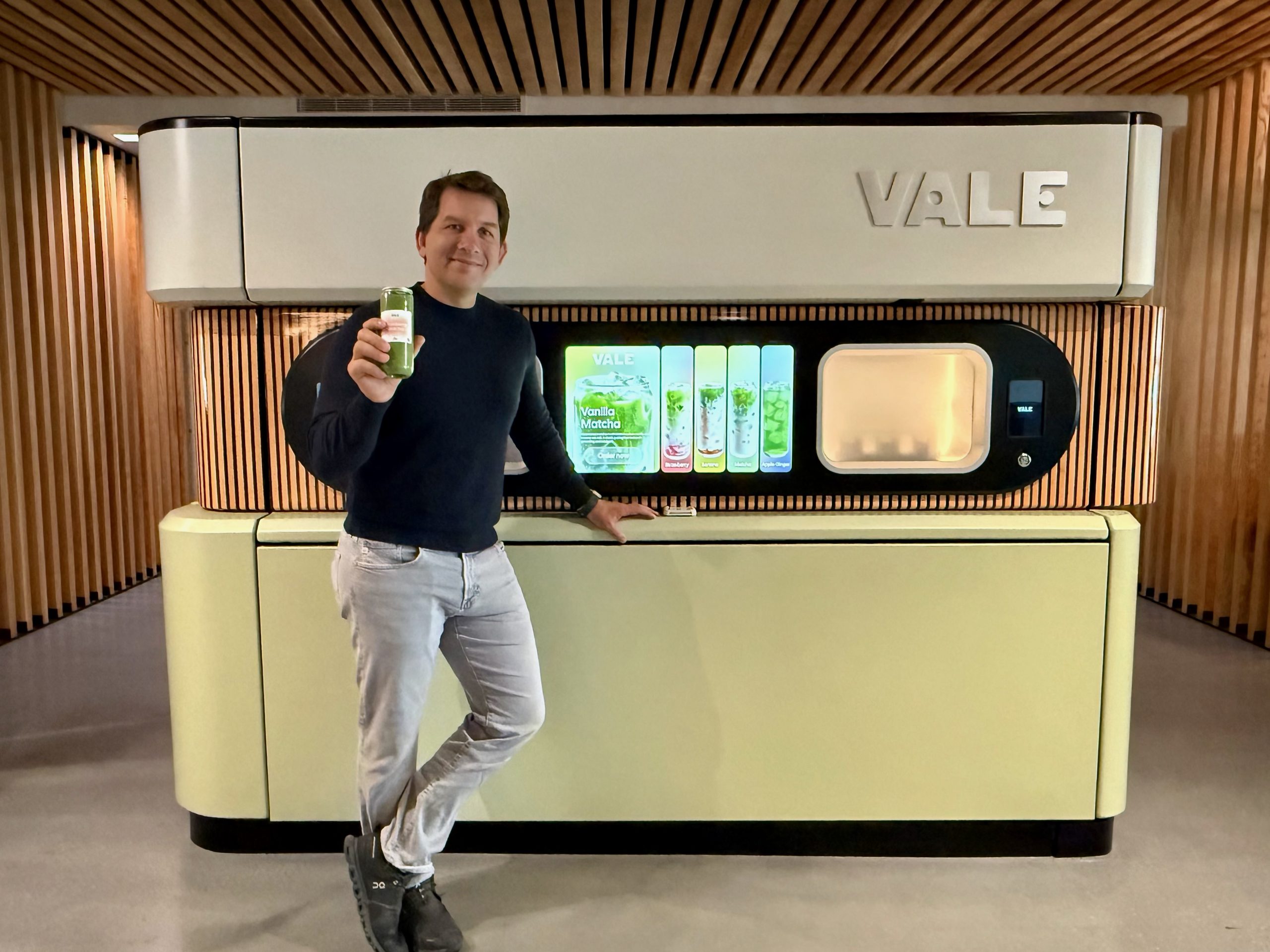
While the human-staffed mobile bars and flagship cafes build community trust and brand awareness, the true crown jewel of Vale’s long-term business model is its proprietary automated matcha-dispensing technology. Positioned prominently in the lobby of an office building at 505 First Avenue South in Seattle’s Pioneer Square—just a stone’s throw from the roaring crowds of Lumen Field—stands a sleek, futuristic machine that looks more like a high-end luxury vehicle than a traditional vending dispenser. Designed with rounded, smooth edges, an elegant minimalist finish, and a large interactive touchscreen sandwiched between two frosted glass panels, the unit hides a dense, incredibly complex robotic system within its deceptively simple exterior. When a customer places an order, a state-of-the-art robotic arm springs into motion, picking up a cup, printing and applying a personalized adhesive label detailing the customer’s name, and moving it gracefully along a track system beneath ten automated ingredient taps. The machine precisely dispenses the correct ratios of matcha, oat milk, sweeteners, and custom fruit purees, before moving the vessel to a specialized sealing station where a sleek, aluminum soda-can-style lid is firmly applied to secure the drink. Rather than showcasing the technology as a cold, imposing novelty, Larson views the machine through a philosophical lens reminiscent of science fiction, comparing it to a “Star Trek” replicator where the incredibly complex mechanical engineering fades seamlessly into the background to allow the sheer magic of the customer experience to take center stage. This frictionless technology is supported by a proprietary mobile app that allows busy urban professionals to order ahead, customize sweetness levels, and effortlessly accumulate loyalty reward points, establishing a high-efficiency retail model that can be easily deployed inside apartment lobbies, corporate high-rises, transit hubs, and hospital wings where a traditional cafe would be physically or financially impossible to operate.
Ultimately, Luke Larson’s vision for Vale transcends the boundary of a typical tech startup or a standard food-and-beverage franchise; it represents an ambitious, holistic attempt to revitalize the civic and cultural fabric of Seattle through the double-edged sword of high technology and community-centered hospitality. By placing these automated hubs in spaces that traditionally lack premium food and beverage options, Vale is redefining how urban citizens interact with their daily environments, transforming sterile corporate lobbies and apartment complexes into vibrant, micro-neighborhood centers of wellness and convenience. Larson’s unwavering belief in the resilience of Seattle serves as a powerful counter-narrative to the prevailing rhetoric of urban decline, demonstrating that the region’s unique heritage of physical mastercraft and digital wizardry can still coalesce to produce world-class consumer experiences. Through Vale, he is proving that automation does not have to result in a cold, sterile, and alienated world; rather, when combined with high-quality ingredients, thoughtful human design, and a genuine passion for hospitality, technology can actually enhance and democratize access to moments of calm, daily luxury. As Vale prepares to expand its footprint from the damp, coffee-dominated streets of the Pacific Northwest to the rest of the country, hiring hundreds of local workers and engineers along the way, it stands as a testament to what is possible when a leader takes the discipline of a soldier, the corporate scaling expertise of a tech executive, and the mindful focus of a tea ceremony, and blends them into a singular, forward-looking vision. In a fast-paced world increasingly searching for sustainable energy, physical connection, and moments of quiet focus, Larson and his dedicated team at Vale are successfully pouring a brighter, healthier, and more automated future, one perfectly mixed cup of matcha at a time.