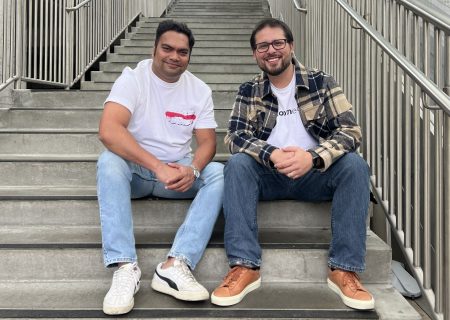



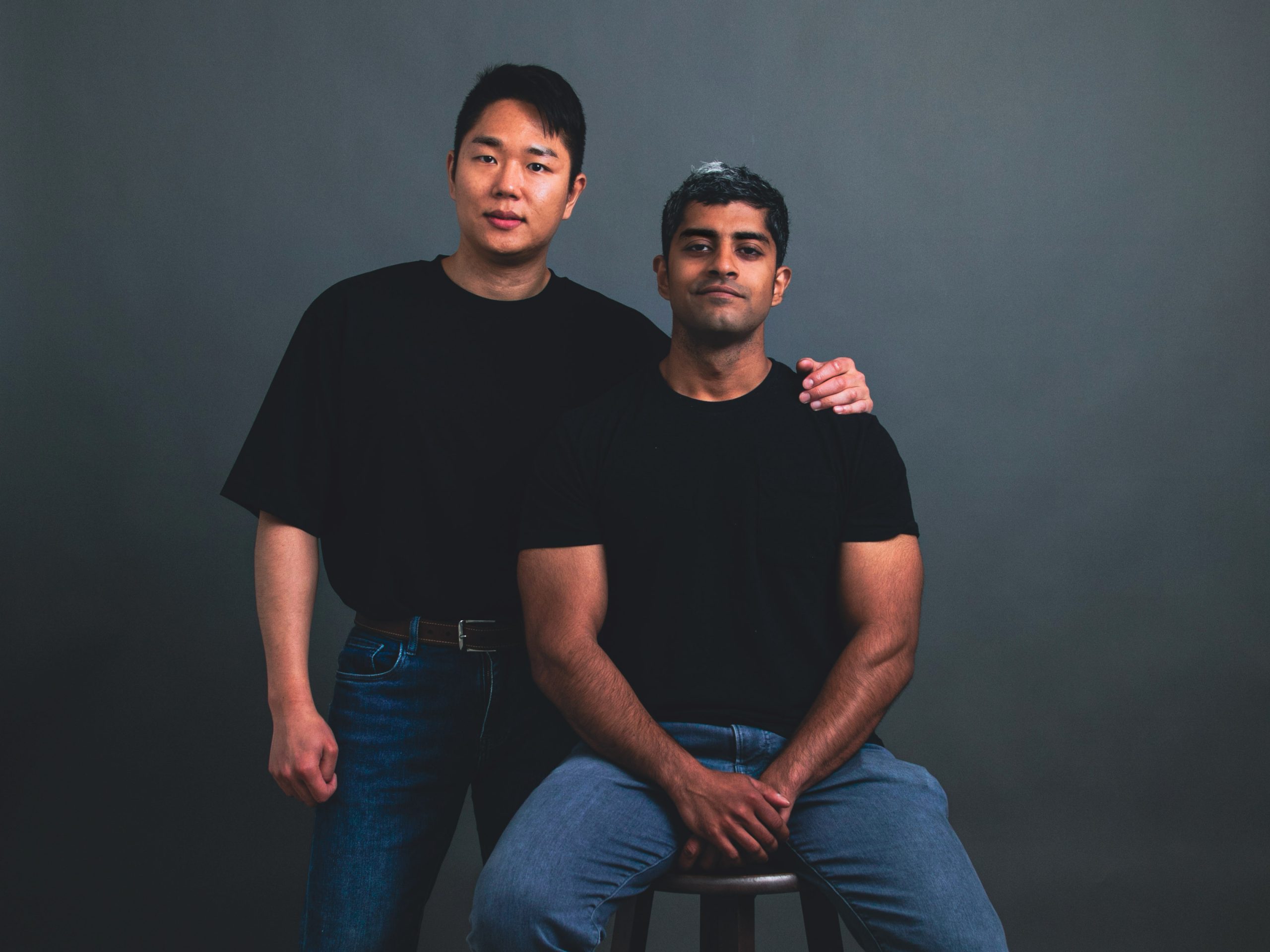
The technology landscape is currently swept up in a gold rush toward “agentic AI”—autonomous digital assistants designed to make decisions, access databases, and complete complex files without constant human intervention. Yet, in their rush to deploy these self-operating systems, many enterprises neglected the glaring security vulnerabilities inherent in letting artificial intelligence act on its own. Recognizing this critical security gap, the innovative startup CodeIntegrity recently secured a $5 million seed investment round to build a robust, protective shield for agentic AI applications. Founded by CEO Steven Jung and CTO Abi Raghuram, the young company first turned heads last year with a startling public demonstration showing how effortlessly today’s leading AI models could be manipulated. In under four hours, CodeIntegrity managed to breach the popular organizational app Notion, exposing sensitive, private user data to the public and earning a prominent mention in The Economist. This alarming breakthrough highlighted a sobering reality: while the tech world was desperate to roll out agents, almost no one knew how to deploy them safely.
To appreciate the gravity of the problem CodeIntegrity is solving, one must understand how fundamentally agentic AI differs from traditional software. Traditional computer programs are strictly deterministic, functioning on a highly predictable “if This, then That” logical structure where typing a specific command always yields the exact same programmatic response. Generative AI, by contrast, operates on non-deterministic natural language models, meaning its reasoning pathways are fluid, conversational, and inevitably unpredictable. This lack of rigid boundaries leaves AI agents highly vulnerable to “prompt injection” attacks, where clever hackers insert hidden, malicious text into otherwise harmless digital data. If an autonomous agent reads this compromised data, it is easily tricked into overriding its original system instructions—potentially leaking intellectual property, altering sensitive databases, or handing over private security credentials to unauthorized third parties.
Currently, companies trying to mitigate this chaotic security threat rely on two deeply flawed methodologies: keeping a human permanently in the loop to review every AI action, or deploying a secondary “judge” AI model to police the primary agent. Neither of these options is truly viable for the modern enterprise, as human review completely destroys the speed and cost advantages of automation, while utilizing a second AI to oversee the first simply introduces another unpredictable, hallucinatory layer into the system. CodeIntegrity bypasses these makeshift band-aids entirely by introducing a secure “runtime control layer” that acts as a permanent, unbreakable guardian. This innovative technology functions as both a translator and a strict security filter, forcing the chaotic behaviors of natural language models to run through rigid, deterministic system rules. By placing a hard boundary between the AI and a company’s vital infrastructure, CodeIntegrity ensures that even if an agent is successfully tricked by a malicious prompt, its underlying system architecture remains completely locked away and out of reach.
The story behind CodeIntegrity is as much about human friendship and shared ambition as it is about advanced cybersecurity. Co-founders Steven Jung and Abi Raghuram first crossed paths as undergraduate engineering students at Indiana’s prestigious Rose-Hulman Institute of Technology, a school widely celebrated for producing highly analytical, hands-on scientific thinkers. Following graduation, both embarked on independent professional careers at separate tech firms, but they remained closely connected, ultimately reuniting in May 2024 to tackle the emerging security threats of the AI revolution from their initial base in the Seattle area. Later that year, their vision was validated when they were accepted into the highly competitive Antler residency program in New York City, an incubator designed to refine early-stage startup ideas into viable, market-shaping businesses. This foundational experience crystallized their mission, prompting the pair to relocate their headquarters to the thriving technological ecosystem of San Francisco, while still maintaining essential development ties to their initial Washington roots.
This strategic evolution recently culminated in the company’s $5 million seed funding round, spearheaded by the specialized cybersecurity venture capital firm Syn Ventures, with additional support from early backers Antler and Boost VC. This fresh capital injection brings CodeIntegrity’s lifetime funding to an impressive $5.25 million, resource power they are aggressively deploying to test their runtime control software within heavily regulated, high-security industries like finance, healthcare, and enterprise logistics. The stakes of this race are incredibly high, as CodeIntegrity is not alone in recognizing this massive market opportunity; young competitors such as Seattle-based Certiv, alongside California startups Raven and Manifold Security, are also rushing to claim dominance in the emerging agent security sector. However, CodeIntegrity’s unique ability to enforce deterministic boundaries over fluid AI models gives them a powerful, highly practical edge in a crowded field of theoretical solutions.
Reflecting on their journey, the founders view their dual-city presence as a critical strategic asset rather than a geographical inconvenience. While Raghuram—who spent three productive years at Seattle’s healthcare data giant Truveta—regards Seattle as a goldmine for recruiting incredibly talented, disciplined systems engineers from tech pioneers like Microsoft and Amazon, he firmly believes the Bay Area is the spiritual home of the current AI boom. By establishing their core hub in San Francisco, the founders have positioned themselves directly at the epicenter of agentic innovation, ensuring they have an intimate, real-time understanding of how fast AI paradigms are shifting. Striking this delicate balance between San Francisco’s high-spirited, forward-thinking imagination and Seattle’s deep-rooted, structured engineering excellence, CodeIntegrity is uniquely equipped to turn the wild, unpredictable frontier of autonomous artificial intelligence into a safe, secure, and highly reliable corporate reality.