





The physical world is incredibly messy, chaotic, and notoriously difficult to track in real time. For decades, industries relying on manual inventory and physical labor—like retail, warehousing, and healthcare—have struggled to bridge the gap between their actual, real-world operations and the digital systems meant to track them. Companies have tried everything from stationary security cameras to clunky handheld scanners and expensive roving robots, but these solutions have consistently proven to be bulky, disruptive, and ultimately ineffective. Seattle-based startup Augmodo is tackling this massive challenge from a completely different angle. By creating lightweight, AI-powered Smartbadges worn passively by frontline employees, the company is quietly digitizing the physical workplace. The technology works seamlessly in the background, transforming everyday movements into highly accurate, real-time spatial data without disrupting the flow of a standard workday.
This innovative approach has captured the attention of both major global enterprises and prominent venture capital firms. Augmodo recently secured a fresh $21 million funding round led by TQ Ventures, catapulting the young startup’s valuation to an impressive $350 million. What makes this cash injection particularly notable is that CEO and founder Ross Finman was not actively looking to raise capital. Instead, the funding was driven by an overwhelming surge of unsolicited interest from diverse industries eager to adapt Augmodo’s technology to their own unique environments. Andrew Marks, co-founding partner at TQ Ventures, noted that demand for Augmodo’s platform was rapidly outpacing the startup’s capacity to deliver. Realizing that customers were practically lining up around the block, the investment firm stepped in to provide the financial fuel necessary to accelerate the company’s expansion and help them scale into these massive, untapped markets.
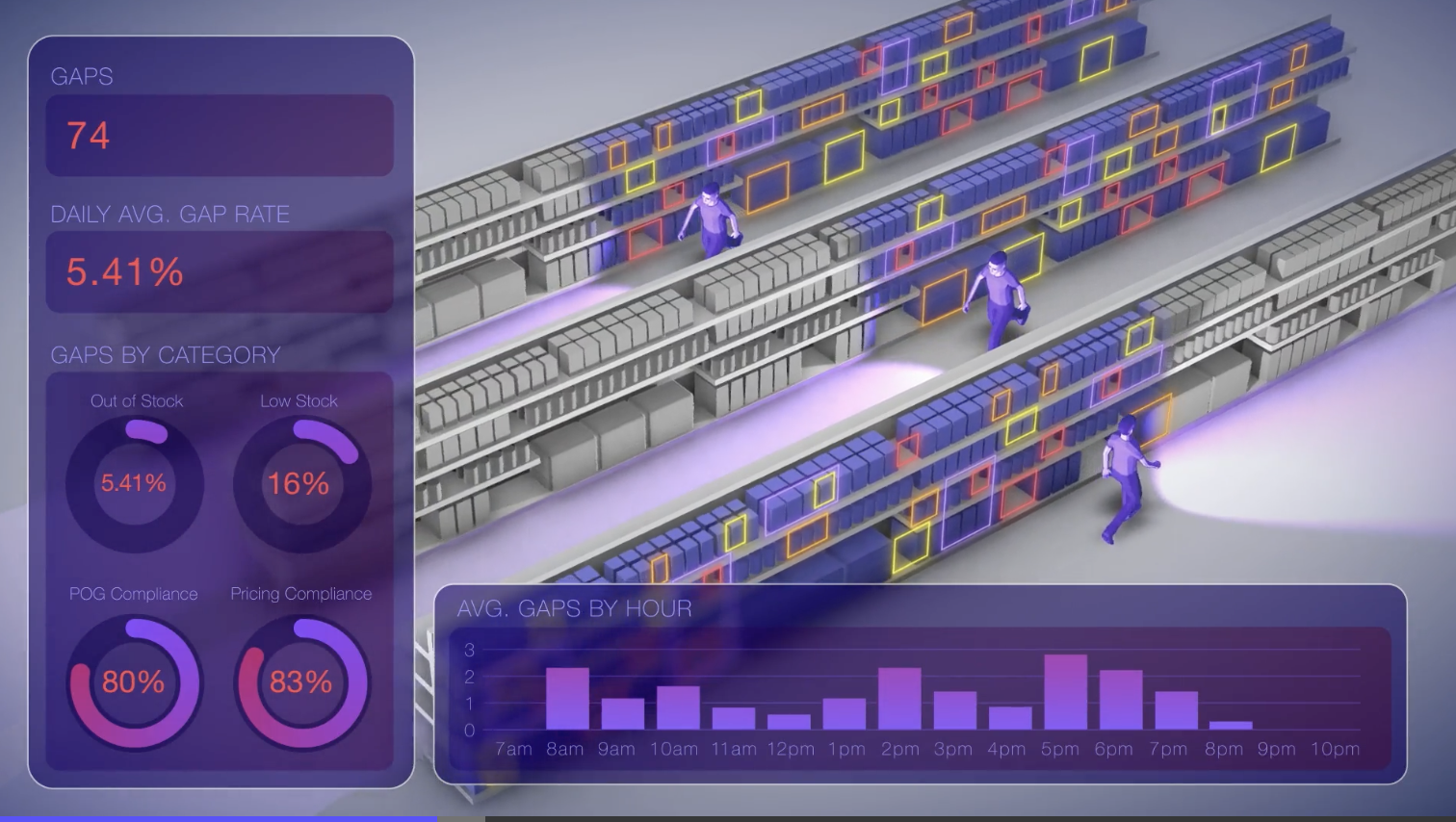
At the heart of Augmodo’s rapid rise is its proprietary “Smartbadge.” Rather than asking workers to stop what they are doing to scan barcodes, the startup equips them with a lightweight, chest-mounted device outfitted with dual cameras. As employees go about their normal routines, the badge automatically utilizes advanced computer vision, 3D mapping, and spatial computing to build a dynamic, digital twin of the physical space—which the company calls a “Realogram.” This allows businesses to instantly see exactly what is on their shelves, what needs restocking, and where assets are located. Originally designed for grocery aisles, the technology is now proving to be highly versatile. As Finman points out, the physical mechanics of a worker grabbing a wrench in an automotive factory are fundamentally identical to a supermarket clerk reaching for a box of cereal. Because the underlying visual and spatial algorithms translate so beautifully across different tasks, the system is just as effective in a high-tech manufacturing plant or a busy hospital wing as it is in a retail store.
While tech developers have spent the last few years obsessing over generative AI and tools designed to optimize office-based desk jobs, Augmodo has deliberately focused its energy elsewhere. Finman emphasizes that while the vast majority of Silicon Valley is fighting over the 20% of the global workforce engaged in knowledge work, his team is dedicated to empowering the remaining 80% of the workforce performing physical labor. This focus is paying off handsomely, as existing clients have continuously pushed to expand their contracts, pulling the startup into completely unexpected logistics, facility maintenance, and delivery operations. To meet these broader demands, the Smartbadge has evolved from a basic inventory tracker into a comprehensive, all-in-one workplace device. It now features built-in walkie-talkie communication, a digital ID display, and an emergency panic button, allowing enterprises to consolidate multiple pieces of expensive, fragmented hardware into a single, highly efficient wearable that weighs less than an iPhone Air.
The operational growth resulting from this product evolution has been nothing short of explosive. Over the past twelve months, Augmodo has seen its revenue grow tenfold, and it now maps over 186 million square feet of physical space every single month. By the end of this year, the company projects that its mapping footprint will eclipse a staggering 1 billion square feet monthly, driven by the rapid addition of 50 to 100 new store locations every month. To support this massive scale-up, Augmodo has expanded its workforce fivefold to more than 50 employees. A key milestone in this organizational growth was recruiting tech veteran Bradford Snow as Chief Technology Officer. Bringing a wealth of scaling experience from previous leadership roles at market giants like Meta, Amazon, Microsoft, and Axon, Snow is uniquely positioned to guide Augmodo’s technical architecture through this next hyper-growth phase.
Looking ahead, Augmodo plans to utilize its newly acquired capital to aggressively expand its global enterprise footprint and refine its core machine learning and computer vision models. The company is actively recruiting top-tier engineering talent, particularly in physical AI, as it prepares to process and analyze increasingly complex datasets from diverse industrial environments. Supported by a robust syndicate of backers—including Lerer Hippeau, Jefferson River Capital, Arena Holdings, and early customer Chemist Warehouse—Augmodo is rapidly transitioning from a promising retail startup into a dominant player in industrial AI. By restoring visibility to the overlooked physical workforce, the company is proving that the most valuable AI applications are not confined to computer screens, but are actively operating out in the real world, helping people work smarter, safer, and more efficiently.